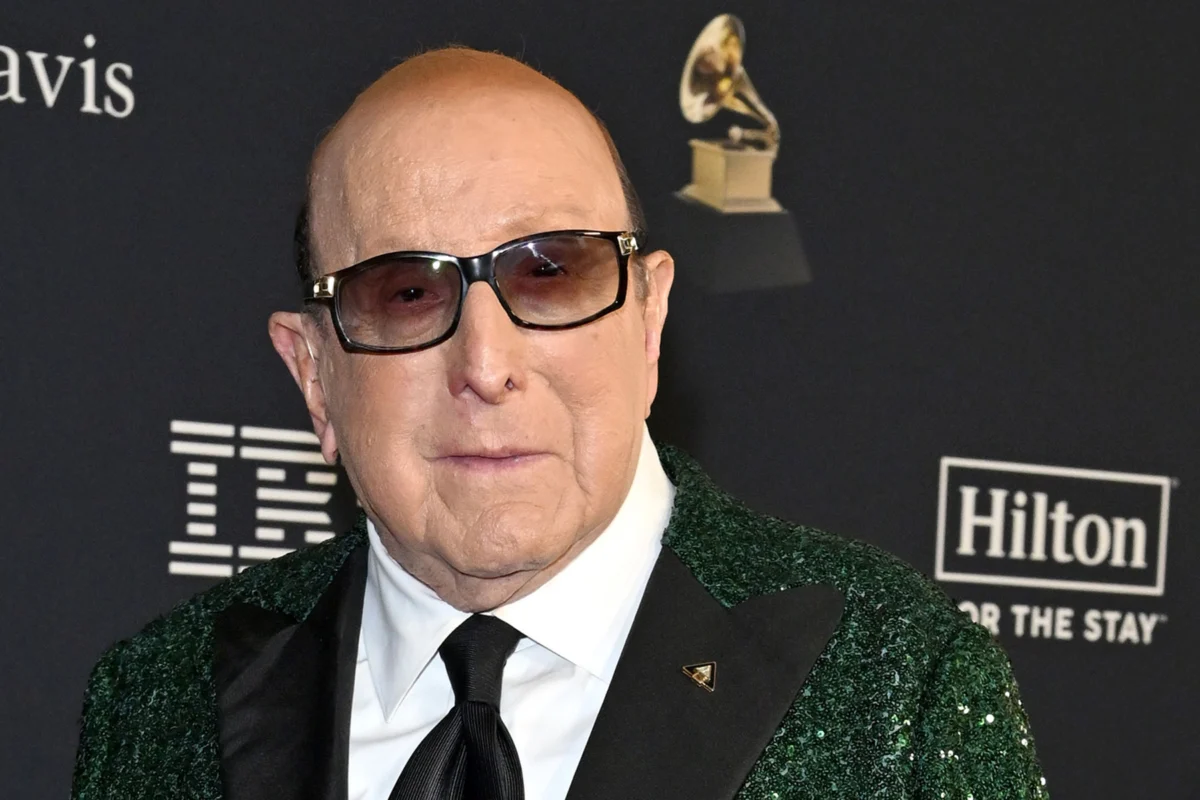
Clive Davis, the towering titan of the music industry whose unerring instincts and transformative vision defined the careers of superstars from Whitney Houston to Alicia Keys, has passed away. He died on Monday, June 22, at his home in New York following a battle with an age-related illness. He was 94.
For over six decades, Davis operated at the absolute zenith of the recording industry, acting as a bridge between raw artistic talent and global commercial dominance. Often referred to as "The Man With the Golden Ears," Davis possessed a near-mythical ability to identify the intersection of artistic integrity and mass-market appeal. His death marks the end of an era—a time when the music executive was not merely a suit in a boardroom, but a creative partner and a cultural force who could, and often did, change the trajectory of popular music with a single signing.
A Legacy of Discovery: The Professional Chronology
Born in Brooklyn on April 4, 1932, to parents Herman and Florence, Davis’s path to the upper echelons of the industry was as unconventional as it was brilliant. After the tragic loss of both his parents during his teenage years, he relocated to Queens to live with his sister, Seena. His academic journey was marked by excellence, culminating in a magna cum laude degree in political science from New York University and a subsequent degree from Harvard Law School in 1956.
The Columbia Records Revolution
Davis entered the music industry in 1960 through the legal department of Columbia Records. His rise was meteoric; by 1967, he was named president of the label. It was during this tenure that Davis demonstrated the visionary boldness that would define his career. Witnessing the seismic shift in the cultural landscape, he famously signed Janis Joplin and Big Brother and the Holding Company after being mesmerized by their performance at the 1967 Monterey International Pop Festival. Under his stewardship, Columbia became a powerhouse for both rock and soul, adding legends like Santana, Billy Joel, and Aerosmith to its roster.
The Arista Era and the Art of the Comeback
Following his departure from CBS Records in 1973, Davis founded Arista Records. It was here that he cemented his reputation as the industry’s greatest talent scout. He didn’t just sign artists; he sculpted legacies. He plucked Patti Smith from the underground scene to produce her landmark 1975 debut, Horses, while simultaneously turning Barry Manilow into a pop juggernaut with the chart-topping success of "Mandy."
Perhaps Davis’s most profound skill was his ability to rejuvenate the careers of established legends. He took icons like Aretha Franklin and Dionne Warwick—artists who were struggling to find their place in a rapidly evolving market—and helped them reclaim their throne. This Midas touch reached its zenith with Santana, whose 1999 collaborative album Supernatural became a multi-platinum global phenomenon, securing nine Grammy Awards, including Album of the Year.

Whitney Houston and the J Records Chapter
No discussion of Davis’s career is complete without mention of Whitney Houston. Recognizing the immense potential in the young cousin of Dionne Warwick, Davis groomed Houston into one of the best-selling artists in music history. The 1985 release of her self-titled debut album, featuring era-defining hits like "How Will I Know" and "Saving All My Love for You," shifted the landscape of pop and R&B. Following her tragic death in 2012, Davis delivered a eulogy that poignantly captured the depth of their professional and personal bond: "You wait for a voice like that for a lifetime."
Even in his later years, Davis refused to slow down. In 2000, he launched J Records, which he famously characterized as "an instant major." It was here he discovered Alicia Keys, whose debut album Songs in A Minor became an instant classic, proving that Davis’s ear for the "next big thing" remained as sharp at 70 as it was at 30.
Industry Impact and Supporting Data
Davis’s influence is best measured by the sheer breadth of artists he shaped. His roster included, at various points, icons such as Bruce Springsteen, Barbra Streisand, Luther Vandross, Kenny G, Usher, Earth, Wind & Fire, and Jennifer Hudson.
His contribution to the industry was recognized with an induction into the Rock & Roll Hall of Fame in 2000 and a Trustees Award from the Recording Academy the same year. A four-time Grammy winner, Davis’s career was defined by consistent excellence. His autobiography, The Soundtrack of My Life (2013), remains a foundational text for anyone seeking to understand the inner workings of the music business.
Beyond the charts, Davis was a philanthropist of significant stature. He was a pioneer in the fight against the AIDS epidemic, beginning his advocacy in the mid-1980s. He turned Arista’s 15th-anniversary concert into a massive benefit for AIDS research, raising millions for the cause. His annual pre-Grammy gala became the most exclusive event in the music industry, consistently serving as a fundraiser for the Recording Academy’s MusiCares and the Grammy Museum.
Official Responses: A Family’s Tribute
The Davis family released a statement that underscored the dual nature of the man—the towering professional and the devoted patriarch:

"To the world, our father was the iconic music legend whose vision, instincts, and relentless pursuit of excellence shaped the soundtrack of countless lives," the family shared. "He discovered, mentored, and championed the greatest artists in modern music history, leaving an indelible mark on culture that will endure for generations."
They continued, "To his family, Clive was Dad and Granddaddy, the steady presence at the center of our lives, the source of wisdom, strength, encouragement, and unconditional love. No matter how extraordinary his professional accomplishments, he never lost sight of what mattered most: the people he loved."
Lasting Implications for the Music Industry
Clive Davis’s passing represents more than the loss of an executive; it is the loss of a specific, high-touch philosophy of music management. In an age of algorithms and data-driven A&R, Davis stood for the power of the "hunch"—the belief that a single song or a unique voice could alter the consciousness of a generation.
His legacy is now etched into the very fabric of music education. In 2011, he donated $5 million to New York University, leading to the creation of the Clive Davis Institute of Recorded Music. This institution serves as a living monument to his commitment to the future of the medium.
As the industry grapples with his absence, the question arises: who will carry the mantle of the "Golden Ears"? Davis proved that while trends change, the need for a visionary to guide, curate, and champion true talent remains constant. He leaves behind a sprawling musical lineage that will continue to resonate for decades, if not centuries.
Clive Davis is survived by his partner, Greg Schriefer; his children, Fred, Doug, Mitchell, and Lauren; eight grandchildren; two great-grandchildren; and his cousin, Jo Schuman. His life was a testament to the idea that with enough passion and a discerning ear, one person can truly change the world—one song at a time.