
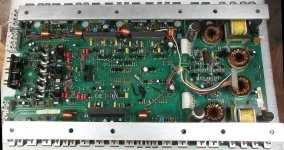
In the world of high-fidelity audio, the allure of vintage equipment is undeniable. For many enthusiasts, the sound signature of legendary brands like McIntosh offers a warmth and depth that modern digital counterparts struggle to replicate. However, the path to restoring these legendary units—specifically complex, aging automotive amplifiers—is fraught with technical, financial, and logistical hurdles. A recent discussion on the DIYAudio community forums highlights the growing tension between the desire to preserve legacy gear and the harsh reality of modern component degradation.
The debate, centered on the restoration of a 30-year-old McIntosh MC440M car audio amplifier, serves as a quintessential case study for hobbyists weighing the risks of "recapping"—the process of replacing electrolytic capacitors—against the viability of professional repair services.
The Impetus for Restoration: A Preventive Dilemma
The conversation began with a forum user, supermaxx123, expressing an interest in acquiring a vintage McIntosh MC440M. Recognizing the age of the unit, the prospective buyer sought guidance on the feasibility of performing a full recap before even powering the device on. The underlying concern was one of fiscal responsibility: the user wanted to avoid a "money pit" scenario where the cost of necessary maintenance would far exceed the intrinsic value of the amplifier.
"I don’t own the amp due to me knowing with age it would be smart to recap rather than just try and use," the user stated. This reflects a growing trend in the audiophile community: the realization that vintage electronics, particularly those featuring aging electrolytic capacitors, are effectively ticking time bombs. When these components fail, they often do so catastrophically, potentially damaging rare and irreplaceable circuitry in the process.
Chronology of the Inquiry
The discourse quickly evolved from a simple inquiry into a complex technical assessment of the MC440M.
- July 17, 2026 (5:55 AM): The initial inquiry is posted, requesting a rough cost estimate for a professional recap.
- July 17, 2026 (7:48 AM): Industry expert Perry Babin intervenes, shifting the focus from costs to the user’s technical aptitude. He questions the user’s experience with component-level repairs and the quality of their equipment.
- July 17, 2026 (4:31 PM): The user confirms they possess a temperature-controlled soldering iron, though their experience is limited to basic wire-to-terminal soldering, not delicate circuit board repair.
- July 17, 2026 (4:37 PM): User rayma joins the thread, seeking critical identification of the amplifier type—tube versus transistor—to gauge the difficulty of the project.
- July 17, 2026 (5:11 PM): Rayma delivers a sobering assessment: the MC440M is a complex car audio unit featuring a Switching Mode Power Supply (SMPS), making it a poor candidate for a beginner and potentially non-cost-effective for professional repair.
- July 17, 2026 (7:35 PM): The prospective buyer acknowledges the complexity, noting that the board components are significantly smaller and more intricate than the simple wiring they have encountered previously.
Technical Considerations: Why the MC440M is a Challenge
The McIntosh MC440M is not a standard amplifier. It represents a pinnacle of 1990s car audio engineering, characterized by high-density component placement and a sophisticated SMPS.
The SMPS Factor
Switching Mode Power Supplies are notoriously difficult to repair compared to traditional linear power supplies. They operate at high frequencies, which requires precise component values and clean, high-quality soldering to prevent noise and oscillation. A mistake in this section of the circuit can lead to a total failure of the output stage or, in the worst-case scenario, a fire hazard.
Component Density and Board Integrity
As supermaxx123 observed, the circuit boards in such amplifiers are densely populated. Modern electronics often use surface-mount devices (SMDs) or compact through-hole components that require specialized tools for removal. Attempting to desolder these without professional-grade equipment—such as a vacuum desoldering station or high-end hot air rework tools—often results in "lifted pads," where the copper traces peel away from the fiberglass board, rendering the board permanently damaged.

The "Recapping" Myth
Many beginners assume that "recapping" is a standardized, simple process. However, in vintage gear, one rarely replaces only the capacitors. Often, internal regulators, diodes, and even output transistors have drifted out of tolerance over three decades. A professional technician will perform a full diagnostic sweep, which adds significantly to the labor hours. When the labor time exceeds the market value of the amplifier, the project shifts from a hobbyist endeavor to an economic loss.
Professional Perspectives on Repairability
The advice provided by forum veterans Perry Babin and rayma underscores a fundamental truth in electronics repair: skill level dictates the risk.
Babin’s emphasis on the difference between a "temperature-controlled" iron and a professional soldering station is critical. Cheap, consumer-grade irons often have poor thermal mass recovery, meaning they cool down as soon as they touch a large copper plane. This forces the user to keep the iron on the board for too long, which cooks the traces and destroys the components.
Rayma’s warning regarding the SMPS is equally vital. In vintage high-power automotive gear, the SMPS is the "heart" of the machine. If that fails, the amplifier cannot provide the stable voltage required for high-fidelity audio reproduction. For a beginner to attempt this on a vintage McIntosh is high-risk; the probability of "bricking" a valuable unit is high.
Implications for the Vintage Audio Market
This case study highlights several broader implications for the vintage audio enthusiast community:
- Market Value vs. Maintenance Cost: The "McIntosh" brand name carries a premium, but that premium is attached to the functionality of the device. If the device requires $500 to $800 in professional labor and parts to be restored to factory spec, the total cost of ownership may quickly exceed the price of a superior, modern, and reliable amplifier.
- The Shrinking Pool of Technicians: As vintage electronics age, the number of qualified technicians capable of working on complex SMPS designs is shrinking. This has led to an increase in labor rates, as the remaining experts are in high demand.
- The "DIY" Trap: The democratization of information via forums like DIYAudio has empowered many to try their hand at repairs. However, this has also led to the destruction of historically significant hardware. Enthusiasts are now encouraged to practice on lower-value "junk" gear before touching high-end units like the MC440M.
Conclusion: A Measured Approach
For supermaxx123 and others in a similar position, the conclusion drawn from the experts is clear: proceed with extreme caution. The McIntosh MC440M is a masterpiece of audio engineering, but it is a complex, aging piece of technology that demands a level of expertise well beyond basic soldering.
The wisest path for a beginner is to seek out a reputable professional who specializes in vintage McIntosh car audio. While the upfront cost may seem steep, it is essentially an insurance policy for the amplifier. Attempting the repair without the proper equipment, schematic documentation, and experience is a gamble that rarely pays off in the long term.
In the pursuit of sonic excellence, the most important lesson remains the same as it has been for decades: knowing when to pick up the iron, and more importantly, knowing when to put it down.


