The landscape of the American automotive industry is undergoing a seismic shift. For years, the narrative was one of inevitable transition—a wholesale migration from the internal combustion engine to the battery-electric vehicle (BEV). However, as 2026 progresses, that narrative has been disrupted by a wave of cancellations, project terminations, and strategic retreats.
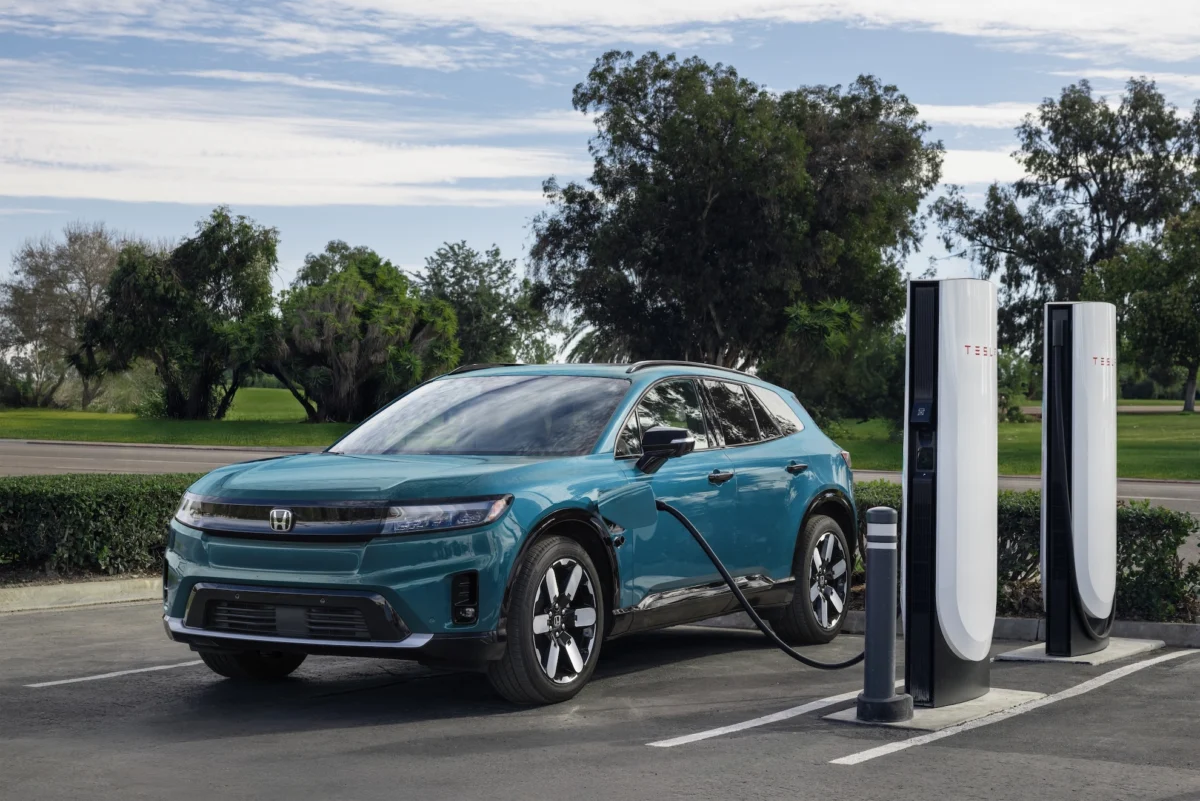
The official confirmation that the Honda Prologue is being phased out of the U.S. portfolio serves as the latest bellwether in this trend. Honda’s decision to pull the plug on its most tangible EV effort signifies more than just a localized change in strategy; it encapsulates a broader, industry-wide recalibration as automakers face the harsh realities of the North American market. From regulatory hurdles and trade tensions to fluctuating consumer demand and the evaporation of federal incentives, the "electrification" of the U.S. fleet has hit a significant, and potentially lasting, roadblock.
The Factors Driving the Retreat
To understand why major global players are suddenly hitting the brakes on their U.S. EV ambitions, one must look at the convergence of economic and political forces. The sunsetting of the $7,500 federal tax credit in late 2025 removed a vital pillar of price parity for consumers. Without this subsidy, the inherent cost premium of EVs—largely driven by battery manufacturing expenses—became harder to justify for the average buyer.

Furthermore, the U.S. regulatory environment has grown increasingly protectionist. Escalating tariffs on imported components and finished vehicles, combined with strict bans on "connected vehicle technology" sourced from specific geopolitical rivals, have forced companies like Polestar to scramble. Simultaneously, internal priorities at legacy automakers have shifted back toward high-margin, proven revenue generators: gas-powered SUVs and trucks.
Data from Kelley Blue Book and Cox Automotive underscores the fragility of the current climate. While second-quarter 2026 sales reached 247,226 units, representing 5.8% of the total market, this figure remains suppressed compared to the pre-credit-expiration era. The recovery is tentative at best; while the year-over-year gap is narrowing, the market is currently trending significantly lower than the record-setting pace of 2025.
A Chronology of Retrenchment
The following list details the high-profile casualties of this market shift—vehicles that have either been officially discontinued or saw their development pipelines severed in 2026.

The Afeela Mirage
Perhaps no project better illustrates the "hype vs. reality" cycle of the EV transition than Afeela. Born from a partnership between Sony and Honda, the brand was teased as a high-tech, software-defined vehicle that would revolutionize the driver experience. First unveiled as the "Vision S" at CES 2020, it evolved through years of aggressive marketing and prototype displays. Despite being a darling of the tech circuit—even making appearances at events like TechCrunch Disrupt—the reality of manufacturing and scaling proved insurmountable. In March 2026, the joint venture formally abandoned the Afeela project, leaving a legacy of sleek prototypes that will never see a public road.
Honda and the "Series 0" Pivot
Honda’s retreat is particularly stark. In early 2025, the company was touting its "Series 0" lineup, promising a future defined by thin, lightweight, and futuristic electric vehicles like the Saloon and Space-Hub concepts. The plan included a mid-sized SUV, slated for production at a dedicated "EV Hub" in Ohio. By March 2026, those plans were scrapped. The company cited intense Chinese competition and shifting trade barriers as primary drivers for the cancellation of the Acura RDX EV and the Honda 0 sedan/SUV projects. The subsequent death of the Prologue, which had actually reached production, marks the end of Honda’s immediate, aggressive electrification push in the States.
The Strategic Contraction of Hyundai
Hyundai, long considered a leader in the EV space, has not been immune to the economic headwinds. While the Ioniq 5 and Ioniq 9 remain central to their U.S. strategy, the Ioniq 6 sedan has been pulled from the American lineup. Analysts attribute this to a combination of lower demand for sedans and the tariff implications of importing the model from South Korea. By focusing on models assembled in its Georgia facility, Hyundai is effectively optimizing its supply chain for a more protected, localized manufacturing model.

Nissan’s Ariya and the Legacy Gap
Nissan, once a pioneer with the Leaf, has struggled to find its footing in the second generation of the EV revolution. The Ariya SUV, which was supposed to be the company’s flagship, will not see a 2026 model year. The decision signals a lack of confidence in the mid-size electric crossover segment, which has become brutally competitive, dominated by established players and a cooling buyer base.
The Polestar Dilemma
Polestar’s situation is unique, born of regulatory intervention rather than market choice. As a company with deep ties to China via its parent, Geely, Polestar found itself in the crosshairs of U.S. restrictions on connected vehicle technology. Lacking the specific exemptions granted to its sibling company, Volvo, Polestar was forced to halt the import of new models. While they continue to support existing inventory, the brand’s future in the U.S. remains in a state of suspended animation.
Tesla: The Pivot to Autonomy
Even the industry leader, Tesla, is shifting its focus. The end of the Model S and Model X production lines in early 2026 was not a failure of sales, but a calculated pivot. Tesla has clearly signaled that its future lies in AI, robotics, and the "Cybercab" platform rather than legacy luxury EVs. By clearing the Fremont factory floor to make way for Optimus robots, Tesla is betting that the next wave of value creation in transportation will be found in software and automation rather than the traditional vehicle-ownership model.

Volkswagen’s Tactical Hiatus
Volkswagen’s strategy has been one of extreme caution. By discontinuing the ID.4 in the U.S. to favor the production of gas-powered SUVs like the Atlas, VW is bowing to the immediate preferences of the American consumer. The ID Buzz, while officially on "hiatus," represents a broader trend: companies are willing to wait for a more favorable regulatory and demand environment before re-committing to full-scale EV rollouts.
Implications for the Future
The current retreat from the U.S. EV market is not necessarily the death of electrification, but rather the end of the "irrational exuberance" phase. Automakers have realized that the transition cannot be subsidized indefinitely and that the U.S. market has unique demands—specifically for larger vehicles and lower price points—that many initial EV offerings failed to meet.
Furthermore, the industry is entering a "wait-and-see" period. Manufacturers are keeping their technology platforms warm, continuing to test autonomous systems and refining battery chemistry, but they are no longer willing to bank their entire U.S. profitability on the immediate adoption of EVs.

The Global Divergence
As the U.S. market retrenches, a global divergence is becoming apparent. While American automakers pull back, the global EV market is becoming "K-shaped," with rapid growth continuing in regions like China and parts of Europe, while the U.S. remains isolated in its reliance on internal combustion. This creates a long-term risk for American manufacturers: if they focus too heavily on legacy gas technology to satisfy short-term domestic profits, they may find themselves technologically behind as the rest of the world moves toward a fully electrified transportation infrastructure.
Conclusion: A Slow Recovery or a New Normal?
The signs of a "slow recovery" exist, evidenced by companies like Rivian pressing forward with the R2 platform. However, the days of rapid, market-wide conversion are over for the time being. The current landscape is one of pragmatic survival. Automakers are trimming the fat, canceling experimental vanity projects, and doubling down on the vehicles that pay the bills today, while keeping a watchful eye on the regulatory and economic indicators of tomorrow.
For the American consumer, this means a shrinking menu of electric options in the immediate future, coupled with higher prices and a lack of federal subsidies. The dream of an all-electric U.S. highway is not dead, but it has been postponed, relegated to a future that looks far less like a sudden transition and more like a long, arduous climb.

Disclaimer: This article provides a summary of market shifts as of July 2026. TechCrunch remains committed to tracking these developments as the landscape continues to evolve.