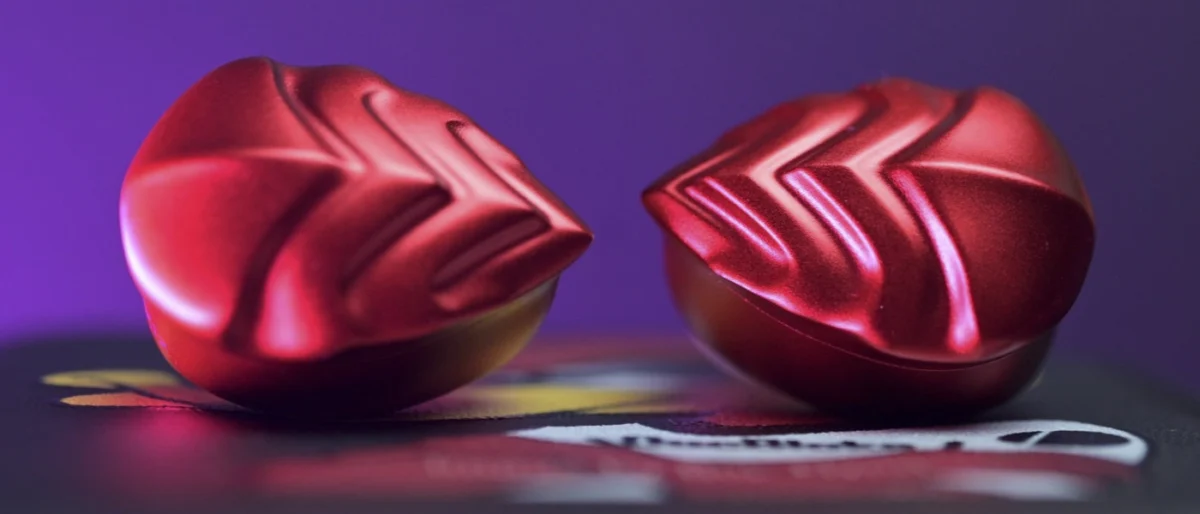
In the rapidly evolving landscape of high-fidelity personal audio, a peculiar trend has taken hold: the rise of the "creator-led" In-Ear Monitor (IEM). For years, the market was dominated by established legacy brands and monolithic corporations. Today, however, the industry has pivoted toward a more collaborative model, where influential reviewers, engineers, and community figures join forces with manufacturers to produce bespoke audio gear.
But what actually happens when a content creator steps into the factory? Is it merely a branding exercise, or a technical deep dive into acoustic signatures? To demystify this process, we look at the recent partnership between prominent audio enthusiast DucBloke and manufacturer HIDIZS, resulting in the well-received MK12 x DucBloke IEM. This collaboration offers a rare window into the mechanical, digital, and collaborative processes that define modern audio tuning.
The Genesis of a Partnership: How Collabs Come to Be
The relationship between an audio manufacturer and an independent reviewer typically begins in the digital ether. As reviewers amass large followings on platforms like YouTube or specialized audio forums, they gain a unique metric: the "ear" of the community. Manufacturers, constantly battling for market share, often seek to align themselves with these voices to gain legitimacy and tap into specific, enthusiast-driven target curves.
The Role of the Expert
In the case of the HIDIZS x DucBloke collaboration, the foundation was built on years of public-facing work. DucBloke established his reputation not through simple unboxings, but through granular, technical analysis—specifically his mastery of Parametric Equalization (PEQ) profiles. By demonstrating how a standard IEM could be "rescued" or "transformed" through precise software-based adjustments, he positioned himself as an authority on frequency response targets.
When HIDIZS approached him, it was not merely to slap a name on a chassis; it was a bid to integrate his specific philosophy on sound signature into the hardware itself. This transition from "software corrector" to "hardware designer" marks a pivotal shift in the career of a reviewer.
Chronology of Development: From Concept to Frequency Response
The development of an IEM is a grueling, multi-month cycle. Unlike consumer electronics that focus on aesthetics, IEMs are bound by the physics of acoustic chambers, driver materials, and ear canal resonance.
Phase 1: The Target Curve (Months 1-2)
Every IEM project starts with a target. This is the "house sound" the creator wishes to achieve. DucBloke spent the initial weeks drafting his ideal frequency response, utilizing measurement rigs to visualize where previous products fell short. The goal was to bridge the gap between technical resolution and musicality—a "holy grail" for many audiophiles.
Phase 2: Prototyping and Acoustic Engineering (Months 3-5)
This is where the magic happens. HIDIZS provided raw prototypes to DucBloke. These early shells often contain basic drivers with no dampening or acoustic filters. Through a back-and-forth process, the team adjusted the internal tubing, the physical dampening materials (which act as physical low-pass filters), and the driver placement.
Phase 3: The PEQ Validation (Month 6)
Before finalizing the acoustic hardware, DucBloke applied his signature PEQ profiles to the prototypes. If the hardware could not reach his target via physical adjustments alone, the team went back to the drawing board. This iterative loop ensures that the final product is "tuned" at the mechanical level, requiring minimal software correction by the end-user.
Supporting Data: The Physics of Tuning
To understand the HIDIZS x DucBloke process, one must understand the three levers of audio engineering: Drivers, Damping, and Geometry.
The Driver Architecture
The MK12 utilizes a specific configuration of drivers—typically a hybrid setup involving dynamic drivers for the bass and balanced armatures for the mids and highs. The tuning challenge here is "coherency." If the bass driver is too fast or too slow compared to the balanced armatures, the sound becomes disjointed.
Damping and PEQ
Damping is the physical equivalent of a software EQ. By placing fine-mesh filters or acoustic foams in the nozzle of the IEM, engineers can shave off sharp treble peaks or smooth out midrange dips. DucBloke’s background in PEQ allowed him to identify exactly which frequency bands were causing listener fatigue, allowing the HIDIZS engineers to apply physical dampening to address those specific frequencies before the product left the factory floor.
| Technical Variable | Purpose | Result |
|---|---|---|
| Acoustic Tubing | Controls sound wave path | Determines clarity and phase |
| Driver Impedance | Regulates power flow | Impacts efficiency and hiss |
| Physical Damping | Attenuates high frequencies | Reduces "sibilance" (harsh ‘s’ sounds) |
| PEQ Profiles | Software-based calibration | Fine-tunes final frequency balance |
Official Perspectives: The Manufacturer-Creator Dynamic
The partnership between HIDIZS and DucBloke reflects a shift in corporate strategy. In the past, companies operated in silos, keeping their R&D departments secret. Today, transparency—or at least the appearance of it—is a selling point.
"Working with someone like DucBloke allows us to see the product through the eyes of the person who will be reviewing it," says a representative from the HIDIZS design team. "It removes the guesswork. If we know exactly what the community is looking for, we can calibrate our assembly lines to match those expectations from the first batch."
From the creator’s side, the process is equally eye-opening. DucBloke noted in his documentation that the most difficult part of the collaboration was the compromise. "You want a sound that is technically perfect, but it has to be mass-producible, durable, and comfortable for thousands of different ear shapes," he explained. This realization is often the biggest hurdle for creators who are used to working only with software.
The Implications for the Audio Industry
The "Collaborative IEM" model has significant implications for the future of the high-end audio market.
1. The Democratization of R&D
By partnering with independent experts, manufacturers can bypass expensive, lengthy market research cycles. They are essentially outsourcing the "product-market fit" to individuals who have already spent years studying the consumer base.
2. The Risk of "Echo Chamber" Tuning
However, there is a potential downside. If a manufacturer only partners with reviewers who share the same "house sound," the diversity of the market may shrink. We risk seeing a homogenization of audio signatures, where every high-end IEM eventually sounds the same because they are all tuned to the same "community-approved" target curve.
3. Increased Accountability
When a creator puts their name on a product, the stakes are higher. If the product fails or has quality control issues, the reviewer’s credibility is on the line. This leads to a more rigorous testing phase, as the creator is personally motivated to ensure the product meets the high standards they previously championed in their content.
Conclusion: A New Standard for Audio?
The HIDIZS x DucBloke collaboration is more than just a successful product launch; it is a case study in modern industry evolution. It demonstrates that the gap between the "reviewer" and the "manufacturer" is closing. For the consumer, this is generally a win. We are seeing products that are more attuned to specific listening preferences, backed by the technical rigor of both engineers and audio enthusiasts.
As this trend continues, the industry will likely see even more specialized collaborations. Whether this leads to a golden age of personalized audio or a market saturated with "signature" products remains to be seen. However, one thing is certain: the era of the mysterious, closed-door audio laboratory is coming to an end. Today, the tuning happens in the open, with the community watching every adjustment of the knob.