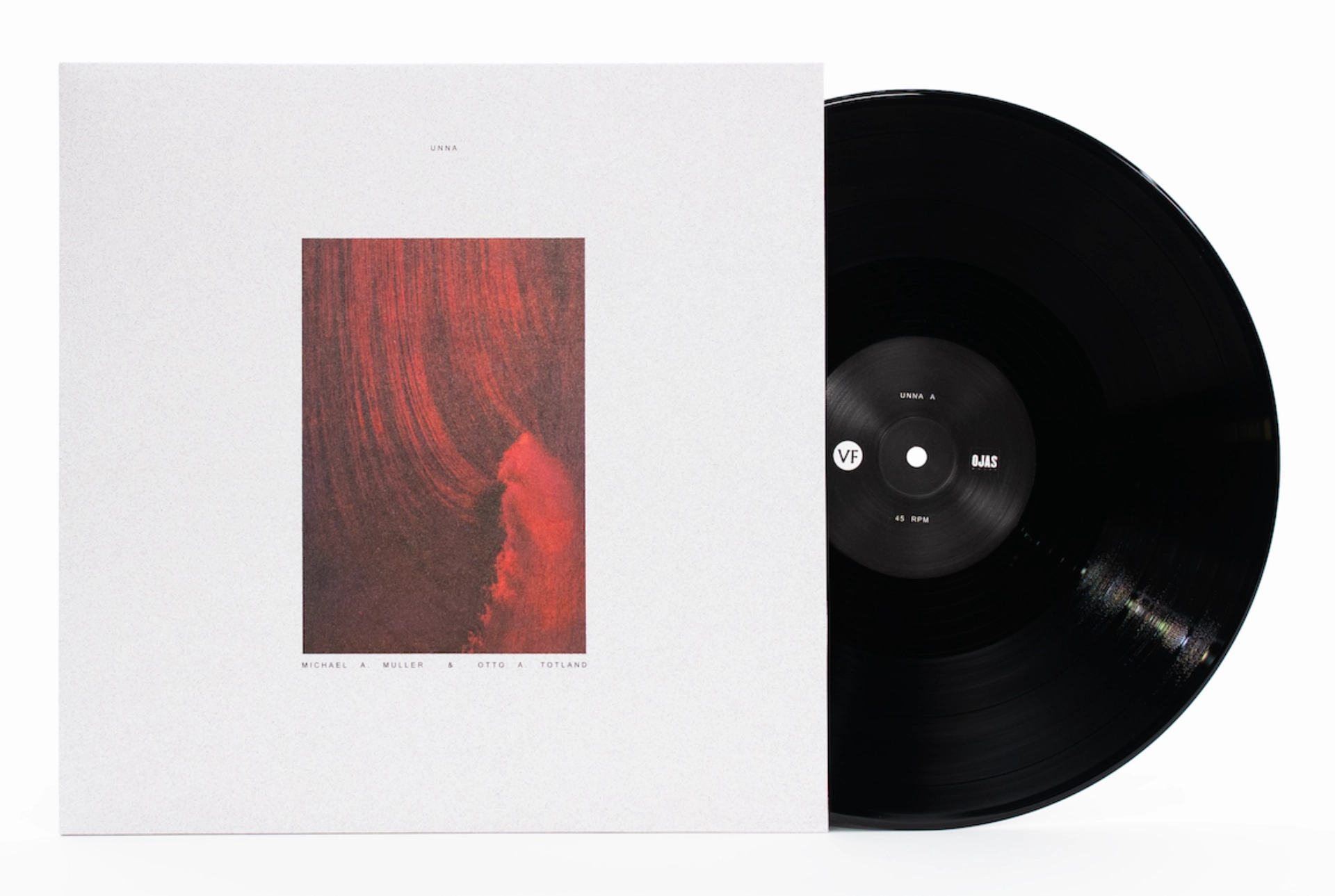
In an era defined by the frantic pace of digital consumption and the saturation of the sonic landscape, the launch of Ojas Music—the record label imprint of Devon Turnbull’s acclaimed audio and design house—serves as a deliberate counter-narrative. The label’s debut offering, Unna, is not merely an album; it is a meticulously crafted spatial experience, born from a trans-Atlantic collaboration between two of the most influential figures in contemporary ambient and minimalist music: Michael A. Muller of Balmorhea and Otto A. Totland of Deaf Center.
Released in partnership with The Vinyl Factory, Unna serves as a bridge between the high-fidelity engineering of Turnbull’s Ojas systems and the delicate, evocative compositions of two masters of restraint.
The Genesis of Unna: A Convergence of Minimalist Icons
The collaborative effort behind Unna represents a meeting of two distinct but philosophically aligned musical lineages. Michael A. Muller, best known as the co-founder of the minimalist instrumental duo Balmorhea, has spent the better part of two decades carving out a space for cinematic, evocative soundscapes. His solo trajectory has been marked by prestigious releases on the Deutsche Grammophon imprint and a prolific history of collaborative ventures with luminaries such as Hania Rani, Alva Noto, Víkingur Ólafsson, The Album Leaf, and Douglas McCombs of Tortoise.
On the other side of this partnership is Otto A. Totland, a cornerstone of the Norwegian experimental and ambient scene. As one-half of the duo Deaf Center, Totland’s contributions to the Type Records and Sonic Pieces catalogs helped define the aesthetic parameters of modern ambient piano music. His acclaimed solo piano trilogy, produced in collaboration with the legendary Nils Frahm, established him as a musician whose work relies as much on the silence between the notes as the notes themselves.
The title Unna—a Norwegian term meaning "away"—functions as a conceptual anchor for the project. It suggests both the physical distance between the collaborators and the psychological "retreat" into a state of deep, uninterrupted creative flow. In this state, the urgency of the outside world recedes, leaving only the textured interplay of instrumentation.
Chronology: From Concept to Audiophile Reality
The trajectory of Unna is inextricably linked to the evolving vision of Devon Turnbull. Turnbull, whose work in high-end audio design has garnered a cult following among audiophiles and music purists alike, has long sought to bridge the gap between hardware and the soul of the recordings played through his speakers.
- 2023: Devon Turnbull establishes the HiFi Listening Room Dream No. 1 at 180 Studios, a permanent installation designed to provide a communal, distraction-free environment for listening. This space serves as the spiritual home for the Ojas Music imprint.
- 2024: The collaborative process between Muller and Totland begins in earnest. Operating across borders, the artists exchange fragments of sound, building a library of motifs that emphasize texture over structure.
- Early 2025: The final masterings of the Unna sessions are completed, with an emphasis on dynamic range and organic warmth, tailored specifically for the analog format.
- February 2026: Ojas Music officially launches, announcing Unna as the label’s inaugural release in partnership with The Vinyl Factory. The limited pressing of 500 copies highlights the project’s exclusivity and physical nature.
The Sonic Palette: An Analysis of the Collaboration
The music found on Unna is an exercise in intentionality. The compositions are built around the delicate, close-miked piano work of Totland, which captures every mechanical nuance of the instrument—the felt hitting the strings, the pedal’s release, and the resonance of the soundboard.
Muller acts as the atmospheric architect, providing a rich textural counterpoint to Totland’s piano. By utilizing double bass, glockenspiel, Mellotron, and Rhodes, Muller introduces a "vertical" depth to the record. Where Totland’s piano is the horizontal narrative, Muller’s instrumentation provides the depth of field, creating a sense of three-dimensional space that aligns perfectly with the Ojas philosophy of high-fidelity playback.
The track "Rolig" (meaning "calm" or "quiet" in Norwegian) is emblematic of the album’s ethos. It features a slow-burning progression that invites the listener into a meditative state, rewarding those who engage with the music at a high volume on a high-quality system.
Ojas Music: A New Paradigm in Audio Design and Distribution
The establishment of Ojas Music is not a standard industry expansion; it is a curation project rooted in the philosophy of "The Listening Room." Devon Turnbull’s background is primarily in the engineering of bespoke, handcrafted speakers that prioritize the "live" feel of music.
The Philosophy of the Listening Space
Turnbull’s permanent installation at 180 Studios is the blueprint for the label’s output. By creating a physical space where "each element has been carefully considered," Turnbull forces a shift in how the listener approaches the record. In a culture of playlist-skipping, Ojas Music demands a "sit-down" approach.

The Vinyl Factory Partnership
By partnering with The Vinyl Factory, Ojas ensures that the physical object matches the sonic ambition of the label. The 180g vinyl pressing of Unna is designed to be a tactile companion to the auditory experience. The choice to limit the run to 500 copies worldwide is a nod to the "scarcity as value" model, ensuring that those who own the record are invested in its preservation.
Implications: The Future of Ambient and Minimalist Music
The release of Unna signals a broader shift in the music industry, particularly within the ambient and minimalist genres. As digital streaming continues to compress audio and commodify background listening, there is a growing counter-movement of artists and labels looking to restore the "prestige" of the album format.
The Return of the "Album-as-Experience"
Unna stands as a rejection of the "single-track" economy. By focusing on an EP structure that functions as a single, cohesive movement, Muller and Totland are advocating for a return to the long-form narrative. This approach mirrors the resurgence of high-end analog equipment, where the medium (vinyl, tube amplification, horn speakers) is treated with the same reverence as the content itself.
The Role of Collaboration in a Digital Age
The successful execution of Unna highlights how collaboration has evolved. Rather than being hampered by the physical distance between Austin (Muller) and Norway (Totland), the artists utilized that distance to inform the record’s thematic identity. The album proves that digital connectivity can serve as a conduit for intimate, analog-sounding art, provided the artists prioritize patience and nuance over rapid production.
Official Responses and Industry Outlook
While critical reception remains in its early stages, the industry consensus is that Unna sets a high bar for Ojas Music. Music critics have noted the seamless integration of Muller and Totland’s styles, with early reviews praising the "haptic quality" of the production.
"This is not background music," notes one industry analyst. "It is music that demands the listener’s proximity. In pairing with Ojas, these artists have essentially guaranteed that their work will be heard in the best possible conditions."
For Devon Turnbull, the success of this first release is a vindication of his design-first approach. By treating music as a physical object to be nurtured through specific equipment, he has successfully positioned his brand as a nexus where engineering and art are indistinguishable.
Conclusion: A Call to Listen
Unna is an invitation to slow down. In a world of infinite, fragmented digital noise, the collaboration between Michael A. Muller and Otto A. Totland offers a rare, concentrated moment of silence and texture. It is a testament to the fact that when music is treated with the respect of a physical, handcrafted object, the listener is rewarded with a profound sense of presence.
As the label moves forward, Ojas Music will likely continue to pursue this intersection of high-fidelity hardware and minimalist composition. For now, Unna stands as the definitive opening statement: a quiet, elegant, and deeply resonant beginning for a label that prioritizes the sanctity of the listening experience above all else.
Those interested in experiencing Unna in its intended form—as a high-fidelity, analog artifact—can find the limited 180g vinyl release through The Vinyl Factory shop. As the inaugural release for Ojas, it is a piece of history for collectors and a masterclass in minimalism for the casual listener.