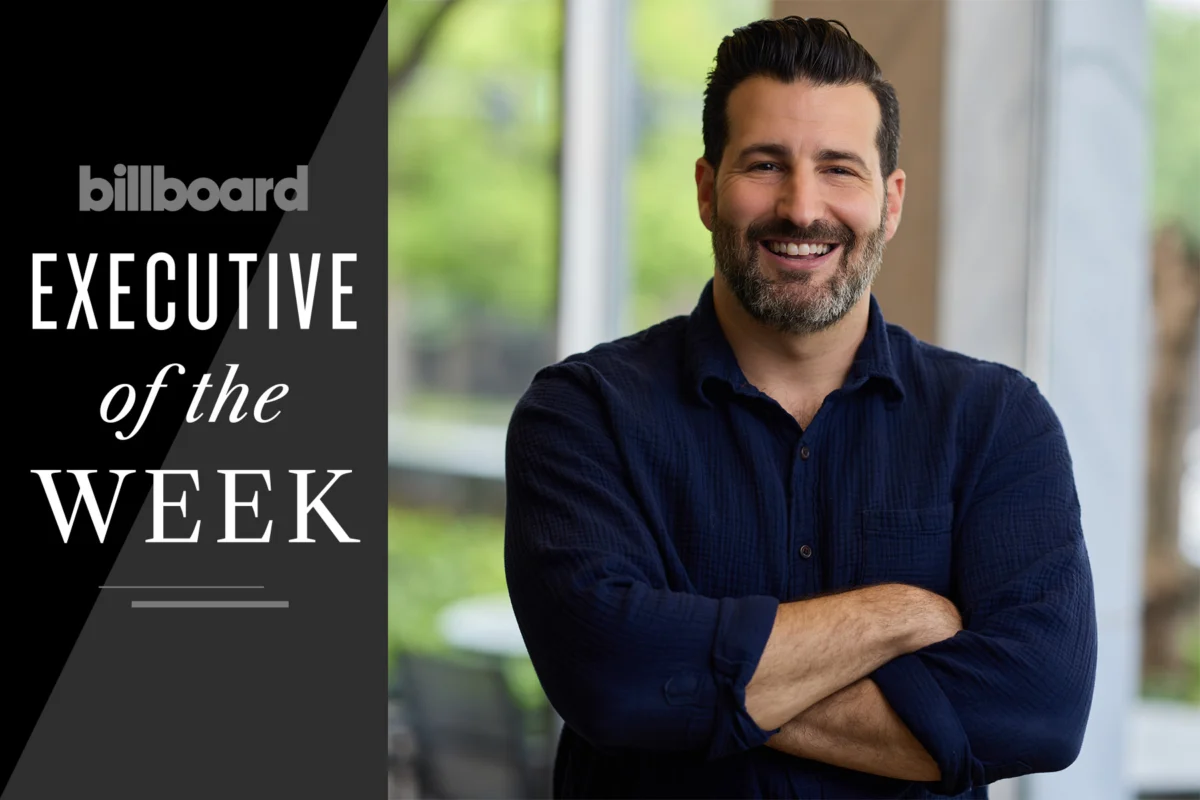
In the rapidly evolving ecosystem of the live music industry, the gap between faith-based artistry and mainstream rock nostalgia has historically been vast. Yet, in 2026, these two disparate worlds are being bridged by a singular force: Jeffrey Hasson. As co-head of UTA’s Nashville office and a recent Billboard Power 100 honoree, Hasson has become the architect behind two of the summer’s most significant tours. By orchestrating the meteoric rise of Forrest Frank and the milestone-heavy resurgence of Jimmy Eat World, Hasson has cemented his status as Billboard’s Executive of the Week, demonstrating that whether it is a stadium-filling gospel pop spectacle or a legacy rock anniversary, success is built on the same foundation of data-driven strategy and human-centric planning.
The Meteoric Ascent of Forrest Frank
The story of Forrest Frank is not merely one of musical talent; it is a masterclass in modern audience mobilization. On May 30, Frank’s single “Jesus Is Alive!” claimed the top spot on Billboard’s Hot Christian Songs chart, marking his second No. 1. However, his influence extends far beyond genre-specific charts.
Frank’s 2024 breakthrough album, Child of God, successfully breached the mainstream, securing a spot on the Billboard 200. Its successor, 2025’s Child of God II, debuted at No. 1 on the Top Christian Albums chart and maintained a presence that effectively rewritten the record books. With his projects spending a collective 45 weeks at the top of the Christian Albums chart, Frank has surpassed the long-standing benchmark set by Ye’s (formerly Kanye West) 2022 release, Donda.
This sustained chart dominance has translated into a live touring phenomenon: The Jesus Generation Tour. Selling over 470,000 tickets within a ten-day window, the tour is currently navigating a high-stakes itinerary that includes legendary venues such as New York City’s Madison Square Garden and Hersheypark Stadium.

Chronology of a Cultural Moment
The trajectory of the Jesus Generation Tour is a testament to the speed at which a digital-age artist can scale to arena-level success.
- 2024: Child of God introduces Frank to the mainstream, signaling a shift in the reach of contemporary Christian music.
- Early 2025: The release of Child of God II solidifies his market dominance, breaking longevity records on the Billboard charts.
- May 2026: “Jesus Is Alive!” hits No. 1, acting as the catalyst for the summer tour announcement.
- June 2026: The tour launches with massive momentum, hitting major markets including New York and Hershey, Pa.
- July–August 2026: The tour continues through the Pacific Northwest and the West Coast, with a scheduled finale at Globe Life Field in Arlington, Texas, on August 1.
Parallel to this, Jimmy Eat World is navigating a different, but equally compelling, timeline. Celebrating the 25th anniversary of their seminal 2001 album Bleed American—a record that sold over 1.7 million copies and spawned the enduring anthem “The Middle”—the band is currently touring amphitheaters and theaters. Kicking off at the iconic Red Rocks Amphitheatre on June 9, the tour serves as a masterclass in legacy management, proving that nostalgia remains one of the most bankable commodities in live music.
Supporting Data: The Anatomy of a Successful Tour
When analyzing why these two tours are succeeding, the data provides a clear picture of shifting consumer habits. For Forrest Frank, the evaluation of tour routing was not a guessing game. According to Hasson, the team utilized a robust framework of “historical sales data, genre growth metrics, market traffic, and internal metrics” to identify the specific cities where Frank’s fanbase was most concentrated.
For Jimmy Eat World, the strategy was rooted in prestige and venue curation. The decision to anchor the Bleed American anniversary run at Red Rocks was a deliberate move to set the "tone" for the summer. By securing an iconic venue, the band was able to elevate the tour from a simple retrospective to a cultural event.

The logistical complexity of summer 2026 cannot be overstated. With a crowded landscape featuring international sporting events like the World Cup, alongside a saturated festival market, the planning phase for these tours began over a year in advance. Hasson describes the process as a "complex puzzle," where the goal is to balance artist trajectory with the realities of global logistics.
Official Perspectives: Jeffrey Hasson on Strategy
In a recent discussion regarding his dual successes, Hasson provided insight into the philosophy that drives his decision-making at UTA.
On the "Heat Index" of Artists:
Hasson emphasizes that venue selection is a combination of art and science. "We have a good feel for the overall market and the career trajectory of the artist—their temperature or heat index at any given moment," he notes. By utilizing streaming data, social engagement, and historical ticket sales, the team can predict with high accuracy which venues will not only sell out but also provide the ideal environment for the fan experience.
On the Human Element of Touring:
Despite the overwhelming demand for more Forrest Frank dates, Hasson and his team made a deliberate choice to cap the expansion of the Jesus Generation Tour. "Family is extremely important to Forrest," Hasson explained. "We chose to make sure he could get back to them rather than extending further, and save that demand for the future." This decision highlights a growing trend in the industry: prioritizing artist longevity and mental well-being over short-term revenue spikes.

On Curating the Experience:
When asked about the role of the venue in a tour’s success, Hasson points to the symbiotic relationship between the artist and the room. "The band delivered an unbelievable performance [at Red Rocks], and it really set the tone for the entire tour, which has been brilliant night in and night out."
The Implications: What This Means for the Industry
The success of Jeffrey Hasson’s current roster reflects a broader shift in the live music business. We are entering an era where niche genres—specifically faith-based music—are shedding their peripheral status to command the same cultural weight as mainstream pop.
Furthermore, the "anniversary tour" model used by Jimmy Eat World suggests that the value of back catalogs has never been higher. As streaming continues to democratize access to older music, legacy acts are finding that their classic albums can still draw massive crowds, provided the tour is routed with the same precision and care as a rising star’s debut.
Ultimately, the success of these two distinct tours proves that while the market is increasingly reliant on data and complex logistics, the human element remains the deciding factor. Whether it is a sold-out stadium in Texas or a historic amphitheater in Colorado, the ability to read the "temperature" of the audience and respect the personal boundaries of the artist is what separates a successful tour from a legendary one. As Hasson continues to navigate the complexities of 2026, his work serves as a blueprint for how to build a career that is as sustainable as it is record-breaking.