
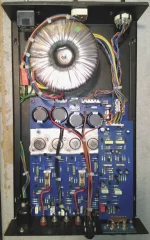
In the rapidly evolving world of high-fidelity audio, a quiet, decades-long debate has reached a new crescendo. As budget-friendly, high-performance Class D amplifiers—often affectionately dubbed "Chi-Fi" (Chinese Hi-Fi)—flood the market with impressive measurements and efficient power delivery, a dedicated cohort of audiophiles continues to invest in, repair, and cherish vintage equipment from the 1970s, 80s, and 90s.
This tension between the clinical efficiency of modern digital-switching amplification and the warm, repairable, and aesthetically iconic designs of yesteryear has sparked a lively discourse within the community. Is the preference for vintage hardware rooted in objective acoustic performance, or is it a nostalgic pursuit of design, tactile satisfaction, and the thrill of DIY maintenance?

The Core Conflict: Modern Efficiency vs. Vintage Soul
The central tension arises from a simple question: If modern Class D amplifiers, utilizing advanced chipsets like the Texas Instruments TPA3255, offer objectively lower distortion and higher power-to-size ratios, why does the "vintage" market remain so robust?
For many enthusiasts, the answer is multifaceted. Owners of classic gear, such as the legendary Cyrus 2 or QED A230, often point to a specific "sound signature" that they argue modern, sterile-sounding Class D boards fail to replicate. Others, however, argue that this is merely a case of preference for harmonic distortion—an additive "color" that some listeners find pleasing, despite it being technically inaccurate.

A Chronology of the Debate
The conversation, which recently gained significant traction on digital audio forums, follows a clear trajectory of inquiry and counter-argument:
- Initial Inquiry: The discussion began with a user expressing skepticism about the necessity of Class D upgrades. Having owned well-regarded vintage units, the user questioned whether the jump to modern, inexpensive high-efficiency boards was truly an upgrade or simply a different "rabbit hole" of consumerism.
- The Practical Argument: Early responses focused on the pragmatism of vintage ownership. Unlike modern integrated circuits, which are often "black boxes" that must be discarded if they fail, vintage amplifiers are discrete and repairable.
- The Performance Surprise: As the discussion evolved, users began reporting unexpected synergies. One user noted that replacing a standard amplifier with a Class D unit significantly improved the performance of DIY loudspeakers equipped with "raspy" piezo tweeters. The efficiency of the Class D amp helped tame the speakers’ resonances, a result that was largely unanticipated.
- The Philosophical Pivot: By the midpoint of the discussion, the debate shifted from acoustic performance to the ethics of "disposable" consumer electronics. Hobbyists expressed a disdain for the "buy-and-toss" culture, favoring the satisfaction of restoring an old, non-functional unit over buying a mass-produced, unrepairable modern board.
Supporting Data and Technical Perspectives
To understand why the debate is so polarized, one must look at the technical trade-offs between the two eras.

The Rise of Class D (Switching Amplifiers)
Modern "Chi-Fi" amplifiers leverage Class D technology, which switches transistors on and off at high frequencies. This leads to extremely high efficiency (often over 90%), minimal heat generation, and a very small physical footprint.
- Linearity: Modern chips like the TPA3255 exhibit exceptional linearity, which can "clean up" the sound of lower-quality speakers by exerting superior control over the drivers.
- Cost: The democratization of high-performance audio is perhaps the biggest selling point. A $100 Class D amplifier can often outperform a $2,000 amplifier from the 1980s in terms of signal-to-noise ratio and frequency response.
The Case for Vintage (Linear Power Supplies)
Vintage amplifiers typically employ Class AB designs with massive linear power supplies.

- Repairability: The circuits are usually composed of standard, through-hole components. A capacitor swap or a transistor replacement is a straightforward task for a hobbyist.
- Aesthetics: There is a consensus among enthusiasts that modern audio gear has become visually utilitarian—often housed in cheap aluminum shells—whereas vintage units feature brushed aluminum faceplates, heavy knobs, and tactile switches that provide a "luxury" user experience.
- Thermal Mass: The heavy transformers and heat sinks in vintage gear are seen as a sign of longevity and robustness, a stark contrast to the lightweight, plastic-heavy construction of many modern budget amps.
Community Perspectives: A Split in the Ranks
The discourse on forums suggests that the community is divided into three distinct camps:
- The Pragmatists: These individuals argue that the "sound" of an amplifier is a secondary concern to its ability to drive a speaker correctly. If a $150 Class D unit can control a difficult speaker load better than an old, failing unit, it is the superior piece of technology.
- The Restorationists: For this group, the joy is in the maintenance. As one user aptly noted, "There is nobody to stop you from fixing it even if it isn’t broken." They view the hobby as an extension of craftsmanship rather than just a means to consume music.
- The Traditionalists: These members maintain that the "soul" of music is lost in the digital-switching process. They believe that the lack of complex, high-quality power supplies in modern gear results in a thin, cold sound, regardless of what the measurements say.
Implications for the Future of Hi-Fi
The ongoing fascination with vintage gear carries significant implications for the audio industry.

The Death of "Disposable Audio"
As the DIY community continues to experiment with dropping modern, high-performance amplifier boards (like the LM3886) into old, high-quality vintage chassis, we are seeing a "hybridization" trend. This movement seeks to marry the best of both worlds: the robust, beautiful physical housing of a 1980s amplifier with the high-efficiency, low-distortion output of 2020s technology.
The Aesthetic Backlash
There is a growing dissatisfaction with the "minimalist" and "utilitarian" design trends of modern consumer electronics. Manufacturers who ignore the desire for tactile, beautiful, and substantial hardware do so at their own peril. The market for boutique, retro-styled amplifiers is expected to grow as younger generations discover the aesthetic appeal of analog controls.

The Role of Curiosity
Perhaps the most important takeaway is that the debate is driven by curiosity. The willingness of hobbyists to compare a $50,000 legacy system against a $100 modern board highlights a healthy, inquisitive culture. It suggests that while the industry moves toward digital efficiency, the human element—the tactile connection to the music—remains a non-negotiable requirement for the true audiophile.
Conclusion: The Path Forward
Whether one chooses to embrace the cutting-edge efficiency of Class D or the nostalgic, repairable charm of a restored vintage unit, the debate ultimately underscores the subjective nature of the audio experience.

For the newcomer, the advice from the community is clear: do not let technical specs be the sole arbiter of your decision. If you value the "look and feel" of a classic piece of gear, there is no shame in choosing vintage. If you are chasing the purest possible signal reproduction on a budget, the modern Class D revolution is an undeniable miracle of engineering.
The "rabbit hole" is deep, but for those who value the intersection of history, electronics, and sonic performance, it is a journey well worth taking. As the technology continues to bridge the gap between old and new, the most successful audio enthusiasts will likely be those who refuse to choose one path exclusively, opting instead to blend the reliability of the new with the artistry of the old.


