In an effort to salvage its tarnished reputation and restore customer trust, Sonos has announced a significant redesign of its mobile application. This overhaul, scheduled to debut in a beta format, represents the most substantial course correction the multi-room audio pioneer has undertaken since its disastrous software update in April 2024.
The upcoming refresh aims to address fundamental user experience (UX) failures by streamlining navigation, introducing more intuitive volume controls, and abandoning non-standard interface elements that have frustrated users for months. Rather than forcing a mandatory update on its entire user base, Sonos is adopting an opt-in beta testing model, allowing loyalists to test the changes and toggle them off if they prefer the current layout.
1. Main Facts: The Core of the Software Refresh
The upcoming update is not a ground-up rebuild of the Sonos application, but rather a fundamental restructuring of how users interact with their existing systems. Sonos leadership has characterized the update as "a new way of navigating Sonos inside the app you already have."
The redesign is built around three primary pillars:
- Simplified Navigation: Sonos is eliminating the complex, gesture-heavy navigation model that defined the April 2024 release. In its place, the company is introducing a traditional, highly visible three-tab navigation bar at the bottom of the screen, featuring dedicated tabs for Home, System, and Search.
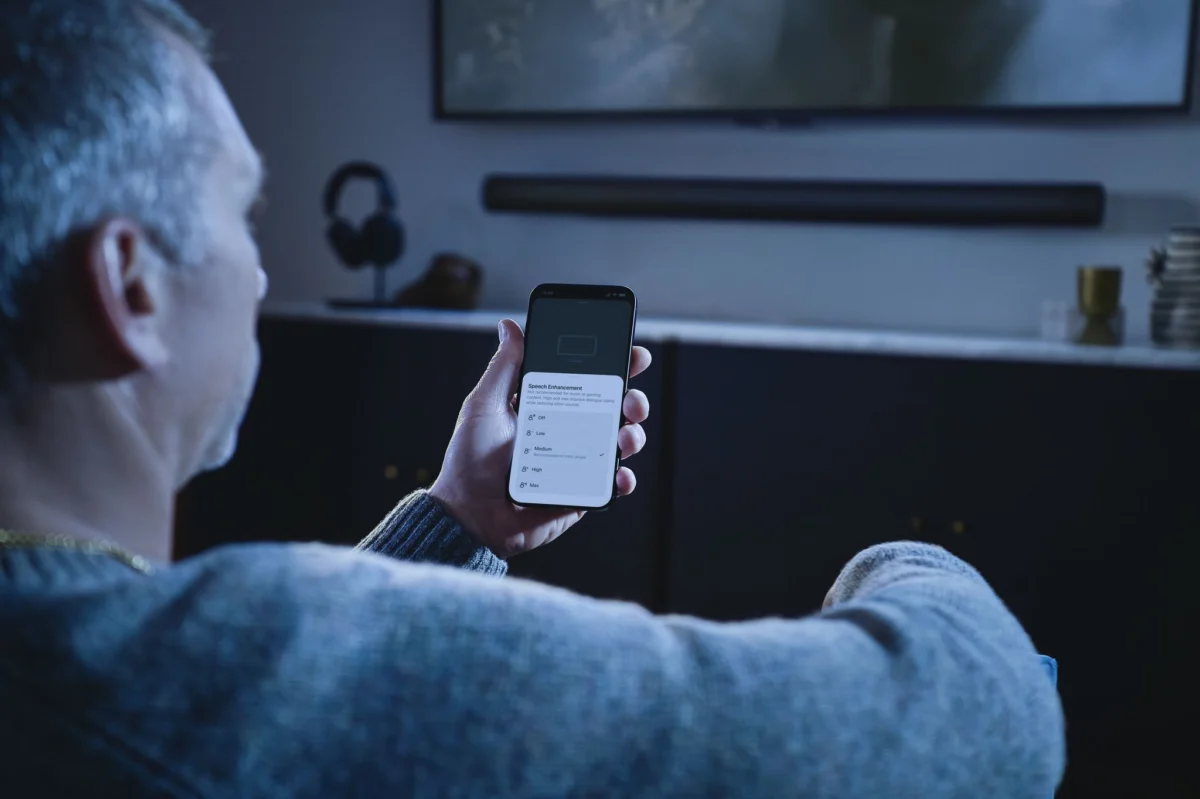
- Re-engineered Volume Controls: Adjusting the volume—one of the most basic yet highly criticized functions of the current app—is receiving a complete overhaul. The new interface features a more tactile, easily adjustable slider accompanied by dedicated physical-style buttons for precise fine-tuning. Additionally, the system introduces a more reliable mechanism for synchronizing volume across grouped rooms.
- Customization and Control: Users will gain greater authority over how their speaker zones and players are displayed and prioritized. The update also reinstates highly requested minor features, such as the ability to delete tracks from a playlist using a simple swipe gesture, alongside a redesigned "Now Playing" screen.
The rollout will begin as a voluntary beta program. Users who opt in will have the ability to toggle the new interface on or off via the app’s settings menu, giving Sonos the opportunity to gather telemetry data and user feedback before making the layout the default standard.
2. Chronology: The Timeline of a Corporate Crisis
To understand the weight of this upcoming release, one must examine the chain of events that brought Sonos to this critical juncture. For over a decade, Sonos was regarded as the gold standard of multi-room home audio, celebrated for its seamless "it just works" user experience. That reputation was severely compromised over the course of 2024.
[April 2024] ----------------> [May 2024] ------------------> [Summer 2024] -------------> [Late 2024]
Disastrous App Redesign        Launch of Sonos Ace            Executive Apologies &      Tom Conrad Announces
Launched alongside Ace         Headphones; Backlash Peaks     Delayed Product Launches   Major UX Course Correction
April 2024: The Fateful Redesign
In anticipation of its entry into the highly competitive wireless headphone market, Sonos completely overhauled its mobile application. The redesign was intended to modernize the interface and accommodate the unique bluetooth-to-wi-fi handoff capabilities of its upcoming hardware. Instead, the release was met with immediate, widespread condemnation. Users reported missing core features—such as alarms, sleep timers, local library access, and playlist editing—alongside severe latency issues, system dropouts, and accessibility failures.
May 2024: The Sonos Ace Launch
Sonos officially launched the Sonos Ace, its premium $449 wireless headphones. While the hardware itself received lukewarm-to-positive reviews for its build quality and active noise cancellation, its launch was severely overshadowed by the broken software ecosystem. Customers who purchased the headphones found themselves struggling to connect them to their existing home theater setups due to the unstable app, turning a landmark hardware launch into a public relations liability.
Summer 2024: Crisis Management and Delayed Pipelines
As consumer outrage intensified, Sonos CEO Patrick Spence issued a formal public apology, promising a bi-weekly update cadence to restore missing features. The software crisis had severe financial implications; Sonos was forced to delay two highly anticipated hardware launches—including a rumored flagship soundbar—to redirect its entire engineering staff toward fixing the app.
Late 2024: The Shift to Community-Driven Development
Recognizing that incremental bug fixes were not enough to address the fundamental usability issues of the app, Sonos leadership shifted strategy. Tom Conrad, a key executive at Sonos, took to public forums like Reddit to directly engage with disgruntled users, culminating in the announcement of the upcoming navigation overhaul.
3. Supporting Data: Technical and Usability Breakdowns
The impending update is a direct response to qualitative and quantitative usability data gathered by Sonos engineers. According to executive statements, the development team spent "hundreds of hours" observing real-world users interacting with the current app to identify critical friction points.
Key Usability Pain Points Identified by Sonos:
- Over-reliance on Gestures: The April redesign relied heavily on "swipe-up" gestures to reveal system configurations and speaker groupings. Testing revealed that users found these gestures unintuitive, frequently triggering them accidentally or failing to find them entirely.
- Cluttered Content Cards: The home screen was dominated by numerous dynamic "content cards" from linked streaming services. This layout overwhelmed users who simply wanted to control their physical hardware.
- Non-Standard Navigation Elements: The app utilized custom "close" boxes (represented by an ‘X’) in areas where mobile OS design guidelines (iOS and Android) dictate a standard "back" arrow. This created cognitive dissonance for users accustomed to native platform behaviors.
| Metric / Feature | Pre-April S2 App | April 2024 Redesign | Upcoming Late 2024 Refresh |
|---|---|---|---|
| Navigation Model | Tab-based (Bottom Bar) | Gesture-based (Single Screen) | Hybrid 3-Tab Layout (Home, System, Search) |
| Volume Control | Dedicated slider per room | Nested sliders / Gesture-dependent | Tactile slider with step-buttons & group sync |
| Feature Completeness | High (Stable legacy features) | Low (Alarms, local library missing at launch) | Medium-High (Iterative restoration & UX fixes) |
| User Onboarding | Intuitive | High friction / Steep learning curve | Simplified / Platform-native design standards |
By transitioning to a static three-tab layout, Sonos is aligning its app with native iOS and Android human interface guidelines. The physical-style volume adjustment buttons address a common accessibility complaint: touch-screen sliders are notoriously difficult to operate for users with motor control difficulties or those attempting to adjust volume quickly without looking at their screens.
4. Official Responses: Leadership Commits to a New Philosophy
The announcement of the redesign has been accompanied by a notable shift in corporate tone. Historically protective of its proprietary designs, Sonos has adopted a more humble, community-centric communication style.
Writing on the r/sonos subreddit, Tom Conrad emphasized that this update represents a permanent change in how the company approaches product development:
"This is the beginning of a different way of working here at Sonos, where what gets built, and in what order, is shaped by the conversations here and with all our customers."
Conrad openly acknowledged that the team’s extensive observation of users revealed deep-seated issues that could not be resolved by simple bug patches. The decision to launch the update as an opt-in toggle is a direct concession to a user base that feels burned by sudden, forced changes. By allowing beta testers to provide feedback before a global rollout, Sonos hopes to prevent another catastrophic deployment.
Industry analysts view this as a necessary, albeit late, realization. The company’s previous leadership structure faced heavy criticism for pushing ahead with the April app release despite internal warnings that the software was not ready for commercial deployment.
5. Implications: The Stakes for Sonos and the Smart Audio Market
The success of this software update will likely dictate the financial trajectory of Sonos for the next several fiscal years. The implications of this release stretch far beyond user convenience:
Brand Equity and Consumer Trust
Sonos built its business on a premium pricing model justified by premium software integration. When that software failed, the value proposition of its expensive hardware collapsed. If this update successfully restores usability, Sonos may stem the tide of customers migrating to competing ecosystems. If it fails, or introduces new bugs, the damage to the brand’s reputation could be permanent.
Hardware Ecosystem Drag
The software crisis severely depressed sales of Sonos hardware. Consumers are hesitant to buy into an ecosystem when the central controller app is deemed unusable. Reinvigorating the app is a prerequisite for driving sales of existing products like the Era 100, Era 300, and Move 2, as well as rescuing the commercial prospects of the Sonos Ace headphones.
Competitive Pressures
The smart audio landscape has grown increasingly crowded. While Sonos faltered, rivals like Apple (with the HomePod ecosystem), Bluesound, Denon HEOS, and WiiM capitalized on the opportunity, positioning themselves as stable, reliable alternatives. WiiM, in particular, has gained market share by offering budget-friendly streaming hardware backed by a highly responsive, stable application.
Ultimately, Sonos’s upcoming app refresh is a high-stakes acknowledgement that in the modern smart home market, hardware is only as good as the software that controls it. Whether these design changes will be enough to win back the hearts of disillusioned audiophiles remains to be seen, but it represents the first logical step the company has taken in its long road to recovery.