PARIS, FRANCE — In the high-stakes environment of prime-time reality television, where a single audio glitch can disrupt a performance seen by millions, technical reliability and sonic excellence are non-negotiable. For the latest season of the acclaimed French reality singing competition The Voice – La plus belle voix, the production team reached a new pinnacle of audio engineering by deploying a sophisticated network of four Solid State Logic (SSL) Live L550 Plus mixing consoles.
The season, which culminated in a spectacular finale and the crowning of 19-year-old Swiss prodigy Lady O as the winner, showcased not only the vocal prowess of its contestants but also the formidable capabilities of modern digital audio networking. Orchestrated by industry-leading integration specialists and sound engineers, the production utilized SSL’s proprietary technology to manage a complex ecosystem of orchestral music, live vocals, and broadcast requirements.
I. Main Facts: A Quad-Console Architecture for Peak Performance
The audio infrastructure for The Voice France was designed to handle the immense pressure of live television while maintaining the studio-quality sound that has become the hallmark of the Solid State Logic brand. The backbone of this setup consisted of four SSL Live L550 Plus consoles, strategically distributed across different roles to ensure redundancy, clarity, and ease of operation.
The Technical Alliance
The deployment was a collaborative effort involving three major entities in the European professional audio sector:
- Algam Enterprise: The professional sound, video, and lighting solutions provider that supplied the SSL hardware.
- S Group: The Alès-based touring events and integration specialist responsible for the technical execution and live broadcast support.
- TF1: The French commercial television network that serves as the home for The Voice, requiring a broadcast mix that meets rigorous national loudness and quality standards.
The Networked Backbone
Central to the operation was SSL’s Blacklight II MADI system. This high-bandwidth, ultra-low-latency protocol allowed all four consoles to remain perfectly synchronized. By linking the consoles over a unified digital network, the team ensured that audio sources could be shared across the monitors, front-of-house (FOH), and broadcast suites without the signal degradation typically associated with traditional analog splits or complex multi-stage conversions.
II. Chronology of Workflow: From Rehearsals to the Grand Finale
The production cycle of The Voice is notoriously demanding, moving from the "Blind Auditions" to the "Battles" and finally the "Live Shows." Each phase requires a different approach to audio management. As the season progressed toward the finale won by Lady O, the workload was meticulously divided among the four L550 Plus consoles.
Stage 1: The Monitor Foundation
The signal chain began at the monitor desk. In this configuration, the monitor console acted as the "master" for the musical elements. According to lead audio engineer Jean-Marc Aringoli, the monitor console was responsible for sending out the primary sources—predominantly the orchestra and backing tracks—while also setting the initial gains for these elements. This ensured that the musicians and singers had a consistent, high-fidelity reference point, which is critical for the pitch-perfect performances required on the show.
Stage 2: The Broadcast Split
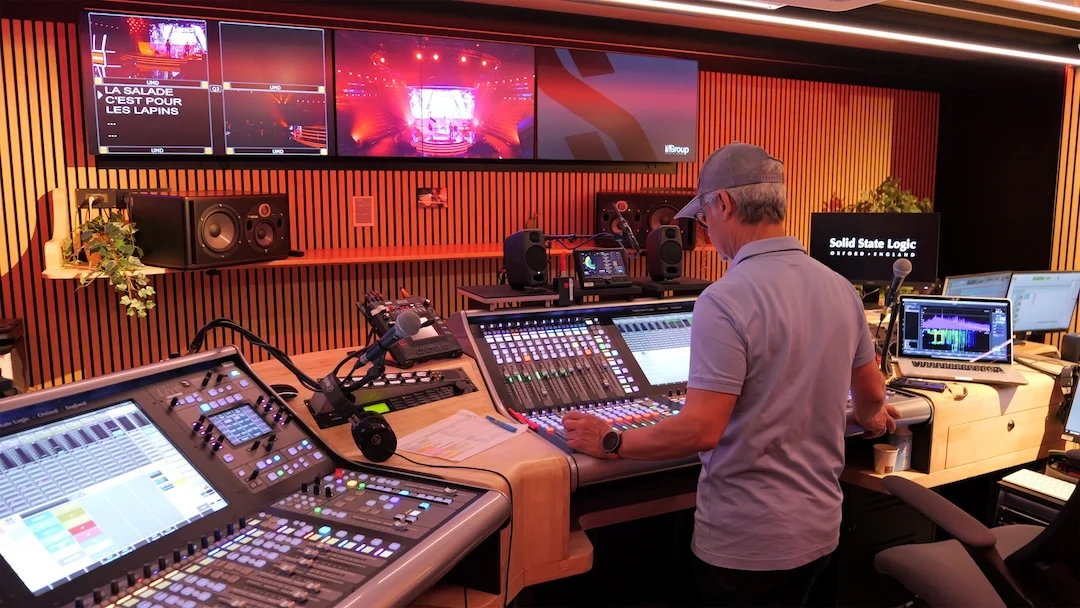
Once the signals left the stage and monitor environment, they were routed to the audio control room at Studio du Lendit in Paris. Here, the workload was split between two dedicated broadcast consoles:
- The Music Console: This desk was dedicated solely to building the instrumental bed. It processed the orchestra, drums, and synthesizers, creating a rich, cinematic musical foundation.
- The Final Mix Console: This console took the stereo output from the music desk and layered the "money channels"—the lead vocals, backing vocals, and the host’s microphone—on top. This separation allowed the engineers to apply heavy processing or adjustments to the music without affecting the clarity of the contestants’ voices.
Stage 3: Front of House and Real-Time Reaction
While the broadcast mix was being prepared for TF1’s viewers, the Front of House (FOH) position focused on the studio audience experience. Crucially, the FOH engineer maintained independent control over the vocal preamps. This allowed for instantaneous reactions to the dynamic range of the performers, ensuring that the vocals remained "out front" and met the strict loudness requirements of French television.
III. Supporting Data: The Power of the SSL Live L550 Plus
The choice of the SSL Live L550 Plus was not incidental. The console is renowned in the industry for its "SuperAnalogue" heritage, providing a warmth and depth of sound that is often difficult to achieve in purely digital environments.
Technical Specifications and Capabilities
- Processing Power: The L550 Plus features an immense amount of path capacity, allowing for up to 288 mix paths (144 fully processed, 144 dry) at 96kHz. This was vital for The Voice, which often features a full live band, multiple backing vocalists, and complex routing for communication (IFB) and monitoring.
- The Blacklight II MADI System: This system allows for the transport of up to 256 channels of bi-directional audio at 96kHz over a single fiber-optic cable. In a fast-paced TV environment, reducing the cable footprint while increasing channel count is a significant logistical advantage.
- User Interface: The console’s multi-gesture touchscreens provided the engineers at Studio du Lendit with a "Tablet-style" workflow, allowing them to pinch-to-zoom and swipe through channels during high-pressure live moments.
- Loudness Compliance: With integrated tools for monitoring signal levels, the SSL consoles helped the team adhere to EBU R128 loudness standards, ensuring that the transition between the singing performances and commercial breaks was seamless for the home viewer.
IV. Official Responses: Insights from the Engineering Team
The success of the season’s audio production was largely attributed to the "division of labor" strategy enabled by the SSL ecosystem. Jean-Marc Aringoli, a veteran of the production, emphasized the importance of control hierarchy in his technical assessment.
"It is the monitor console that sends out sources—mainly everything to do with the orchestra and music—and it sets the gains for us," Aringoli explained. This setup allows the rest of the chain to receive a clean digital feed, minimizing the risk of "gain fighting" between different engineers.
However, Aringoli highlighted one critical exception to this rule: the lead vocals.
"The only thing where I have control over preamps at FOH is the vocals," Aringoli noted. "That is what I need in order to react very quickly, to have control over the gains to provide the broadcast with a level that is consistent with the loudness requirements. Because contestants’ vocals are being judged both in the TV studio and by the viewing public, the voice must always be present and out front."
This philosophy—treating the vocal as a sacred, independent element—is what allowed the show to maintain its emotional impact. Whether Lady O was performing a delicate ballad or a powerful anthem, the SSL L550 Plus provided the headroom and transparency to ensure her talent was the focal point.
V. Implications: The Future of Live Broadcast Audio
The successful execution of The Voice France Season 13 (and the crowning of Lady O) serves as a case study for the evolving landscape of live broadcast audio. Several key implications emerge from this production:
1. The Necessity of Distributed Processing
As television productions become more complex, the "all-in-one" mixing approach is becoming obsolete. By distributing the workload across four consoles, S Group and Algam Enterprise demonstrated that specialized roles (Music Mix vs. Final Assembly) lead to a higher quality end product. This prevents "sonic clutter" and allows engineers to focus on the nuances of their specific tasks.
2. High-Fidelity in the Streaming Era
With more viewers watching The Voice via high-definition streaming services and sophisticated home theater systems, the demand for studio-quality broadcast audio has never been higher. The use of SSL’s SuperAnalogue technology ensures that the "warmth" of a recording studio is translated to the living room, bridging the gap between live performance and a polished studio record.
3. Reliability as a Creative Tool
The stability of the Blacklight II MADI link and the L550 Plus hardware allowed the creative team to take risks. When engineers aren’t worried about system crashes or latency issues, they can focus on the artistry of the mix—using the SSL’s onboard FX rack and bus compressors to enhance the musicality of the show.
4. A Milestone for the French Industry
The collaboration between S Group and Algam Enterprise reinforces France’s position as a hub for technical excellence in broadcasting. Studio du Lendit continues to be a premier venue for large-scale productions, proving that when world-class talent is paired with world-class hardware like Solid State Logic, the results are nothing short of transformative.
Conclusion
As Lady O begins her career following her victory, she does so backed by a performance that was captured with the highest degree of technical integrity. The use of four SSL Live L550 Plus consoles on The Voice – La plus belle voix was more than just a technical choice; it was a commitment to the art of the human voice. In the world of reality TV, where everything is fleeting, the sonic foundation provided by SSL ensured that this season would be remembered for its clarity, its power, and its uncompromising quality.