Introduction: A Routine Production Becomes a Historical Tragedy
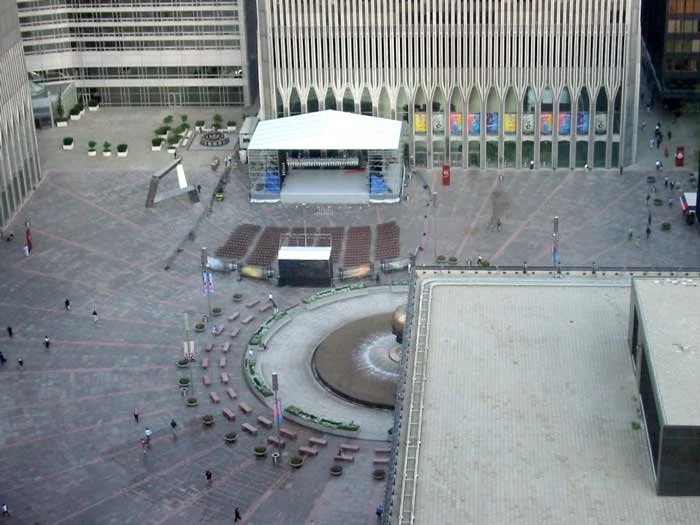
On the morning of September 11, 2001, the production team at RSA Audio, a Long Island-based sound reinforcement company, was preparing for what they believed would be another routine day of work. They were in the midst of an 11-day dance and performance festival titled Evening Stars—On Stage at the Twin Towers. The event, which had brought vibrant energy and music to the base of the World Trade Center, was designed to celebrate culture in the heart of New York City’s financial district.
However, as the world knows, that Tuesday morning shifted from a celebration of the arts to an unimaginable national tragedy. While the entire country reeled from the terror of the attacks, the staff and leadership of RSA Audio found themselves uniquely positioned at the epicenter of the catastrophe. Their experience—one of professional loss, personal survival, and the surreal dissonance of a world changing in an instant—offers a poignant, often overlooked perspective on the events of 9/11.
The Morning of September 11: A Chronology of Survival
To understand the impact on RSA Audio, one must look at the timeline of that morning. The production staff—including a production manager, a production accountant, four stagehands, and a runner—were already on-site or in the immediate vicinity of the Twin Towers, preparing for the day’s scheduled activities.
The First Impact
At 8:46 a.m., when American Airlines Flight 11 struck the North Tower, the world shifted. For those at the base of the towers, the sound was not merely a noise; it was an atmospheric event. The production manager, referred to by RSA co-owner Joe Light as "Tony," was positioned outside the towers when the initial impact occurred.
The Escape
As debris began raining down and the sheer scale of the horror became apparent, the RSA crew was forced into a desperate scramble for safety. According to Light, the crew’s call time was set for 11:00 a.m., meaning the bulk of the technical team had not yet arrived. Those already present, however, witnessed the immediate chaos. Tony, covered in the blood of a stagehand who had suffered an ear laceration from flying glass, and coated in the thick, gray soot that would soon define the landscape of Lower Manhattan, managed to flee the immediate vicinity.
The Surreal Subway Ride
Perhaps the most jarring aspect of the crew’s survival was the disconnect between the disaster unfolding at the World Trade Center and the rest of the city. As Tony retreated into the subway system, he encountered commuters who were entirely oblivious to the catastrophe. He attempted to warn tollbooth attendants and fellow passengers, only to be dismissed as a "crazy man." Because the train had been traveling underground, the passengers remained in a bubble of normalcy, unaware that the skyline of their city was currently being erased. It was only when Tony arrived home and turned on his television that the gravity of what he had survived—and the reality of the buildings collapsing—truly settled in.
The Loss of Assets: A Professional Perspective
While the survival of the staff was the primary miracle, the professional toll on RSA Audio was absolute. In the pro audio industry, equipment is more than just hardware; it is the lifeblood of a company.
Total Equipment Obliteration
Joe Light, co-owner and vice president of RSA Audio, described the loss in stark, haunting terms during an interview with Pro Sound News. The company had invested heavily in the Evening Stars festival, deploying a comprehensive system that included:
- High-end mixing consoles
- Multicore cable snakes
- Professional-grade monitors
- Microphone arrays and stands
- Digital Audio Tape (DAT) recorders
- Wireless transmission systems
Initially, Light held onto a slim, perhaps optimistic, hope. "Your instinct is to lock the door of the production trailer behind you, to make sure that things stay put," Light recalled. "Well, now there are 110 stories on top of that production trailer." His initial hope—that the gear might be salvaged, perhaps waterlogged by firefighters’ hoses but ultimately intact—was shattered when he watched the towers collapse on television. When a colleague suggested they might "dig it out of the rubble," Light’s response was immediate and crushing: "Rubble? Look at what just came down on it!"
The equipment was not merely damaged; it was pulverized under the weight of millions of tons of steel and concrete. It was a total, irrecoverable loss.
The Pro Audio Industry’s Response to 9/11
The tragedy faced by RSA Audio was a microcosm of a larger movement within the live sound and entertainment industry. In the weeks following the attacks, the spirit of solidarity within the professional audio community was unprecedented.
A Nationwide Effort
As news of the destruction spread, hundreds of live sound professionals across the United States volunteered their services, equipment, and time. Benefit concerts were organized in major cities from Los Angeles to Chicago to Boston, aimed at raising funds for the families of victims and first responders.
The pro audio industry, often characterized by its competitive nature and high-pressure work environments, pivoted instantly. Companies that were normally rivals shared resources, provided equipment at cost, and worked around the clock to support memorial events. For RSA Audio, the support was a reminder that while their gear had been lost to the dust of Ground Zero, their professional community remained a resilient, connected network.
Implications: The Long-Term Effects on Event Production
The events of September 11 irrevocably changed the landscape of live event production in the United States, particularly in urban centers.
Security and Protocol
Before 2001, security at public events was often lax, focused primarily on crowd control and ticket validation. After 9/11, the "production trailer" mentality changed. RSA Audio’s experience underscored the vulnerability of outdoor production setups. In the years following, the industry saw:
- Enhanced Security Screening: Implementation of rigorous bag checks and perimeter security for even small-scale outdoor events.
- Logistical Contingencies: Production companies began factoring in "worst-case scenario" insurance and evacuation planning as core components of their contracts.
- Technological Shifts: A move toward more portable, modular equipment that could be moved quickly if a site needed to be cleared in an emergency.
The Emotional Weight of the Industry
The tragedy also left a psychological mark on those who worked in the industry. For RSA Audio, the loss was not just financial; it was a trauma associated with the very tools of their trade. Many sound engineers and stagehands who worked in NYC in the early 2000s struggled with the memory of the "missing" gear and the realization that their place of work had been a target. The story of RSA Audio became a parable within the industry—a reminder that a sound check can be interrupted by history, and that the people behind the mixing board are as susceptible to the world’s volatility as anyone else.
Conclusion: Honoring the Memory
The story of RSA Audio on September 11, 2001, serves as a bridge between the technical world of professional sound and the human story of the terror attacks. It highlights the surreal nature of that day—the way an ordinary morning shift transformed into a fight for survival, and how the loss of physical objects eventually gave way to the much more profound loss of life and normalcy.
While the equipment was buried under the debris of the Twin Towers, the resilience of the RSA Audio team and their colleagues in the pro audio industry stands as a testament to the character of those who work in the shadows of the stage. They were witnesses to the dust, the noise, and the silence that followed, and their story remains an essential part of the tapestry of 9/11—a reminder that even in the most catastrophic circumstances, the human spirit continues to strive for the next performance, the next note, and the next day.