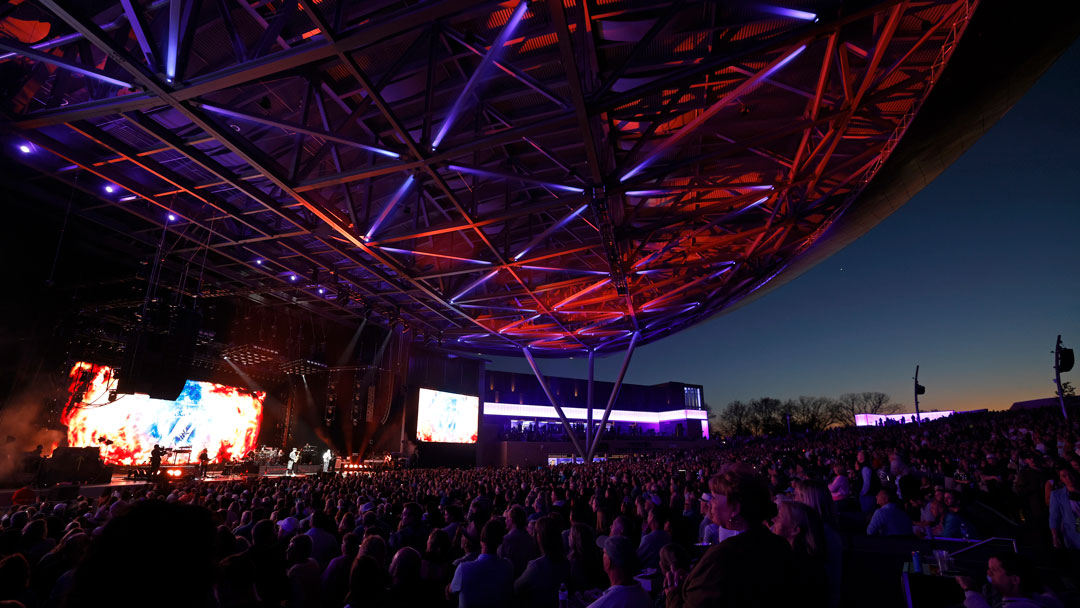
Since its grand opening in May 2026, the $184 million Acrisure Amphitheater in Grand Rapids, Michigan, has been hailed as a transformative crown jewel for the city’s downtown waterfront. However, the 12,000-capacity venue has found itself at the center of a growing firestorm, not over its architectural ambition or economic promise, but over the sheer volume of its acoustic footprint. As residents miles away report being unwilling audience members to nightly performances, the venue is now facing a legal reckoning that could redefine how major outdoor amphitheaters operate in urban environments.
The Genesis of a Dispute: Main Facts
The Acrisure Amphitheater was designed to serve as a catalyst for tourism and cultural engagement along the Grand River. Yet, the physics of sound has proven to be a difficult variable to control. Residents living in surrounding neighborhoods—some located significant distances from the venue—have reported that the facility’s sound system, particularly the low-end frequencies, propagates down the river corridor with alarming clarity.
The core of the issue lies in the nature of sound propagation. While high-frequency sounds are easily absorbed or blocked by physical barriers, low-frequency sounds (bass) possess long wavelengths that can travel vast distances, bending around obstacles and penetrating structural barriers. Residents have described an experience where the lyrics of performances and the concussive thumping of kick drums are clearly audible inside their homes. In some extreme instances, local reports suggest that Sound Pressure Levels (SPL) have reached as high as 98 dB inside private residences—a volume level that constitutes a significant disruption to daily life.
A Chronology of the Friction
The tension between the amphitheater and the public was not immediate, but it accelerated quickly following the venue’s May 15, 2026, inaugural concert featuring Lionel Richie.
- May 2026: The amphitheater opens to significant fanfare. Initial community feedback is largely focused on the aesthetics of the venue, but complaints regarding late-night noise begin to trickle into city offices within weeks.
- Summer 2026: As the concert season reaches its peak, the intensity of the complaints grows. Residents form informal coalitions, documenting the frequency and intensity of the noise.
- Late Summer 2026: Local authorities initially push back against the complaints, citing an "entertainment exemption" in the city’s municipal code that ostensibly shields the venue from standard noise ordinances.
- September 2026: The conflict moves to the courtroom. A Kent County Circuit Judge issues a landmark ruling, determining that the amphitheater is not immune to city noise restrictions. The ruling mandates that the venue must adhere to the city’s established quiet hours, which begin at 10:00 p.m.
The Technical Reality: Why Bass Wins
For audio engineers and acousticians, the situation in Grand Rapids is a textbook case of "low-frequency escape." When sound systems are tuned for massive, open-air venues, the challenge is keeping that energy contained within the "bowl" of the audience seating area.
When those frequencies escape, they don’t just travel; they settle. Because bass frequencies are omnidirectional, they propagate in a sphere rather than a focused beam. The Grand River acts as an acoustic waveguide, carrying these vibrations far beyond the immediate downtown vicinity. For the nearby condo owners, this means that even if the venue attempts to EQ their systems to favor mid-range frequencies, the bass-heavy "thump" of a modern live mix remains a constant, intrusive presence in their living rooms.
Official Responses and Judicial Intervention
The legal landscape shifted dramatically in September 2026. City officials had long maintained that the amphitheater’s status as a major regional economic driver necessitated a degree of flexibility regarding noise. However, the Kent County Circuit Court’s decision signaled a shift in the legal balance of power. By ruling that the amphitheater must comply with the 10:00 p.m. to 7:00 a.m. quiet hours, the judge effectively challenged the venue’s current operational model, which regularly features performances extending until 11:00 p.m. or later.
The city and venue operators are now in a precarious position. Complying with a 10:00 p.m. curfew requires a radical rethink of scheduling, load-in/load-out procedures, and set-length management. For a high-budget, high-capacity venue, every hour of performance time represents significant revenue and contractual obligations to touring artists who are accustomed to later stage times.
The "Pac Amp" Precedent: A Path Forward?
While the situation in Grand Rapids appears dire, it is not without historical precedent. The Pacific Amphitheater in Costa Mesa, California, offers a compelling case study. In the 1990s, the venue was forced to shut its doors for nearly a decade due to exhaustive, protracted litigation brought by local residents regarding noise pollution.
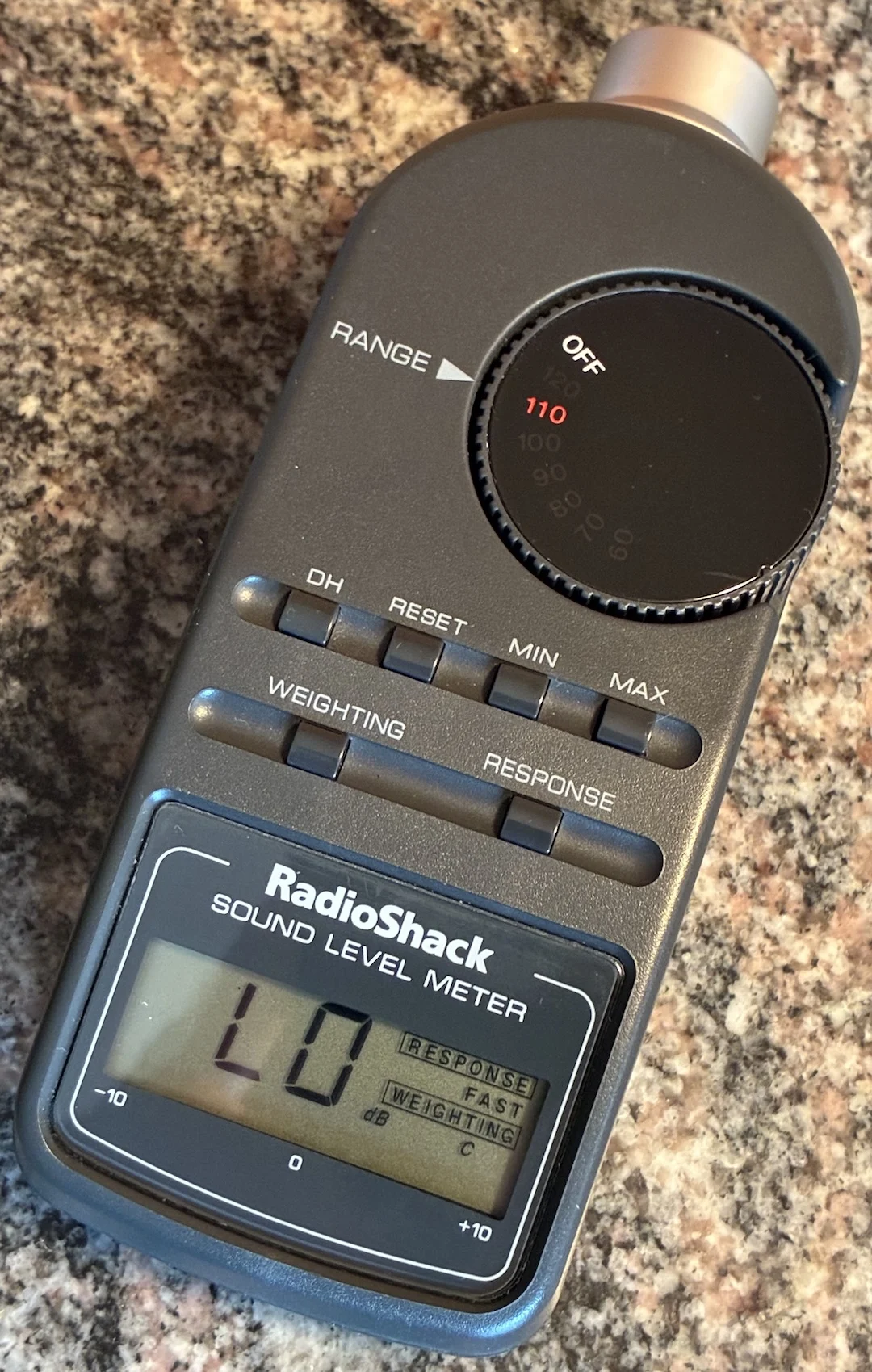
When it reopened in 2003, it did so under a strictly regulated framework. The venue implemented a hard 10:00 p.m. curfew, which is now enforced with rigid professionalism. Furthermore, the venue established a maximum SPL limit at the rear wall of the bowl—specifically 86 dB. Any sound that exceeds this threshold is considered a violation, and the venue actively monitors these levels throughout every performance. Engineers who attempt to push the volume beyond these limits are immediately flagged, and in some cases, fined.
This model has proven effective. By turning the noise management from a "suggestion" into a "contractual requirement," the Pacific Amphitheater has successfully integrated into its community.
Implications for Modern Live Sound
The conflict in Grand Rapids highlights a broader evolution in the concert industry. Modern line array systems—the vertical stacks of speakers commonly seen at large festivals and amphitheaters—are capable of unprecedented sonic precision. Through advanced DSP (Digital Signal Processing) and beam-steering technology, sound engineers can effectively "aim" audio to hit the audience while minimizing spill into the sky or surrounding areas.
However, technology alone is not a panacea. It requires a fundamental shift in the culture of live event production. For years, the industry has operated under the assumption that "louder is better," a mentality that is increasingly at odds with the realities of urban density.
The implications for the Acrisure Amphitheater are clear:
- Strict Enforcement: The venue must adopt real-time SPL monitoring that is transparent to the public and independent of the venue’s internal operations.
- Structural Mitigation: Further investment in acoustic baffling or structural adjustments at the rear of the stage may be necessary to deflect low-frequency energy away from residential zones.
- Scheduling Reform: The 10:00 p.m. curfew must become the standard, not the exception. While this may necessitate earlier start times, it is a necessary compromise to ensure the long-term viability of the venue.
Conclusion: Finding the Middle Ground
The residents of Grand Rapids are not asking for the death of their city’s music scene; they are asking for a reasonable expectation of quiet within their own homes. Conversely, the Acrisure Amphitheater provides a vital cultural and economic service to the region.
The path to resolution is not found in more litigation, but in the adoption of strict, industry-standard noise management protocols. By looking to the successes of venues like the Pacific Amphitheater, the management of the Acrisure can transform this conflict into a blueprint for modern, responsible venue operation. The music does not have to stop, but for the sake of the neighbors, it must be better managed. If they can bridge this gap, the Acrisure Amphitheater may yet become the gold standard for how urban entertainment spaces can exist in harmony with the communities they serve.