Main Facts
Horror cinema’s most suave and influential creature of the night is preparing to stalk the screen once more. Hammer Films’ iconic 1958 adaptation of Dracula—starring the legendary Christopher Lee as the titular count and Peter Cushing as his relentless nemesis, Dr. Van Helsing—is being resurrected for a state-of-the-art 4K Ultra HD Blu-ray release and a nationwide theatrical run in the United Kingdom this October.
Handled by the restoration specialists at Silver Salt Restoration in collaboration with Hammer Films, this definitive new edition goes far beyond a standard digital polish. The upcoming release incorporates approximately three minutes of long-lost footage originally exclusive to the film’s Japanese theatrical release in 1958. These newly integrated sequences restore gore and narrative beats that shocked audiences over six decades ago, offering modern horror aficionados a radically complete version of a foundational cinematic text.
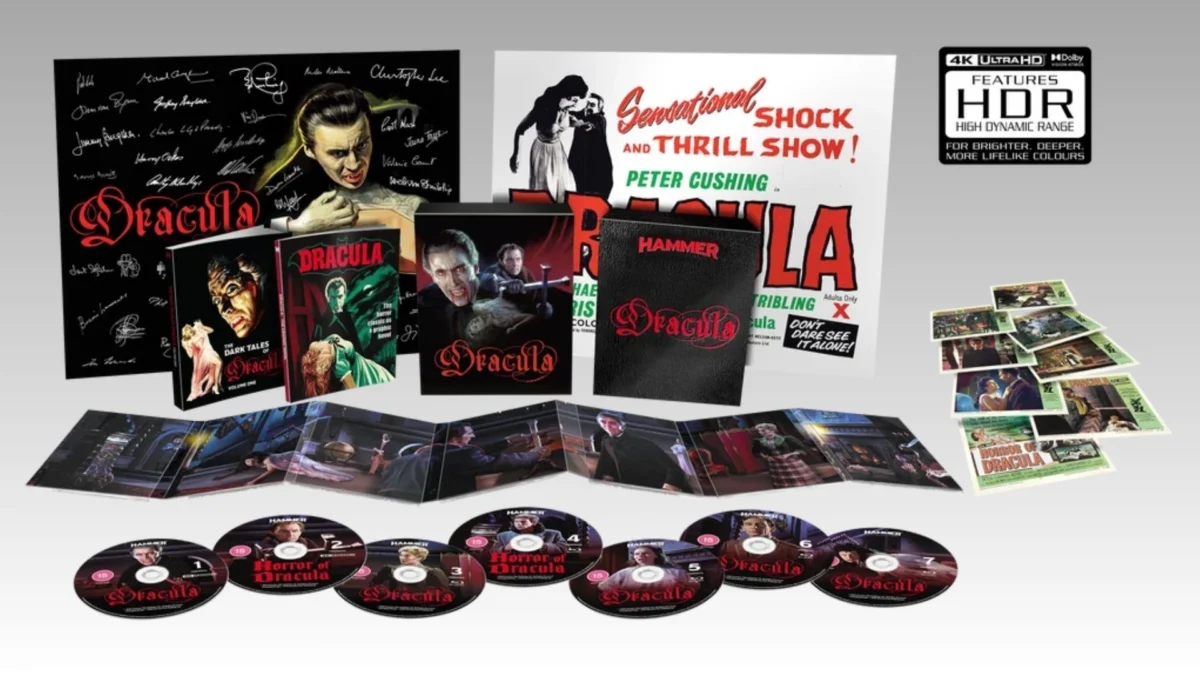
The Dracula 4K Limited Collector’s Edition is currently available for pre-order via the official Hammer website, promising to test the limits of modern home cinema setups with pristine visual clarity and lossless audio tracks.
Chronology: The Evolution of a Masterpiece
To understand the magnitude of the 4K restoration, one must look back at the chaotic history of film preservation and the changing landscape of home entertainment.
1958: The Theatrical Shockwave
When director Terence Fisher’s Dracula premiered in 1958, it broke cinematic molds. Discarding the theatrical, expressionistic tropes of Universal’s 1931 Dracula starring Bela Lugosi, Hammer’s Technicolor production introduced a predatory, charismatic, and overtly bloodthirsty Count. Featuring graphic violence and sensual undertones that pushed the boundaries of the British Board of Film Censors (BBFC), different international cuts were distributed, including the Japanese version containing specific scenes of carnage excised from Western prints.
The Decades of Degradation
Over the decades, as the film transitioned from theatrical reels to television broadcasts and standard-definition home video formats like VHS and DVD, the physical elements suffered. Original negatives aged, fading chemically, while archive prints developed scratches, instability, and muddy color grading. By the late 1990s, viewing classic Hammer horror meant squinting at washed-out cathode-ray tube televisions during late-night broadcasts on channels like BBC Two.
2024–2025: The Silver Salt Restoration
Tasked with breathing new life into the nitrate and safety elements, Silver Salt Restoration set up shop in London to digitally rebuild Dracula frame by frame. Utilizing high-resolution 4K scanners, the team tackled the immense technical hurdle of integrating the Japanese cut elements—which survived as lower-generation preservation copies—with the primary British negative. Following a successful theatrical run of Hammer’s The Curse of Frankenstein in roughly 150 UK cinemas, producers finalized plans for Dracula to hit both the silver screen in October and physical media shelves.
Supporting Data and Technical Challenges
Restoring a 66-year-old Technicolor horror film shot on physical film stock is an exercise in digital archeology. Anthony Badger, Head of Restoration at Silver Salt, and Mark Stanborough, Head of Restoration at Hammer Films, offered a behind-the-scenes look at the immense technical obstacles overcome during the project.
The most formidable hurdle involved the newly recovered Japanese cut elements. Badger explained the intricacies of working with older preservation components:
"In the cut elements that were preservation elements, you tend to often get issues with it when you recombine the colour channels together from monochromatic film."
When separate black-and-white records of red, green, and blue light are digitally married to recreate a color image, any slight shrinkage or warping in the archival stock causes the color channels to misalign. This creates an unstable visual artifact where the image abruptly or slowly shifts colors from frame to frame.
Furthermore, the original negative exhibited age-related fading and chemical degradation. Badger noted that color grading becomes exponentially more difficult when consistency cannot be guaranteed from one frame to the next. The restoration team had to manually lock and stabilize the color profiles across the entire runtime—including the newly spliced-in foreign footage—ensuring a seamless viewing experience that honors the original Technicolor palette without looking artificially modern.
Despite these hurdles, the results speak for themselves. According to Mark Stanborough:
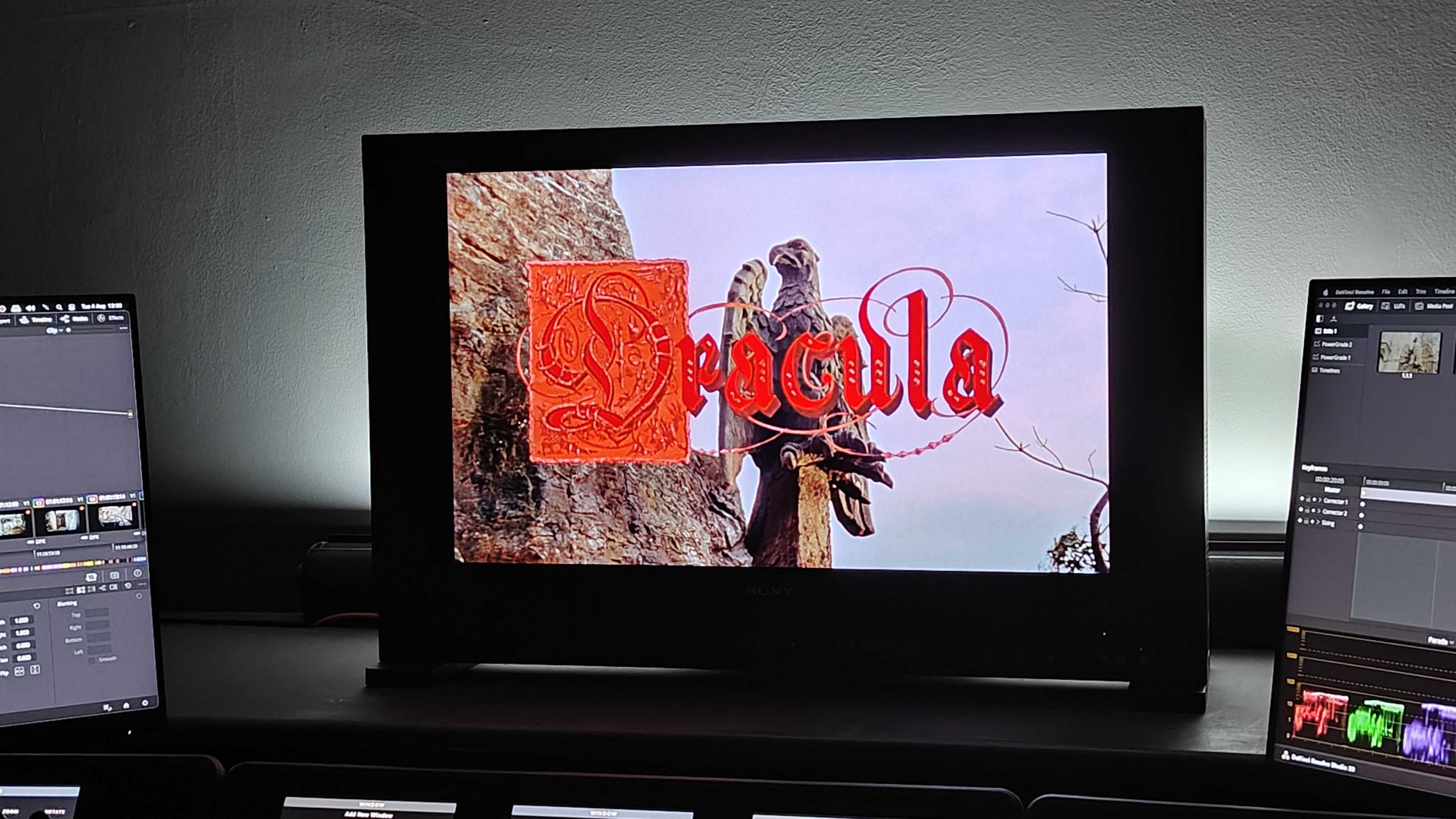
"When you look at some of the Hammer titles that we’ve done, they could have been filmed last week. They look so sharp and it’s amazing."
Official Responses and Perspectives
The team behind the Dracula restoration is deeply passionate not just about a single film, but about the broader ecosystem of physical media and classic cinema preservation.
Addressing the contentious state of physical media in an era dominated by streaming algorithms, Anthony Badger remains optimistic. While acknowledging that the era of impulse-buying DVDs at supermarket checkouts has passed, he emphasizes the enduring psychology of ownership:
"It’s certainly the end of the day of buying a film on DVD at Tesco. But I think there will always be a place for it… People value the tangibility of holding a physical disc in your hands."
Badger also highlighted the unexpected commercial viability of lesser-known titles in Hammer’s vault. Obscure dramas and thrillers that haven’t been broadcast since late-night television slots in the late 1990s are finding an enthusiastic audience on modern boutique home video labels. He credits this to a widespread cultural hunger for archival discovery, driven largely by fans who are tired of compressed, low-bitrate streaming versions behind paywalls.
Mark Stanborough echoed these sentiments, emphasizing why a theatrical re-release was non-negotiable for Dracula:
"We did Curse of Frankenstein, and I think that went into 150 cinemas and was very popular. And obviously, Dracula is the bigger film, the one that everybody knows."
By putting the film back into cinemas, Hammer aims to remind modern audiences of the visceral impact the picture had upon its initial release—proving that the dread generated by Christopher Lee’s fangs and Terence Fisher’s direction is timeless.
Implications for Collectors and the Home Cinema Market
The release of Dracula on 4K Ultra HD Blu-ray carries significant implications for both hardcore cinephiles and the AV hardware industry.
For years, home video enthusiasts have argued that streaming services—despite offering nominal 4K and Dolby Vision tags—cannot compete with the uncompressed bitrates of physical 4K Blu-ray discs. Discs offer vastly superior dynamic range, grain management, and audio fidelity, completely bypassing the compression artifacts that plague dark, shadowy scenes in horror movies.
As boutique labels like Silver Salt, Criterion, Arrow Video, and Second Sight continue to mine studio vaults, 4K Blu-rays are increasingly viewed as archival artifacts rather than disposable entertainment. The meticulous cleanup of Dracula removes the traditional barriers to entry for classic cinema—namely, blurry visuals and muffled, scratchy audio tracks—allowing younger generations to experience historical horror as it was meant to be seen and heard.
As the Dracula 4K Limited Collector’s Edition heads toward its release, it serves as a litmus test for high-end home theater setups. For reviewers and tech enthusiasts equipped with the best 4K Blu-ray players, Dolby Atmos soundbars, and calibrated OLED displays, Christopher Lee’s definitive cinematic bloodsucker will provide the ultimate torture test for black levels, color accuracy, and high-frequency audio recovery.
Ultimately, this restoration proves that while cinematic vampires may fear the light of day, the legacy of classic horror has never burned brighter.