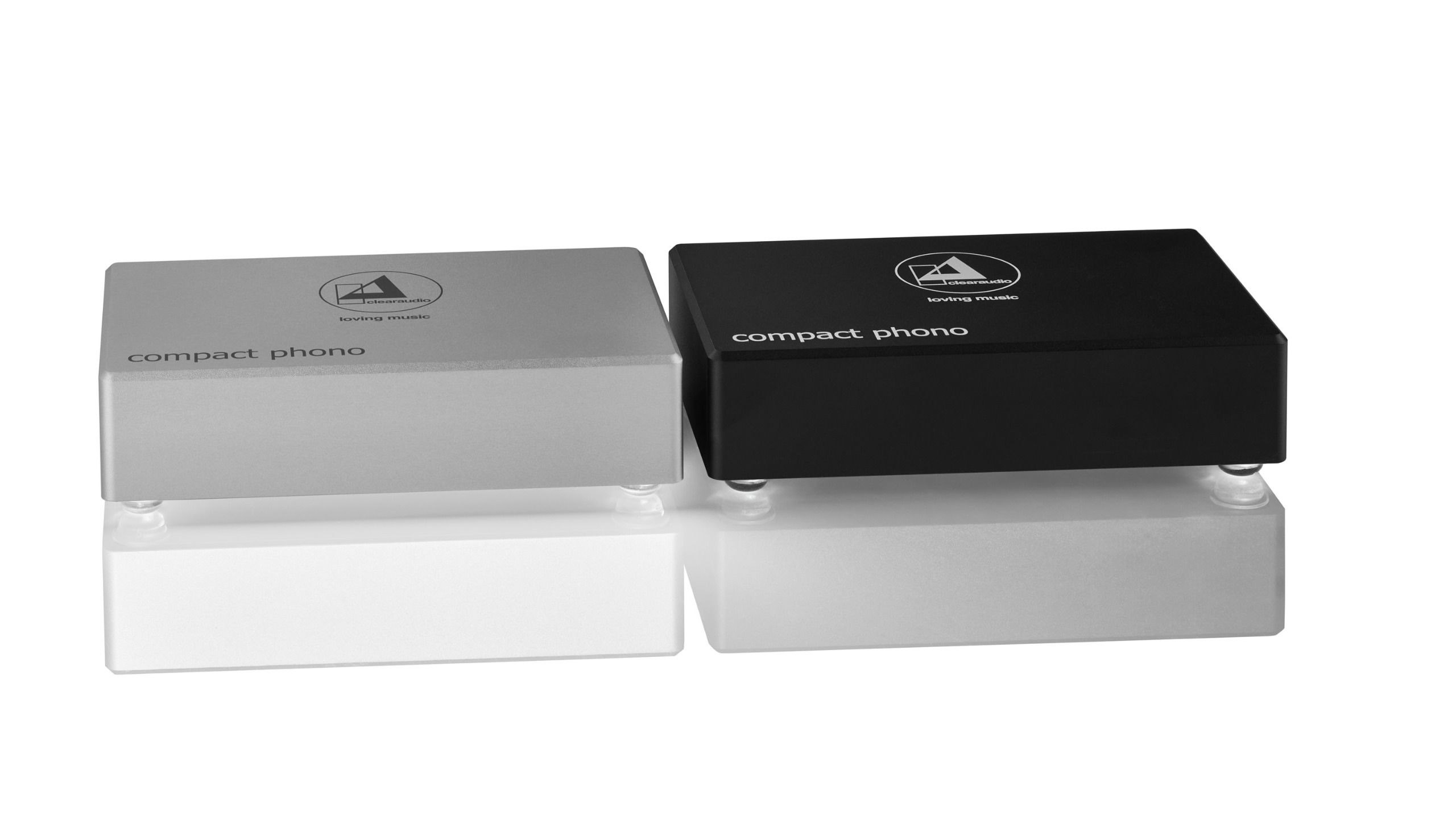
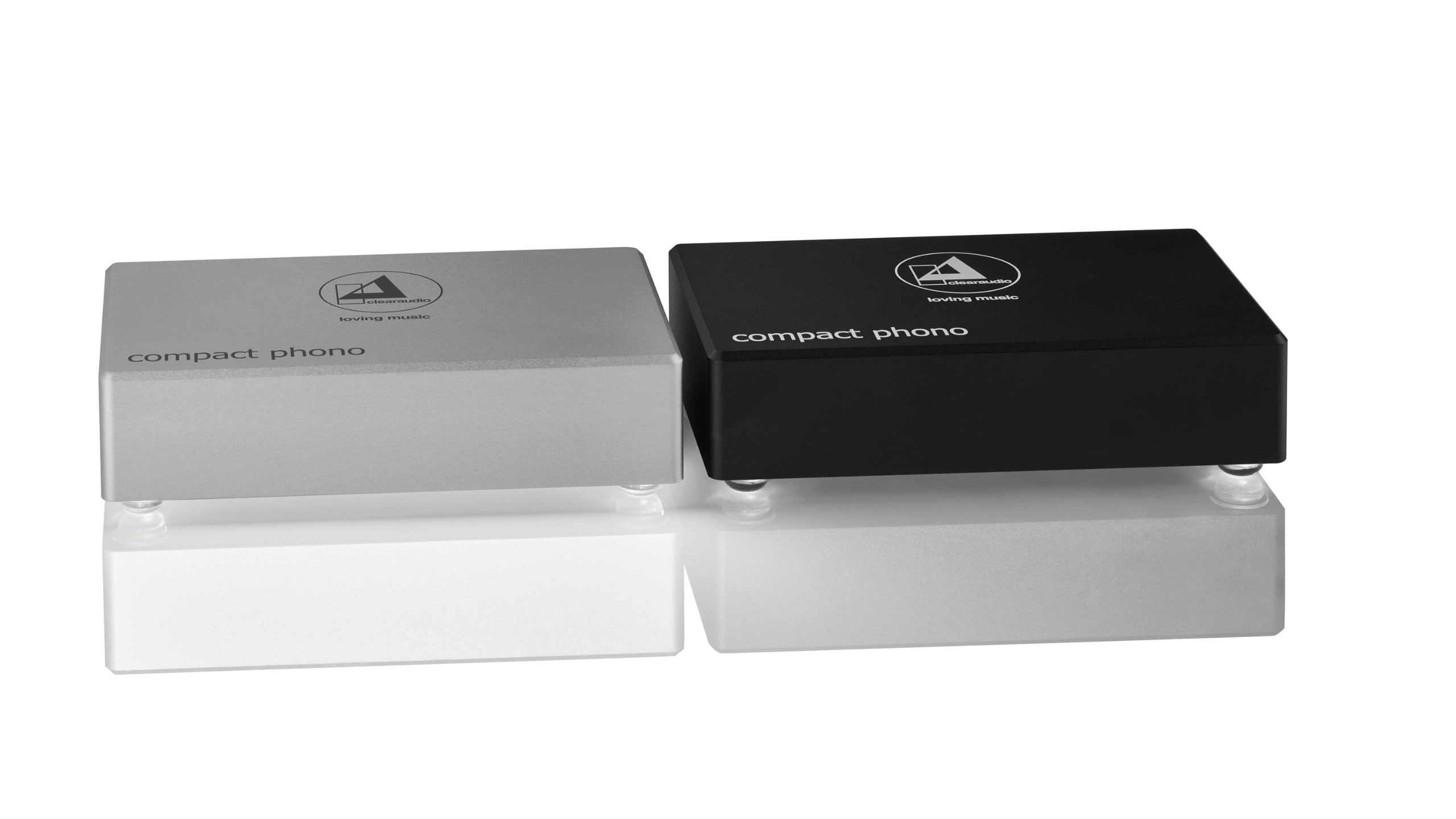
German high-end audio specialist Clearaudio has expanded its distinguished product ecosystem with the release of the Compact Phono, a remarkably diminutive phono preamplifier designed to bridge the gap between space-saving convenience and uncompromising audiophile performance. Measuring a mere 2.6 x 11.5 x 8 cm (HWD), the device is engineered to disappear effortlessly into virtually any living space or audio rack. Yet, according to the manufacturer, its pint-sized footprint heavily belies a serious, highly capable internal architecture intended to satisfy discerning vinyl enthusiasts.
Available immediately in sophisticated silver and black finishes, the Compact Phono enters a fiercely competitive market at a retail price of £490 / €490 / $639. In doing so, it goes head-to-head with established heavyweights in the sub-£500 / $700 category, challenging users to rethink what is possible from a micro-form-factor phono stage.
Main Facts at a Glance
- Product Name: Clearaudio Compact Phono
- Manufacturer: Clearaudio Electronic GmbH (Germany)
- Dimensions: 2.6 x 11.5 x 8 cm (HWD)
- Pricing: £490 / €490 / $639
- Finishes Available: Black, Silver
- Core Compatibility: Moving Magnet (MM) and Moving Coil (MC) cartridges
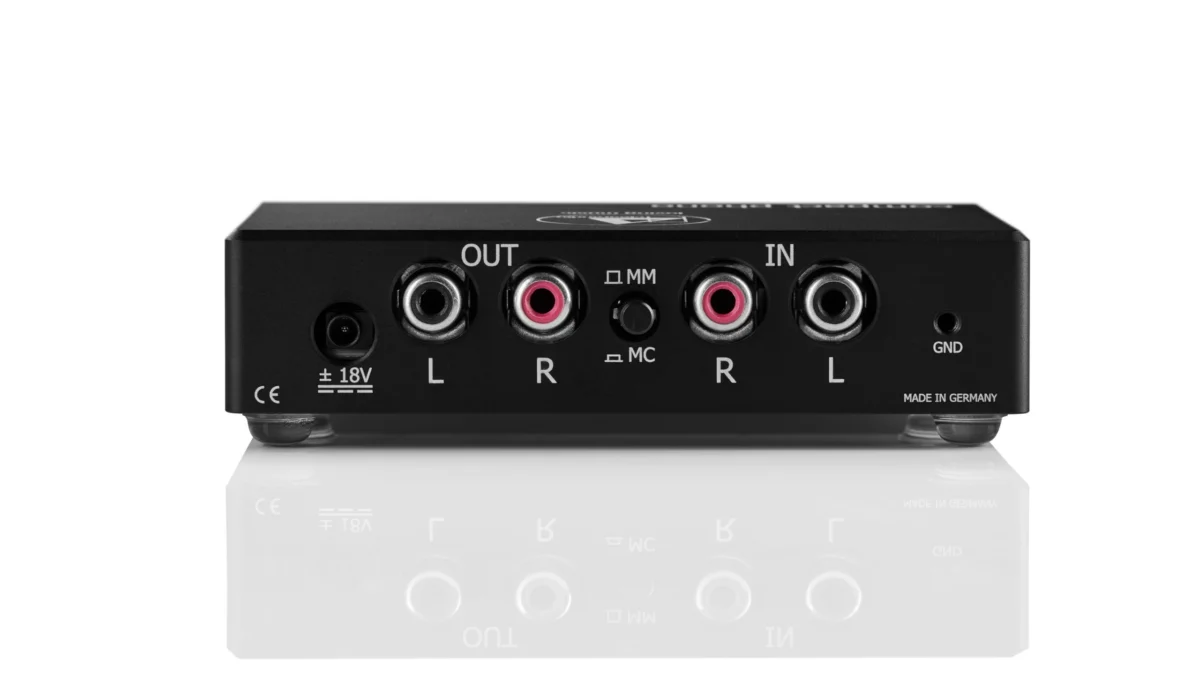
- Key Usability Feature: Front-panel tactile push-button for switching between MM and MC modes, eliminating internal jumpers.
- Filtering System: Dual-stage filtering including a 16Hz subsonic filter and a 70kHz ultrasonic filter.
- Gain and Headroom: Switchable gain of 40dB (MM) and 60dB (MC), with an MC headroom rating of 29dB.
Chronology of Innovation: Evolution from Internal Jumpers to Front-Panel Control
To understand the significance of the Compact Phono, one must examine Clearaudio’s historical approach to entry- and mid-tier phono stage design. Traditionally, high-end audio manufacturers—particularly those adhering to purist European design philosophies—prioritized absolute signal path brevity over user convenience. In previous iterations of Clearaudio’s compact phono line, switching between a Moving Magnet (MM) cartridge and a Moving Coil (MC) cartridge required a tedious, hands-on procedure: users had to power down the unit, unthread it from their audio setup, unscrew the chassis casing, and manually shift internal circuit-board jumpers to reconfigure the gain and input loading.
While this method eliminated the potential signal degradation associated with physical front-panel switches, it alienated modern vinyl hobbyists who frequently experiment with different cartridges or upgrade their turntables over time.
The development of the Compact Phono marks a significant philosophical shift for the German brand. Recognizing the modern resurgence of vinyl—driven heavily by a younger, more dynamic consumer base that values plug-and-play accessibility alongside high fidelity—Clearaudio’s engineering team spent considerable development cycles reimagining the user interface. The result is a clean, minimalist front panel dominated by a discrete, high-reliability tactile push-button that instantly toggles between MM and MC operation. This chronological evolution reflects a broader industry trend: high-end manufacturers are realizing that audiophile sonic purity no longer needs to come at the expense of everyday user-friendliness.
Supporting Data and Technical Architecture
Despite its diminutive dimensions, the Clearaudio Compact Phono is packed with sophisticated engineering choices typically reserved for larger, more expensive separates.
Amplification and Signal-to-Noise Optimization
At the beating heart of the Compact Phono’s circuitry are exceptionally low-noise, high-precision operational amplifiers. Clearaudio has implemented a split-gain architecture across two distinct stages. The first stage shoulders the bulk of the heavy amplification duties, a strategic decision designed to maximize the signal-to-noise ratio (SNR) right out of the gate. By amplifying the minute electrical signals generated by the turntable cartridge as early and cleanly as possible, the unit minimizes the introduction of thermal and electrical floor noise. The second stage then employs highly targeted filters to shape the frequency response and eliminate unwanted anomalies.
Advanced Dual-Filtering (Subsonic and Ultrasonic)
Earlier phono stages in this class typically relied solely on a subsonic filter to eliminate low-frequency rumble caused by warped vinyl records or acoustic feedback from footfalls. The Compact Phono goes a step further by introducing a comprehensive dual-filtering mechanism:
- 16Hz Subsonic Filter: Sweeps away unwanted low-frequency rumbles without bleeding into the audible bass spectrum.
- 70kHz Ultrasonic Filter: Specifically designed to catch and neutralize high-frequency cartridge resonances that occur far above the human hearing threshold but can cause intermodulation distortion in downstream amplifiers and loudspeakers.
According to Clearaudio, this dual-filter approach delivers robust protection against stray signals while maintaining absolute phase linearity, precise RIAA equalisation, and total signal stability.
Flexibility, Loading, and Power Supply
Flexibility is a defining pillar of the Compact Phono’s design brief. It is engineered to accommodate everything from budget-friendly entry-level cartridges to ultra-low-output moving coil systems.
- Input Loading: Fixed at 47kΩ / 100pF for Moving Magnet cartridges, and 100Ω / 100pF for Moving Coil cartridges.
- Gain Settings: Switchable between 40dB (MM) and 60dB (MC)—both of which represent higher gain figures than those found on Clearaudio’s legacy models.
- Headroom: The moving coil operation boasts a generous 29dB of headroom, providing ample breathing room for dynamic peaks in complex orchestral or heavily compressed modern pressings.
Power delivery is handled by an external ±18V power supply operating in tandem with a pair of advanced linear voltage regulators. This setup yields an exceptionally stable, noise-free DC voltage supply, keeping power-line hum entirely out of the delicate phono signal path. Furthermore, the unit’s redesigned power architecture operates at a higher efficiency level, resulting in a cooler-running, more energy-efficient device that can be left powered on continuously without thermal degradation worries.
All of this technology is housed within a rigid, low-resonance metal enclosure resting on specialized isolating feet. These feet act as an acoustic anchor, mitigating structure-borne vibrations—a crucial consideration for music lovers who live in older homes with suspended wooden floors.
Official Responses and Manufacturer Intentions
In official statements accompanying the launch, Clearaudio emphasized that the Compact Phono was designed to challenge preconceived notions about what a micro-sized audio component can achieve.
"Its compact dimensions belie a serious phono stage," a company spokesperson noted during the global product rollout. Clearaudio stressed that no compromises were made in component selection despite the unit’s space-saving constraints. Top-tier resistors, capacitors, and op-amps were explicitly chosen for their thermal stability and ultra-low distortion profiles.
Furthermore, the brand highlighted that the transition to a cooler-running electrical design was a direct response to consumer feedback regarding continuous-operation electronics. By optimizing power draw and heat dissipation, Clearaudio has ensured that the Compact Phono integrates seamlessly into custom cabinetry or tight AV racks without posing a thermal risk to neighboring components like integrated amplifiers or network streamers.
Market Implications and Competitive Landscape
Priced at £490 / €490 / $639, the Clearaudio Compact Phono steps into a fiercely contested pocket of the hi-fi marketplace. At this price point, consumers are typically experienced vinyl enthusiasts looking to upgrade from the built-in phono stages found in entry-level turntables or budget amplifiers.
However, the Compact Phono faces formidable rivals:
- Cambridge Audio Duo MC/MM: Retailing significantly lower at £299 / $399 / AU$559, the Duo is a perennial favorite that offers exceptional value, built-in headphone amplification, and robust MM/MC performance.
- Graham Slee Reflex M: Earning widespread critical acclaim and industry awards, this unit commands a slightly higher price point (£540 / $960 / AU$1290) and focuses heavily on raw musical engagement, though it typically targets single-cartridge setups or requires dedicated modular upgrades.
Assessing the Value Proposition
Does the Clearaudio Compact Phono justify its asking price? For audiophiles constrained by physical space who refuse to sacrifice build quality, German engineering pedigree, and front-panel versatility, the Compact Phono presents an extraordinarily compelling package. Its combination of a high signal-to-noise ratio, split-gain topology, dual subsonic/ultrasonic filtering, and robust MC headroom sets a high benchmark for micro-form-factor preamplification.
As the vinyl revival continues to mature, listeners are becoming increasingly sophisticated regarding signal chain purity. Products like the Clearaudio Compact Phono prove that high-end analog reproduction no longer requires sprawling, multi-chassis components to deliver emotional, highly detailed musical performances. Whether paired with a minimalist belt-driven deck or a heavily customized high-mass turntable, this petite German newcomer is well-equipped to make a resounding impact on the modern listening room.