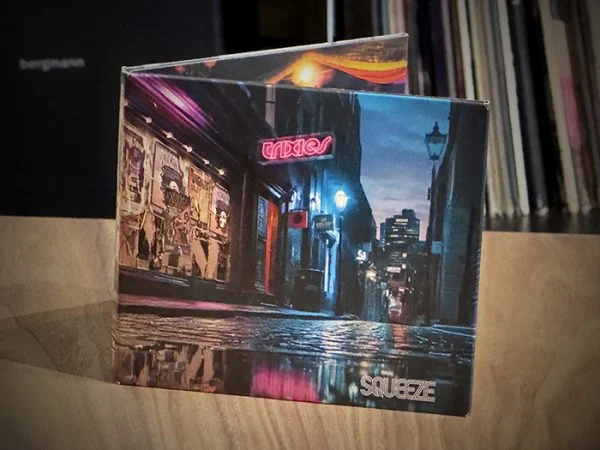
March 12, 2026 — In a move that has sent ripples of excitement through the global power-pop community, legendary British band Squeeze has officially breathed new life into one of their oldest, most mythical lost projects. Known universally for their razor-sharp lyricism, infectious melodies, and the peerless songwriting partnership of Chris Difford and Glenn Tilbrook, the band has finally realized Trixies—a conceptual masterwork originally drafted at the very dawn of the band’s existence in the early 1970s.
Long relegated to the realm of rock lore and fan-magazine rumor, Trixies has transitioned from an unrecorded notebook concept to a fully realized commercial release. While purists have lamented the formatting quirks surrounding the physical rollout—specifically that the coveted treasure trove of demo recordings and bonus tracks is strictly exclusive to the compact disc edition—the release has nonetheless dominated music journalism and audiophile circles since its drop.
Main Facts
The release of Trixies represents a major archival and creative milestone for Squeeze. For decades, the existence of a pre-fame concept album written during the formative years of Difford and Tilbrook’s collaboration was treated as a piece of esoteric band history. The core facts surrounding the project highlight its unique trajectory from a dusty notebook to a polished modern release:
- The Origin: Trixies was originally conceived and written in the early 1970s, well before Squeeze achieved mainstream commercial success with hits like "Cool for Cats," "Up the Junction," and "Hourglass."
- The Concept: Operating as a conceptual song cycle, the project tells a narrative-driven story through the distinct, observational lens that would eventually become the trademark of the Difford-Tilbrook songwriting factory.
- The Modern Revamp: Rather than simply unearthing a crude rehearsal tape, the band has meticulously revised, arranged, and recorded the material, bridging a gap of over half a century between conception and execution.
- The Format Debate: The album’s physical distribution has sparked spirited discussions among collectors. While the core album is widely available, the essential companion pieces—including comprehensive demo recordings and exclusive bonus tracks—are tethered exclusively to the CD format, prompting many analog purists to pick up dual copies.
- Direct Insight: To accompany the rollout, songwriters Chris Difford and Glenn Tilbrook released an in-depth video discussion detailing the creative archaeology behind the project, offering fans an unprecedented look into their teenage songwriting mindsets.
Chronology: From Deptford Bedrooms to the Modern Studio
To understand the magnitude of the Trixies release, it is necessary to trace the timeline of Squeeze’s inception and the long, winding road this material has traveled.
1973–1974: The Genesis in South London
Long before they were signed to A&M Records or playing sold-out theater tours, Chris Difford and Glenn Tilbrook met in South London. Difford, having placed an advertisement in a local sweet shop window seeking a guitarist, was introduced to Tilbrook. Living in and around Deptford and Greenwich, the pair began writing songs at an astonishing pace. During these embryonic sessions, alongside early versions of songs that would eventually populate their 1978 self-titled debut, they drafted Trixies. It was envisioned not just as a random collection of tracks, but as a thematic concept album. However, due to a lack of resources, proper equipment, and professional backing, the project was shelved, remaining a conceptual ghost while the band rapidly evolved into a punchy new-wave/power-pop outfit.
The Decades Between: The Myth of the Lost Album
As Squeeze carved out their legacy through the late 1970s, 1980s, and beyond—surviving various hiatuses, line-up changes, and stylistic shifts—Trixies occasionally surfaced in interviews. Music historians and dedicated fans viewed it as the ultimate holy grail of unrecorded Squeeze material. While other bands might have raided their vaults years prior, Difford and Tilbrook maintained a forward-looking trajectory, focusing on contemporary songwriting and live performance rather than backward-looking retrospectives.
Late 2025 – Early 2026: The Revival and Recording
Spurred by a renewed interest in their archival history and a desire to see through a project that had sat dormant for over fifty years, Difford and Tilbrook quietly re-visited the original lyric sheets and chord progressions. Recognizing that the narrative held structural integrity and charm, they updated the arrangements to reflect their seasoned musicianship while preserving the naive, youthful spirit of the original compositions.
March 2026: The Official Launch
Trixies officially arrived in the public sphere, accompanied by high-profile promotional efforts, including a deep-dive YouTube conversation featuring the primary architects discussing the project’s miraculous resurrection.
Supporting Data and Archival Context
In the audiophile and record-collecting communities, the release of Trixies has generated significant discourse regarding physical media economics and archival completeness.
Music industry analysts note that physical format stratification is becoming increasingly common as legacy acts seek to incentivize physical purchases in a streaming-dominated market. The decision to restrict the demo tracks and bonus material solely to the CD version has created an interesting consumer dynamic. While vinyl remains the format of choice for high-end audio enthusiasts—as championed by publications like TONE Magazine—the sheer gravity of the historical bonus material has forced many collectors to compromise.
- Material Span: Over 50 years separating composition (circa 1973–1974) and formal release (2026).
- Archival Value: The inclusion of period-adjacent demos provides musicologists with a vital missing link between Difford and Tilbrook’s bedroom-demo era and their studio polish on landmark albums like East Side Story and Cosi Fan Tutti Frutti.
- Digital vs. Physical: While digital streaming platforms carry the standard tracklist, the physical CD remains the definitive artifact for completists due to the proprietary bonus curation.
Official Responses and Creator Commentary
The release strategy was demystified when Chris Difford and Glenn Tilbrook took to digital platforms to pull back the curtain on the decades-old project. In a warmly received video discussion, the duo reflected on the psychological landscape of writing Trixies as teenagers compared to recording it as elder statesmen of British pop.
"When you look back at what you were writing when you barely knew how to tune your guitars, there’s a certain fearless innocence to it," Tilbrook noted during the broadcast. “Trixies was a beast we created before we even knew what the music industry looked like. Bringing it to life now feels like closing a very long, very important circle.”
Difford echoed these sentiments, emphasizing the narrative framework of the project: "The stories we wanted to tell back then were observational, slightly quirky vignettes about characters living on the margins of ordinary towns. Revisiting those lyrics felt like visiting old friends we hadn’t seen since we were twenty years old."
Critics and industry insiders have praised the duo’s self-awareness. Rather than attempting to masquerade the record as a contemporary commercial chart-chaser, Squeeze has framed Trixies for what it truly is: a lovingly curated historical artifact, elevated by modern musicianship and contextualized by extensive commentary.
Implications for the Squeeze Legacy and Modern Pop Archaeology
The successful unearthing and release of Trixies carries profound implications not only for the enduring legacy of Squeeze, but for the broader landscape of rock and pop archaeology.
1. Elevating the "Lost Album" Trope
Too often, archival releases from legacy acts are treated as cynical cash-grabs—hastily compiled outtakes dredged from muddy cassette tapes with little regard for sequencing or quality control. Squeeze has subverted this trope by treating a 1970s concept piece with the reverence of a brand-new artistic statement. By actively revising and polishing the material rather than leaving it as a raw sketch, they have set a high benchmark for how heritage acts can handle unfulfilled early-career ambitions.
2. Deepening the Difford-Tilbrook Canon
For decades, the standard narrative of Squeeze’s evolution began cleanly with their eponymous 1978 debut album. Trixies successfully backdates the origin story, offering listeners a missing stepping stone that proves Difford and Tilbrook’s unique lyrical preoccupation with working-class British characters, domestic drama, and wry humor was hardwired into their DNA from day one.
3. The Physical Media Paradox
The formatting rollout of Trixies—specifically the exclusive tethering of demo and bonus tracks to the CD version—highlights the ongoing tension within modern music retail. In an era where vinyl is celebrated for its tactile warmth and premium aesthetic, record labels are increasingly utilizing CDs as the ultimate repository for bonus-heavy, completist-driven archival material. This strategy forces a strategic dilemma for audiophiles who prioritize both optimal analog sound reproduction and absolute archival completeness.
Conclusion
As Trixies finds its way into the collections of devoted fans worldwide, its release cements the timeless vitality of Chris Difford and Glenn Tilbrook’s songwriting partnership. What began as a forgotten notebook concept in a South London bedroom during the early 1970s has miraculously materialized into a brilliant, fully realized addition to the Squeeze canon. Whether consumed via the streaming ether, spun on heavy vinyl, or parsed meticulously through the bonus-laden CD edition, Trixies stands as a triumphant testament to a band that continues to honor its past while refusing to let its history fade quietly into obscurity.