GLOBAL EDUCATION REPORT — Modern educational architecture has undergone a radical transformation. Gone are the days when learning environments were strictly defined by rows of bolted-down desks, chalk dust, and static rectangular walls. Today, universities, K-12 institutions, progressive libraries, and campus commons are intentionally designed as flexible, multi-purpose hubs. These spaces are engineered to foster dynamic communication, spontaneous peer-to-peer interaction, and collaborative shared experiences.
However, as architectural design has shifted toward open floor plans and striking aesthetic materials, a silent barrier to academic success has emerged. While glass, polished concrete, steel, and exposed granite create visually stunning modern facilities, they routinely create hostile acoustic environments.
The core question facing architects, educators, and facility planners today is profound: Can a room genuinely make you smarter? The growing consensus among acoustic engineers and cognitive scientists is that while a room cannot magically boost raw intelligence, poor acoustic design can actively diminish cognitive performance. Conversely, optimized acoustic spaces create the ideal conditions for deep concentration, elevated speech intelligibility, and superior information retention.

Main Facts: The Hidden Crisis of Classroom Noise
At the heart of the modern educational acoustic challenge is a fundamental mismatch between contemporary interior design trends and human auditory biology.
The Rise of Hard Reflective Surfaces
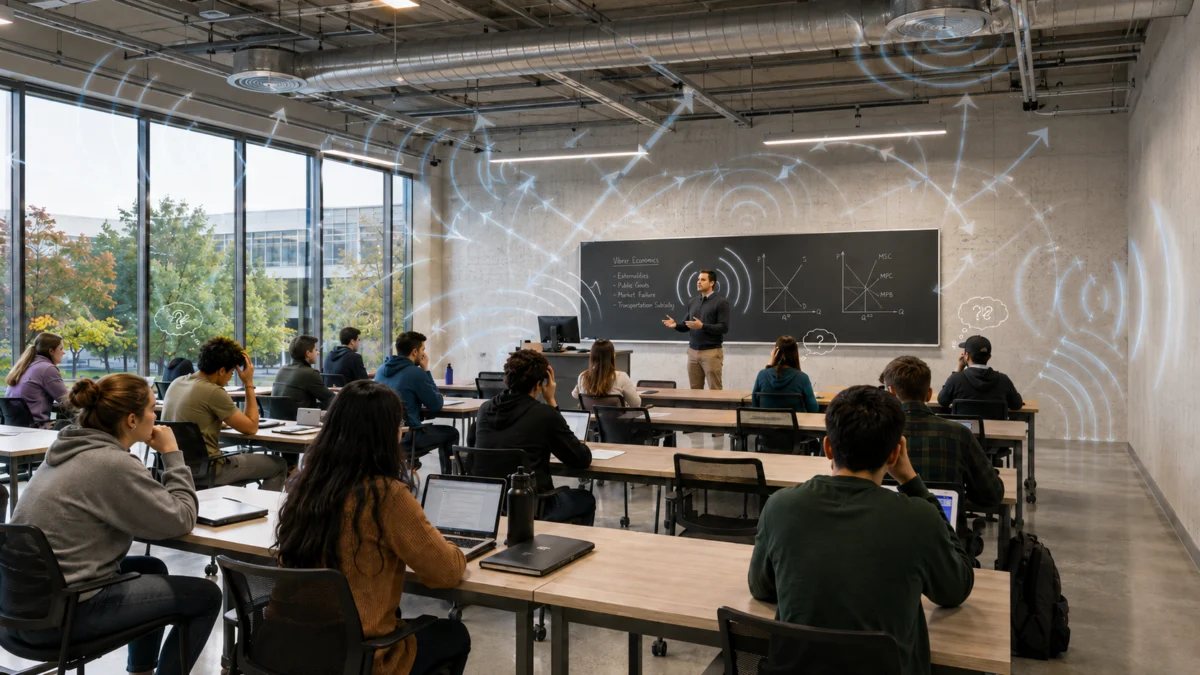
In recent years, aesthetic trends in educational architecture have heavily favored hard, non-porous surfaces. Large expanses of glass windows, sprawling granite countertops, tiled or polished concrete floors, and expansive whiteboards have become staples of modern school design. While these materials offer durability and visual appeal, they are notoriously unforgiving acoustic reflectors. Sound waves do not dissipate when they strike these surfaces; instead, they bounce wildly around the room, creating overlapping echoes, prolonged reverberation, and chaotic ambient noise.
The Physics of Poor Sound
When a teacher speaks in an untreated room, the sound waves travel outward, striking walls, ceilings, and floors. These reflections arrive at a listener’s ear milliseconds after the direct sound, blurring consonants and turning speech into a muddy wash of noise.

This acoustic degradation is compounded by building infrastructure. HVAC systems, fluorescent lighting hums, hallway traffic, and outdoor environmental noise bleed into learning areas. In typical untreated educational spaces, reverberation times—measured as RT60, the time it takes for sound to decay by 60 decibels—frequently reach 1.9 seconds. Acoustical standards for optimal learning, by contrast, recommend an RT60 of no more than 0.7 seconds.
The Lombard Effect
In open-plan and collaborative learning spaces, this acoustic friction triggers a physiological phenomenon known as the Lombard Effect. As ambient background noise rises, human speakers instinctively raise their voices to be heard over the din. This escalation creates a compounding feedback loop: louder voices lead to higher background noise, which forces occupants to shout even louder, ultimately transforming a study area into a chaotic, stressful cacophony.
Chronology: The Evolution of Educational Sound Management
To understand where educational acoustics stand today, it is helpful to trace how sound management has evolved within institutional architecture over the past century.

- The Mid-20th Century (The Utilitarian Era): Early standardized school construction prioritized cost-efficiency and durability over occupant comfort. Rooms featured plaster walls, hard flooring, and functional, sagging industrial acoustic ceiling tiles. These tiles offered minimal, short-lived sound absorption and often degraded visually and functionally over time.
- The Late 20th Century (The Era of Amplification): As classrooms grew larger, institutions relied heavily on primitive public address systems and basic loudspeakers to combat poor room acoustics. However, without adequate sound absorption, amplifying speech in these spaces merely amplified the echoes and reverberation, worsening speech intelligibility rather than fixing it.
- The 2000s–2010s (The Open-Plan Revolution): Driven by workplace trends favoring collaboration, architects began designing open-concept classrooms, flexible breakout pods, and cavernous multi-story commons areas. Unfortunately, acoustic planning often lagged behind structural design, leading to widespread complaints of chronic noise fatigue among both students and faculty.
- The Present Day (Integrated Acoustic Architecture): Today, acoustic design is recognized as an essential component of human-centric architecture. Modern spaces utilize high-performance, aesthetically integrated materials—ranging from specialized glass wool panels to modular ceiling clouds and fabric-wrapped baffles—that control sound at the source without compromising architectural vision.
Supporting Data: Cognitive Load, Speech Intelligibility, and Retention
The argument for investing in advanced acoustic treatment is deeply rooted in cognitive psychology and empirical research.
Cognitive Load Theory
Cognitive Load Theory posits that human working memory has a strictly limited capacity. In an acoustically compromised classroom, students do not simply hear a lesson; their brains must actively expend finite mental energy filtering out background noise, parsing distorted speech, and deciphering words over echoes.
When a student’s working memory is overburdened by the invisible labor of listening through noise, fewer cognitive resources remain available for higher-order tasks such as critical thinking, conceptual comprehension, and long-term memory encoding. By contrast, when excess sound is absorbed and ambient noise is minimized, the cognitive burden lifts. Students experience a calmer sonic environment, translating directly into extended attention spans, reduced behavioral disruptions, and enhanced engagement.

The Crisis of Speech Intelligibility
Hearing a voice and understanding it are two entirely different metrics. In untreated rooms, critical consonant sounds—particularly unvoiced fricatives and plosives like f, p, s, and t—are easily masked by background noise and reverberation. Word endings blur, and subtle nuances in a speaker’s tone are lost entirely.
Empirical studies reveal startling statistics:
- In poor acoustic environments, students can miss up to 1 in every 4 words spoken by an instructor.
- This deficit disproportionately impacts students seated farther back in large lecture halls, assembly spaces, and multi-purpose rooms, where sound naturally loses energy over distance.
- Young children (who are still developing language and vocabulary skills), students with hearing impairments, and English Language Learners (ELL) suffer disproportionately from poor speech intelligibility.
Quantifying the Solution
Deploying targeted acoustic interventions dramatically changes these metrics. By implementing professional-grade acoustic solutions—such as Primacoustic’s high-performance Broadway series, complete London Room Kits, fabric-wrapped TelaScapes, customizable Archadia lines, and comprehensive EcoScapes systems (featuring dimensional baffles, contour carved panels, and blades)—facilities can successfully bring reverberation times down to recommended thresholds.

Furthermore, modern grid-and-tile solutions like the GridWay series replace sagging, utilitarian industrial tiles with high-NRC (Noise Reduction Coefficient) alternatives that offer superior, long-lasting performance.
Official Responses and Industry Perspectives
Architects, acoustic engineers, and interior designers are increasingly viewing sound as a core building material rather than an afterthought. Industry leaders emphasize that the goal of acoustic treatment is never to "deaden" a room into an unnatural, vacuum-like silence. Rather, the objective is balanced sound management.
"An entirely dead space is just as uncomfortable and uninspiring as an echo chamber," notes acoustic design specialists. "Sound needs to be managed and balanced just like temperature, lighting, and ergonomic seating. The objective is localized absorption—treating sound close to its source before it has the chance to reflect, travel, and accumulate."

Leading acoustic manufacturing partners, such as Primacoustic, advocate for a hands-on, ears-on methodology when consulting with institutions. By analyzing room geometry, surface materials, and intended usage profiles, engineers can deploy tailored solutions—such as ceiling-mounted clouds and suspended baffles that halt vertical reflections in high-ceilinged atriums, or mobile isolation booths for multi-media recording and streaming—that transform chaotic spaces into zones of pristine clarity.
Implications: The Future of Learning Environments
The implications of prioritizing acoustic design extend far beyond academic test scores; they touch upon public health, institutional equity, and the future of collaborative work.
Health and Well-Being
Chronic exposure to high ambient noise levels is a documented physiological stressor. For educators, vocal strain and occupational fatigue are leading causes of burnout and missed workdays. For students, constant auditory stress elevates cortisol levels, increases anxiety, and degrades the overall quality of the school day. Lowering noise levels through strategic acoustic design fosters a calmer psychological atmosphere for everyone inside the building.

Flexibility and Multi-Purpose Utility
Modern campuses require spaces to pivot rapidly between quiet individual study, boisterous group collaboration, formal lectures, and digital media production. Without integrated acoustic planning, multi-purpose spaces inevitably fail at least one of their intended functions. High-performance acoustic treatments ensure that a room can seamlessly transition from a lively discussion forum to a focused lecture hall without forcing occupants to strain against the environment.
A Holistic Approach to Architecture
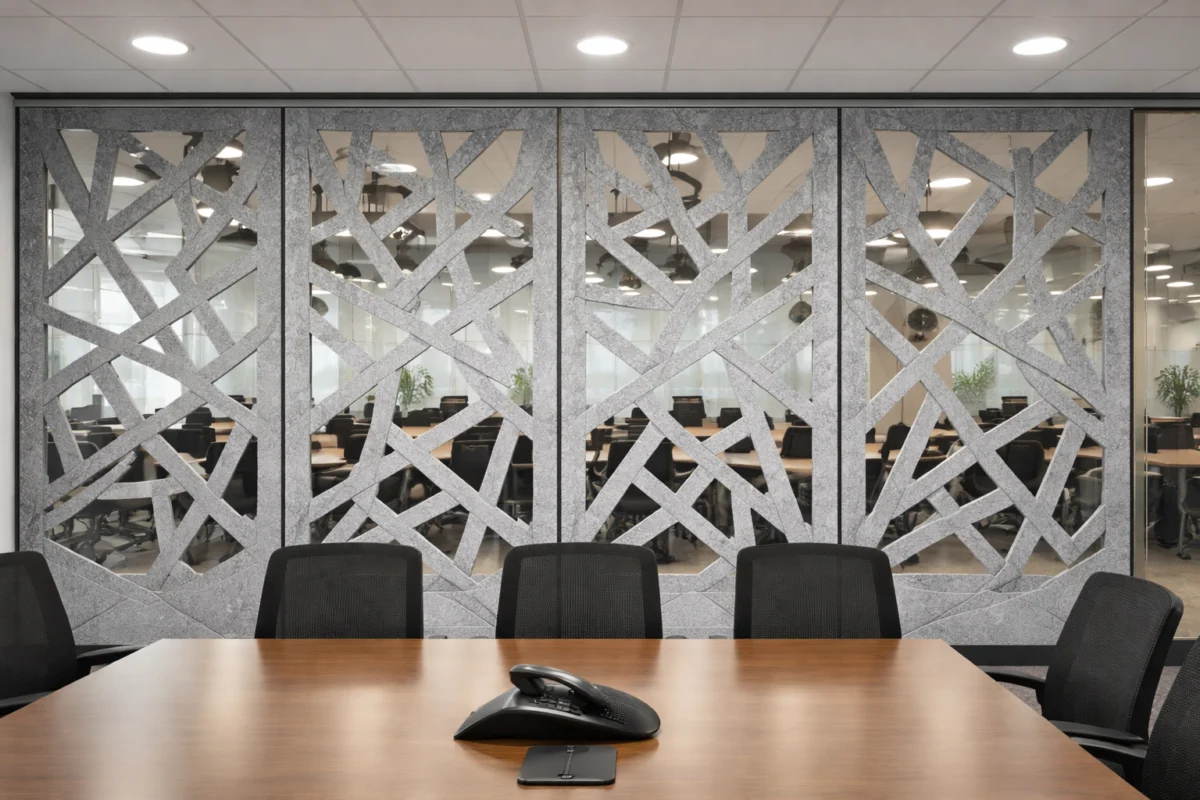
Ultimately, modern acoustic solutions prove that institutions no longer have to choose between stunning architectural aesthetics and functional performance. With fabric-wrapped panels, artistic dimensional baffles, and customizable color and texture palettes, acoustic treatment is now an active design asset.
As educational institutions continue to rethink how physical spaces shape human potential, investing in acoustics is no longer viewed as a luxury. It is a fundamental prerequisite for effective communication, deep concentration, and true cognitive growth.