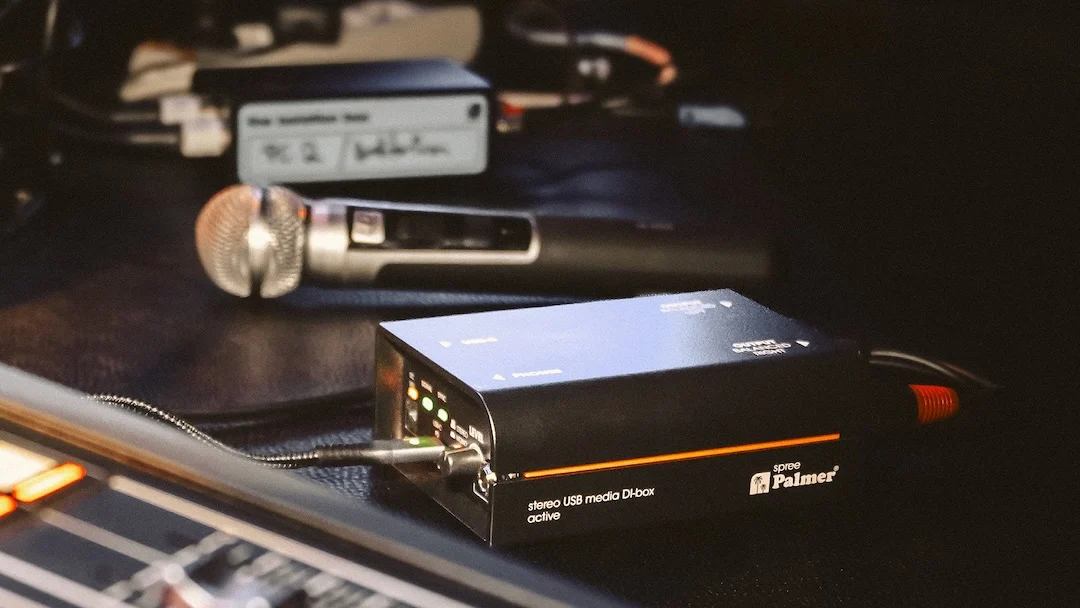
In the rapidly evolving landscape of professional audio, the transition from traditional analog sources to digital-first workflows has presented a unique set of challenges for sound engineers, touring musicians, and studio professionals. As laptops, tablets, and smartphones become the primary playback engines for live performances and recording sessions, the need for high-fidelity, rugged, and reliable conversion tools has never been greater. Recognizing this shift, Palmer, a brand under the umbrella of the Adam Hall Group, has announced the launch of the Spree, an active USB-C stereo DI box designed to serve as the definitive interface between modern digital devices and professional analog environments.
Part of Palmer’s acclaimed "River Series," the Spree is more than just a converter; it is a comprehensive solution for the digital age, combining high-resolution digital-to-analog conversion with the heavy-duty isolation and signal management that have made Palmer a staple in the industry for decades.
Main Facts: The Spree at a Glance
The Palmer Spree enters the market as a specialized tool tailored for the USB-C era. Its primary function is to take a digital audio stream from a host device—be it a MacBook, an iPad, or an Android smartphone—and convert it into a balanced, low-impedance analog signal suitable for mixing consoles, stage boxes, and audio interfaces.
Key Technical Features
- High-Resolution Conversion: The Spree features an internal D/A converter capable of handling resolutions up to 32-bit and sampling rates up to 192 kHz. This ensures that even the most nuanced high-fidelity audio files are reproduced with absolute transparency and minimal jitter.
- Galvanic Isolation: One of the most critical features for live use, the Spree utilizes transformer-based galvanic isolation to completely decouple the digital source from the analog output. This effectively eliminates the hum and buzz associated with ground loops—a common plague when connecting computers to PA systems.
- Dual Output Modes: The unit features a switchable Mic/Line output level. This allows users to match the output gain to the specific requirements of their gear, whether they are hitting a high-headroom line input on a studio console or a sensitive microphone preamp on a stage box.
- Versatile Power Management: The Spree can be bus-powered via the host USB-C connection, making it ideal for mobile setups. However, it also includes an external power supply option that enables "Power Pass-Through," allowing the DI box to charge the connected smartphone or laptop while in use.
- Monitoring and Diagnostics: A built-in 6.3 mm (1/4 inch) headphone output provides a direct monitoring path, while a trio of LEDs (Signal, Sync, and Power) offers instant visual feedback on the device’s status.
With a retail price of €269 (including VAT), the Spree positions itself as a premium, professional-grade tool designed to withstand the rigors of the road while delivering studio-quality sonics.
Chronology: The Evolution of Palmer’s River Series
To understand the significance of the Spree, one must look at the lineage of the Palmer River Series. Named after various rivers of the world, this series was conceived to provide "pure and flowing" audio signals through specialized tools like the Monos (passive DI), the Pan (active DI), and the Wipper (line isolator).
The Analog Foundation (Pre-2020)
For years, Palmer was known primarily for its indestructible passive DI boxes and speaker simulators. These devices were built around high-quality transformers designed in Germany. As the industry moved toward digital playback, engineers often used 3.5mm-to-XLR adapters or consumer-grade DACs, which were prone to interference and lacked the durability required for touring.
The Digital Shift (2021–2025)
The introduction of the USB-C standard as a universal port for power, data, and audio marked a turning point. Professional audio manufacturers began experimenting with USB-enabled DI boxes. Palmer’s River Series was expanded to address these needs, focusing on high-quality components that could bridge the gap between consumer electronics and professional XLR-based infrastructure.
The Arrival of the Spree (June 2026)
Announced in Neu-Anspach, Germany, on June 18, 2026, the Spree represents the pinnacle of this evolution. It addresses the final "pain points" of digital integration: the need for higher bit depths (32-bit), the demand for device charging during performance, and the requirement for a headphone jack for "silent" soundchecks. The Spree is the culmination of years of feedback from Front of House (FOH) engineers who demanded a "no-compromise" USB-C interface.
Supporting Data: Technical Performance and Design Philosophy
The Spree’s performance metrics place it at the top of its class. By supporting 32-bit/192 kHz audio, Palmer has ensured that the device exceeds the requirements of standard streaming (16-bit/44.1 kHz) and even high-end studio tracking (24-bit/96 kHz).
The Importance of 32-bit Resolution
In a live environment, "headroom" is king. 32-bit processing allows for a significantly higher dynamic range, meaning the Spree can handle sudden transients and high-volume digital peaks without clipping the converter. This is particularly vital for electronic music performers and DJs who utilize software with high internal dynamic range.
Galvanic Isolation and Signal Integrity
The Spree uses proprietary Palmer transformers to achieve galvanic isolation. Unlike cheap electronic balancing, transformer isolation physically separates the input and output circuits. Data from field testing suggests that this method provides superior Common Mode Rejection (CMRR), which is the ability of the device to reject electromagnetic interference (EMI) from lighting rigs and power cables on a crowded stage.
Power Pass-Through Efficiency
A common failure point in mobile setups is battery life. The Spree’s Power Pass-Through feature supports the USB Power Delivery (PD) protocol. When the external mains adapter is connected, the Spree acts as a power hub, delivering clean DC power back to the laptop or tablet. This eliminates the need for bulky USB hubs or "dongle chains" that often introduce mechanical instability and noise.
Official Responses: The Adam Hall Group Vision
While the Spree is marketed under the Palmer brand, its development is a testament to the engineering resources of the Adam Hall Group. Based in Neu-Anspach, the group has focused on creating "event technology solutions" that prioritize reliability.
In internal statements regarding the launch, Palmer’s product development team emphasized the "utilitarian elegance" of the Spree. The design philosophy was centered on the idea that a DI box should be "invisible"—meaning it should not color the sound, and it should never fail.
"The Spree was born from the realization that the laptop is the modern instrument," noted a lead designer at Adam Hall Group. "Whether it’s a backing track for a stadium tour or a presentation at a corporate keynote, the audio must be flawless. We designed the Spree to be the ‘Swiss Army Knife’ for the USB-C generation, ensuring that no matter what device the artist brings on stage, the connection to the PA is professional and protected."
The inclusion of the Ground Lift switch and the Mic/Line toggle further reflects this user-centric approach. These features were included specifically at the request of touring engineers who frequently encounter mismatched gain stages and "dirty" electrical grids in international venues.
Implications: How the Spree Changes the Professional Landscape
The introduction of the Palmer Spree has several far-reaching implications for the audio industry, ranging from live sound reinforcement to content creation.
1. The Death of the 3.5mm Jack
For decades, the "aux cable" (3.5mm TRS) was the standard for connecting consumer devices to professional systems. However, with the removal of headphone jacks from flagship smartphones and tablets, the industry has struggled with fragile "dongles" that are easily lost or broken. The Spree legitimizes USB-C as the professional standard for audio playback, providing a rugged, locking-connector alternative that can survive being stepped on or dropped.
2. Streamlining the "Hybrid" Studio
For home and project studios, the Spree serves as a high-quality, compact D/A interface. Producers who often work on laptops but want to hear their mixes through high-end studio monitors can use the Spree as their primary output device. Its 32-bit resolution ensures that the audio quality is on par with much larger rack-mounted interfaces.
3. Corporate and House of Worship Integration
In corporate AV and House of Worship settings, where non-technical users often need to connect devices to a complex sound system, the Spree offers a "plug-and-play" simplicity. The LED indicators provide immediate troubleshooting: if the SYNC light isn’t on, the user knows the issue is with the cable or the computer, not the sound system.
4. Reliability in the Field
By offering both bus power and external power, the Spree provides a level of redundancy that is rare in this product category. If a power cable is kicked out, the unit can immediately draw power from the laptop without a signal dropout, a feature that is indispensable for high-stakes live broadcasts.
Conclusion
The Palmer Spree USB-C DI box represents a significant milestone in the professionalization of digital audio connectivity. By combining high-resolution conversion, robust mechanical design, and intelligent power management, Palmer has created a tool that meets the rigorous demands of the 2026 audio landscape. As USB-C continues to dominate the hardware market, the Spree is poised to become an essential component in every sound engineer’s peli-case, ensuring that the "River" of audio remains clear, constant, and uncompromised.