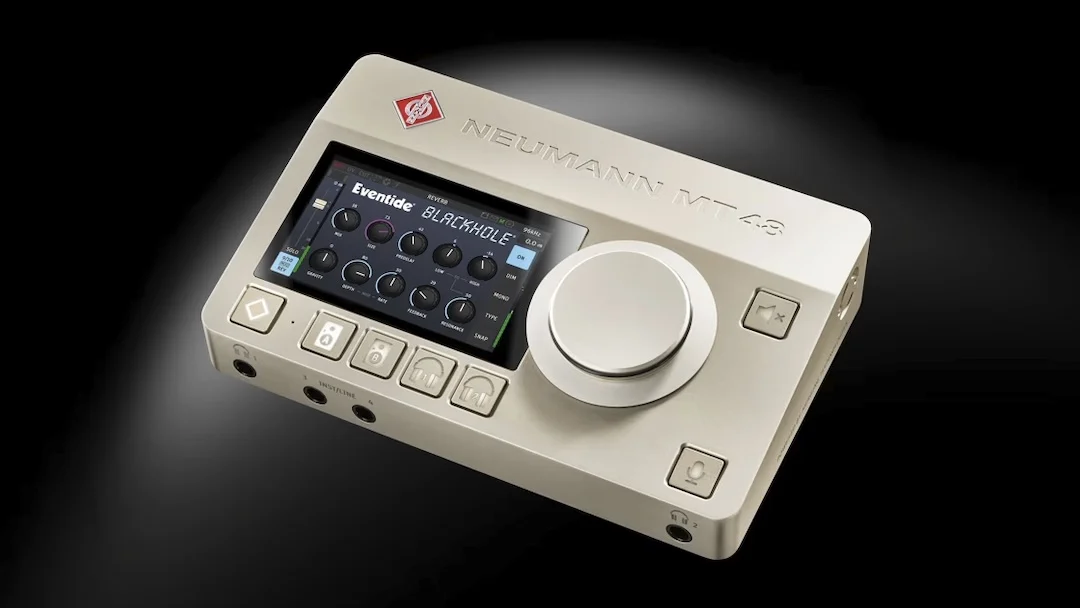
BERLIN, GERMANY — In a move that further solidifies its position at the intersection of high-fidelity analog heritage and cutting-edge digital networking, Neumann.Berlin has officially announced the release of Firmware 2.0 for its flagship MT 48 audio interface. This comprehensive update represents a significant milestone for the device, transforming it from a premium desktop interface into a versatile powerhouse capable of anchoring professional broadcast environments, high-end recording studios, and immersive audio production suites.
Firmware 2.0 is not merely a collection of bug fixes; it is a fundamental expansion of the MT 48’s internal architecture. By introducing third-party plug-in compatibility, scalable Dante networking, and advanced broadcast encoding tools, Neumann is signaling its intent to dominate the Audio-over-IP (AoIP) landscape. The update also brings the MT 48 into closer alignment with its sister products from Merging Technologies, specifically the Anubis and Hapi Mk III, creating a unified ecosystem for professional audio engineers.
Main Facts: A New Era for the MT 48
The MT 48, originally launched to critical acclaim for its class-leading converters and intuitive touchscreen interface, receives a suite of high-impact features in this latest iteration. The headline additions include:
- Expanded Plug-in Compatibility: For the first time, MT 48 users can access the sophisticated DSP-based plug-ins previously exclusive to the Merging Technologies Anubis platform. This includes the legendary Eventide Blackhole Reverb and the surgical Merging+Deesser.
- Scalable Dante Integration: The update introduces "Dante Ready" plans, allowing users to license 8×8, 16×16, 32×32, or 64×64 channels of Dante connectivity. This enables the MT 48 to scale according to project requirements, from simple stereo setups to massive networked configurations.
- Ambeo 2-Channel Live Broadcast Encoder: Addressing the burgeoning demand for immersive audio, the MT 48 now supports the Ambeo encoder. This allows broadcasters to deliver immersive soundscapes via standard two-channel delivery formats, ensuring compatibility with existing consumer hardware while providing an enhanced spatial experience.
- Lawo Home Support: In a major win for enterprise-level broadcast facilities, the MT 48 now integrates with the Lawo Home management platform, facilitating seamless device discovery and routing in complex IP infrastructures.
- User Experience Overhaul: A redesigned "Advanced Pages" interface streamlines navigation, offering deeper control over the device’s internal DSP and routing matrix through improved visuals and a more logical workflow.
Chronology: From Analog Legend to Digital Pioneer
To understand the significance of Firmware 2.0, one must look at the trajectory of Neumann.Berlin over the last decade. Historically known for the world’s most coveted microphones and monitors, the company’s move into the audio interface market was a calculated step toward providing a "complete signal chain."
The MT 48 was born from a strategic partnership with Merging Technologies, a leader in high-resolution digital audio and networking. When the MT 48 was first unveiled, it was seen as a "Neumann-optimized" version of the Merging Anubis, featuring custom-designed preamps and a user interface tailored for studio musicians and producers.
Since its launch, the MT 48 has undergone several minor iterations, primarily focusing on stability and basic feature parity with the Anubis. However, the industry’s rapid shift toward AoIP (specifically the AES67 and Dante standards) and the rising demand for immersive audio content created a need for a more robust software foundation.
The development of Firmware 2.0 began in earnest as Neumann recognized that the MT 48 was being adopted not just by home producers, but by major broadcast networks and multi-room facility managers. The timeline of this release reflects a year-long engineering effort to merge the "creative" side of the MT 48 (plug-ins and recording tools) with the "infrastructure" side (Dante and Lawo integration).
Supporting Data: Technical Specifications and Performance
The technical depth of Firmware 2.0 is reflected in how it leverages the MT 48’s internal DSP (Digital Signal Processing). Unlike traditional interfaces that rely on the host computer’s CPU for effects, the MT 48 processes these new tools internally, ensuring near-zero latency—a critical requirement for tracking and live broadcast.
The Plug-in Suite
The inclusion of Eventide Blackhole is a significant value-add. Traditionally a staple of high-end rack units and DAW plug-ins, its implementation on the MT 48’s DSP allows engineers to monitor with massive, cinematic reverbs without taxing their computers. The Merging+Deesser provides a highly specialized tool for vocalists, allowing sibilance control at the input stage, which is often preferred in "committing to a sound" during the tracking process.
Dante Scalability
The "Dante Ready" plans represent a shift in Neumann’s business model toward flexible, software-defined hardware. By offering tiered channel counts (8×8 to 64×64), Neumann allows a user to start with a modest investment and upgrade their networking capacity via a software license as their studio grows. This is particularly relevant for the MT 48, which features two independent sets of outputs, allowing for complex monitoring setups that can now be fed into a wider Dante network.
Broadcast Standards
The Ambeo 2-channel live broadcast encoder is perhaps the most forward-looking technical addition. As live sports and concerts move toward immersive formats (like Dolby Atmos), broadcasters face the challenge of delivering these mixes to viewers with standard stereo televisions or headphones. The Ambeo encoder solves this by "folding down" the immersive information into a two-channel signal that still retains spatial cues, a process now handled natively within the MT 48.
Official Responses: Neumann’s Vision for the Future
While official press statements emphasize the "creative freedom" offered by the update, internal product specialists at Neumann suggest that Firmware 2.0 is about "removing the ceiling" for what a desktop interface can do.
In technical briefings, Neumann representatives have highlighted that the MT 48 is no longer "just an interface" but a "mission control center." The integration with the Lawo Home Management Platform is a testament to this. Lawo Home is the industry standard for managing IP-based media infrastructures; by supporting this platform, the MT 48 can be managed remotely by a broadcast engineer in a different building, or even a different city, allowing for centralized control of gain, routing, and monitoring.
"The MT 48 has always been about bringing the legendary Neumann sound into the digital domain," noted a spokesperson during the Berlin launch event. "With Firmware 2.0, we are ensuring that this sound can travel anywhere—from a single-person podcast setup to the most complex networked broadcast facility in the world. We are giving the user the tools to scale their production without ever having to swap out their hardware."
Implications: Reshaping the Professional Audio Landscape
The release of Firmware 2.0 has several far-reaching implications for the audio industry, specifically in how professionals view the "Desktop Interface" category.
1. The Convergence of Studio and Broadcast
Historically, there has been a divide between "studio" gear (focused on character and creativity) and "broadcast" gear (focused on redundancy, networking, and standards). The MT 48 Firmware 2.0 effectively erases this line. By combining high-end preamps with Lawo and Dante support, Neumann is providing a device that feels at home in both a boutique vocal booth and a television master control room.
2. Hardware as an Evolving Platform
This update reinforces the trend of "Hardware-as-a-Service" or software-defined hardware. Consumers are increasingly wary of "disposable" tech. By providing a massive feature leap through firmware, Neumann is extending the lifecycle of the MT 48, proving that the hardware has significant "headroom" for future innovations. This builds brand loyalty and justifies the premium price point of the unit.
3. Democratization of Immersive Audio
By building the Ambeo encoder directly into the interface, Neumann is lowering the barrier to entry for immersive content creation. Independent creators and smaller broadcast outlets can now produce content that meets modern spatial standards without requiring a massive array of outboard encoders.
4. Competitive Pressure
The MT 48 now stands as a formidable competitor to other high-end networked interfaces from brands like Focusrite (RedNet), Universal Audio (Apollo), and RME. While those brands offer excellent networking or DSP, Neumann is the only one currently offering this specific blend of Merging Technologies’ networking prowess and Neumann’s storied analog heritage.
Conclusion
Neumann.Berlin’s Firmware 2.0 for the MT 48 is a transformative update that redefines the capabilities of a modern audio interface. By bridging the gap between the creative needs of musicians and the technical requirements of global broadcasters, Neumann has created a truly "future-proof" device. As the industry continues to migrate toward IP-based workflows and immersive audio, the MT 48, backed by this new software foundation, is positioned to remain at the heart of the professional audio conversation for years to come.
For existing users, the update is a significant value-add that breathes new life into their hardware. For those on the fence, the addition of Dante scalability and third-party plug-ins makes the MT 48 perhaps the most versatile and powerful interface currently available on the market.