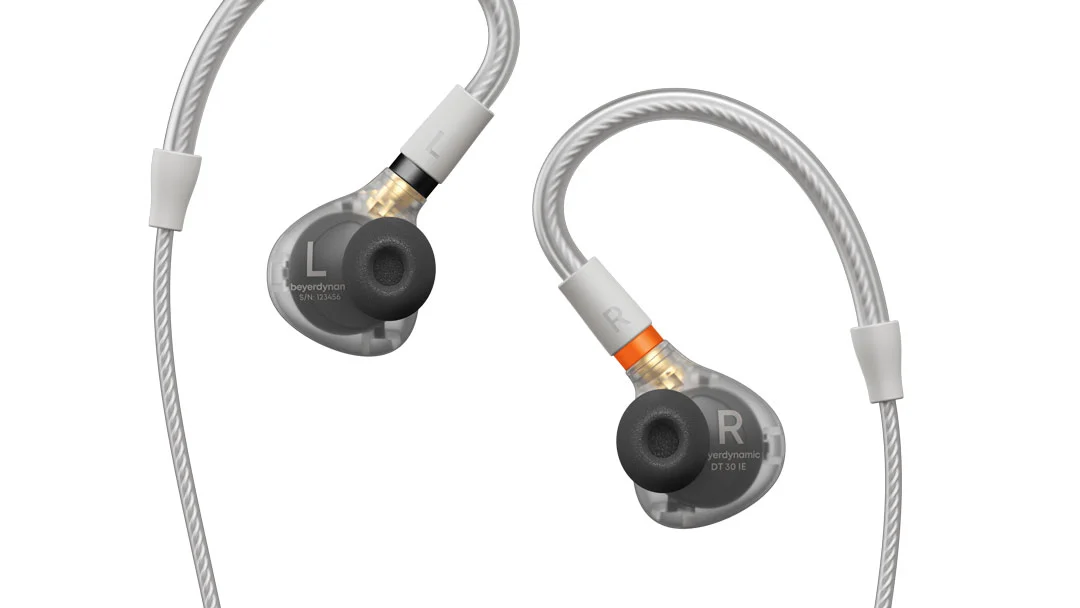
HEILBRONN, GERMANY — In a move that signals a strategic shift toward the burgeoning "prosumer" and entry-level professional markets, Beyerdynamic has officially announced the release of the DT 30 IE. This new In-Ear Monitor (IEM) system, priced at a competitive $159.99, is specifically engineered for musicians, podcasters, and live performers who are making the transition from traditional floor monitors to personal in-ear systems.
The announcement, made on June 17, 2026, marks a pivotal moment for the storied German manufacturer. Known for decades as the gold standard in studio over-ear headphones with their DT 770 and DT 990 lines, Beyerdynamic is now aggressively pursuing the in-ear segment. The DT 30 IE is positioned not just as a piece of hardware, but as an entry point into a professional ecosystem that was once reserved for high-touring acts and elite studio engineers.
Main Facts: A Balanced Entry into the IEM World
The DT 30 IE is defined by its "all-rounder" philosophy. While many high-end IEMs are tuned specifically for certain instruments—emphasizing low-end for bassists or high-mids for vocalists—the DT 30 IE aims for a neutral, balanced sound signature that serves a wide variety of applications.
Technical Specifications at a Glance:
- Driver Type: 11 mm high-performance dynamic driver.
- Frequency Response: 5 Hz to 20,000 Hz.
- Weight: 2.7 grams per earpiece (excluding cable).
- Isolation: High-grade passive noise isolation.
- Cable: Detachable, Kevlar-reinforced for maximum durability.
- Price Point: $159.99 USD.
The core of the unit is the 11 mm dynamic driver. In the world of IEMs, driver size and tuning are the primary determinants of soundstage and clarity. By opting for a larger-than-average 11 mm driver, Beyerdynamic ensures that even at lower volumes, the monitor provides a full-bodied low end without sacrificing the crispness of the transients. This is particularly crucial for first-time users who may struggle with the "clinical" or "thin" sound often associated with cheaper, balanced armature-based entry-level buds.
The physical design of the DT 30 IE is the result of extensive ergonomic research. Beyerdynamic claims to have utilized hundreds of individual ear scans to create a housing shape that fits the maximum number of users securely. This focus on "universal fit" is a direct response to the primary complaint of new IEM users: physical fatigue and the fear of the monitors falling out during a high-energy performance.
Chronology: From Studio Legends to In-Ear Innovation
To understand the significance of the DT 30 IE, one must look at the timeline of Beyerdynamic’s evolution over the last several years.
The Legacy Era (1924–2020)
For nearly a century, Beyerdynamic was synonymous with the "DT" (Dynamic Telephone) prefix. The DT 770 Pro, released in the 1980s, became a permanent fixture in recording studios worldwide. However, as the live music industry shifted away from loud stage wedges toward silent stages and personal monitoring, the demand for high-fidelity in-ears skyrocketed.
The Pivot (2024–2025)
Recognizing a gap in their portfolio, Beyerdynamic began a multi-year R&D cycle focused on miniaturizing their signature sound. This culminated in the January 2025 launch of the DT 70 IE Series at the NAMM Show. The DT 70 IE was a flagship product, featuring multi-driver configurations and instrument-specific tuning (e.g., a "Drummer Edition" with enhanced sub-bass). While critically acclaimed, its high price point remained a barrier for local bands and students.
The Realization (Late 2025)
Market data throughout 2025 indicated that the fastest-growing segment of the audio market was the $150–$200 range. Musicians were looking for "workhorse" gear—something better than consumer earbuds but more affordable than custom-molded $1,000 monitors.
The Launch (June 17, 2026)
The DT 30 IE is the direct result of that market realization. Designed in Heilbronn, Germany, the system was developed to provide the "Beyerdynamic Sound" in a package that is accessible to the masses. It represents the final piece of the company’s "Stage-to-Studio" initiative, ensuring they have a product for every stage of a musician’s career.
Supporting Data: Ergonomics and Materials
Beyerdynamic’s engineering team focused heavily on two metrics for the DT 30 IE: Weight-to-Comfort Ratio and Signal Integrity.
The Ergonomics of 2.7 Grams
The weight of an IEM is a critical factor in long-term comfort. At 2.7 grams per side, the DT 30 IE is among the lightest in its class. For comparison, many mid-range IEMs weigh between 4 and 6 grams. By using a specialized lightweight polymer for the housing, Beyerdynamic has reduced the "lever effect" on the ear canal, which often causes soreness after two or more hours of use.
The inclusion of six different pairs of ear tips—three in medical-grade silicone and three in memory foam—is not merely an aesthetic choice. Supporting data from the company’s internal testing suggests that a proper seal can provide up to 25dB of passive noise reduction. This allows musicians to keep their monitor volume at safer levels, protecting their hearing over long-term use.
The Kevlar Factor
Durability is the number one failure point for entry-level IEMs. Cables often fray or snap at the connector point. Beyerdynamic has addressed this by utilizing a Kevlar-reinforced detachable cable. Kevlar, a heat-resistant and strong synthetic fiber, provides the tensile strength necessary to survive the rigors of touring—being stepped on, pulled, and sweated on—without signal degradation. The detachable nature of the cable (using a standard MMCX or proprietary 2-pin connection, depending on the region) ensures that if a cable does fail, the user only needs to replace the wire, not the entire $160 unit.
Official Responses: The "All-Rounder" Philosophy
In a statement released alongside the product launch, Beyerdynamic’s Lead Product Manager for Pro Audio emphasized the intent behind the DT 30 IE’s tuning.
"With the DT 30 IE, we wanted to eliminate the intimidation factor of professional monitoring," the spokesperson stated. "Many first-time users are overwhelmed by the technical choices in the IEM market. They don’t know if they need a ‘bass-boosted’ driver or a ‘mid-forward’ driver. They just want to hear themselves clearly. The DT 30 IE is our answer to that—a balanced, reliable tool that sounds great whether you are a vocalist, a guitarist, or a podcaster."
The company also highlighted the "Designed in Germany" pedigree. While many competitors in the sub-$200 market outsource both design and manufacturing to third-party factories, Beyerdynamic maintains that the acoustic engineering and quality control for the DT 30 IE remain centered in their Heilbronn headquarters. This ensures that the "German sound"—characterized by analytical clarity and robust build quality—is maintained even at a lower price point.
Implications: Changing the Landscape of Live Sound
The introduction of the DT 30 IE has several significant implications for the music industry and the broader audio market.
1. The Death of the Floor Wedge
As high-quality IEMs become more affordable, the "silent stage" becomes a reality for smaller venues and local bands. This leads to better Front of House (FOH) mixes, as there is less "bleed" from stage monitors into the vocal microphones. The DT 30 IE makes it financially feasible for a four-piece band to switch entirely to in-ears for under $700, a move that would have cost thousands just a decade ago.
2. Hearing Health as a Priority
One of the most profound implications of the DT 30 IE is its impact on hearing conservation. By providing 25dB of isolation and a clear signal, young musicians are less likely to "crank" their monitors to compete with the sound of a loud drummer or a wall of Marshall stacks. By making professional isolation affordable, Beyerdynamic is indirectly contributing to the longevity of the next generation’s hearing.
3. The "Prosumer" Crossover
The DT 30 IE is likely to find a home far beyond the concert stage. The rise of high-fidelity mobile gaming and professional-grade podcasting creates a massive secondary market. Podcasters who require long-term comfort and a neutral sound for editing will find the DT 30 IE a compelling alternative to bulky over-ear headphones, especially in mobile or "on-location" recording scenarios.
4. Pressure on Competitors
The $159.99 price point puts Beyerdynamic in direct competition with established players like Shure (SE215) and Sennheiser (IE 100 PRO). However, the DT 30 IE’s wider frequency response (5 Hz vs. the typical 20 Hz) and the inclusion of premium materials like Kevlar may force competitors to refresh their aging entry-level lineups.
Conclusion
The Beyerdynamic DT 30 IE represents more than just a new product; it is a testament to the maturation of the personal monitoring market. By distilling decades of acoustic expertise into an ergonomic, durable, and affordable package, Beyerdynamic has lowered the barrier to entry for professional-grade audio. As musicians increasingly move away from the chaotic soundscapes of traditional stage monitoring, the DT 30 IE stands ready to provide a clear, balanced, and safe path forward. For the first-time user, the message is clear: professional sound is no longer a luxury—it is a standard.