Main Facts: The Eternal Struggle of Capturing Electric Guitar Tone
Mixing electric guitars live or in the studio often feels like navigating a minefield of conflicting priorities, technical constraints, and artistic choices. At its core, creating a great electric guitar sound in the mix starts with respecting the fundamental tone crafted by the instrumentalist. Yet, time and again, audio engineers and front-of-house (FOH) mixers fall into predictable traps—the most egregious of which involves poor amplifier miking.
When a microphone is left hanging lifelessly by its cable like a noose, halfheartedly pointed at empty air midway down a speaker cabinet, the results are catastrophic for the mix. The guitarist plays on, entirely oblivious to the sonic disaster occurring downstream, while the engineer is left weeping over a muddy, phase-cancelled, or hollow signal.
The root problem in modern mixing is a failure to recognize the intrinsic value of tone. Guitarists invest heavily in boutique instruments, vintage stompboxes, and high-end amplifiers to cultivate a signature sound. Consider the unmistakable sonic fingerprints of blues legends like B.B. King or Stevie Ray Vaughan—artists whose identity can be identified within a mere three notes. Beyond hardware, musicians meticulously choose specific pickups, pedal combinations, and amp settings to fit the emotional narrative of a given song.
Respecting this intricate web of tone-shaping requires audio engineers to master two critical domains: precise amplifier miking and intelligent sculpturing during the mixing process. Only by treating the guitar’s raw tone as an artistic medium—much like a sculptor approaches a block of marble—can a mix engineer achieve professional clarity.
Chronology: The Lifecycle of a Guitar Tone from Practice Room to FOH Console
To understand how an electric guitar sound evolves and ultimately succeeds or fails in a mix, one must trace its chronological journey from the musician’s hands to the audience’s ears.
Phase 1: Inception and Selection
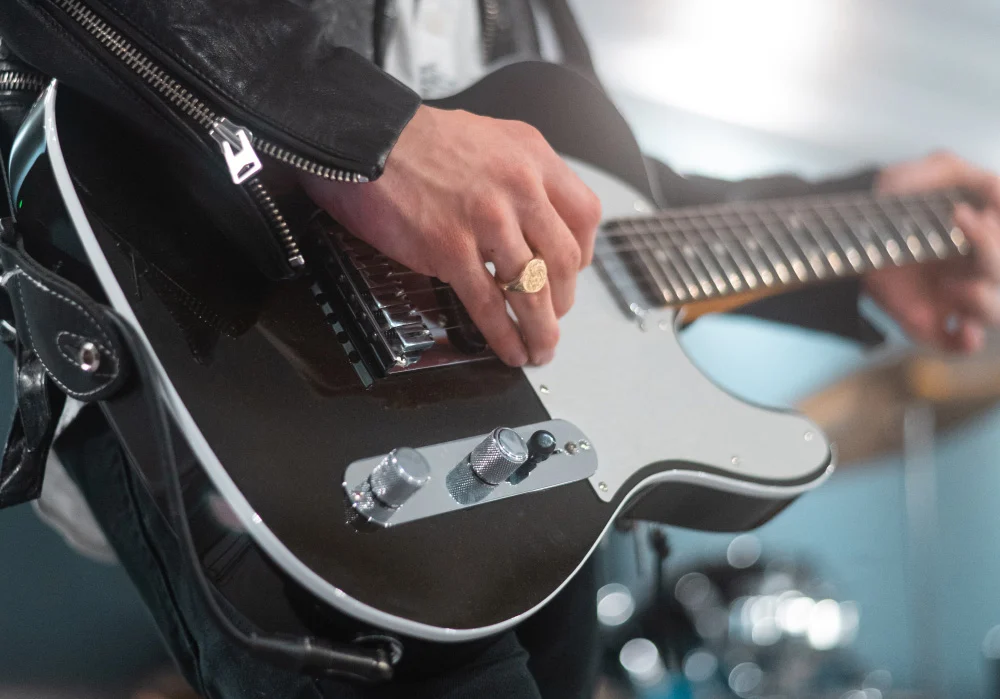
The journey begins weeks or months before a performance, when the guitarist writes a part, selects a specific instrument (such as a Stratocaster for glassier highs or a Les Paul for thick midrange warmth), and pairs it with appropriate pedals and amplifier settings.
Phase 2: The Rehearsal and Soundcheck Evolution
A crucial turning point occurs during live rehearsals and soundchecks. According to seasoned live audio veterans, guitarists regularly change patches, pedal selections, and gain structures between initial practice sessions and the final soundcheck. Once they hear how their instrument interacts with a full band in a live acoustic space, they re-evaluate their sound. An engineer must be flexible and prepared for these sudden sonic shifts.
Phase 3: Stage Monitoring and Source Evaluation
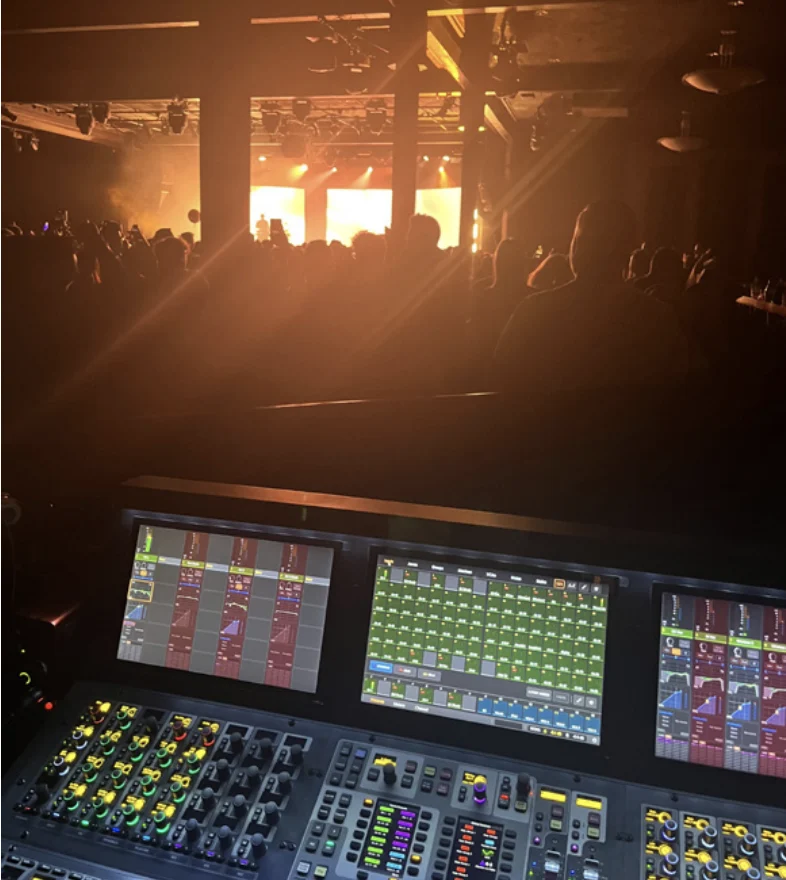
Before touching a console fader or dialing in EQ, the engineer must step away from the mixing desk, walk onto the stage, and listen directly to the amplifier’s physical output. For direct setups utilizing digital modelers (such as a Line 6 POD or Kemper), the engineer must solo the guitar channel flat within the house system. This critical listening phase identifies the raw characteristics of the tone—whether it is heavy, gritty, biting, warm, grungy, or bright.
Phase 4: Miking and Signal Capture
With the source tone understood, the engineer deploys microphones, dialing in physical placement inch by inch relative to the speaker cone until the desired balance of warmth, bite, and directness is achieved.
Phase 5: The Final Mix and Solo Dynamics
Finally, during the performance, the engineer manages the dynamic interplay between rhythm and lead sections, ensuring that supporting rhythm parts "grind behind" the mix while solos step forward with vocal-like clarity and emotional impact.
Supporting Data: Understanding Amplifiers, Microphones, and Sculptural Mixing Techniques
Achieving sonic excellence requires a deep dive into the hardware and technical methodologies that govern electric guitar amplification and mixing.
The Anatomy of Amplification
Amplifiers fundamentally alter the incoming guitar signal through dedicated EQ stages. While standard controls include bass, middle, and treble, high-end amplifier heads—such as the Marshall DSL100H—expand this toolset significantly by incorporating resonance, presence, and dual reverb architectures ("classic" and "ultra").
An amplifier setup typically consists of two primary components:
- The Amp Head: The controlling brain that houses pre-amplification, power generation, and tone-shaping circuitry.
- The Speaker Cabinet: Typically housing a configuration of four speakers (though smaller practice amps feature single speakers), cabinets emit sound waves unevenly across the physical surface of the speaker cone. This uneven dispersion is precisely why microphone placement is so vital.
Microphone Selection and Placement Strategies
Microphones naturally color incoming audio. Consequently, engineers must experiment with various models to find the right pairing for a specific genre or venue:
- Dynamic Microphones: The Shure SM57 remains an industry workhorse for its durability and tight directional response.
- Instrument Condensers: Brands like Rode (e.g., the NT1) offer extended high-frequency detail and transient response.
- Ribbon Microphones: High-end choices like the Royer R-121 deliver smooth, natural high-end roll-off ideal for taming harsh, biting guitar cabinets, provided budget permits.
Miking Best Practices:
- Stage Positioning: Ensure the amplifier is pointed at the guitarist’s head so they accurately perceive their own tone while adjusting controls. For full stacks, maintain a distance of a few feet.
- Close Miking: Begin by placing the microphone roughly one inch away from the cabinet mesh, initially pointing toward the outer edge of the speaker cone.
- The Sweep: Listen through the FOH system while incrementally moving the microphone toward the center of the speaker. Moving inward increases brightness and bite; moving outward introduces warmth and softens harsh high frequencies.
- Distance and Proximity Effect: Moving the mic farther back captures more stage bleed, while placing it too close introduces an artificial low-end boost due to the microphone proximity effect.
The Michelangelo Approach to EQ and Gating
Famed painter and sculptor Michelangelo famously described his process by saying, "I saw the angel in the marble and carved until I set him free." Mixing electric guitars follows this exact philosophy. The engineer’s job is not to mutate the guitar into an unrecognizable synthesizer or acoustic simulation, but rather to refine and sculpt the existing tone, carving away unnecessary frequencies that clash with vocals or keyboards.
To maintain mix clarity, engineers frequently utilize noise gates on the guitar amplifier’s mic channel. This suppresses unwanted stage bleed and amplifier hiss when the guitarist is resting, ensuring that dead air is not unnecessarily broadcasted into the house PA system.
Official Perspectives: Insights from Industry Professionals
Experienced touring engineers and working musicians emphasize that electric guitar mixing is as much about psychological awareness as it is about technical execution.
Guitarist Adam Lipps describes his ideal supportive rhythm style as "grind behind." Popularized during the hard-rock explosion of the 1980s, this approach requires the rhythm electric guitar to provide a persistent, driving wall of energy that supports the track without muddying the vocal or keyboard spaces.
When transitioning to a lead break, the mixing philosophy shifts dramatically. Renowned live sound engineer Steve Dennis famously notes:
"A guitar solo should be like a lead vocal. It should stand above everything else in the mix. It’s more than an instrumental interlude, it’s an emotion."
To achieve this vocal-like prominence during a solo, engineers deploy a three-tiered strategy:
- Volume Differentiation: The most direct method is applying a clean gain boost via a dedicated solo channel or VCA group.
- Fader Automation: Simultaneously dipping the level of competing rhythm instruments—particularly rhythm electric guitars and keyboards—to carve out physical space in the sonic landscape.
- Presence Enhancement: Boosting the lead guitar in its upper-midrange and high-frequency registers to add tonal "shine" and cut through dense reverb or delay effects.
Implications: Elevating Live Sound and Studio Production Standards
The implications of mastering electric guitar mixing extend far beyond avoiding embarrassing moments with dangling microphones. When audio engineers respect the source tone, understand the physical nuances of speaker dispersion, and treat EQ as a sculptural medium, the overall quality of modern music production rises significantly.
Poorly mixed guitars lead to listener fatigue, masked vocal lines, and frustrated musicians who feel their artistic vision has been compromised by incompetent sound reinforcement. Conversely, when FOH engineers and studio producers collaborate effectively with guitarists—anticipating tonal changes, utilizing proper miking techniques, and treating solos with the reverence of lead vocals—the result is an immersive, emotionally resonant auditory experience.
Ultimately, keeping the tears of frustration at bay in favor of pristine, powerful guitar mixes ensures that rock, blues, and alternative music retain the raw, driving energy that defines the genre.