
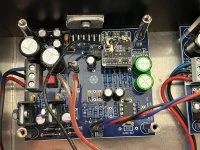
In the world of high-end audio, the humble operational amplifier (op-amp) has long been a subject of intense scrutiny. While monolithic integrated circuit (IC) op-amps—such as the industry-standard LM4562 or the high-performance OPA828—are engineering marvels of precision and cost-efficiency, a growing contingent of audiophiles and DIY enthusiasts are turning their attention back to discrete component designs. The recent community-led effort to reverse-engineer and optimize the "SA100" discrete op-amp module highlights a shift toward reclaiming the "discrete character" that many believe is lost in the miniaturized, silicon-limited world of integrated circuits.

Main Facts: The Shift Toward Discrete Architectures
The core of this debate centers on the subjective performance of discrete op-amps compared to their IC counterparts. Enthusiasts often speak of "OPA fog"—a perceived lack of transparency, micro-detail, and transient clarity when relying on traditional monolithic chips. The SA100, a Chinese-manufactured discrete module, has emerged as a focal point for those looking to bypass these limitations.

By building these modules directly into the negative feedback loop of a composite power amplifier, users have reported a significant leap in soundstage openness and dynamic realism. The appeal lies in the ability to utilize discrete transistors, which offer superior thermal management and the opportunity for hand-matched component pairs—features that are structurally constrained in a standard DIP8 or SO8 package. The SA100 represents a bridge between vintage design philosophy and modern, high-precision assembly.

Chronology of the Reverse-Engineering Effort
The exploration of the SA100 module began in late April 2026, when user "zarandok" documented their experience installing these modules into a custom composite power amplifier. The journey began with a simple listening test, which quickly escalated into a collaborative technical project on the diyaudio.com community forums.

- April 28, 2026: Initial testing of the SA100 modules yielded immediate positive subjective results. The user observed superior performance in brass instrument reproduction and drum transients. The community was invited to assist in decoding the circuit, as the user aimed to produce a clone for further optimization.
- April 28, 2026 (Technical Review): Veteran forum members immediately identified flaws in the initial schematic sketches, noting incorrect transistor polarities (specifically the Q10 PNP assignment) and swapped emitter/collector orientations for Q3. These corrections were rapidly integrated into the documentation.
- April 29, 2026: Discussions shifted toward the specific topology of the SA100, comparing it to established High Definition Amplifier Module (HDAM) circuits. Technical debates regarding folded cascode topologies and the necessity of base resistors to prevent high-frequency oscillation dominated the discourse.
- May 1, 2026: The investigation reached a critical juncture regarding component identification. Questions were raised about the authenticity of the "K398" SMD transistors marked on the boards, leading to discussions on component sourcing and the potential for counterfeit or re-branded parts.
- May 18, 2026: The project reached a validation milestone when technical measurements were shared by community member "Sercan85," providing the first empirical look at the performance of the SA100.
Supporting Data: Technical Challenges and Circuitry
Decoding the SA100 required navigating the complexities of high-impedance circuits. The community identified several key areas where the module deviates from standard IC design.

The Compensation Dilemma
One of the most persistent issues identified during the reverse-engineering process was the "???" marked capacitors in the original schematics. Experts advised that these are compensation capacitors. The consensus for optimization is to start with a value (e.g., 220pF) and incrementally decrease it while monitoring for oscillation, effectively "tuning" the amplifier’s stability.

The Oscillation Risk
As pointed out by community contributors, the high-impedance lines in the SA100 design are prone to oscillation. The addition of base resistors (ranging from 220R to 470R for the output stage and 47R for the input stage) was recommended as a mandatory upgrade. Without these, the discrete nature of the transistors—while theoretically superior—can lead to instability that would never occur in a monolithic chip designed with internal stability compensation.

Component Integrity
The mystery of the "K398" marking provided a reality check for the project. While the label suggests a specific vintage transistor, it was noted that the actual parts installed on the modules often differ. This highlights a common risk in the DIY audio market: the use of obsolete or re-marked components. The identification of parts like the 2SK3320 or 2SK2145 in place of expected transistors underscores the need for users to verify their components via datasheet analysis rather than relying on board markings.

Official Responses and Expert Perspectives
The project drew on the collective wisdom of seasoned audio engineers and long-time hobbyists. Notable contributions included:

- Design Philosophy: Experts directed the project toward Bob Cordell’s Designing Audio Power Amplifiers as the definitive guide to understanding these circuits. The emphasis was placed on the importance of quiescent currents, which in the SA100 are significantly higher than what a standard IC can dissipate.
- Thermal Management: It was noted that the SA100 runs at idle dissipation levels (approximately 360mW) that would likely cause a standard DIP8 op-amp to overheat or fail. This thermal headroom is a core contributor to the "discrete sound," allowing for more linear operation of the input and voltage amplification stages.
- The "Rip-off" Controversy: A notable moment in the discourse involved a stern warning from industry expert Jan Didden regarding the unauthorized sharing of copyrighted technical literature. The incident served as a reminder that even within open-source DIY communities, respect for intellectual property remains a critical boundary.
Implications for the Future of DIY Audio
The SA100 project is more than just a technical exercise; it represents a broader trend in high-end audio towards "modular personalization." As mass-produced consumer electronics continue to favor extreme miniaturization and cost-cutting via integrated silicon, there is a clear, growing desire for modular, repairable, and tunable audio paths.

Is "Discrete" Always Better?
The debate remains polarized. While subjective reports are overwhelmingly positive, the objective reality is that discrete designs are harder to stabilize and require more board space. However, the SA100 project proves that for the dedicated enthusiast, the "fun" of the build—and the ability to tweak compensation capacitors or select specific transistor grades—is just as important as the final measurement.

The Path Forward
The implications for future DIY projects are clear:

- Transparency is Paramount: The move to document the schematic and share it openly is the new gold standard for community projects.
- Measurements Matter: The inclusion of FFT (Fast Fourier Transform) measurements, as provided in the later stages of the thread, is vital for separating "audiophile myth" from electrical reality.
- Component Scrutiny: As the SA100 investigation revealed, one must always be wary of the provenance of parts sourced from secondary markets.
In conclusion, the SA100 discrete op-amp project serves as a compelling case study of modern audio engineering in the wild. It demonstrates that while ICs may offer convenience and standardized performance, there is a tangible, audible benefit to be found in the deliberate, hand-tuned application of discrete components. Whether the "discrete character" is a product of superior electrical topology or the simple satisfaction of the builder remains a point of debate, but for those who have experienced the difference, the return to discrete is likely permanent.

As the community continues to refine the design, adding base resistors to dampen oscillations and optimizing the compensation network, the SA100 stands as a testament to the fact that in the pursuit of high-fidelity, the journey of understanding the circuit is just as rewarding as the music it reproduces. The project has successfully transformed from a simple "parts swap" into a comprehensive learning experience, proving that the collective intelligence of the DIY audio community remains a powerful force for innovation.


