Introduction: The Sound and the Fury in the Test Room
Walk into the What Hi-Fi? home cinema test room on any given afternoon, and you are likely to be greeted by a familiar chorus of philosophies. The team’s guiding principles are practically etched into the acoustic panels: "Good sound is good sound, regardless of whether it’s home cinema or hi-fi," and "Audio quality is equally as important as picture quality for home cinema."
Then, of course, there is the third, less philosophical refrain—usually shouted in exasperation: "Blasted box! To hell with you! Why won’t you fit?!"
While that final exclamation is merely the standard war cry associated with the agonizing ritual of repackaging AV gear—a process complicated by ill-fitting, nonsensical blocks of fragile polystyrene designed by architects of chaos—the first two mantras are the bedrock of proper visual and auditory critique.
All too often, enthusiasts fixate exclusively on visual fidelity, chasing the highest lumen counts, deepest blacks, and sharpest 4K resolution, while treating sound as an afterthought. This oversight is particularly common among consumers transitioning away from standard flat-screen televisions or basic projectors and stepping into the world of Ultra-Short Throw (UST) projection. But as a recent grueling round of testing for the What Hi-Fi? Awards 2026 proved, audio is not just a companion to the picture; it is the heartbeat of the cinematic experience.
Main Facts: The UST Projector Group Test Revelation
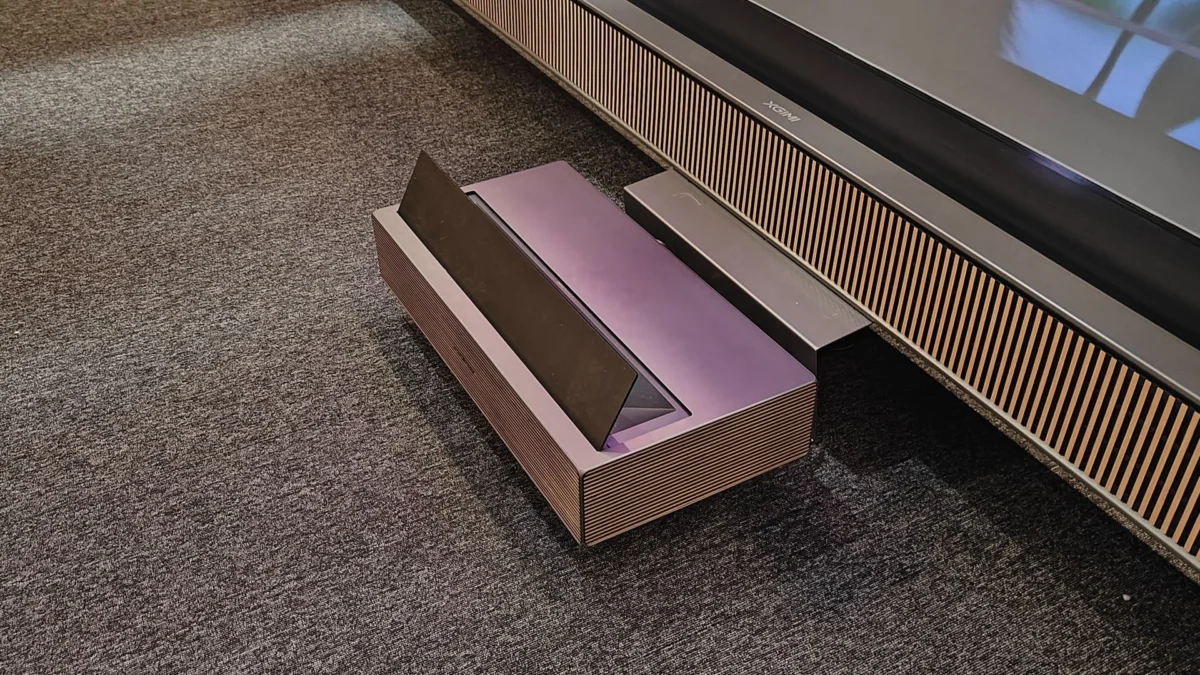
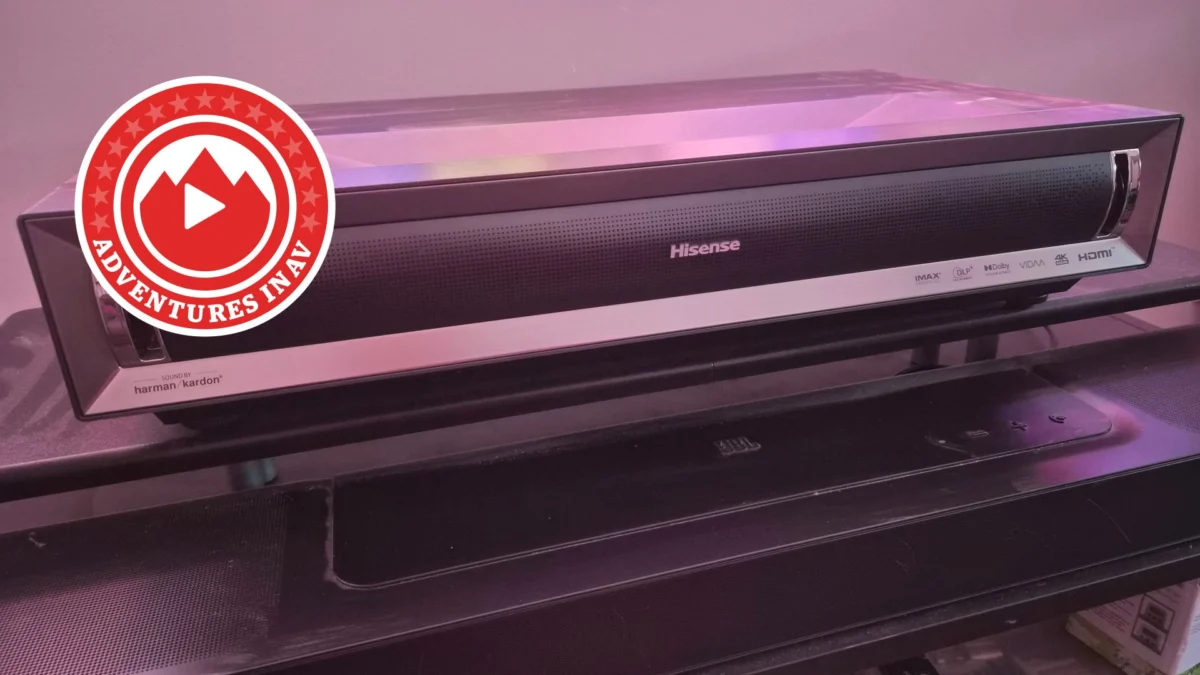
The realization struck during the final stages of the What Hi-Fi? Awards 2026 UST projector group test. This rigorous multi-week evaluation process pits the industry’s leading ultra-short throw models head-to-head, testing every facet of their performance to crown the coveted Best Buy winners later in the year.
By the time testing reached its final units, fatigue had set in. Reviewers covering the category had become accustomed to the industry status quo regarding UST audio systems: functional, flat, and ultimately forgettable. A quick scan of current market reviews reveals a glaring industry-wide deficit—finding a UST projector with a five-star rating purely for its integrated audio capabilities is exceptionally rare. Most manufacturers treat built-in speakers as a mere checkbox, prioritizing dialogue clarity while artificially boosting underpowered low-end frequencies, resulting in muddy, compressed soundscapes that fail to engage the listener.
However, the routine was shattered when the final contender of the lineup was unboxed, plugged in, and put through its paces with the 4K Blu-ray of Sinners.
Chronology: From Jaded Fatigue to Acoustic Awakening
To understand why this particular unit caused such a stir, one must trace the timeline of the testing phase.
Weeks 1 & 2: The Slog of Mediocre Sound
In the early days of the group test, the testing team cycled through various UST projectors, evaluating color accuracy, contrast, edge-to-edge sharpness, and processing engines. Predictably, the built-in sound systems were put through standard cinematic stress tests—action sequences, whispered dialogue, and sweeping orchestral scores. While the visuals on many of these high-end laser projectors were breathtaking, the audio consistently fell flat. Soundstages felt constrained to the physical chassis of the projector sitting mere inches from the wall, lacking depth, dynamic range, and, crucially, musicality. Reviewers grew jaded, accepting that external soundbars or dedicated surround systems would remain a mandatory secondary purchase for anyone buying a UST setup.
The Turning Point: The Sinners 4K Blu-ray Test
Toward the end of the evaluation schedule, the final projector was connected. To test its dynamic handling and tonal balance, the team queued up a famously demanding sequence from Sinners: the dingy speakeasy musical medley scene, featuring Sammy performing the blues.
The transformation was immediate. The moment Sammy plucked his first guitar string, the test room’s cynical atmosphere dissolved. Ears pricked up. As the scene progressed—morphing into an intricate musical medley that traversed multiple genres of Black music across decades—the reviewers found themselves involuntarily nodding their heads to the beat.
The secret weapon wasn’t sheer volume or earth-shattering subwoofer performance; it was musicality.
Supporting Data & Audio Analysis: What Sets Apart Exceptional Sound
Why did this anonymous UST projector succeed where dozens of others failed? The answer lies in the nuanced engineering of its integrated acoustic architecture.
- Rhythmic Drive: Unlike its competitors, which smeared complex audio passages together, this unit possessed genuine rhythmic drive. It propelled the listener through the genre-crossing musical rooms, bringing interlinking beats to life with precise timing.
- Controlled Dynamic Swells: During the scene’s climax—marked by a screaming psychedelic guitar wailing over competing frequencies—the projector managed a controlled, pleasing swell in volume rather than collapsing into distortion or compression.
- Bass Extension and Impact: While it could not compete with a dedicated 12-inch subwoofer, it delivered just enough low-end extension to give the musical breakdown physical impact and weight.
Of course, reality must be maintained. Did it match a moderately capable standalone soundbar, let alone a full-fat 5.1 multi-speaker configuration like the five-star KEF R Meta system reviewed earlier in the year? Of course not. Physics dictates that the slim chassis of a UST projector cannot replicate the acoustic volume of dedicated cabinet speakers.
Yet, it did something far more important: it handled music with finesse. It proved that integrated audio does not have to be an exercise in damage control.
Official Industry Perspectives and System Matching Philosophy
The debate over integrated audio highlights a persistent disconnect between display manufacturers and audiophiles. While visual technology has advanced at a breakneck pace—with UST projectors capable of throwing massive, laser-lit 120-inch images in ambient light environments—audio engineering within these units often lags behind.
Industry experts and reviewers continue to push a fundamental tenet: system matching matters just as much in home cinema as it does in traditional hi-fi.
When What Hi-Fi? evaluated the KEF R Meta 5.1 surround sound system months prior, it served as a timely reminder that even the most advanced video display is hamstrung if the audio chain lacks cohesion. Integrated speakers that focus solely on artificial dialogue enhancement often throw off the delicate balance of a movie’s sound design. Directors craft audio landscapes where music, effects, and speech weave together seamlessly. When a speaker system sacrifices musicality to cover up a weak bass response, the director’s original vision is compromised.
Implications: What This Means for Future Home Cinema Buyers
The implications of this unexpected test-room revelation extend directly to consumers currently shopping for a home entertainment upgrade.
- Re-evaluating UST Projector Purchases: Buyers must look beyond lumens and contrast ratios. While USTs are marketed as all-in-one television replacements, shoppers need to scrutinize audio reviews carefully—or budget for an external soundbar or AV receiver setup.
- The Demand for Better Integrated Audio: As manufacturers take note of units that successfully inject musicality into UST chassis, consumer expectations will shift. The success of this unnamed award contender sends a clear message to the industry: mediocrity in built-in sound is no longer acceptable at premium price points.
- The "Director’s Intent" Standard: Ultimately, experiencing a film "as the director intended" requires an equitable distribution of resources between sight and sound.
As the What Hi-Fi? Awards 2026 approach, the identity of the winning UST projector will soon be revealed to the public. Until then, the warning to home cinema enthusiasts remains clear: do not let dazzling visuals blind you to the vital importance of proper acoustic performance.