The July 12 incident at Yankee Stadium, where a Jay-Z concert was thrust into chaos by hundreds of ticketless individuals rushing the gates, has sent shockwaves through the live entertainment industry. What was intended to be a marquee performance by one of hip-hop’s most iconic figures devolved into a logistical nightmare, resulting in a four-hour delay, a locked-down venue, and a frantic reassessment of modern event security protocols.
As the industry grapples with the fallout, security professionals are pointing to a confluence of factors—from the psychological impact of social media-driven "fear of missing out" (FOMO) to the complexities of managing public versus private property. This report examines the mechanics of the breach, the lessons learned from recent large-scale incidents, and the evolving best practices for keeping crowds safe in an era of unprecedented viral connectivity.
The Chronology of Chaos: How the July 12 Incident Unfolded
The evening of July 12 was meant to be a celebration. However, as the sun set over the Bronx, the atmosphere outside Yankee Stadium shifted. According to witness accounts and subsequent reports, a large, unorganized mass of individuals without tickets gathered at the perimeter.
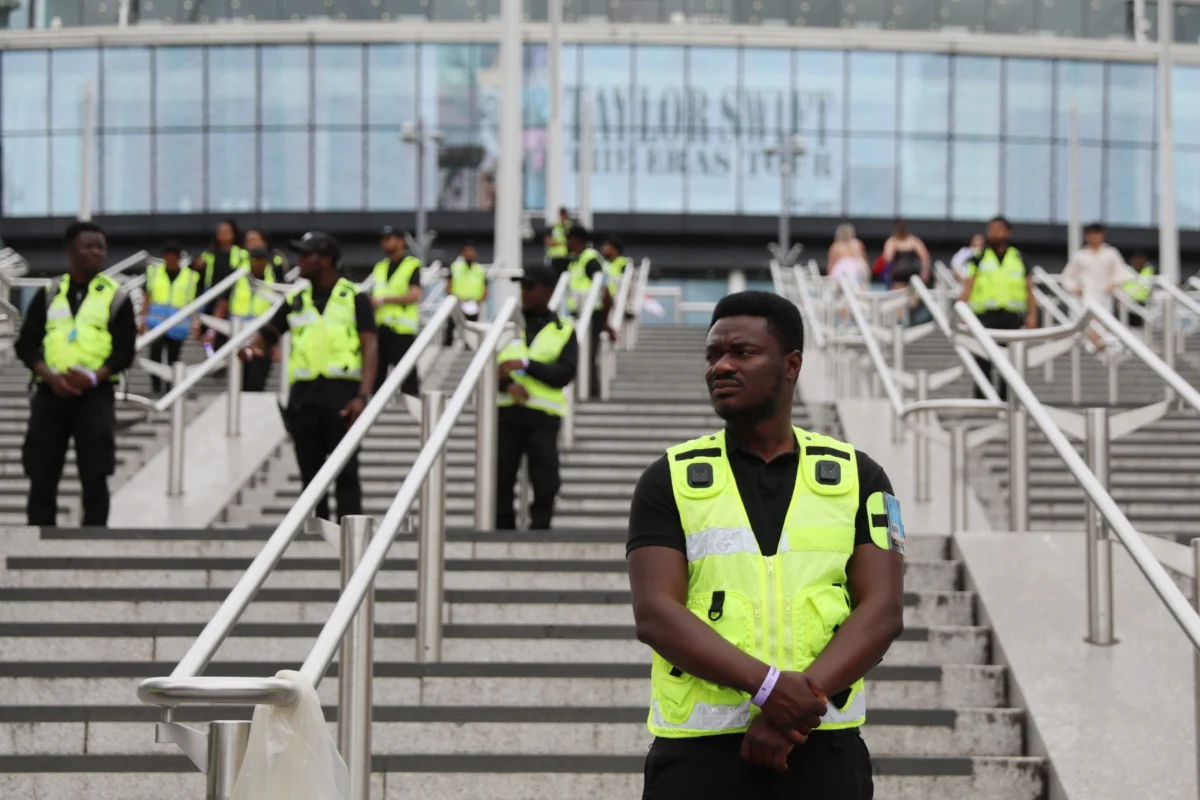
By the time the show was slated to begin, the crowd had grown restless. The tipping point occurred when the collective pressure of the crowd overwhelmed the perimeter checkpoints. Hundreds of people surged forward, pushing past security personnel in a coordinated effort to breach the stadium gates.
The immediate result was an operational paralysis. For the safety of those already inside—and to prevent the venue from reaching dangerous capacity limits—stadium management made the difficult decision to shut down entry points entirely. This left thousands of legitimate ticketholders stranded outside, unable to access the show for which they had paid.
Jay-Z did not take the stage until 12:18 a.m. ET on Sunday, July 13—a delay of more than four hours. The delay was not merely a matter of scheduling; it was a desperate attempt to restore order, verify the integrity of the venue, and ensure that the crowd within the gates was manageable and safe.

Understanding the "Gate-Crashing" Phenomenon
While the incident at Yankee Stadium felt uniquely modern in its scale and speed, security experts note that the phenomenon of gate-crashing is an age-old challenge for large-scale venues. However, the dynamics have shifted in the digital age.
Steven A. Adelman, director of the Event Safety Alliance and an expert in international festivals, suggests that the incident mirrors the 2024 Copa América final at Miami’s Hard Rock Stadium. In both instances, the security response followed a binary logic: once the breach occurred, the priority shifted from "screening" to "securing."
"The response was pretty similar to what they did at Yankee Stadium," Adelman explains. "Security personnel inside the stadium gates rushed to resecure the entrance, and they effectively slammed the door. Everyone who was outside got stuck outside, and the people who were already inside were permitted to stay. That is, unfortunately, the only viable option when faced with a sudden, overwhelming surge."
The Role of FOMO and Social Media
Why do these breaches occur? Experts point to the "Fear of Missing Out" (FOMO), amplified by real-time social media updates. When fans see videos on TikTok or X (formerly Twitter) of a concert beginning or hear the sound of the music from outside the venue, the desire to bypass the gate becomes an active, physical pursuit.
John Badcock, a board member of the Event Safety Alliance, notes that while social media may not have invented the concept of gate-crashing, it serves as a powerful catalyst. "It’s a force multiplier," Badcock says. "It makes the prospect of sneaking in seem more achievable, more urgent, and more social. It turns an individual decision into a collective movement."
Anatomy of a Security Plan: Risk Assessment and Proactive Defense
To mitigate such risks, experts emphasize that security begins long before the first ticket is scanned. Taylor Collins, a litigation attorney at McCarter & English who specializes in sports and entertainment law, stresses that a successful event requires a "tripartite" collaboration between the venue, the promoter, and local public safety agencies.

"That planning should translate into a coordinated security plan," Collins notes. This includes:
- Clear Communication: Using signage and public address systems to manage expectations and inform crowds of entry status.
- Layered Perimeter Defense: Establishing buffer zones far enough from the stadium gates to allow security to detect a potential rush before it reaches the turnstiles.
- Trained Personnel: Ensuring supervisors at entry points are trained not just in ticket scanning, but in crowd psychology and identifying the early warning signs of a surge.
- Real-Time Monitoring: Utilizing CCTV and physical spotters to track crowd density and movement patterns throughout the day.
The Problem of Private vs. Public Property
One of the most complex legal and logistical hurdles in managing crowds is the boundary of the venue. As Adelman points out, fans have a legal right to gather in public streets. When a crowd is in a public space, private security guards have limited authority.
"If they gather on private property, then ticketless fans can be escorted off by law enforcement," Adelman explains. "But private security cannot do that. That is a police function. The challenge for venues is ensuring that the handoff between private security and local police is seamless before a situation escalates from a gathering to a breach."
Supporting Data and Historical Context
The Yankee Stadium incident joins a list of high-profile, high-stress crowd management events. In 2021, the Astroworld disaster highlighted the catastrophic consequences of failure in crowd density management. In 2023, the Electric Zoo festival in New York faced significant challenges due to overcrowding and permit issues.
While these incidents garner massive media attention, industry data suggests that violent or destructive gate-crashing remains statistically rare relative to the thousands of concerts held annually. However, when they do happen, they expose systemic vulnerabilities:
- Staffing Shortages: Many venues rely on third-party staffing agencies, leading to high turnover and inconsistent training.
- Infrastructure Limitations: Older stadiums were often designed with entry points that are difficult to harden against modern, high-intensity crowd pressures.
- Communication Silos: Failures often occur because security, local law enforcement, and venue management are operating on different communication channels or have differing priorities during an emergency.
Implications: A New Standard for Live Entertainment?
The aftermath of the Yankee Stadium incident has sparked a necessary conversation regarding the "new normal" for concert-goers. If venues are forced to implement more rigid, fortress-like security, the fan experience—characterized by ease of entry and accessibility—could be fundamentally altered.

Investing in Technology
Beyond physical barriers, there is an increasing push for smarter technology. This includes:
- Advanced CCTV and Facial Recognition: While privacy concerns remain, some venues are exploring the use of advanced analytics to identify known troublemakers or detect "rushing" patterns in real-time.
- Automated Gate Systems: Moving away from human-only scanning toward integrated systems that can detect fraudulent tickets and prevent bottlenecks.
The Legal Liability of Promoters and Venues
For promoters like Live Nation or AEG, the legal implications of a gate-crashing event are significant. Litigation involving breach of contract for ticketholders, potential personal injury claims, and municipal fines creates a strong financial incentive to "over-prepare."
"There is no substitute for training," says Badcock. "Having staff who know what a ticket looks like is step one. Step two is having an effective communication structure where, if a gate becomes overwhelmed, they can report that instantly and request additional resources—be it more staff or the deployment of law enforcement."
Conclusion: Balancing Safety and Spectacle
The incident at Yankee Stadium serves as a stark reminder that the live music industry exists in a delicate balance. On one side is the desire to provide an immersive, high-energy, and accessible experience for fans; on the other is the immutable requirement for safety and order.
As the industry moves forward, the consensus among experts is clear: the era of "passive security" is over. Modern events require a proactive, intelligence-led approach that accounts for the volatile nature of large crowds, the influence of social media, and the legal complexities of modern venues.
For fans, the lesson is perhaps more sobering: the experience of a live concert is a privilege that depends entirely on the stability of the environment. While the industry works to harden its defenses, the cooperation of the audience remains the final, essential component in ensuring that the music can continue to play—safely and on time.