The premium home entertainment market is experiencing a period of rapid technological evolution, marked by the arrival of next-generation display technologies and highly refined audio systems. Traditionally, flagship audio-visual (AV) equipment maintains its launch-day pricing for several months post-release. However, recent market dynamics have disrupted this trend. Industry-leading televisions and sound systems are seeing significant, immediate price reductions shortly after receiving critical acclaim from expert testing panels.
At the center of this shift is the debut of Sony’s highly anticipated RGB Mini LED display technology, featured in its new flagship Bravia 9 II and step-down Bravia 7 II models. Simultaneously, LG’s flagship G6 OLED has undergone a critical software re-evaluation, securing a coveted five-star rating and prompting immediate retail adjustments. In the audio sector, Samsung’s premium Dolby Atmos soundbar systems and JBL’s high-fidelity smart speakers are also seeing aggressive pricing strategies designed to capture consumer interest in an increasingly competitive landscape.
Chronology of Recent AV Developments
The current state of the premium AV market is the result of several key product launches, software updates, and strategic retail decisions over the past several months.
[Early Year: Product Announcements]
       │
       ▼
[Mid-Year: Initial Testing & Software Tuning] ──► (LG G6 software update resolved performance bottlenecks)
       │
       ▼
[Late-Quarter: Definitive Reviews Published] ──► (Sony RGB Mini LED & LG G6 receive critical acclaim)
       │
       ▼
[Immediate: Retail Price Adjustments] ──────────► (Promotional codes & steep discounts applied to flagships)- The Product Announcements: Early in the product cycle, manufacturers showcased their hardware trajectories. Sony bet heavily on high-luminance RGB Mini LED backlighting as a viable alternative to OLED dominance, while LG and Samsung refined their respective OLED panels to push the boundaries of peak brightness and color volume.
- Initial Testing and Software Tuning: As units arrived in specialized testing rooms, early firmware versions underwent rigorous calibration. Notably, the LG G6 OLED required critical software updates to address initial performance bottlenecks, demonstrating the growing reliance of modern display hardware on sophisticated processing algorithms.
- The Definitive Reviews: Following comprehensive testing under standardized laboratory conditions, definitive reviews were published. The Sony Bravia 9 II, Sony Bravia 7 II, and the updated LG G6 emerged as benchmark-setting displays, each earning high recommendations.
- Immediate Retail Adjustments: In a departure from historical retail patterns, these top-tier products did not remain at their premium manufacturer’s suggested retail prices (MSRP). Instead, promotional campaigns, discount codes, and direct price cuts were implemented almost immediately to stimulate demand and capture early-adopter market share.
Supporting Data and Technical Deep-Dives
To understand the value proposition of these early discounts, it is necessary to examine the technical specifications and performance metrics of the featured hardware.
Sony Bravia 9 II (K-65XR95M2)
The Sony Bravia 9 II represents a significant technological pivot for the Japanese manufacturer, serving as its premier flagship display.
- Panel Technology: RGB Mini LED
- Key Strengths: Unprecedented color purity, industry-leading peak luminance, sophisticated local dimming algorithms.
- Limitations: Lacks the absolute pixel-level contrast control inherent to self-emissive OLED panels.
Unlike standard Mini LED backlights, which typically employ a blue LED light source coated with a yellow phosphor layer or paired with a quantum dot film, RGB Mini LED utilizes red, green, and blue LEDs directly within the backlighting matrix. This allows for highly targeted chromatic control at the backlight level.
In laboratory testing, the Bravia 9 II achieved color saturation and volume metrics that surpassed previous reference-grade displays. Its proprietary local dimming system minimizes blooming (the halo effect around bright objects on dark backgrounds), though extremely demanding scenes still reveal the physical limitations of zone-based backlighting when compared to the absolute black levels of OLED.
LG G6 (OLED65G6)
Following a comprehensive re-evaluation with updated, production-ready software, LG’s flagship G6 OLED has secured a flawless five-star rating.
- Panel Technology: Micro Lens Array (MLA) OLED
- Key Strengths: Perfect black levels, expansive viewing angles, flawless gaming specifications (HDMI 2.1, VRR, ALLM), robust app ecosystem.
- Software Importance: The update resolved previous processing anomalies, optimizing tone mapping and near-black detail.
The G6 utilizes LG’s latest self-emissive panel technology enhanced by a Micro Lens Array, which redirects light that would otherwise be lost internally back toward the viewer. This dramatically increases peak brightness, addressing a historic weakness of OLED technology. The updated software suite ensures that high dynamic range (HDR) metadata is processed with extreme precision, preserving details in both the brightest highlights and the deepest shadows.
Traditional OLED Panel:
[Backplane] ──► [OLED Emissive Layer] ──► [Lossy Glass Cover] ──► (Lower Brightness)

MLA OLED Panel (LG G6):
[Backplane] ──► [OLED Emissive Layer] ──► [Micro Lens Array] ──► (Redirected Light) ──► (Higher Peak Brightness)
Samsung S90F (QE48S90F)
Positioned as a highly competitive mid-range option, the 48-inch Samsung S90F has emerged as a top recommendation in the sub-50-inch category.
- Panel Technology: QD-OLED (Quantum Dot OLED)
- Key Strengths: Vibrant color reproduction, robust gaming features, practical physical stand design.
- Market Position: Currently retailing at over 50% off its launch price, offering exceptional price-to-performance value.
The S90F combines the self-emissive benefits of OLED with the color-expanding properties of Quantum Dots. This results in highly saturated reds and greens, even at high brightness levels. Its compact 48-inch form factor, combined with four full-bandwidth HDMI 2.1 ports, makes it an ideal option for both high-end console gaming and premium secondary viewing spaces.
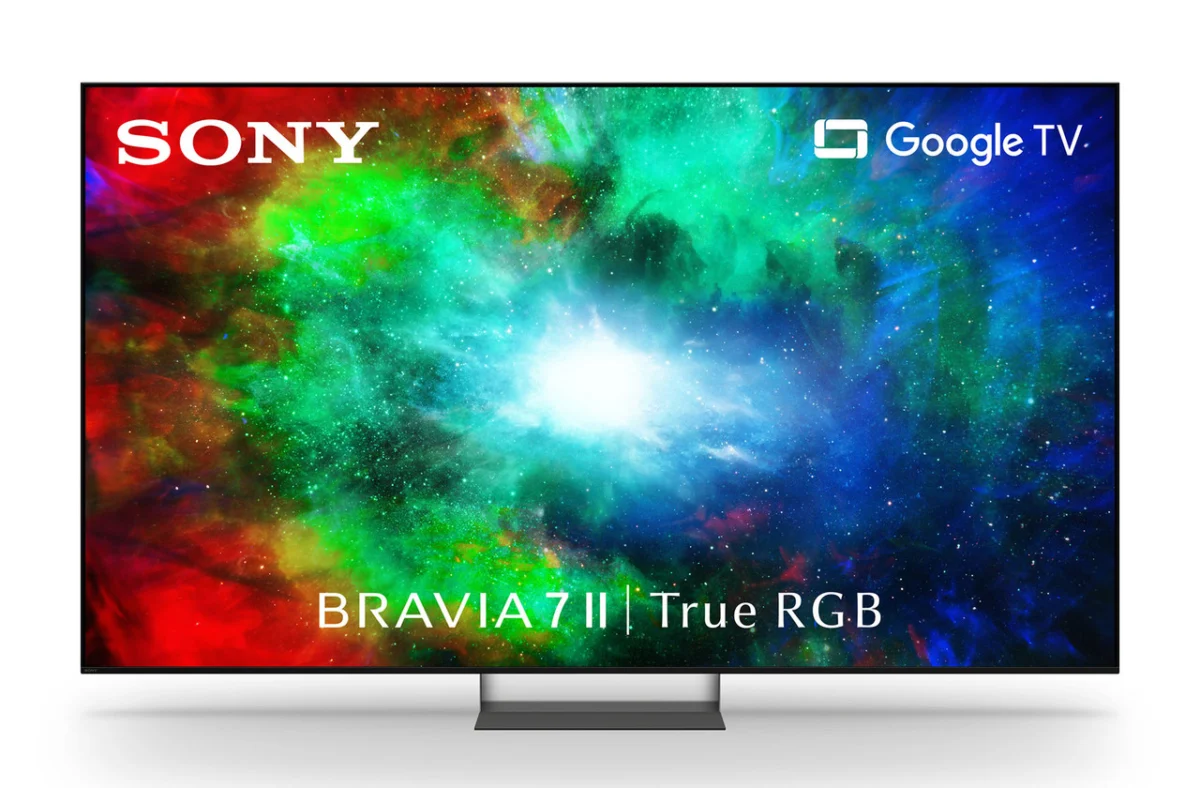
Sony Bravia 7 II (K-55XR75M2)
The Bravia 7 II acts as Sony’s step-down RGB Mini LED model, designed to offer much of the flagship’s visual character at a more accessible price point.
- Panel Technology: RGB Mini LED (Reduced dimming zone count compared to Bravia 9 II)
- Key Strengths: Natural color reproduction, excellent depth perception, strong off-axis performance for a backlit TV.
- Current Promotion: Available with a 10% discount using promotional code
SONY10PERCENT, representing a £200 saving on the 55-inch model.
While it features fewer local dimming zones and lower peak brightness than its flagship sibling, the Bravia 7 II retains the same cognitive processor, ensuring class-leading upscaling and motion handling. It represents a highly compelling option for consumers seeking the longevity and brightness of Mini LED without the flagship price tag.
Samsung HW-Q990H Dolby Atmos Soundbar System
To complement these high-performance displays, Samsung has released the HW-Q990H, a flagship audio package designed to deliver true cinema-grade sound without the complexity of a traditional AV receiver setup.
- Configuration: 11.1.4-channel system (including wireless rear speakers and an active subwoofer)
- Audio Formats: Dolby Atmos, DTS:X, wireless proprietary high-resolution audio transmission.
- Acoustic Performance: Exceptional spatial accuracy, powerful low-frequency extension, clear dialogue reproduction.
The HW-Q990H builds on the success of its predecessor by refining the driver configuration and improving room-calibration algorithms. The system utilizes up-firing and side-firing drivers in both the main bar and the rear surrounds to bounce sound off the ceiling and walls, creating a convincing three-dimensional dome of sound.
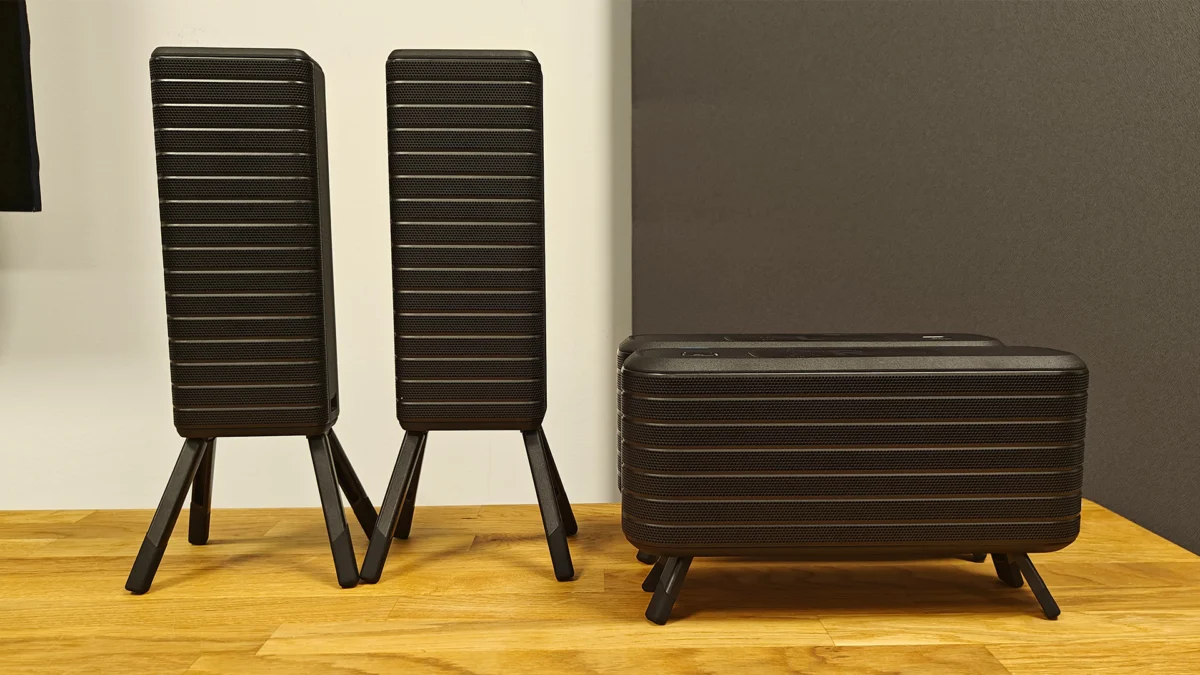
JBL Authentics 300
For versatile, multi-room audio, the JBL Authentics 300 blends retro industrial design with modern streaming capabilities.
- Acoustic Design: Distinctive Quadrex grille, integrated battery for portability, robust driver configuration.
- Connectivity: Simultaneous integration of Google Assistant and Amazon Alexa, Wi-Fi, Bluetooth, AirPlay.
- Sonic Character: Dynamic, punchy bass, clear midrange, confident presentation.
The Authentics 300 appeals to users who demand high-fidelity sound in a flexible, aesthetically distinct package. It has recently reached its lowest retail price to date, making it a highly competitive option in the premium wireless speaker market.
Industry Responses and Expert Consensus
The rapid discounting of highly rated, newly released AV hardware has drawn analysis from industry commentators and retail experts.
Historically, manufacturers protected the pricing integrity of their flagship models during the first six months of availability. However, the convergence of multiple factors has changed this behavior. According to industry analysts, the concurrent release of highly competitive technologies—specifically MLA-OLED, QD-OLED, and RGB Mini LED—has created a buyer’s market.
Furthermore, the case of the LG G6 highlights a growing trend in consumer electronics: the critical role of post-launch software updates. Hardware performance is no longer static. As manufacturers rush to meet retail deadlines, early firmware can occasionally bottleneck a display’s true potential.
Expert reviewers noted:
"The initial testing of the LG G6 showed immense promise, but it was the subsequent software update that fully unlocked the panel’s capabilities, particularly in HDR tone mapping and gaming responsiveness. The fact that this performance leap has coincided with immediate retail discounts makes it one of the most compelling flagship purchases in recent memory."
Market Implications for Consumers and Manufacturers
The current market environment has significant implications for both the manufacturing strategies of major brands and the purchasing decisions of consumers.
The Mini LED vs. OLED Competitive Dynamic
For several years, OLED was the undisputed choice for premium home theater setups. However, Sony’s heavy investment in RGB Mini LED technology indicates a strategic belief that high-brightness, burn-in-resistant backlit displays can compete directly with OLED flagships. By offering colors that surpass traditional LED displays and brightness levels that OLED cannot match, RGB Mini LED presents a compelling alternative for bright living rooms.
The Compression of Product Lifecycles
The immediate discounting of flagships like the Sony Bravia 9 II and the LG G6 suggests that the traditional yearly product cycle is putting immense pressure on retail channels. To clear inventory and maintain high manufacturing volumes, brands are bypassing the traditional high-margin launch phase. This benefits the proactive consumer but challenges the traditional retail model, which relies on sustained premium pricing to recoup research and development costs.
Consumer Purchase Strategy
For consumers, the current landscape offers a rare opportunity to acquire reference-grade technology at mid-range prices. The availability of promotional codes (such as SONY10PERCENT) and direct price cuts on newly reviewed models suggests that waiting for traditional holiday sales may no longer be necessary to secure a good deal. However, buyers must remain vigilant, ensuring that software updates are fully applied to their new hardware to guarantee they are receiving the exact level of performance validated by expert testing panels.