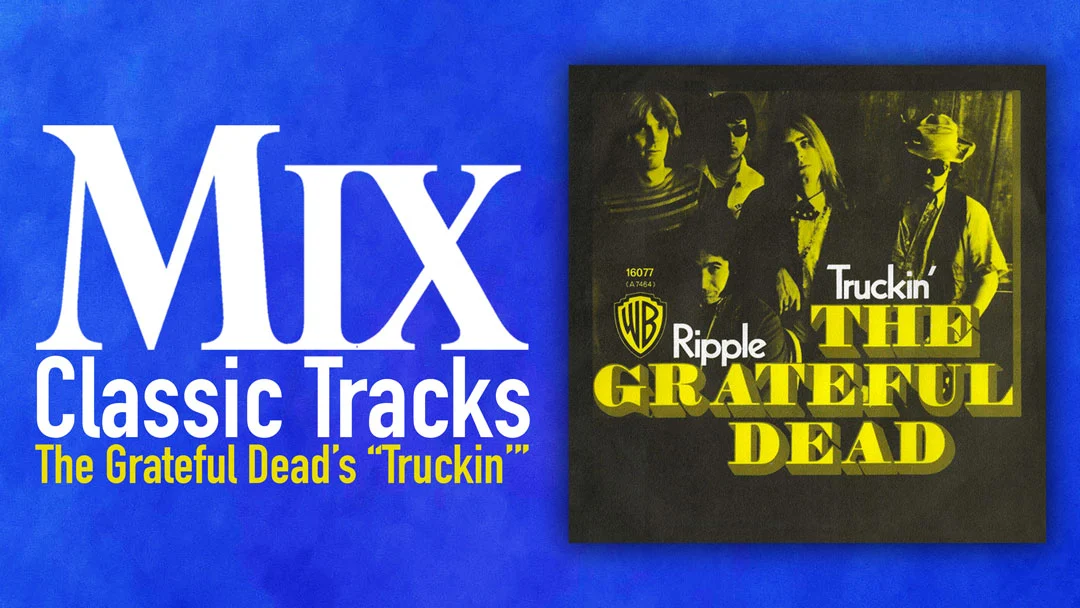
The year 1970 stands as the most pivotal hinge-point in the three-decade odyssey of the Grateful Dead. It was the year the band shed its skin as a localized, psychedelic cult act and emerged as a national phenomenon, defining the "Americana" genre long before the term became a marketing category. Central to this transformation was the song "Truckin’," a shuffle-beat travelogue that provided the band with a rare FM radio hit and gifted the English language one of its most enduring idioms: "What a long, strange trip it’s been."
This article explores the technical and creative genesis of "Truckin’" and the album that housed it, American Beauty, drawing on archival insights from the musicians and engineers who captured lightning in a bottle at Wally Heider Recording.
Main Facts: The Birth of a Classic
"Truckin’" was more than just a track on the Grateful Dead’s fifth studio album; it was a synthesis of the band’s collective experience on the road. Recorded in the late summer of 1970, the song was a collaborative effort involving the band’s primary songwriting duo, Jerry Garcia and Robert Hunter, with significant musical contributions from rhythm guitarist Bob Weir and bassist Phil Lesh.
While the Grateful Dead were notorious for their sprawling, improvisational "space jams," "Truckin’" represented a shift toward disciplined, song-oriented craftsmanship. The track was recorded at Wally Heider Recording in San Francisco, a facility that had become the epicenter of the "San Francisco Sound." Unlike their previous experimental efforts, "Truckin’" was captured with a sense of urgency and clarity, utilizing 16-track technology to layer the band’s newfound mastery of vocal harmonies—a skill honed through their friendship with Crosby, Stills, Nash & Young.
The song’s lyrics were overtly autobiographical, famously referencing a January 1970 drug bust at a Bourbon Street hotel in New Orleans. This transparency, paired with a driving rhythm, turned "Truckin’" into a permanent fixture of the American songbook, eventually being recognized by the Library of Congress as a national treasure in 1997.
Chronology: From Psychedelic Albatross to Americana Masterpiece
To understand the success of "Truckin’," one must look at the band’s trajectory leading into 1970.
1969: The Complexity Crisis
In 1969, the Grateful Dead released Aoxomoxoa. While the album contained future staples like "St. Stephen" and "China Cat Sunflower," its production was a nightmare. The band spent months and an exorbitant amount of Warner Bros.’ money on 16-track experimentation that resulted in a dense, "obtuse" sound. It was an album that failed to capture the band’s live energy and was largely ignored by FM radio.
February 1970: The Turning Point
Seeking a departure from the studio-as-instrument approach, the band entered the studio with engineers Bob Matthews and Betty Cantor to record Workingman’s Dead. In just two weeks, they recorded the album almost entirely live. Influenced by the rootsy, folk-driven songwriting of Robbie Robertson and The Band, Garcia and Hunter began mining a rich vein of country and bluegrass roots.
Summer 1970: The Prolific Peak
Following the May release of Workingman’s Dead, Garcia and Hunter were living together in a house in southern Marin County. This proximity sparked an unprecedented creative burst. While Hunter pounded away on a typewriter upstairs, Garcia practiced guitar below. This synergy allowed songs to be composed in real-time, with melodies often finalized by the time Hunter walked down the stairs with a fresh sheet of lyrics.
August–September 1970: The American Beauty Sessions
Only three months after their previous release, the band returned to the studio. With Matthews and Cantor unavailable, they teamed up with a young engineer named Steve Barncard. It was during these sessions that "Truckin’" was recorded, marking the final evolution of the band’s 1970 sound—a blend of high-fidelity recording and raw, honest songwriting.
Supporting Data: The Architecture of Sound
The technical success of "Truckin’" was largely due to the unique environment of Wally Heider Recording’s Studio C and the meticulous ear of Steve Barncard.
The DeMedio Console
Studio C was equipped with a custom Frank DeMedio console, which Barncard credits for the album’s transparent sound. The console was a marvel of "simple" engineering:
- Signal Path: It utilized a single UREI plug-in line amplifier in the chain, avoiding the noise associated with modern op-amps.
- Components: The desk featured massive Switchcraft pushbuttons, telephone-type lever switches, and passive UREI EQs.
- Reliability: Everything was transformer-isolated and calibrated with fixed pads to ensure a consistent, high-quality signal.
Microphone Selection and Placement
Barncard relied on mic placement rather than processing to achieve the album’s "live" feel. His choices for the American Beauty sessions included:
- Acoustic Guitars: AKG C-60 "lipstick" tube condensers.
- Overheads: Neumann U67s.
- Vocals: Three Neumann U67s for Garcia, Lesh, and Weir, each run through a separate limiter and doubled to create a lush, choral effect.
- The "Bass" Audition: To land the job, Barncard had to satisfy Phil Lesh’s exacting standards. He used a three-pronged approach: a DI (Direct Input) combined with two microphones on two separate amps—one for low-end "thud" and a smaller amp for mid-range "buzz."
The 16-Track Breakdown of "Truckin’"
The recording of "Truckin’" was remarkably efficient, completed in a single day. The 16-track tape was utilized as follows:
- Garcia’s Electric Guitar
- Piano (Commander Cody)
- Kick Drum
- Drums (Left)
- Drums (Right)
- Snare
- Organ (Howard Wales)
- Bass Amps
- Bass Direct
- Weir’s Lead Vocal
- Garcia’s Acoustic Guitar
- Weir’s Acoustic Guitar
- Weir’s Electric Guitar
- Lesh’s Backup Vocals
- Weir’s Backup Vocals
- Garcia’s Backup Vocals
Official Responses: Perspectives from the Studio
The participants in the American Beauty sessions recall a period of rare professional harmony and focused labor.
Robert Hunter on the shift in direction:
"I was so impressed by the songwriting of Robbie Robertson. I just said, ‘Oh yeah, this is the direction. This is the way for us, with all our folk roots, our country and bluegrass roots.’"
Jerry Garcia on the collaborative living arrangement:
"It was the basic thing of friendship and economics. We had a nice big house that we could afford to live in together but probably couldn’t have afforded separately at that point."
Steve Barncard on the band’s work ethic:
"I had heard bad stories… about how they always had a thousand people in the control room and hippies camping out. What I found were a bunch of hard-working guys, a great, tight band who had woodshedded everything, who knew exactly what they wanted to lay down."
Barncard on the vocal sessions:
"The Dead were a notoriously weak vocal band in the late ’60s, but they were brilliant in these sessions. They walked in and just did it. People don’t believe me when I say this, but they were ready."
Implications: Legacy and the "Long Strange Trip"
The release of "Truckin’" and American Beauty in November 1970 fundamentally altered the Grateful Dead’s relationship with the public and their own music.
The Cultural Lexicon
The phrase "What a long, strange trip it’s been" transcended the song to become a cultural shorthand for the turbulent transitions of the late 20th century. It encapsulated not just the band’s five-year history at the time, but the collective hangover of the 1960s counterculture as it moved into the more cynical 1970s.
The Live Evolution
Interestingly, the version of "Truckin’" found on American Beauty was almost never replicated live. While the studio version was a tight, 5-minute shuffle, it quickly evolved on stage into a massive improvisational vehicle. By 1972, "Truckin’" often served as a gateway into "The Other One" or "Not Fade Away," sometimes stretching to 20 minutes as the band explored the "distorted" spaces between the verses.
The Foundation of Americana
American Beauty remains the gold standard for the Grateful Dead’s studio output. By choosing simplicity over psychedelic artifice, the band created an album that sounds as fresh today as it did in 1970. "Truckin’" served as the anchor for this sound—a song that was simultaneously about the band’s specific legal troubles and the universal human experience of "keeping on."
Ultimately, "Truckin’" proved that the Grateful Dead could be "professional" without losing their soul. It demonstrated that a band born in the acid-drenched ballrooms of San Francisco could speak to the heart of the American experience, proving that even when you "can barely see," the light has a way of shining on you in the end.