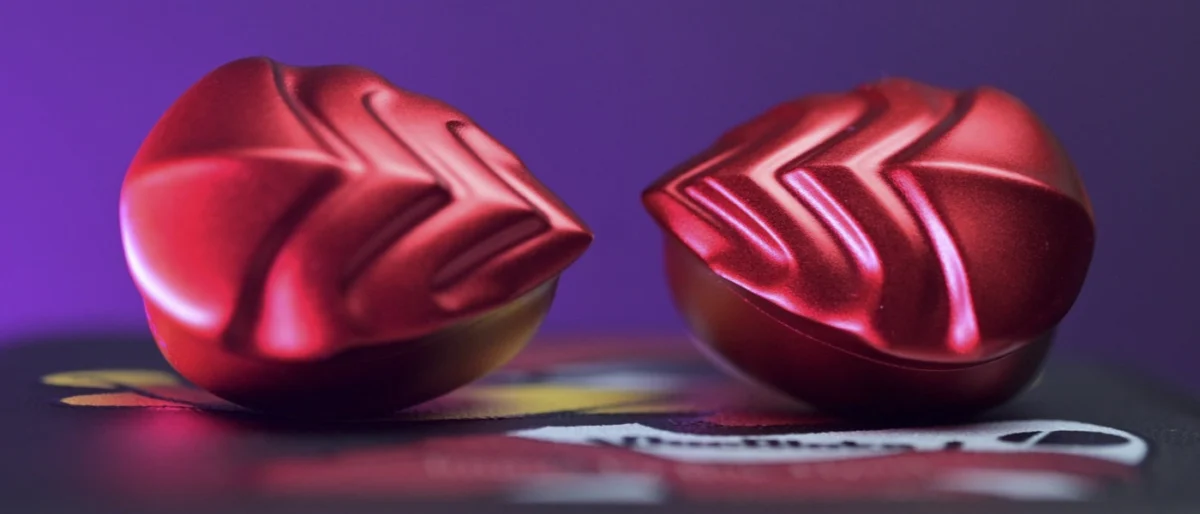
The landscape of high-fidelity audio has undergone a seismic shift over the last decade. Once dominated by heritage brands and massive corporate conglomerates, the market for In-Ear Monitors (IEMs) is now increasingly driven by a new breed of tastemakers: the content creator. As audiophiles migrate from traditional audio forums to YouTube and social media, the lines between critic and collaborator have blurred, leading to a surge in co-branded hardware.
But how exactly does a collaboration move from a conceptual idea to a physical product? To understand the technical rigor, the logistical hurdles, and the delicate art of sound tuning, we look to a recent case study: the partnership between influential audio analyst DucBloke and the veteran manufacturer HIDIZS, which resulted in the well-received MK12 x DucBloke IEMs.
Main Facts: The Intersection of Critique and Creation
At the core of the current IEM boom is the democratization of tuning. Historically, a "house sound" was dictated by a company’s engineering department, often behind closed doors. Today, the "reviewer-collab" model allows for a more personalized sonic signature, often informed by the specific preferences of an online community.
The HIDIZS x DucBloke MK12 project serves as a quintessential example of this transition. DucBloke, an expert known for his analytical approach to Parametric EQ (PEQ) and frequency response measurement, was tasked with applying his methodology to a hardware platform. The resulting product is not merely a "re-skin" of existing tech; it is a collaborative effort involving driver selection, acoustic chamber optimization, and refined frequency target adjustments.
Key takeaways from this collaboration include:
- The Role of the Reviewer: The creator acts as a bridge between the niche requirements of the audiophile community and the mass-manufacturing capabilities of the partner brand.
- Technical Methodology: The tuning process relies heavily on PEQ profiling, a method that translates digital signal processing (DSP) expertise into physical acoustic hardware.
- Transparency: The project highlights the necessity for clear communication between the brand’s R&D team and the collaborator to ensure that the final product meets the "tuning target" envisioned at the project’s inception.
Chronology: The Lifecycle of an IEM Collaboration
A collaboration is rarely a simple "plug and play" endeavor. It is a multi-month, often year-long, marathon of prototyping and refinement.
Phase 1: Conceptualization and Pitch
The process usually begins with an invitation. Established manufacturers, seeking to tap into the dedicated fanbase of a prominent reviewer, reach out with a request to leverage the creator’s expertise. For DucBloke, the process started with a discussion on technical capabilities—what the driver configuration could achieve versus what the market was missing.
Phase 2: The Tuning Phase (The "Goldilocks" Search)
This is the most critical stage. The creator provides a "target curve"—a graphical representation of how they believe an IEM should sound. Engineers at the manufacturing facility then translate these digital graphs into physical reality by adjusting the internal damping materials, nozzle diameter, and filter densities.
Phase 3: Prototyping and Iteration
Multiple prototypes are shipped between the collaborator and the factory. Each iteration is tested for technical performance (imaging, soundstage, resolution) and tonal balance. If the bass is too muddy or the treble too sibilant, the factory returns to the bench.
Phase 4: Finalization and Branding
Once the acoustic performance is locked, the project moves to aesthetics. This involves choosing the shell material, cable quality, and the branding elements that signify the collaborative nature of the product.
Phase 5: The Market Launch
The project culminates in a coordinated launch, often supported by deep-dive technical reviews, marketing campaigns, and community outreach.
Supporting Data: The Technicality of Tuning
To understand how a reviewer like DucBloke contributes to a product, one must understand Parametric EQ (PEQ). PEQ allows a user to surgically alter specific frequencies to correct imbalances or to match a target frequency response curve, such as the Harman Target or the Diffuse Field target.
When an expert in PEQ collaborates on an IEM, they aren’t just "guessing" at the sound. They are applying a scientific approach to acoustic pressure. The tuning process involves:
- Frequency Response (FR) Analysis: Utilizing coupler measurements to visualize how the IEM interacts with the human ear canal.
- Harmonic Distortion Checks: Ensuring that the tuning does not push the drivers beyond their linear threshold, which would cause unwanted noise or clipping.
- Impedance Matching: Tuning the crossover network to ensure the IEM performs consistently across various source devices, from high-end DAPs to mobile phones.
The MK12 x DucBloke collaboration relied on this data-driven approach to move beyond "v-shaped" consumer sound profiles and toward a more nuanced, reference-grade signature that caters to critical listeners.
Official Perspectives and Industry Response
The reception of the MK12 collaboration has been largely positive, reflecting a growing industry trend of valuing "creator-led" products. However, this model has also faced scrutiny.
The Manufacturer’s View: HIDIZS has emphasized that partnering with reviewers provides invaluable feedback loops. "When we work with someone like DucBloke," a representative noted, "we aren’t just getting a name; we are getting a filter through which our engineering can be tested against the high standards of the modern audiophile community."
The Creator’s View: DucBloke maintains that his goal is to demystify the process. "There is a lot of speculation about these deals," he explains. "The reality is that it’s a high-pressure environment where you have to balance your reputation as a reviewer with the practical realities of what can be manufactured at scale."
Critics and Skeptics: Some in the audiophile community remain wary, citing the potential for conflict of interest. If a reviewer creates a product, can they still objectively review the brand’s other offerings? The industry is currently in a self-regulatory phase, with many creators adopting strict disclosure policies to ensure transparency with their audience.
Implications: The Future of the Audio Market
The success of the HIDIZS x DucBloke collaboration suggests that the "Reviewer-as-Engineer" model is here to stay. This has profound implications for the future of the industry:
- Niche Targeting: Large companies are moving away from "one-size-fits-all" sound signatures in favor of diverse, specialized products created for specific listening sub-cultures (e.g., classical lovers vs. electronic music bass-heads).
- Lowering the Barrier to Entry: Because creators act as consultants, they can help smaller manufacturers produce "giant-killer" IEMs at a fraction of the cost of traditional flagship products.
- The Professionalization of Reviewing: As reviewers become collaborators, the standard of review content is rising. To be a credible collaborator, one must now demonstrate a deep technical understanding of acoustic engineering.
A New Era of Transparency
As the industry matures, we can expect to see more "behind the curtain" content. The technical transparency provided by figures like DucBloke helps the consumer understand that audio is not magic—it is a combination of physics, materials science, and subjective preference.
The collaboration between DucBloke and HIDIZS stands as a milestone in this journey. It proves that when engineering expertise meets the refined ear of a professional critic, the result is an elevation of the listening experience for the entire community. As we look forward, the question is no longer whether these collaborations are valid, but rather, which creators and manufacturers will continue to push the boundaries of what is possible in the palm of our hands.