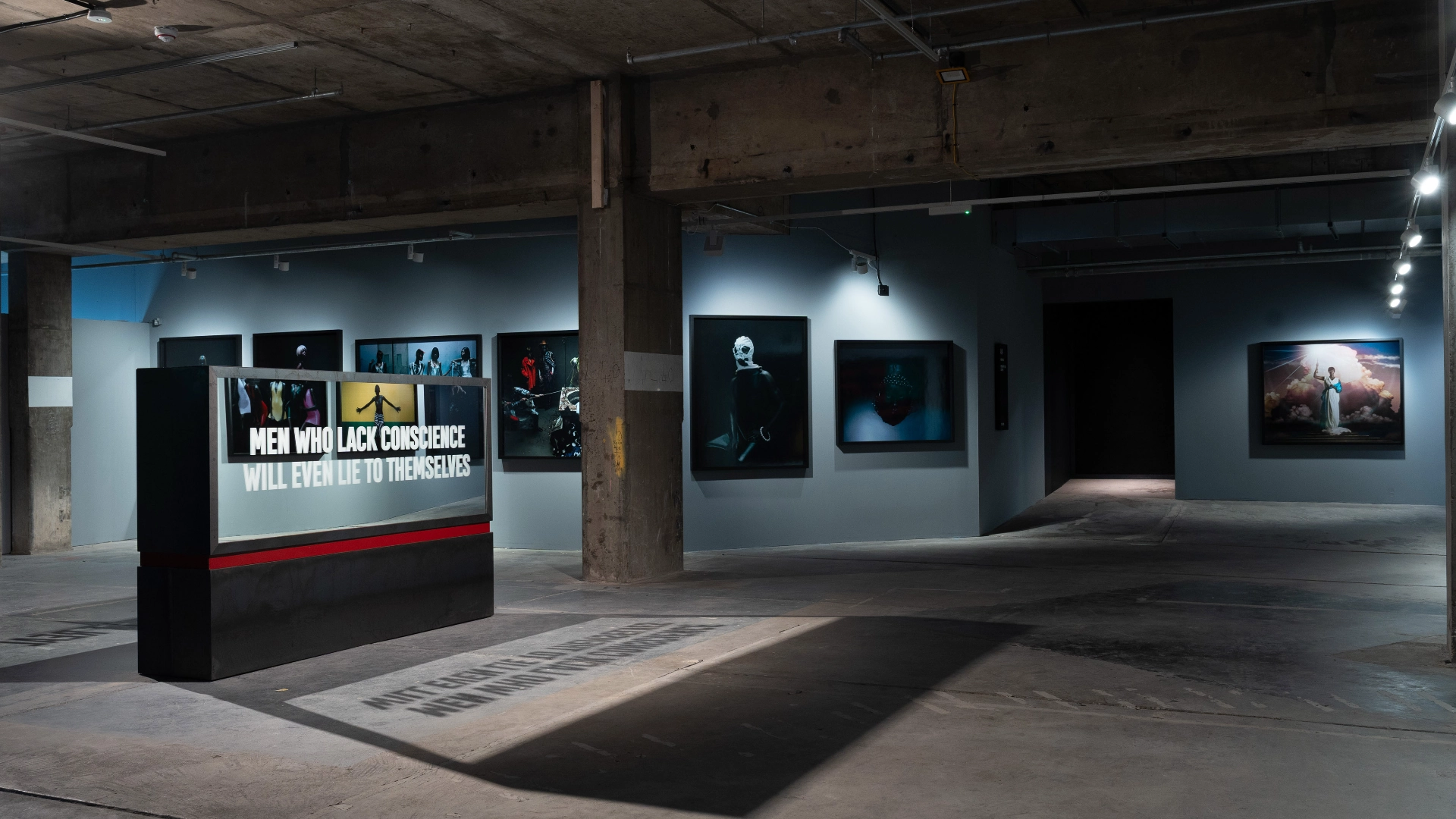
In the heart of London’s creative epicenter, 180 Studios has once again transformed into a portal for the contemporary zeitgeist. This time, the conductor is Gabriel Moses, the South London-born polymath whose lens has captured the most iconic faces in fashion, sports, and music. His latest exhibition, Selah, is not merely a gallery showcase; it is a sprawling, sensory-driven manifesto that marks his most ambitious project to date.
Spanning two floors of the iconic Strand venue, Selah serves as a retrospective, a projection of future intent, and a cinematic journey. Featuring over 70 photographs, 10 films, and an array of bespoke installations, the exhibition solidifies Moses’s reputation as a visionary capable of bridging the gap between high-fashion commercialism and profound, soul-searching art.
The Genesis of a Vision: Main Facts and Scope
Selah—a Hebrew term often interpreted as a musical or liturgical pause, a moment to reflect and listen—is an apt title for an exhibition that demands the viewer stop moving and start observing. The exhibition is a departure from the traditional "white wall" gallery experience, opting instead for an immersive environment where the boundary between the viewer and the subject dissolves.
The exhibition is anchored by the premiere of The Last Hour, a short film that encapsulates Moses’s growth as a narrative filmmaker. While his previous works have been lauded for their technical precision and lighting, The Last Hour pushes into the realm of the subconscious, utilizing experimental soundscapes and non-linear storytelling.
The scope of the work on display is massive. Visitors are guided through a carefully curated sequence of rooms, each dedicated to a specific facet of Moses’s career. From his intimate portraits of global music stars to the kinetic energy of his sports photography, the exhibition acts as a comprehensive map of his trajectory over the last half-decade.
From ‘Regina’ to ‘Selah’: A Chronological Evolution
To understand the weight of Selah, one must look back at the catalyst: Regina. Held at the same venue in 2023, Regina was Moses’s debut solo exhibition. It was a breakout moment, a testament to his ability to blend cultural commentary with exquisite aesthetic choices.
"I’ve grown a lot in those two years," Moses reflects during our exclusive conversation. "I’ve developed more as an artist. With Regina, I was learning how to command a space. With Selah, the goal was to take that command and turn it into a dialogue. It was important to me to create a show that felt so much more immersive and interactive—not just something you look at, but something you inhabit."
The Trajectory of a London Icon
- Early Days: Emerging from South London, Moses gained initial traction through his authentic, grit-inflected documentary style.
- The Commercial Pivot: His transition into high-fashion photography saw him working with the world’s leading publications and luxury houses, bringing a raw, humanizing lens to brands that often feel detached.
- 2023: Regina debuts at 180 Studios, establishing him as a fine art force.
- 2025: Selah opens, marking his most significant expansion into sculptural and installation-based media.
The progression from Regina to Selah highlights a maturing artist who is no longer satisfied with static images. He is now concerned with the "architecture of the experience"—how the light hits the floor, how the sound resonates in the rafters, and how the physical placement of a print can alter the emotional resonance of the subject.
Behind the Lens: Supporting Data and Artistic Methodology
The sheer volume of work on display provides a unique data set for analyzing Moses’s artistic evolution. By featuring over 70 photographs, the exhibition allows viewers to trace the subtle shifts in his technical approach.
The Technical Signature
Moses’s work is characterized by:
- Chiaroscuro Mastery: His use of deep, velvet-like shadows contrasted against piercing highlights creates a sense of drama that feels reminiscent of Caravaggio, yet thoroughly contemporary.
- Humanizing Sports: Unlike traditional sports photography, which focuses on the act of the game, Moses focuses on the "aftermath"—the fatigue, the contemplation, and the isolation of the elite athlete.
- Cultural Synthesis: Whether it is a fashion campaign for a global conglomerate or a personal documentary project, he treats every subject with a level of reverence that blurs the lines between commercial and fine art.
The inclusion of 10 films provides the necessary context for his photography. In the exhibition, these films are not relegated to a corner; they are woven into the architecture of the space, acting as the heartbeat of the show.
Official Responses and Creative Dialogue
The reception of Selah has been one of critical acclaim, with peers and industry experts highlighting the exhibition’s role in modernizing the gallery experience.
When asked about the challenge of balancing commercial work with fine art, Moses is pragmatic. "The camera is just a tool," he says. "Whether I’m shooting for a campaign or a sculpture installation, the goal is always the same: to find the truth in the subject. If I can find the humanity in a luxury garment, or the vulnerability in a world-famous athlete, I’ve done my job."
The curators at 180 Studios have noted that Selah represents a shift in how they view exhibition design. By allowing Moses to incorporate physical sculptures alongside his prints, they have created a "living room" for his art. It is less a museum exhibition and more an invitation into the artist’s mind.
Implications: The Future of Cultural Storytelling
The success of Selah raises significant questions about the future of photography as an exhibition medium. In an era where digital content is consumed in seconds on mobile devices, the physical exhibition has become a sanctuary for "slow looking."
Why ‘Selah’ Matters
- Reclaiming the Physical: By forcing a physical, multi-sensory encounter, Moses is fighting back against the ephemerality of digital consumption.
- Breaking the Silos: The exhibition successfully breaks the silos of fashion, music, and sports, suggesting that these are not disparate fields but part of a singular cultural continuum.
- The Artist as Polymath: Moses is a prime example of the "new creative," someone who does not view himself as just a photographer, but as a visual director who uses every tool available—video, sculpture, sound—to tell a story.
As the exhibition continues its run through 31 August 2025, it is poised to become a cultural touchstone for a generation of photographers and directors who see the gallery as a viable, and perhaps necessary, evolution of their professional practice.
Final Reflections
To visit Selah is to take a pause from the relentless pace of modern life. Gabriel Moses has succeeded in creating a space that is as challenging as it is beautiful. He invites us to look closer, to sit with the images, and to appreciate the "selah" of our own lives—the moments of quiet reflection in between the loud, chaotic moments of global culture.
For those looking to experience the exhibition, tickets are currently available through the 180 Studios website. It is highly recommended to book in advance, as the immersive nature of the show requires limited capacity, ensuring that every visitor has the space to experience the work as intended.
In the final assessment, Selah is more than a display of talent; it is a declaration of maturity. Gabriel Moses has moved beyond the promise of his early work to claim his place as one of the most important visual storytellers of his generation. He has not only captured the world; he has successfully reconfigured it, one frame at a time.
Exhibition Details:
- Location: 180 Studios, London.
- Dates: Open now through 31 August 2025.
- Admission: Tickets available via the 180 Studios portal.
- Further Reading: For deeper insights into the technical production of the show, visit the Fact Magazine coverage.