In the rapidly evolving landscape of desktop audio, finding a solution that successfully bridges the gap between nearfield studio monitoring and casual living room entertainment is a rare feat. Edifier, a brand long celebrated for its high-value audio equipment, has attempted to master this duality with their latest release: the Edifier M90. Priced at $369.99, these compact active speakers arrive with a promise of 100W RMS power, modern wireless connectivity, and, perhaps most crucially, HDMI eARC capability.
As we examine the M90, it is essential to look beyond the specifications. For the audiophile, the integration of HDMI eARC is not merely a convenience; it is a signal that Edifier is positioning this set as a primary hub for both computing and television audio. This review explores whether the M90 holds its ground against competitors or if its compact nature forces it to compromise on its sonic signature.
Main Facts and Core Specifications
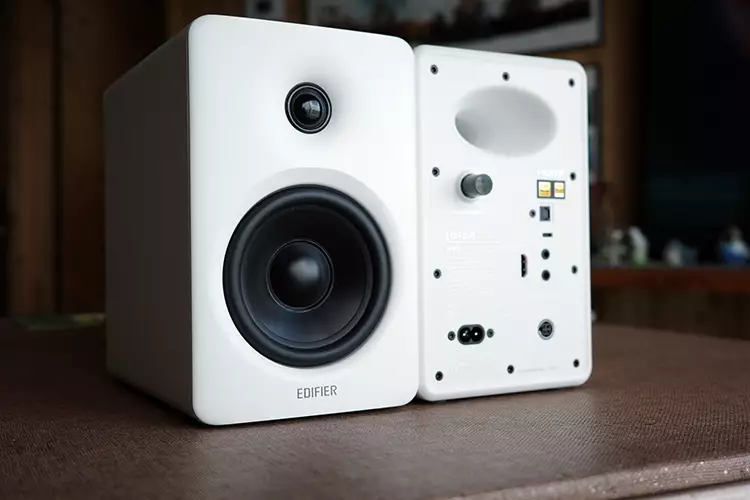
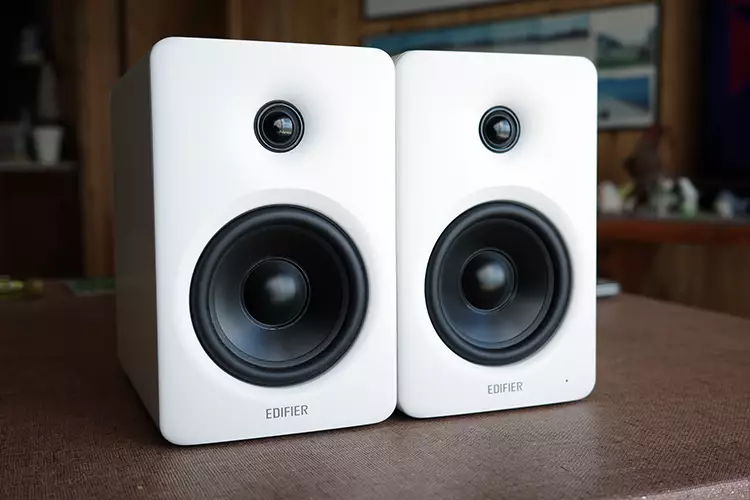
The Edifier M90 is built around a dual-driver configuration designed to maximize output in a small footprint. Each speaker houses a 4-inch long-throw aluminum mid-bass driver paired with a 1-inch silk dome tweeter. The amplification is handled by a dual Class-D bi-amplification system, pushing a total of 100W RMS. To break this down: each mid-bass driver receives 35W, while each tweeter is allocated 15W.
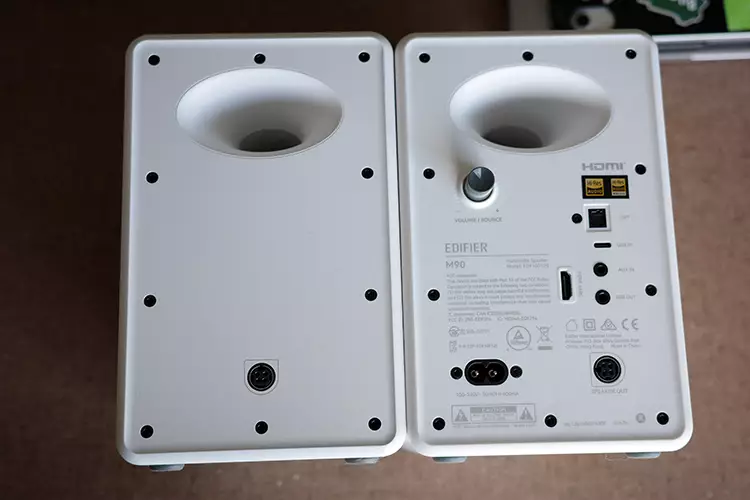
The connectivity suite is particularly robust for a speaker of this class. Beyond the standard analog AUX and optical inputs, the inclusion of HDMI eARC allows for seamless integration with modern televisions, enabling users to control volume and power using their standard TV remote. Furthermore, the M90 features Bluetooth 6.0 with support for high-bitrate LDAC decoding, ensuring that wireless streaming remains crisp and detailed. For those seeking even deeper low-end performance, a dedicated subwoofer-out port is provided, allowing the M90 to serve as the heart of a larger 2.1 system.
A Chronology of the M90 Experience
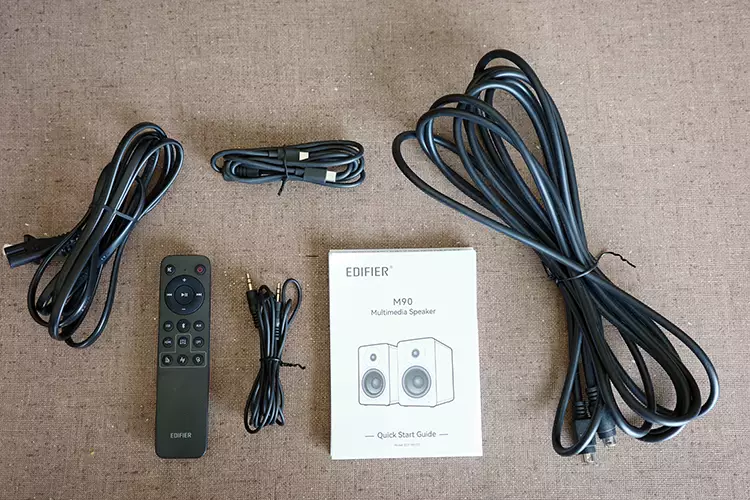
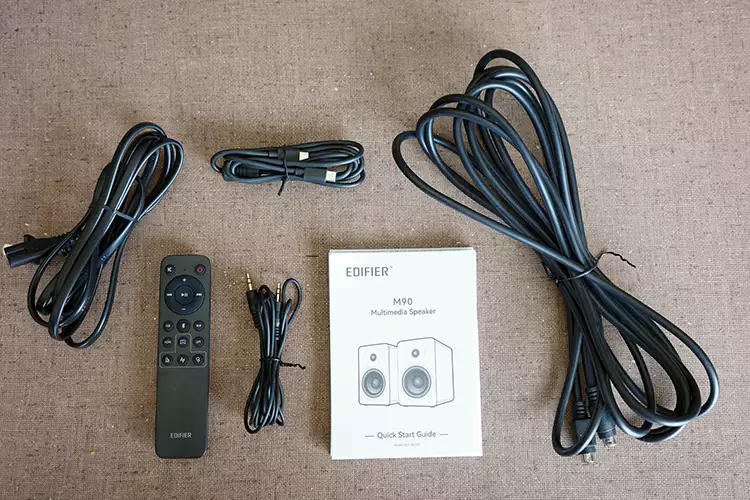
The journey with the M90 begins with the unboxing process, which reflects Edifier’s commitment to sustainable and secure packaging. The speakers are double-boxed and protected by recycled, molded cardboard inserts. Unlike many modern consumer electronics, the M90 ships with a comprehensive set of accessories, including the necessary power cables, interconnects, and a pair of AAA batteries for the 2.4GHz omnidirectional remote. Notably, an HDMI cable is not included, which is a minor oversight given the product’s focus on television integration.
Following the setup, a standard 50-hour "burn-in" period was conducted to allow the drivers to settle. Initial testing was split between nearfield desktop use—connected to a MacBook Pro and a high-end Digital Audio Player (DAP)—and living room duty connected to a Samsung television via HDMI.
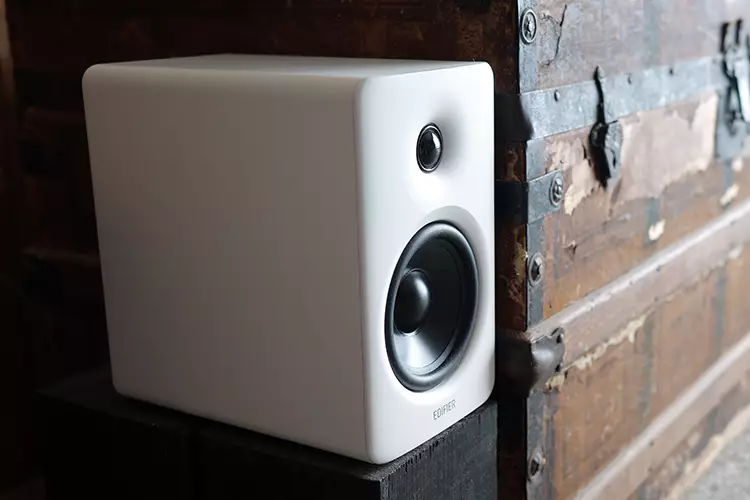
Throughout the testing phase, the M90 displayed a consistent character: one that favors a smooth, organic top-end with a surprisingly authoritative low-end. When used as a desktop unit, the speakers were placed at varying angles. It was discovered that keeping the speakers perpendicular to the listening position widened the soundstage, while slight angling tightened the bass response, providing a more focused "analytical" sound.
Supporting Data and Technical Performance
The M90’s frequency response is rated from 50Hz to 40kHz. While the low-end extension is physically limited by the 4-inch woofer, the DSP (Digital Signal Processing) work within the cabinet allows for a surprisingly deep and controlled bass. When playing bass-heavy content via HDMI, the M90 managed to replicate low-end impact with a level of authority that rivals many dedicated soundbars.
The Role of the Edifier ConneX App
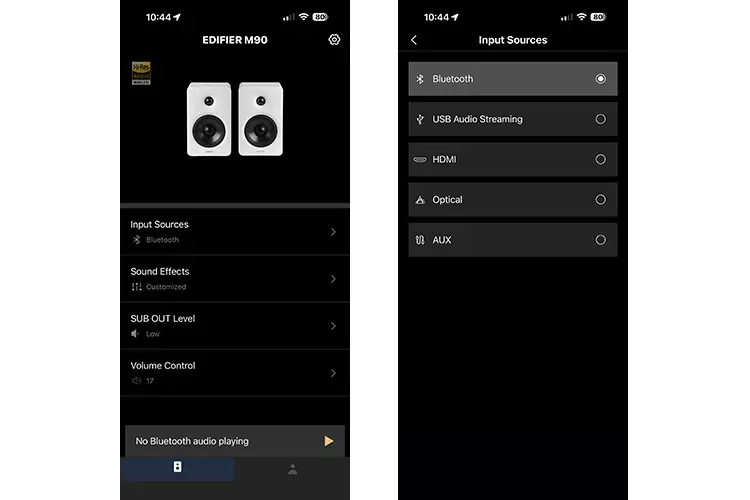
The Edifier ConneX app is the command center for the M90. It provides access to firmware updates, input switching, and, most importantly, the EQ suite. While the remote control allows for three presets—Classic, Dynamic, and Monitor—the app unlocks a 9-band graphic equalizer. This interface, ranging from 62Hz to 16kHz, allows users to fine-tune the output to match the acoustics of their room. While some power users may lament the lack of a full Parametric EQ (PEQ), the provided tools are more than sufficient for the average user to mitigate room-mode issues or personal frequency preferences.
Build Quality and Physical Design
The M90 is undeniably "stocky." Weighing in at over 6kg for the pair, the cabinets feel substantial. The housing consists of two heavy plastic sections. While the finish is clean and the white variant provides a refreshing aesthetic shift from the traditional black-box speakers, the fit-and-finish is slightly below what we have seen from Edifier’s higher-end lines. Specifically, the seam where the two halves of the rear port meet is visible. However, these are minor cosmetic details that do not impact the acoustic performance of the drivers or the internal bracing.
Official Stance and Market Positioning
Edifier has historically been a brand that prioritizes the cost-to-performance ratio. By integrating HDMI eARC, the company is making a clear play for the "all-in-one" home office and media room market. Their design philosophy for the M90 seems to focus on removing barriers to entry. By automating power-on cycles via HDMI and ensuring the speakers are "plug-and-play," Edifier is targeting the user who wants high-fidelity sound without the clutter of external DACs, amplifiers, or complex cable management.
The inclusion of Bluetooth 6.0 and LDAC support underscores their desire to stay ahead of wireless standards, ensuring that the M90 remains relevant for several years to come. By including features typically found in much more expensive professional monitors, Edifier is attempting to commoditize high-end functionality for the casual consumer.
Implications: How the M90 Reshapes Desktop Audio
The implications of the M90’s release are significant for the budget-to-mid-range audio market. For decades, the "desktop speaker" category was dominated by either cheap, tinny multimedia speakers or bulky, expensive studio monitors that required significant desk real estate and external hardware.
The M90 suggests that the future of home audio is convergence. By providing a speaker that sounds "honest"—a blend of analytical clarity and organic warmth—the M90 proves that you do not need to sacrifice soundstage or depth to achieve a compact footprint.
However, the M90 is not without its limitations. The midrange, while clear, can feel slightly recessed compared to the punchy bass and the smooth treble. For listeners who prioritize vocal-forward tracks or complex orchestral pieces, this "V-shaped" signature might require some adjustments via the custom EQ settings in the ConneX app. Furthermore, the reliance on a digital wake-up for non-HDMI inputs means that users of analog or optical sources may need to occasionally manually wake the system from its idle state.
Final Assessment
The Edifier M90 stands as a testament to the brand’s ability to evolve. It is an ideal companion for the modern professional who works at their desk by day and consumes media by night. While it may not satisfy the most discerning audiophile seeking the ultimate in midrange transparency, it offers an incredible value proposition for the price of $369.99. It provides a wide, deep soundstage, robust connectivity, and a level of versatility that is hard to find in a single package. Whether you are looking to upgrade your TV audio or elevate your workspace sound, the M90 is a contender that demands a serious listen.