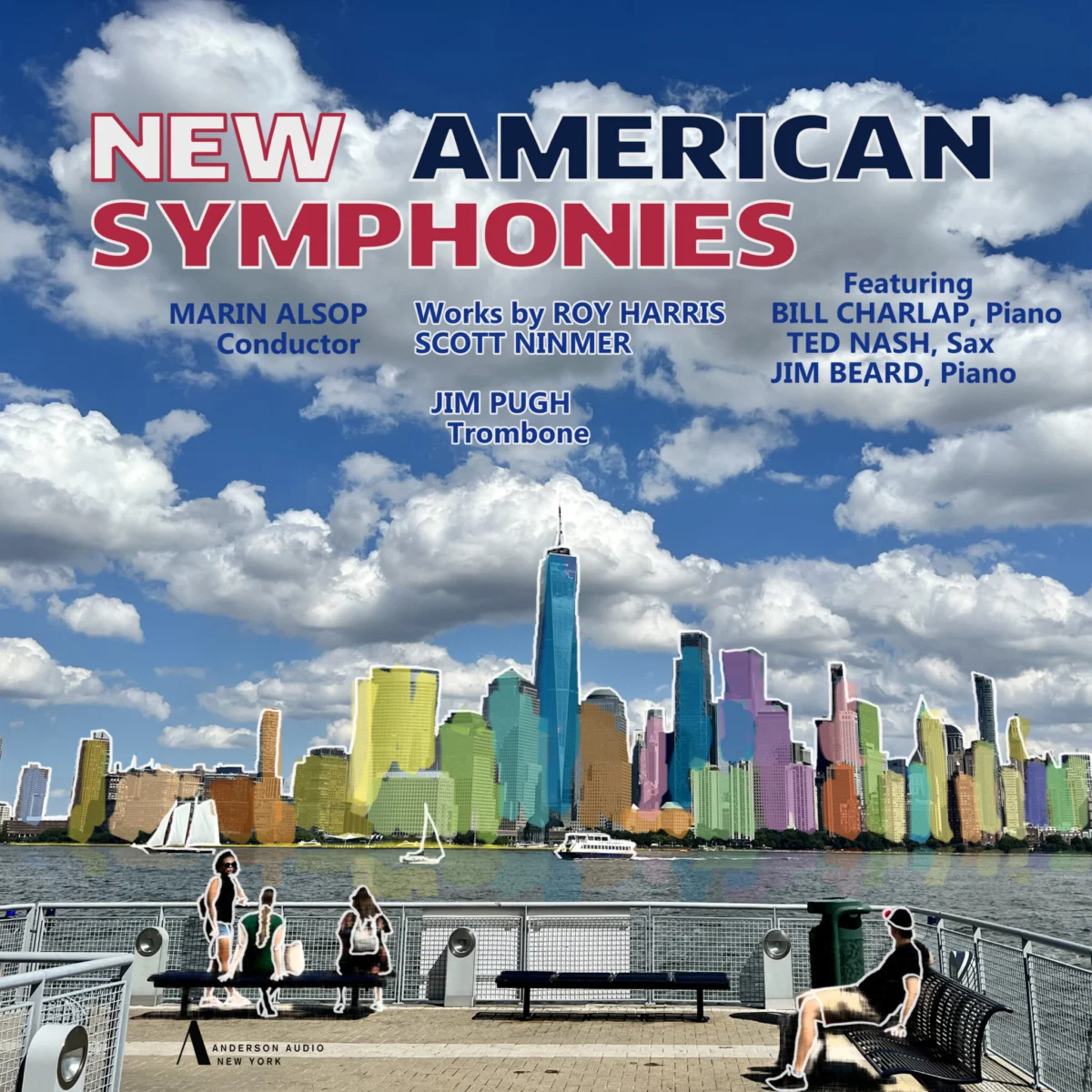
NEW YORK CITY — In the archives of the Library of Congress, buried beneath layers of dust and the silence of nearly ninety years, lay a musical ghost. It was an ambitious, sweeping symphonic work penned by the legendary composer Roy Harris in 1938, specifically commissioned for the iconic bandleader Tommy Dorsey. Yet, the score was never realized. Deemed too technically demanding and structurally complex for the constraints of its era, the manuscript was shelved, its potential locked away in boxes of forgotten archival material.
Today, that silence has been broken. Trombone virtuoso Jim Pugh, a pillar of the contemporary American music scene, has successfully exhumed this lost chapter of music history. On August 14, 2026, the world will finally hear this long-lost trombone symphony as part of a groundbreaking new release, New American Symphonies.
This project is not merely a recording; it is a collaborative triumph of historical preservation and sonic innovation, reuniting Pugh with his lifelong friend and collaborator, the multi-Grammy-winning engineer Jim Anderson, and acclaimed producer Ulrike Schwarz. Captured in the pristine, ultra-high-resolution format of Digital eXtreme Definition (DXD) at the world-renowned Power Station at BerkleeNYC, the album stands as a bridge between the symphonic ambitions of the 1930s and the cutting-edge audio technology of the 21st century.
A Journey of Discovery: The Archival Excavation
The story of New American Symphonies began not in a recording studio, but in the quiet, climate-controlled stacks of the Library of Congress. For Jim Pugh, the discovery was the culmination of a deep-seated curiosity regarding the repertoire for his instrument.
"When you begin to look at the history of the trombone in symphonic literature, you find these gaps," Pugh explains. "Roy Harris is a monumental figure in American music—his Symphony No. 3 is a cornerstone of the repertoire. To find that he had written a major work for trombone that had never seen the light of day was an irresistible challenge."
Pugh’s research uncovered a sobering reality: Tommy Dorsey, despite his stature as the "Sentimental Gentleman of Swing," had only managed a single rehearsal of the work before the complexity of the orchestration led the project to be abandoned. It was a failure of the era’s technical limitations, not the composer’s vision. For nearly nine decades, the music remained an unplayed relic.

Chronology: From 1938 to 2026
- 1938: Roy Harris composes a landmark symphonic work for trombone, intended for Tommy Dorsey. The piece is rehearsed once but shelved, deemed "too difficult" for the ensemble to perform at the time.
- 1960s: Jim Pugh and Jim Anderson meet as students in a Pennsylvania school band, sparking a lifelong friendship that would eventually lead to a legendary professional partnership.
- 2020s: Jim Pugh begins his archival research, eventually locating the original Harris manuscripts within the Library of Congress.
- 2025: Pugh, alongside Jim Anderson and Ulrike Schwarz, begins the process of preparing the score and assembling an elite ensemble of musicians.
- 2026 (June 24): Official announcement of New American Symphonies and the partnership with NativeDSD for an exclusive early digital release.
- 2026 (August 14): Official global release of the album.
- 2026 (September 15): The project is celebrated at an exclusive event at Technica House in New York City.
Technical Mastery: The DXD Advantage
The decision to record New American Symphonies in Digital eXtreme Definition (DXD) was born from a desire for total transparency. Jim Anderson, whose career as an engineer has spanned decades of industry evolution, argues that the technology should never overshadow the performance.
"If we can make the technology disappear, if our presence can be totally transparent, then we’ve done our job," Anderson notes. "We’re not just capturing sound; we’re capturing the intent of the composer and the physical reality of the room."
The recording, conducted at the Power Station at BerkleeNYC, utilized an all-star ensemble. The goal was to provide an immersive, three-dimensional sonic experience. Ulrike Schwarz, who co-produced the sessions, emphasizes that the goal was to eliminate the "glass wall" between the listener and the musician.
"When you listen to this record, you’ll feel like you’re standing in the middle of the band, but also like they’re playing directly to you," Schwarz adds. "It’s a completely immersive experience that respects the architectural integrity of the music."
Supporting Data: A Career of Unmatched Range
The scale of this project is matched only by the pedigree of those involved. Jim Pugh’s resume is a roadmap of modern musical history. With over 4,000 recording sessions, his trombone has graced the works of artists as diverse as Steely Dan, Yo-Yo Ma, Paul Simon, Barbra Streisand, Michael Jackson, Pink Floyd, and Frank Sinatra.
This deep experience allowed Pugh to approach the Harris manuscript with a unique perspective. "If you close your eyes and listen to the first movement," Pugh observes, "you can hear where jazz would eventually arrive some 35 or 40 years later. And if you pay attention to the back end, you can hear the roots of minimalism. It’s this remarkable little time capsule that slipped through the cracks of history."
The album is balanced by the inclusion of Night Suite, a contemporary work by Scott Ninmer, the current Chief Arranger for The United States Marine Band. Ninmer, who studied under Pugh, provides a modern counterpoint to the Harris work, creating a narrative that spans nearly a century of American musical evolution.
Official Perspectives: The Philosophy of Sound
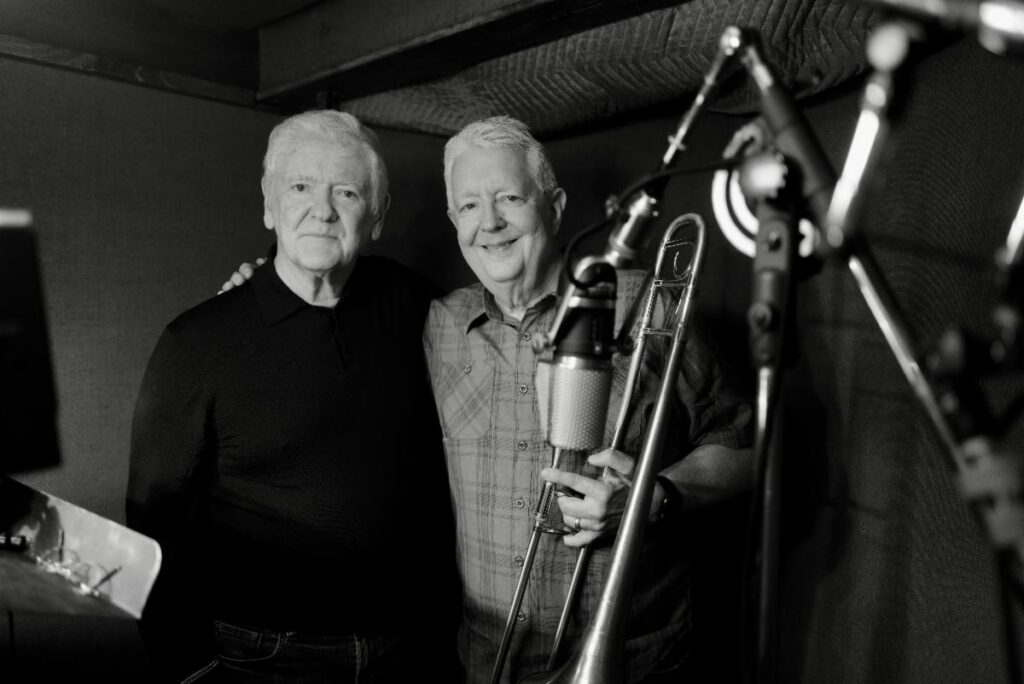
The partnership between Pugh, Anderson, and Schwarz is the heartbeat of this release. Having met as young musicians in Pennsylvania, the reunion of Pugh and Anderson represents a full-circle moment.
"We grew up playing in bands together," Anderson recalls. "To be here, decades later, working on a project that requires this level of dedication and technical rigor, it’s the culmination of a shared journey."
The project also draws upon the expertise of the industry’s elite. The ensemble assembled for the recording represents the best of the New York scene, drawing talent from Broadway pits, jazz clubs, and classical concert halls. By blending these disparate worlds, the producers ensured that the Harris composition would finally receive the virtuosic treatment it was denied in 1938.
The Implications: A New Standard for Archival Music
New American Symphonies raises significant questions about the nature of our musical heritage. How many other masterpieces are currently gathering dust in the archives of national libraries? By utilizing DXD and high-resolution immersive audio, the team has not only performed the music—they have documented it in a format that ensures its survival for future generations of listeners and scholars.
Furthermore, the release sets a new benchmark for how we treat "lost" works. Rather than viewing historical manuscripts as objects for academic study alone, the team has proven that they can be living, breathing, and relevant parts of our contemporary soundscape.
Looking Ahead: The September 15 Event
As the release date approaches, the anticipation within the industry is palpable. The September 15th event at Technica House in New York City will serve as a definitive showcase for the work, providing an opportunity for critics, fellow musicians, and audiophiles to experience the project as it was intended: in high-definition, immersive surround sound.
For those eager to experience the recording before the general public, NativeDSD is offering an exclusive early release. It is a rare opportunity to engage with a piece of history that spent 88 years in the shadows, now brought into the light by two old friends and a team of visionary producers.
"We’re honoring the past," Pugh says, "but we’re doing it with the tools of the future. That’s what this is really about. It’s about keeping the conversation going."
As the final notes of the Harris symphony ring out, one cannot help but feel the weight of the years. What was once considered impossible—a challenge too great for the Swing Era—has become a testament to the enduring power of American composition and the relentless drive of those committed to its preservation.
For inquiries regarding the album or the upcoming event at Technica House, please contact Taylor Perry at [email protected].