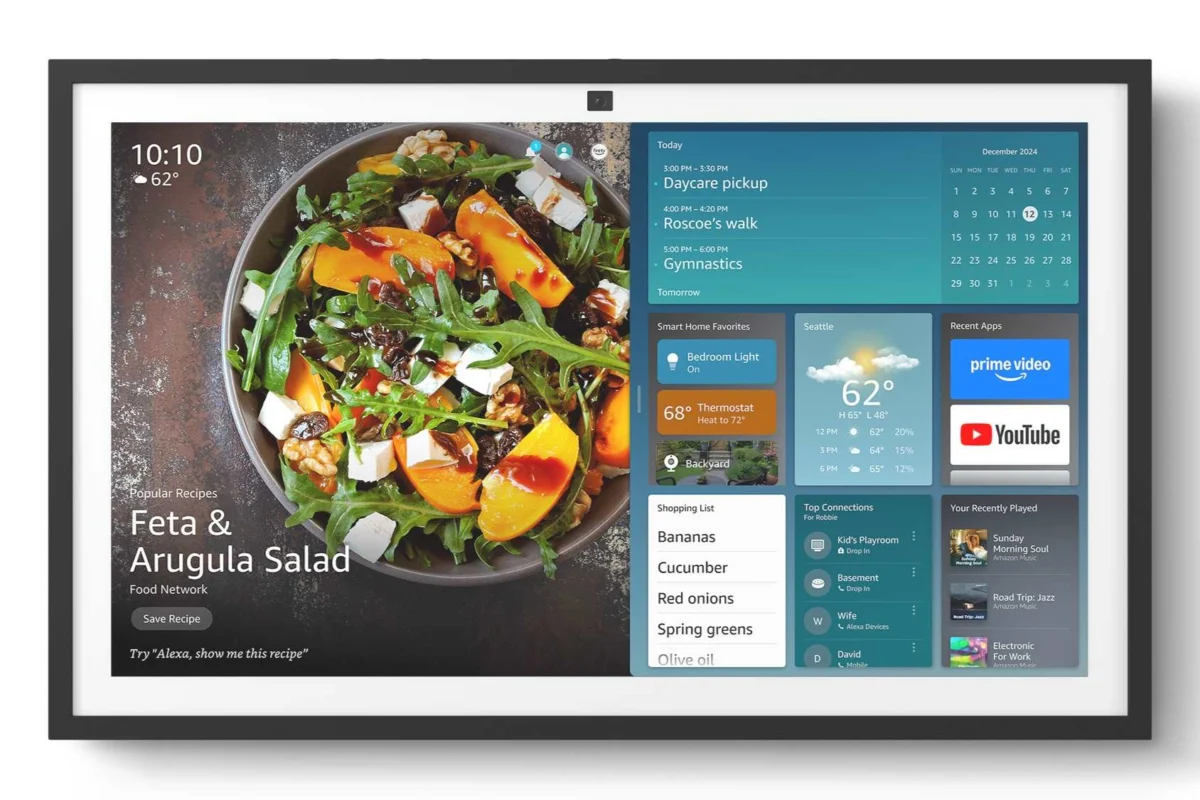
In a move that signals a significant shift in the company’s smart home strategy, Amazon has officially unveiled the Echo Show 21, its largest Alexa-powered smart display to date. By expanding the footprint of its wall-mountable display series, Amazon is positioning its hardware not just as a kitchen assistant, but as a primary hub for home entertainment, communication, and complex smart home management.
The announcement brings a refreshed Echo Show 15 and the introduction of the massive Echo Show 21, both of which aim to rectify long-standing criticisms regarding audio fidelity and smart home integration. With a price point of $299.99 for the 15-inch model and $399.99 for the 21-inch powerhouse, Amazon is clearly banking on the consumer’s desire for "more screen" in a market that has historically prioritized smaller, more discreet smart devices.
The Main Facts: A New Tier of Smart Displays
The Echo Show 21 represents a significant milestone in the hardware ecosystem. While the original Echo Show 15 was lauded for its wall-mountable form factor, it faced significant pushback from reviewers and users alike for its thin, lackluster audio and limited smart home control capabilities.
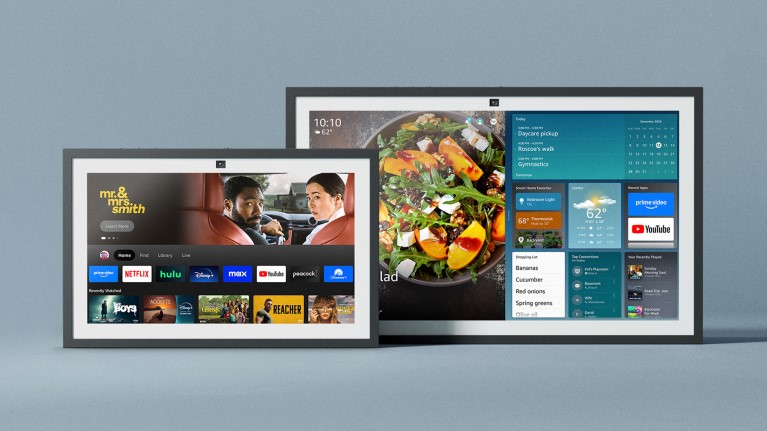
The Echo Show 21 addresses these concerns with a 21-inch high-definition display, offering nearly double the screen real estate of its smaller sibling. While it maintains the 1920 x 1080 resolution—meaning the pixel density is lower than the 15-inch model—the sheer surface area transforms the device into a genuine secondary monitor for streaming services like YouTube, Prime Video, Paramount+, Peacock, and Max.
Beyond the physical size, the internal hardware has received a massive overhaul. Both the 15 and 21 models now feature:
- Integrated Zigbee and Thread radios: Finally enabling the displays to act as fully functional Matter controllers.
- Enhanced Audio Architecture: Featuring twin 2-inch woofers designed to deliver twice the bass of the previous iteration.
- Room Adaptation Technology: Software-driven acoustic adjustment that balances sound output based on the specific dimensions and reflective surfaces of the room.
- Wi-Fi 6E Connectivity: A first for the Echo line, ensuring that streaming high-bitrate video doesn’t bottleneck the household network.
A Chronological Evolution of the Echo Show
To understand the significance of the Echo Show 21, one must look back at the trajectory of Amazon’s display-based hardware.
2017: The Genesis
The original Echo Show arrived as a novelty, a small screen tethered to an Alexa speaker. It was primarily designed for visual feedback—showing weather, timer countdowns, and news headlines.
2021: The Wall-Mountable Pivot
The launch of the Echo Show 15 marked the first departure from the "countertop" philosophy. It was designed to live on a wall, acting as a digital bulletin board. It introduced the concept of widgets, allowing families to pin calendars, shopping lists, and sticky notes to a home screen. However, it was technically limited, lacking the smart home hub capabilities found in cheaper Echo speakers.

2022–2023: The Feedback Loop
During this period, the Echo Show 15 was frequently criticized for being a "jack of all trades, master of none." While the aesthetic was praised, the lack of Zigbee integration meant users still required a separate hub to manage advanced lighting or security systems. Furthermore, the audio quality was widely considered insufficient for a device of its size and price.
2024: The Maturity Phase
With the launch of the Echo Show 21, Amazon has synthesized years of user feedback. The inclusion of native Matter support, improved camera framing, and a commitment to better audio signifies that Amazon is no longer treating these displays as "accessories" but as foundational smart home infrastructure.
Supporting Data and Technical Specifications
When comparing the Echo Show 21 to competitors, the metrics reveal a strategic focus on the "command center" use case.
| Feature | Echo Show 15 (New) | Echo Show 21 |
|---|---|---|
| Display Size | 15.6 inches | 21 inches |
| Resolution | 1920 x 1080 | 1920 x 1080 |
| Smart Hub | Zigbee + Thread | Zigbee + Thread |
| Wi-Fi | Wi-Fi 6E | Wi-Fi 6E |
| Audio | Dual 2-inch woofers | Dual 2-inch woofers |
| Price | $299.99 | $399.99 |
The camera technology has also seen a significant leap. Both devices now utilize an enhanced auto-framing lens that offers twice the field of view and 65 percent more zoom than the previous 15-inch model. This, combined with new noise-reduction algorithms, positions the devices as serious tools for remote work or family video calls.
It is worth noting the competition. The Skylight Calendar Max, retailing at $600, offers a 27-inch display, but it is a "specialized" device. It lacks the cameras, speakers, and broader ecosystem utility of the Echo Show 21. By pricing the Echo Show 21 at $399, Amazon is undercutting niche smart-home calendar displays while offering a vastly more capable multimedia experience.
Official Perspectives: Amazon’s Strategic Intent
Amazon’s representatives have emphasized that the design of the new Echo Show line was heavily influenced by "lifestyle integration." The company’s goal is to remove the "clutter" of smaller, disconnected smart home devices by consolidating control into a single, high-visibility hub.
"The Echo Show 21 isn’t just about making the screen bigger," an Amazon spokesperson noted during the product briefing. "It is about making the smart home interface more accessible to everyone in the room. By doubling the bass and improving the camera’s framing, we’ve transformed the display from a passive information board into an active member of the home’s communication and entertainment system."
Amazon also addressed the mounting options, noting that while the devices are wall-mountable, the company is catering to renters and those who prefer flexibility. The availability of a "premium" counter stand—priced at $99.99—reflects a recognition that not every user wants to drill holes in their drywall.
Implications for the Smart Home Industry
The release of the Echo Show 21 carries several implications for the broader smart home market:
1. The Consolidation of the Smart Hub
For years, the industry was fragmented. You had your smart lights on a Philips Hue bridge, your sensors on a Zigbee hub, and your streaming services on a separate Fire TV stick. By baking Zigbee, Thread, and Matter support directly into the Echo Show 21, Amazon is attempting to streamline the "controller" layer of the smart home. This is a direct challenge to standalone hubs like Samsung’s SmartThings or Home Assistant hardware.
2. Moving Toward "Ambient Computing"
The increase in screen size supports the trend toward ambient computing—where technology is present but not intrusive. A 21-inch display can act as a piece of digital art, a family calendar, or a live video feed for a security camera, all while blending into the home environment. The addition of stylish, optional frames suggests that Amazon understands these devices are now considered part of home decor.
3. The Future of Video Conferencing
By enhancing the field of view and zoom capabilities, Amazon is signaling that the "home office" is no longer confined to a desk. The Echo Show 21 is clearly designed to be placed in kitchens or living areas, allowing for more natural, motion-oriented video calls where the user can move around the room without leaving the frame.
4. Competitive Pressure on Specialized Hardware
The aggressive pricing of the Echo Show 21 puts immense pressure on companies producing digital photo frames and smart calendars. When a $399 device can do everything a $600 specialized calendar can do—and add 4K streaming, premium audio, and smart home control on top—the value proposition of single-purpose hardware becomes increasingly difficult to justify.
Conclusion: A New Standard?
As we wait for full-scale testing of these devices, the initial specifications and design choices suggest that Amazon has successfully identified the pain points of its previous hardware. The move to incorporate Wi-Fi 6E, Matter compatibility, and improved acoustics shows a company that is listening to its power users.
Whether the Echo Show 21 becomes a staple in modern households will depend on its software fluidity and the reliability of its new hub features. However, one thing is certain: the era of the "small" smart display is fading. In the battle for the wall, Amazon has just made a massive, high-definition statement.
Stay tuned for our upcoming in-depth performance analysis, where we will put the Echo Show 21 through its paces in real-world scenarios—from kitchen-side recipe management to its efficacy as a central nervous system for a complex, multi-device smart home.