The 2026 InfoComm Show, hosted at the Las Vegas Convention Center, has officially concluded, leaving behind a clear mandate for the future of the audiovisual (AV) industry: the era of Artificial Intelligence is no longer a speculative trend—it is the foundational architecture of modern communication.
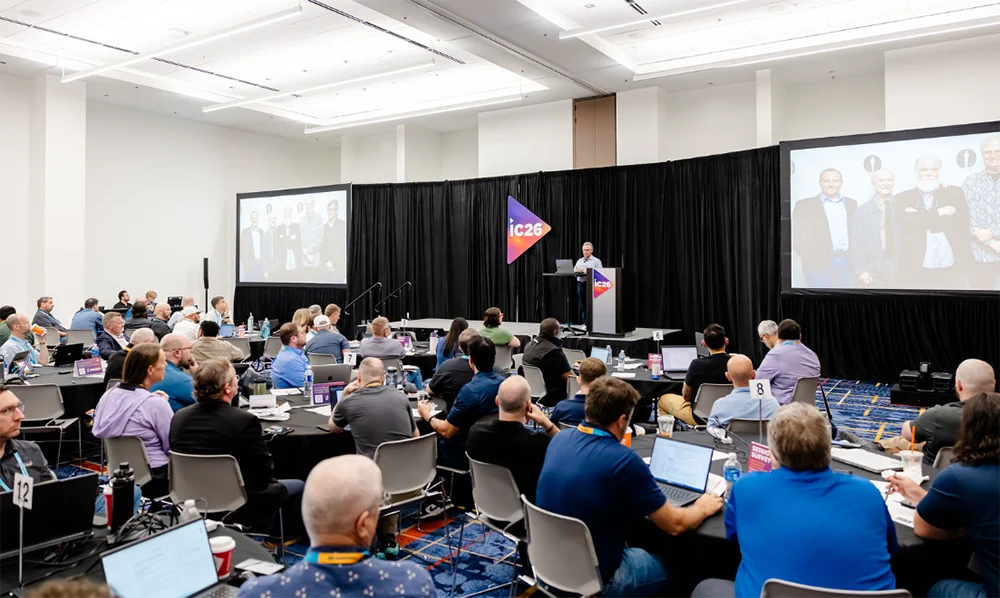
As the premier trade show for the professional AV industry, InfoComm 2026 served as a massive, high-fidelity laboratory where 28,132 verified attendees from 94 countries converged to witness the rapid evolution of digital infrastructure. With 35,707 total registrants, the event underscored a robust global demand for integrated technologies that bridge the gap between human intent and machine execution.
The State of the Industry: By the Numbers
The scale of the 2026 gathering was staggering. Across 395,500 net square feet of show floor space, 807 exhibitors displayed the cutting edge of collaboration, broadcast, retail digital signage, and immersive experience technology.
Beyond the sheer volume of floor space, the composition of the audience revealed a shift in the AV landscape. End users—the corporate, retail, and educational professionals who deploy these technologies—made up 37% of the total attendance. This indicates that the "pro-AV" sector has firmly transitioned from a niche technical specialty into a central pillar of enterprise business strategy. Furthermore, with international attendance accounting for 20% of the total, it is clear that the push for standardized, AI-enhanced collaborative environments is a global imperative rather than a localized trend.
Chronology of Innovation: A Week of Transformation
The week began with a sense of urgency, as the industry sought to define how AI integrates into the "new normal" of hybrid work and experiential retail.
Wednesday: Defining the AI-Powered Workplace
The opening keynote, delivered by Ilya Bukshteyn, corporate vice president for Microsoft Teams, set the tone for the week. Bukshteyn’s presentation moved beyond buzzwords, focusing on tangible AI applications for Teams Phone and meeting environments. By demonstrating voice agents capable of managing enterprise-level communications, Microsoft signaled that the meeting room is evolving into an intelligent, active participant in the workplace rather than a passive conduit for video and audio.
Thursday: The "Distance Zero" Vision
Following up on the momentum, Thursday’s keynote featured Espen Løberg, vice president and general manager of Collaboration Devices at Cisco. Løberg introduced the concept of "Connected Intelligence," anchored by the idea of "Distance Zero." This philosophy posits that through AI-driven spatial audio, intelligent camera framing, and real-time data analytics, the friction of remote work can be entirely eliminated. His demonstration of the AI-powered Director Agent showed a future where the platform—be it Zoom, Google Meet, or Microsoft Teams—becomes secondary to the quality of the interaction itself.
Show Floor Activations: Experiential Learning
The 2026 show was defined by its "activations," which allowed attendees to move past theoretical discussions and engage in hands-on testing of complex systems.
- Smart Workplace (Powered by FORTË): This installation acted as a microcosm of the modern office. It integrated workplace analytics with automated room controls, proving that the future of the office is not just "connected," but "aware."
- The Pitch (Powered by Diversified): Focused on the convergence of sports and broadcast, this activation highlighted the high-pressure, high-reward environment of fan engagement. It demonstrated how production workflows are becoming increasingly modular and software-defined.
- Retail Experience: In a collaborative effort involving industry leaders like Samsung, BrightSign, and Bluesound Professional, this zone explored the "Phygital" customer journey. By utilizing AI to personalize digital signage in real-time based on customer traffic and demographics, retailers are turning static displays into dynamic sales tools.
- AVIXA TV: Providing a live, broadcast-grade production studio on the show floor, this activation offered an "under the hood" look at the techniques required to produce modern media in a digital-first world.
Professional Development and Certification
InfoComm is as much a classroom as it is a marketplace. The 2026 education program boasted over 300 sessions, catering to a diverse audience ranging from systems designers to IT managers.
The commitment to professional excellence was evidenced by the testing center, where 129 attendees earned their Certified Technology Specialist (CTS) credential, pushing the total number of global CTS holders past the 15,800 milestone. Additionally, 18 new Audiovisual Network Professionals (ANP) were certified, a vital development given the industry’s increasing reliance on network-based infrastructure. The success of these programs underscores a trend identified by industry analysts: as hardware becomes commoditized, the value of the professional who can design, install, and maintain these complex ecosystems continues to climb.
Strategic Shifts: The Rise of Media Day and Residential Convergence
A significant structural change this year was the introduction of the first-ever "Media Day." By curating tours for journalists and analysts, AVIXA successfully amplified the reach of new product launches. This initiative resulted in a 35% increase in verified media attendance, ensuring that the innovations showcased at the Las Vegas Convention Center resonated throughout the global tech press.
Looking ahead, the show served as the launchpad for "RESIDE." This new event, developed in partnership with HTSA and ProSource, marks a pivotal strategic shift for AVIXA. By dedicating space to the residential integration market—starting in 2027—the organization is acknowledging that the lines between the "smart home" and the "smart office" are blurring. The modern consumer expects the same level of connectivity and AI-driven convenience in their living room as they do in their boardroom.
Official Perspectives: The Future is Interactive
Jenn Heinold, senior vice president of Expositions at AVIXA, captured the spirit of the event in her closing remarks. "This year’s InfoComm was the most interactive and engaging event we’ve ever produced," Heinold stated. She emphasized that the goal was to shift the narrative from "what AI can do" to "what we can do with AI." By prioritizing immersive activations and hands-on demonstrations, AVIXA ensured that attendees left Las Vegas with more than just business cards; they left with a roadmap for implementation.
Implications for the Industry
The implications of InfoComm 2026 are profound. First, the professional AV sector is officially an "AI-first" industry. Every major product launch and educational session revolved around how machine learning can increase operational efficiency, enhance user inclusivity, or provide deep data analytics.
Second, the convergence of IT and AV is complete. The focus on network-based certification and the prominence of enterprise collaboration giants like Cisco and Microsoft confirm that the AV manager is now, for all intents and purposes, an IT systems architect.
Finally, the industry is becoming increasingly "experience-centric." Whether in a retail store, a corporate lobby, or a sports stadium, the demand for immersive, interactive content is forcing a re-evaluation of hardware standards. As we look toward the 2027 InfoComm Show in Orlando, Florida (June 12-18), the industry is poised to move from the pilot stage of AI integration to mass deployment.
InfoComm 2026 was not merely a trade show; it was a testament to the resilience and adaptability of the AV industry. By embracing the complexity of AI and the necessity of global standards, the sector has proven that it is capable of building the infrastructure of the future—one connection at a time.