Main Facts: The Battle for ASML’s Future
In a rare and high-stakes display of diplomatic intervention, Dutch Trade Minister Sjoerd Sjoerdsma traveled to Washington, D.C., this week to engage in a series of urgent meetings with U.S. Commerce Secretary Howard Lutnick and key members of Congress. The primary objective of the mission: to halt the progress of the "MATCH Act" (Making Advanced Technology Controls Harmonized Act), a piece of legislation that threatens to upend the global semiconductor supply chain and inflict significant financial damage on ASML, Europe’s most valuable technology company.
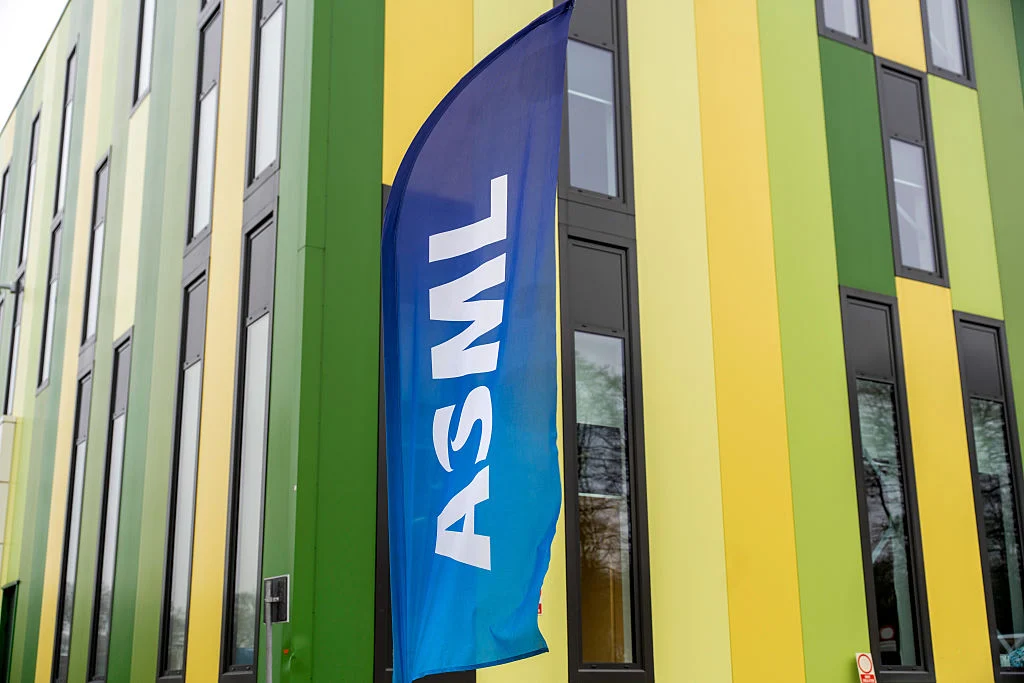
ASML, headquartered in Veldhoven, Netherlands, occupies a unique position in the global economy. As the world’s sole manufacturer of extreme ultraviolet (EUV) lithography machines, the company is the indispensable gatekeeper of the AI revolution. Without ASML’s technology, the production of the cutting-edge microchips required for generative AI, high-performance computing, and advanced defense systems would be physically impossible.
The MATCH Act, introduced in April, seeks to tighten the regulatory noose around China’s semiconductor industry. If passed, the bill would extend existing export controls to include ASML’s deep ultraviolet (DUV) immersion machines—tools that are currently permitted for export to China under a specific, albeit restricted, licensing framework. For the Dutch government, the bill represents an overreach that threatens the economic stability of its national champion and disrupts the delicate balance of international trade diplomacy.
Chronology: A Escalating Semiconductor War
The tension surrounding the MATCH Act is the latest chapter in a multi-year saga of geopolitical maneuvering over silicon dominance.
- 2019–2022: The U.S. government successfully lobbies the Dutch government to restrict the sale of ASML’s most advanced EUV lithography machines to China, citing national security concerns regarding the modernization of the Chinese People’s Liberation Army.
- April 2026: The MATCH Act is introduced in the U.S. House of Representatives. The bill proposes a sweeping expansion of restrictions, aiming to move beyond high-end EUV machines to target legacy DUV immersion systems—technology that has been the industry standard for over a decade.
- May 2026: ASML CEO Christophe Fouquet publicly addresses the mounting pressure, asserting the company’s resilience while acknowledging the impact of shifting geopolitical landscapes on its long-term strategy.
- June 2026: Following weeks of back-channel negotiations, Trade Minister Sjoerdsma arrives in Washington for a formal lobbying blitz, marking an escalation in the Netherlands’ pushback against U.S. unilateralism.
- Present Day: The bill remains in legislative limbo. While it has not faced a full floor vote in either the House or Senate, political analysts suggest that proponents are seeking to fold the MATCH Act into a larger, "must-pass" legislative package, such as a defense authorization or economic omnibus bill, to bypass traditional committee hurdles.
Supporting Data: The Economic Anatomy of the Dispute
To understand the gravity of Minister Sjoerdsma’s mission, one must look at the numbers. China is not merely a peripheral market for ASML; it is a fundamental pillar of its revenue stream.
Revenue Exposure
According to recent fiscal reports, China accounts for 19% of ASML’s total net system sales. This revenue is generated largely through the sale of DUV immersion machines. While the most advanced EUV tools have been banned from Chinese export for years, the DUV machines—which are essential for manufacturing chips used in everything from automobiles to consumer electronics—have remained a bridge between the West and the Chinese market.
Technological Thresholds
The MATCH Act seeks to reclassify DUV immersion tools as "restricted technology." As ASML’s CEO Christophe Fouquet noted in a May interview with TechCrunch, the machines in question are not bleeding-edge prototypes. They are mature technologies, first shipped roughly ten years ago. By restricting these, the U.S. is not merely attempting to slow the development of future Chinese AI, but is effectively attempting to decouple China from the global semiconductor ecosystem at the legacy production level.
Market Volatility
Since the introduction of the MATCH Act, ASML’s stock price has shown heightened sensitivity to legislative news. As the company is a pillar of the European tech sector, any significant restriction on its global reach has immediate, cascading effects on the AEX index and the broader European tech valuation.
Official Responses: A Clash of Geopolitical Doctrines
The Dutch Position
Minister Sjoerdsma’s rhetoric in Washington was calculated but blunt. Speaking to reporters after his meetings with Secretary Lutnick, Sjoerdsma emphasized that the Netherlands is not simply acting out of corporate loyalty, but out of a need for economic self-preservation. "It’s exceptional that I’m coming here to broadly outline our concerns to Congress," Sjoerdsma told Bloomberg. "The stakes for the Netherlands may be very high."
The Dutch argument is twofold: first, that unilateral U.S. actions undermine the sovereignty of Dutch trade policy; and second, that such blunt instruments as the MATCH Act risk alienating European allies who have already cooperated with previous, more targeted export control regimes.
The U.S. Congressional Perspective
Proponents of the MATCH Act within Congress argue that existing controls are porous. They contend that Chinese semiconductor firms are utilizing DUV machines to "work around" the EUV bans, employing multi-patterning techniques to achieve near-EUV results. For these lawmakers, the MATCH Act is not an act of trade protectionism, but a necessary national security measure to prevent the Chinese military from achieving technological parity in the AI arms race.
Industry Sentiments
ASML’s leadership has walked a fine line. CEO Christophe Fouquet has publicly maintained a posture of "technological independence," suggesting that the market for ASML machines is global and that the company is prepared to pivot if specific markets close. However, internal corporate communications suggest a deeper concern: that the loss of the Chinese market will not only hurt short-term revenue but will provide the necessary incentive for China to accelerate its own domestic lithography programs, potentially creating a long-term competitor to ASML.
Implications: A New Era of Trade Governance
The "Sovereignty Gap"
The visit by Minister Sjoerdsma highlights a growing "sovereignty gap" between the U.S. and its European partners. While the U.S. views the semiconductor supply chain through the lens of a singular "Cold War" style conflict with China, the Netherlands—and the broader European Union—tends to view the semiconductor industry as a globalized utility. The attempt to force the Netherlands to adhere to the MATCH Act’s stringent standards sets a precedent that could lead to further friction within the Transatlantic alliance.
The Acceleration of Chinese Autarky
If the MATCH Act passes, the most immediate consequence may be the further insulation of the Chinese tech sector. By cutting off access to mature DUV technology, the U.S. may force Beijing to increase its subsidies for domestic equipment manufacturers like SMEE (Shanghai Micro Electronics Equipment). While currently far behind ASML, an forced shift toward domestic production could, in the long run, erode the global market share currently enjoyed by Western firms.
Legislative Hurdles
The fate of the MATCH Act remains uncertain. Because it has not yet reached a floor vote, its passage depends entirely on the willingness of leadership to append it to broader legislation. If the bill fails, it will likely be because of the very diplomatic efforts Sjoerdsma is currently spearheading. If it succeeds, it will mark a significant shift in how the U.S. leverages its influence over global supply chains, signaling that "national security" will henceforth be interpreted as the total exclusion of adversarial nations from all tiers of semiconductor production.
Conclusion: The Unresolved Future
The standoff between Washington and The Hague is more than a trade dispute; it is a fundamental disagreement over the role of technology in the 21st-century geopolitical order. As Minister Sjoerdsma returns to Europe, the message to Congress is clear: the Netherlands is willing to cooperate on security, but it will not be an silent partner in its own economic contraction. As the debate continues, the global tech industry watches with bated breath, knowing that the outcome of this legislative skirmish will define the boundaries of the global semiconductor market for decades to come.