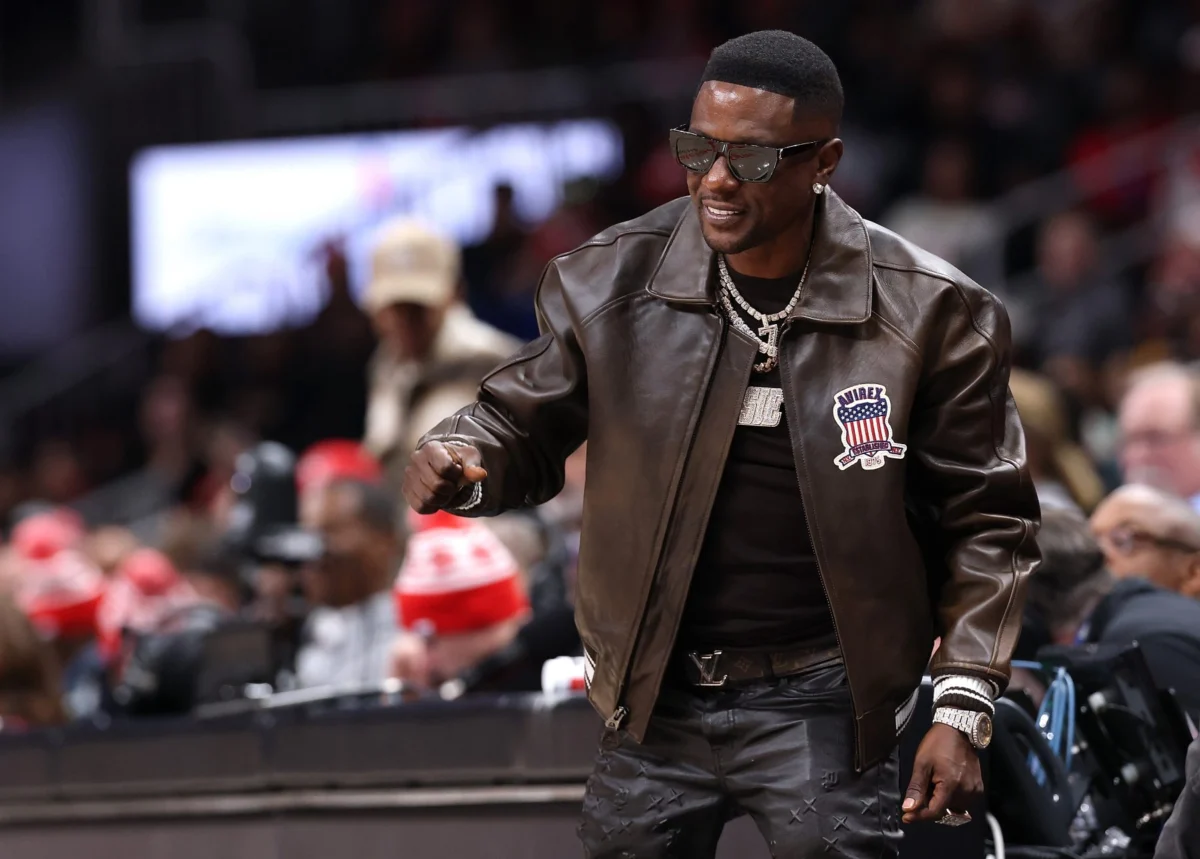
The Baton Rouge rapper finds himself back in the crosshairs of federal authorities as his supervised release following a high-profile gun case faces immediate revocation.
The legal saga surrounding veteran rapper Boosie Badazz—born Torence Hatch—has taken a precarious turn. Federal probation officials have officially petitioned the court to revoke the rapper’s supervised release, recommending an 18-month prison sentence. The request, filed in federal court on Wednesday, June 24, follows a series of alleged infractions that authorities argue represent a total disregard for the court’s leniency and a continued commitment to a "criminal lifestyle."
The development marks a significant escalation in a case that, until recently, appeared to be moving toward a successful conclusion for the 42-year-old artist.
The Core Allegations: From Probation to Prosecution
The U.S. Probation Office’s filing is anchored in a May incident at a Houston, Texas, nightclub, where Boosie allegedly assaulted an individual using a glass hookah. This incident, which led to a state-level aggravated assault charge in Texas, serves as the primary catalyst for the federal petition.
Beyond the assault allegation, federal authorities have cited a pattern of non-compliance. According to the court documents, Boosie reportedly traveled from his residence in Georgia to Texas without obtaining the necessary travel authorization from his supervising officers. Furthermore, the filing notes that the rapper tested positive for marijuana—a substance strictly prohibited under his federal terms—during a recent drug screening.
The Probation Office’s assessment of the situation is damning. "His conduct demonstrates a disregard for the court’s authority and unwillingness to comply with the expectations established to facilitate a successful transition to the community," the document reads. The agency further characterized the rapper’s history as one of "longstanding involvement in a criminal lifestyle," citing "antisocial peer associations" and "criminogenic influences" as persistent factors in his ongoing legal woes.

Chronology of a High-Stakes Case
To understand the gravity of the current situation, one must look at the convoluted path that brought Boosie to this juncture.
2023: The San Diego Arrest
The current federal proceedings date back to 2023, following an unconventional arrest in San Diego. Local law enforcement, while monitoring the social media activity of an individual identified as a "known gang member," allegedly spotted a handgun tucked into Boosie’s waistband. Authorities utilized aerial surveillance to track the rapper’s vehicle, eventually conducting a traffic stop that resulted in the discovery of a Glock pistol. Because Boosie was already a convicted felon, this possession charge triggered a federal case.
2024: The Plea and Leniency
For months, the case moved through the federal court system, with various procedural motions creating a high-pressure environment for the defense. By August 2024, citing exhaustion from the "fight," Boosie entered a guilty plea to illegally possessing a firearm.
In a surprising move in January 2025, the presiding judge opted for leniency, sentencing Boosie to three years of supervised release rather than incarceration. This decision was widely viewed as a second chance, providing the rapper with the opportunity to focus on his career and personal life while under the oversight of federal agents.
2025–2026: The Alleged Downward Spiral
The "second chance" lasted less than six months. The May incident in Houston, followed by the Probation Office’s June filing, has effectively nullified the goodwill built during the sentencing phase. With a state-level trial in Texas looming in September, the federal government is now moving to ensure that their previous oversight was not in vain.
Supporting Data and Evidence
The Probation Office’s petition is not merely a request for incarceration; it is a calculated argument based on the standards of supervised release. Under federal law, the commission of any state, local, or federal crime—including simple battery or assault—while on probation is a per se violation of the terms of release.

The prosecution’s argument rests on three distinct pillars:
- Commission of a New Crime: The aggravated assault charge in Houston.
- Unauthorized Travel: Violation of geographical restrictions imposed by the court.
- Substance Abuse: A violation of the drug-free mandate via a positive test for marijuana.
The federal authorities have explicitly requested that any prison time imposed for these violations be served consecutively to any punishment resulting from the Houston assault case. This means that if Boosie is convicted in Texas and subsequently found in violation of his federal probation, he could be looking at a combined sentence that would keep him behind bars for a significant duration.
Boosie’s Defense: "I’m Not Stupid"
In the face of these allegations, Boosie has taken to social media to proclaim his innocence and defend his track record. On Wednesday, following the news of the filing, the rapper posted a defiant statement on X.
"IM NOT STUPID," the rapper wrote. "MY probation officer has been fair to me throughout this process. It’s the people over him who have problems with me."
Boosie’s defense strategy appears to focus on three points:
- Permission for Travel: The rapper insists that he did, in fact, have the necessary authorization to be in Texas.
- Sobriety Claims: He claims to have remained "crystal clean" of drugs throughout his probation, directly contradicting the laboratory results cited by the Probation Office.
- Community Engagement: He highlighted that he has completed several hours of community service and is actively working with his legal counsel to have the Houston assault case dismissed.
The rapper’s frustration is palpable, as he claims that he is being unfairly targeted by the judicial hierarchy. His assertion that he is being "dragged" suggests that he views the federal intervention as a motivated effort to see him fail, rather than a neutral enforcement of the law.

The Broader Implications
The case of Boosie Badazz serves as a lightning rod for broader discussions regarding the intersection of the hip-hop lifestyle, urban policing, and the federal probation system.
The Burden of Celebrity
For artists like Boosie, who often broadcast their lives via social media, the line between private activity and evidence for the prosecution has become increasingly blurred. The 2023 arrest in San Diego, initiated by an Instagram feed, is a prime example of how digital footprints can dictate legal outcomes.
The "Criminogenic" Argument
The language used by the Probation Office—specifically the term "criminogenic influences"—is a hallmark of modern federal sentencing. It suggests that the system believes an individual’s environment and social circle are just as punishable as their actions. For a public figure, this creates an impossible paradox: the need to remain relevant in a high-risk industry while avoiding the very environment that fueled their initial success.
Future Outlook
As Boosie prepares for his September court appearance in Texas, his legal team faces the difficult task of bifurcating his defense. They must successfully argue for an acquittal or dismissal in the state assault case while simultaneously convincing a federal judge that the probation violations are either erroneous or do not warrant a return to prison.
If the court rejects his arguments, the implications are severe. A return to federal prison would effectively halt the momentum of his career and serve as a stark reminder of the limitations of "second chances" within the American judicial system.
For now, the rap icon remains out on bail, navigating a complex web of legal challenges that will define the next chapter of his life—and perhaps, determine whether he can truly leave his past behind him.