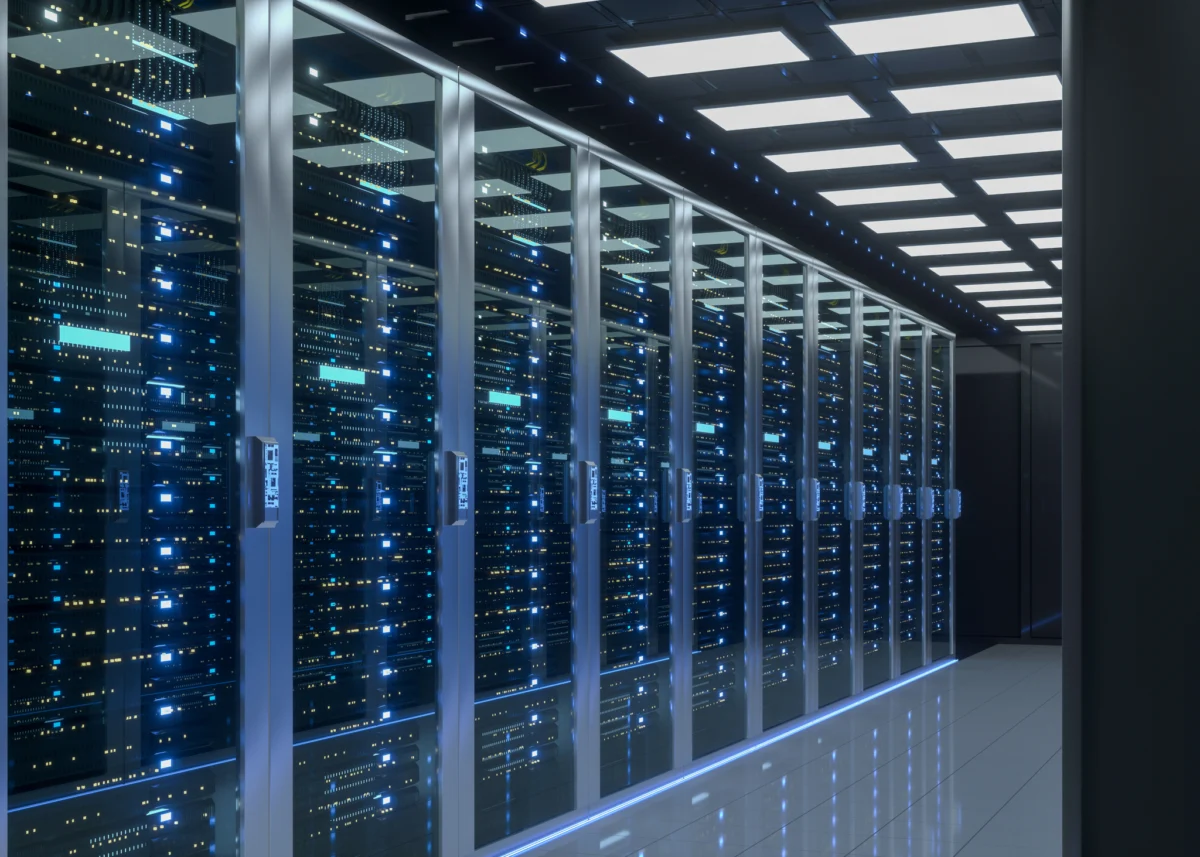
As the global race for artificial intelligence supremacy intensifies, the physical foundation of this digital revolution—the hyperscale data center—has become the most sought-after asset class for institutional capital. In a landmark move that underscores India’s rising status as a critical node in the global tech ecosystem, the Canada Pension Plan Investment Board (CPP Investments) has announced a commitment of up to ₹70 billion (approximately $741 million) into Indian data center operator CtrlS.
This strategic investment marks a significant milestone in the ongoing transformation of the Indian subcontinent from a software services outsourcing hub to a primary engine for global cloud and AI compute capacity.
The Deal Structure: A Dual-Track Partnership
The investment, announced this Wednesday, is bifurcated into two distinct tranches designed to provide both immediate equity exposure and long-term infrastructure development.
- Direct Equity Stake: CPP Investments will deploy ₹40 billion (roughly $423 million) to acquire an 8.2% stake in CtrlS. This infusion of capital provides the Hyderabad-based operator with the balance sheet strength required to accelerate its expansion efforts.
- Hyperscale Joint Venture: Beyond the equity stake, the pension fund has committed an additional ₹30 billion (about $317 million) toward a dedicated joint venture. This vehicle will focus exclusively on the development of hyperscale data center campuses across India. Under the terms of the agreement, CPP Investments will hold a 48% ownership interest in this joint venture, with CtrlS retaining the remaining 52% control.
By combining the operational expertise of CtrlS—which has been refining its data center footprint since its inception in 2007—with the deep capital reserves of Canada’s largest pension investor, the partnership aims to create a formidable player capable of servicing the high-density power requirements of modern generative AI models.
Chronology: India’s Ascent as a Data Haven
The trajectory of India’s data center market has accelerated from a localized industry to a global strategic priority in less than a decade.
- 2007–2017: The Foundation Years: CtrlS began its journey during the early era of enterprise digitization, establishing a network that would eventually span more than 15 data centers across the country.
- 2017–2023: The Institutional Shift: CPP Investments initiated its formal entry into the global data center sector in 2017, viewing digital infrastructure as a long-term hedge against traditional market volatility. Simultaneously, India’s government began framing policies to incentivize domestic data residency.
- 2023: The $2 Billion Pivot: CtrlS announced a massive $2 billion capital expenditure plan spanning six years, signaling its intent to dominate the nascent hyperscale market.
- 2025–2026: The AI Explosion: In the last 18 months, a "gold rush" has materialized. Giants like Amazon, Google, Microsoft, and OpenAI have pledged billions to Indian infrastructure. This period also saw significant policy shifts, including New Delhi’s decision to offer zero-tax incentives through 2047 for cloud providers running workloads locally.
The Global Capital Influx: Why India?
The partnership between CPP Investments and CtrlS does not exist in a vacuum. It is part of a broader, hyper-competitive landscape where sovereign wealth funds and private equity giants are vying for control over the "pipes" of the AI economy.
The urgency is driven by the massive power and cooling demands of AI hardware, such as NVIDIA’s H100 and B200 GPUs. Traditional data centers are insufficient; the new breed of "hyperscale" facilities requires massive, dedicated power grids and specialized thermal management.
Other recent maneuvers highlight this trend:
- AirTrunk’s Ambition: Blackstone-backed AirTrunk recently committed a staggering $30 billion to build five gigawatts of data center capacity in India by 2030.
- Reliance and Meta: In a move that signaled the integration of local industrial conglomerates into the AI stack, Meta partnered with Reliance Industries for a 168-megawatt AI-enabled facility in Gujarat.
- Corporate Giants: Adani Group and Tata Consultancy Services (TCS) have pivoted their massive balance sheets toward data center development, with Adani pledging $100 billion to support India’s role in the global AI race.
Official Perspectives
For CPP Investments, this move is a validation of a strategy that has seen the fund invest consistently in India since 2009. With net assets in the country reaching $20 billion as of March 31, the fund is already one of the largest foreign institutional investors in the market.
"As one of the world’s fastest-growing digital markets, India represents an important pillar of our global data center strategy," said Max Biagosch, global head of real assets at CPP Investments. The sentiment is echoed by CtrlS founder and CEO Sridhar Pinnapureddy, who noted that the capital would be specifically earmarked for "building infrastructure tailored for AI workloads," acknowledging that the requirements for AI are fundamentally different from traditional cloud hosting.
The Implications: Opportunities and Challenges
The aggressive buildout of data centers is intended to make India a "global hub" for AI workloads. By providing tax exemptions and infrastructure support, New Delhi hopes to attract the massive computing needs of Western tech firms, effectively turning India into the "data factory" of the world.
The Technological Gap
However, there is a stark dichotomy in India’s current position. While the nation is rapidly becoming the physical home for AI, it lags in the conceptual development of frontier AI models. Despite the emergence of promising startups like Sarvam, which recently reached unicorn status, the underlying architecture and large language models (LLMs) powering Indian companies remain largely dependent on U.S.-based firms. As seen recently with Anthropic’s suspension of certain services, this reliance leaves Indian enterprises vulnerable to shifts in U.S. corporate policy.
The Sustainability Crisis
The most pressing implication of this data center boom is the physical toll on India’s resources. Data centers are notoriously power-hungry and water-intensive. In regions where cooling requirements are high, the massive consumption of water—often in areas already struggling with water scarcity—has sparked public concern.
Furthermore, the strain on the national electricity grid is significant. While India is aggressively pursuing renewable energy, the sheer scale of the 5GW and 10GW projects currently in the pipeline will require an unprecedented expansion of green energy capacity. Failure to align the data center boom with sustainable energy practices could lead to long-term regulatory friction and public opposition.
Conclusion: A New Economic Pillar
The $741 million deal between CPP Investments and CtrlS is more than just a financial transaction; it is a vote of confidence in India’s long-term economic stability and its central role in the digital age. As the world pivots toward AI-driven productivity, the countries that can provide the most reliable, scalable, and cost-effective infrastructure will dictate the terms of the next decade of innovation.
India has the demographics, the policy tailwinds, and the growing industrial capacity to meet this demand. However, the true test will be whether the nation can evolve from being a provider of physical hosting space into a creator of the intelligence that drives it. For now, the "picks and shovels" of the AI gold rush are being laid in the soil of the Indian subcontinent, and global investors are ensuring they have a seat at the table.
As this infrastructure matures, the interplay between foreign institutional capital, local conglomerates, and government policy will likely define the contours of the global digital landscape for years to come. The CPP-CtrlS partnership is simply the latest, and perhaps most significant, brick in that foundation.