The digital landscape in India witnessed a seismic shift this week as the government enforced a week-long temporary suspension of the messaging platform Telegram. The directive, aimed at curbing the spread of fraudulent content and illicit activity surrounding the National Eligibility cum Entrance Test (NEET-UG)—India’s high-stakes medical entrance examination—has triggered an unprecedented reaction from the Indian public. As the platform went dark, millions of users did not simply log off; they mobilized, leading to a historic surge in the adoption of circumvention tools and alternative communication software.
This incident marks a critical juncture in the ongoing dialogue between the Indian state and global tech platforms, highlighting the precarious balance between national security concerns and the fundamental right to digital access.
The Chronology of a Digital Lockdown
The events unfolded rapidly on Tuesday, June 16, when the Indian government announced the sweeping restriction on Telegram. The decision was rooted in intelligence suggesting that bad actors were utilizing the encrypted messaging service to distribute fake exam papers and organize syndicates to defraud candidates preparing for the NEET-UG re-test.
The government’s move was swift, but the legal battle was swifter. Telegram, which counts over 150 million users in India, immediately challenged the order in the Delhi High Court. The company’s legal counsel argued that the blanket ban was a disproportionate response, suggesting that authorities should have targeted specific malicious channels or content creators rather than crippling the entire infrastructure for the country’s vast user base.
Despite these arguments, the Delhi High Court upheld the government’s directive on Friday, June 19, concluding that the authorities had acted within the bounds of emergency protocols given the time-sensitive nature of the fraud prevention effort. The restriction is slated to remain in effect until June 22, leaving a significant portion of the Indian digital population in a state of suspended animation.
Supporting Data: A Surge in Circumvention
The immediate response to the ban was a testament to the sophistication and resilience of the Indian internet user base. Data provided by app intelligence firm Appfigures to TechCrunch reveals that the day of the announcement saw the highest volume of VPN app downloads in India since the beginning of 2025.
The VPN Boom
On Tuesday alone, downloads of major VPN services jumped by 49%, rising from a baseline daily average of 139,000 to a staggering 208,000. The trend was not limited to a single provider; it was a market-wide phenomenon:

- Proton VPN: Recorded a 113% increase in Apple App Store downloads and a 64% surge on Google Play.
- Turbo VPN: Saw an 85% rise on iOS and 35% on the Android platform.
- NordVPN and ExpressVPN: Experienced significant double-digit growth, with increases of 41% and 31% respectively, as users sought reliable pathways to bypass the state-mandated firewall.
The visibility of these apps also skyrocketed. Proton VPN, for instance, climbed from 18th to 5th in the Apple App Store’s "Utilities" category in just 48 hours. Similarly, on Google Play, it vaulted from 8th to 2nd in the "Tools" category.
Registration and Traffic Patterns
The surge was corroborated by internal metrics from the service providers themselves. Proton reported that daily registrations in India rose 120% above baseline levels on Wednesday, with hourly sign-up rates spiking by 150% on the evening the ban was first implemented.
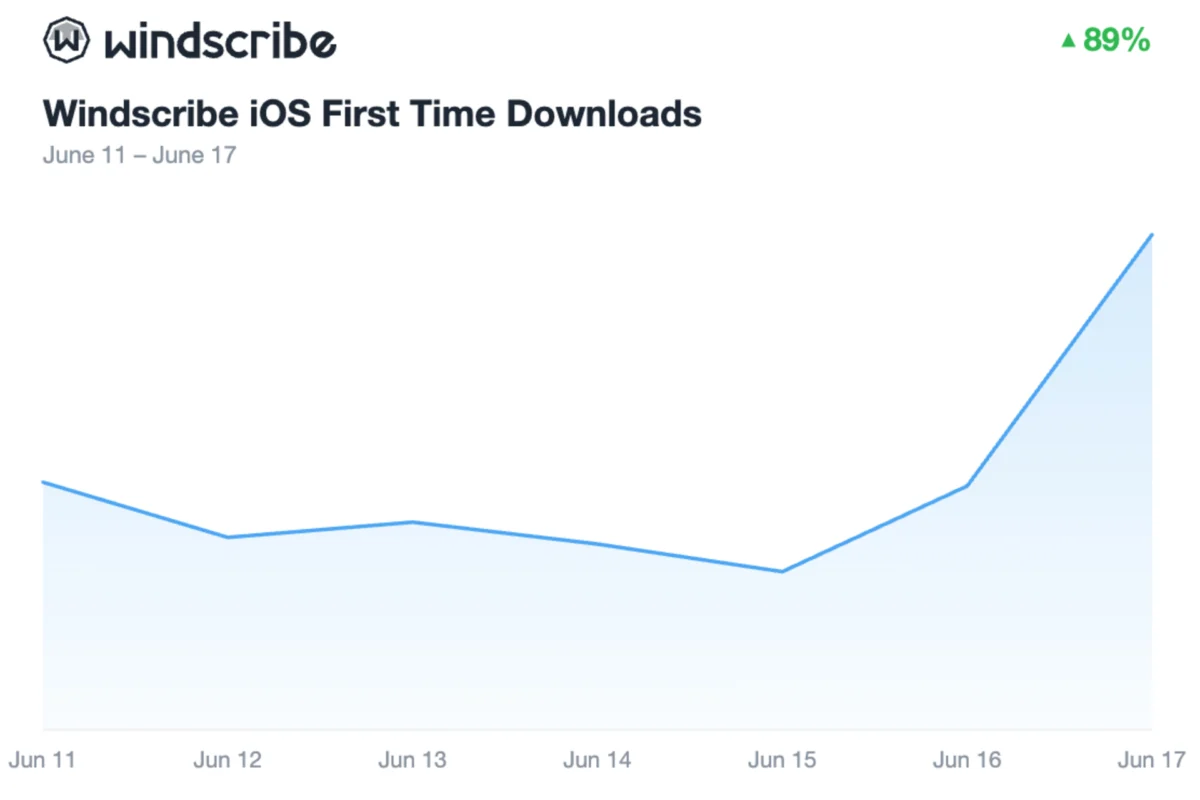
Windscribe, another major player in the space, reported a similar trend, with new user signups peaking at 100% above the norm. Rebecca Rosenberg, growth operations manager at Windscribe, noted that this pattern is consistent with global trends. "The spike in India follows the same general trend we see in areas that ban specific apps, introduce age bans, or otherwise restrict internet access," she observed.
The Quest for Alternatives
While many users attempted to circumvent the block, a large segment of the population turned to alternative messaging platforms to maintain their daily communication. The data indicates a clear "digital migration" pattern:
- Signal: Experienced a 72% increase in downloads on the App Store and a massive 322% surge on Google Play.
- Viber: Saw its App Store popularity rise by 216%.
- iMe: A Telegram-integrated client, saw its Google Play downloads explode from a daily average of 827 to over 50,900 on June 16, as users looked for "Telegram-adjacent" solutions that might not yet be caught in the sweep.
Paradoxical Engagement: Why Telegram Usage Spiked
Perhaps the most counterintuitive finding of the week was the data from Sensor Tower, which indicated that despite the restriction, Telegram’s daily active users (DAU) in India actually rose by 17% on the day the measure was announced.
This suggests two things: first, that the blockade was not immediately effective in cutting off existing, persistent users; and second, that the act of restriction itself created a "Streisand Effect," drawing more attention to the app and encouraging users to seek out the aforementioned VPNs to gain access.
Cloudflare Radar’s data confirms this frantic activity. DNS requests for Telegram domains surged in the 48 hours following the announcement. While Cloudflare noted that high DNS traffic does not guarantee successful access—it could simply represent thousands of failed connection attempts—it serves as a clear indicator of the massive, collective effort by users to override the government’s censorship.

Official Stances and Legal Justification
The legal proceedings in the Delhi High Court provided a rare look into the government’s rationale for such a drastic step. Solicitor General Tushar Mehta, representing the state, defended the action by emphasizing the "logical nexus" between the platform’s accessibility and the integrity of the NEET-UG examination.
The government argued that the platform had become a hub for syndicates selling fake papers, which threatened the future of millions of students. While the state acknowledged that a permanent ban might raise issues of proportionality, it maintained that the temporary, event-linked nature of this specific order justified the measure.
Telegram, for its part, attempted to present itself as a cooperative partner. Its lawyers highlighted that the platform had already removed several channels identified by the government as sources of misinformation or illegal activity. They questioned the necessity of a "sledgehammer approach" to a problem they argued could be managed through targeted cooperation and content moderation.
Implications for India’s Digital Future
The current situation is not an isolated incident but part of a growing trend of "platform governance" through state intervention. When governments restrict access to major online platforms, they inadvertently force a segment of the population to become more technologically literate. The rapid adoption of VPNs is a double-edged sword; while it allows for the continuation of personal communication, it also complicates the state’s ability to regulate digital spaces.
The precedent set by this week’s events is significant. As Sensor Tower noted, similar patterns have emerged globally, such as when TikTok faced removal from U.S. app stores in 2025. In those instances, as in India, the restrictive measures often resulted in a spike in VPN adoption, demonstrating that the modern user is increasingly equipped to bypass digital barriers.
Looking Ahead
As June 22 approaches, the eyes of the tech world remain fixed on New Delhi. Will the government lift the ban as promised, or will this evolve into a more permanent regulatory impasse? Furthermore, the incident raises long-term questions regarding the accountability of encrypted messaging apps in the face of criminal misuse, and the potential for a more "localized" approach to internet regulation that avoids the collateral damage of a total platform blackout.
For now, the events of this week serve as a reminder of the volatility of the digital age in India. While the state strives to protect its citizens from fraud, the citizenry has demonstrated a clear preference for the continuity of its chosen digital tools, turning to technological workarounds to maintain the connectivity that has become the bedrock of modern life.