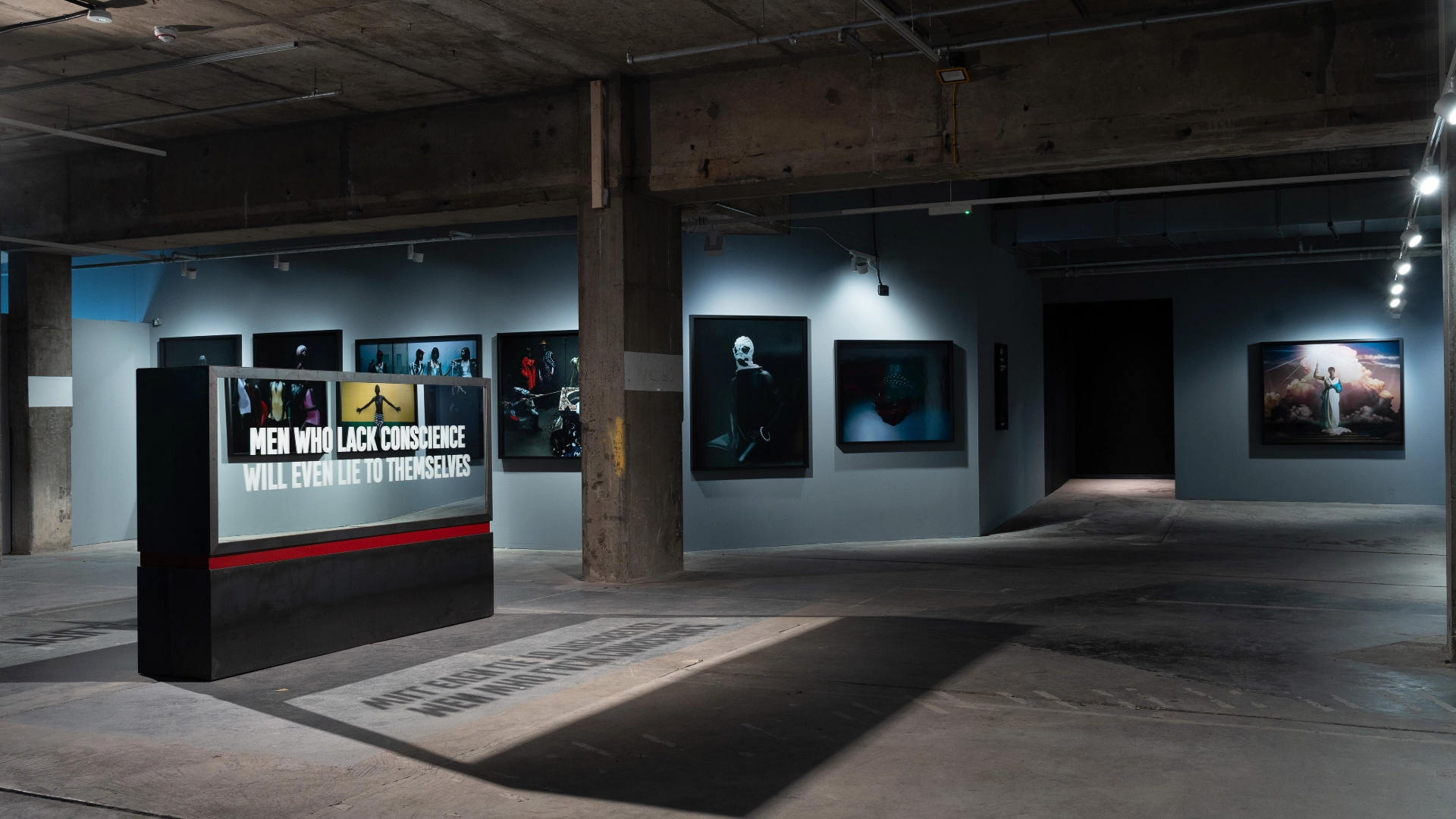
In the heart of London’s creative epicenter, 180 Studios has once again transformed into a portal for the contemporary zeitgeist. This time, the conductor of this sensory experience is Gabriel Moses, the multi-hyphenate London artist, photographer, and filmmaker whose meteoric rise has redefined the aesthetics of fashion, music, and sports photography. His latest exhibition, Selah, is not merely a collection of works; it is a sprawling, meditative odyssey that marks the most ambitious chapter of his career to date.
Main Facts: An Unprecedented Scale
Selah serves as a testament to Moses’ evolution as a visual storyteller. Spanning two expansive floors of 180 Studios, the exhibition is a cavernous exploration of identity, movement, and the ephemeral nature of time. The show features an impressive curation of over 70 photographs and 10 films, offering a retrospective of his high-impact collaborations alongside brand-new, site-specific installations.
The exhibition’s centerpiece, the premiere of his latest short film, The Last Hour, acts as a narrative anchor for the show. Unlike the static presentation often found in gallery spaces, Selah utilizes sculpture and multi-sensory installations to break the "fourth wall" between the audience and the image. The exhibition will remain open to the public until August 31, 2025, providing a long-term residency for what many critics are already calling the most vital visual showcase of the year.
Chronology: From Regina to Selah
To understand the gravity of Selah, one must look back at the trajectory that brought Moses here. In 2023, his debut solo exhibition, Regina, also hosted at 180 Studios, served as his formal introduction to the fine art world. Regina was a deeply personal exploration of heritage, community, and the specificities of Black British life. It was a refined, intimate affair that established Moses as a master of lighting and composition.
"I’ve grown a lot in those two years," Moses reflects, sitting down for an exclusive interview regarding the transition between his two major shows. "I’ve developed more as an artist, not just in terms of technical capability, but in how I view the relationship between the viewer and the medium. For me, it was important to create a show that felt so much more immersive and interactive. Regina was about the subject; Selah is about the environment."
Between 2023 and 2025, Moses has been anything but dormant. His commercial work for global luxury houses and his iconic portraiture of athletes and musicians have kept him in the public eye. However, the development of Selah was a deliberate retreat from the frantic pace of the fashion industry. It represents two years of meticulous planning, scouting, and technical experimentation that allowed him to move beyond the frame.
Supporting Data: The Anatomy of the Exhibition
The logistics of Selah are staggering. By utilizing two full floors of the 180 Studios complex, Moses has been able to curate a "rhythm" to the visitor experience.
- The Photographic Archive: 70+ works spanning his career, printed at varying scales to emphasize the texture of his subjects’ skin and the depth of the shadows he is known for.
- The Film Component: 10 films, ranging from early experimental shorts to the polished, cinematic aesthetic of The Last Hour.
- Spatial Installations: Incorporating sculptures that relate to the themes of his photographs, the exhibition functions as a three-dimensional mood board.
- Duration: The show is open for approximately six months, a significant commitment for a contemporary art exhibition, signaling the cultural weight 180 Studios places on Moses’ work.
Moses’ work consistently draws from a palette of high-contrast lighting and a soulful, almost cinematic stillness. Whether he is capturing a footballer in a moment of exhaustion or a musician mid-performance, his lens seeks the "in-between" moments—the seconds before or after the action, where the human truth of the subject is most visible.
Official Responses and Creative Philosophy
During the press preview, the atmosphere was one of profound quietude—a stark contrast to the typically bustling nature of London’s art scene. Moses spoke candidly about the title of the show, Selah. Derived from a Hebrew word often found in the Psalms, it is widely interpreted as a musical or liturgical pause—a moment to reflect, to breathe, and to consider what has come before.
"I wanted people to enter a space where they could stop," Moses explains. "In the age of the scroll, we don’t look at things for very long. Selah is about forcing that pause. You see the film, you see the photo, but you also see the space around it. You see the sculpture. You are forced to exist in that moment for a duration that isn’t dictated by an algorithm."
The collaboration with 180 Studios is symbiotic. Known for their support of avant-garde creators, the venue has provided the technical infrastructure for Moses to push his boundaries. The integration of high-definition projection, acoustic soundscapes, and physical art pieces demonstrates a shift in the gallery model from "display" to "experience."
Implications: The Future of Contemporary Art
The success of Selah signals a broader shift in how photography is being contextualized in the 21st century. We are moving away from the "white cube" gallery aesthetic toward a more narrative-driven, environmental approach. Gabriel Moses is at the vanguard of this movement, bridging the gap between high-fashion editorial, documentary filmmaking, and fine art installation.
1. The Death of the Static Image
Moses’ work proves that photography can no longer be limited to a flat, paper medium. By integrating film and sculpture, he provides a multi-dimensional context that deepens the viewer’s emotional connection to the subject. This approach forces a reconsideration of how we consume imagery in an increasingly digital world.
2. The Commercial-to-Fine-Art Pipeline
The path from commercial fashion photography to the gallery space is historically fraught with skepticism. However, Moses has managed to retain the "gloss" and technical perfection of his commercial portfolio while imbuing it with the raw, emotional weight of personal art. This bridges the gap for younger audiences who are more accustomed to engaging with visual media via social platforms but are hungry for a deeper, physical experience.
3. Cultural Preservation
Through Selah, Moses is effectively building a historical archive. By documenting the faces and figures of the current cultural moment—from rising stars to established icons—he is creating a visual record of our time. The inclusion of The Last Hour suggests a preoccupation with the passage of time, an existential thread that elevates his work from mere documentation to profound commentary.
Concluding Thoughts: A Must-See Experience
For those who have followed Gabriel Moses from his early days as a wunderkind photographer to his current status as a multi-disciplinary visionary, Selah is the culmination of a unique creative arc. It is a show that demands presence.
As the London art scene continues to evolve, the influence of artists like Moses will be paramount. By refusing to be categorized by medium or industry, he has carved out a space that is entirely his own. Selah is not just an exhibition; it is a statement of intent. It asserts that the visual arts, when handled with the right balance of technical mastery and narrative depth, have the power to stop time, even if only for a few moments.
With tickets now available through the 180 Studios website, the exhibition offers a rare opportunity to engage with a body of work that is as challenging as it is beautiful. Whether you are an admirer of his commercial fashion work or a student of contemporary photography, Selah provides a masterclass in how to build a world from the ground up—and more importantly, how to invite others to live in it.
Exhibition Details:
- Exhibition: Selah by Gabriel Moses
- Location: 180 Studios, London
- Dates: Now showing until August 31, 2025
- Tickets: Available via the official 180 Studios website
For those interested in further reading, see the recent deep-dive feature on Gabriel Moses’ creative process and his influence on the modern visual landscape at Fact Magazine.