BUENA PARK, CA — September 10, 2026 — In a move that signals a significant evolution for the professional audio landscape, Yamaha has officially unveiled its new DM5 digital mixing console series. Designed to bridge the gap between high-end touring production and the diverse requirements of houses of worship (HOWs), corporate AV, and mid-sized live sound venues, the DM5 series represents the next logical step in Yamaha’s mission to unify its digital ecosystem.
The launch, which took place in Buena Park, is accompanied by a sweeping firmware update for the flagship DM7 series and the introduction of the RUio Series, a trio of utility I/O devices intended to streamline connectivity in increasingly complex digital networks.
Main Facts: The DM5 Series Technical Breakdown
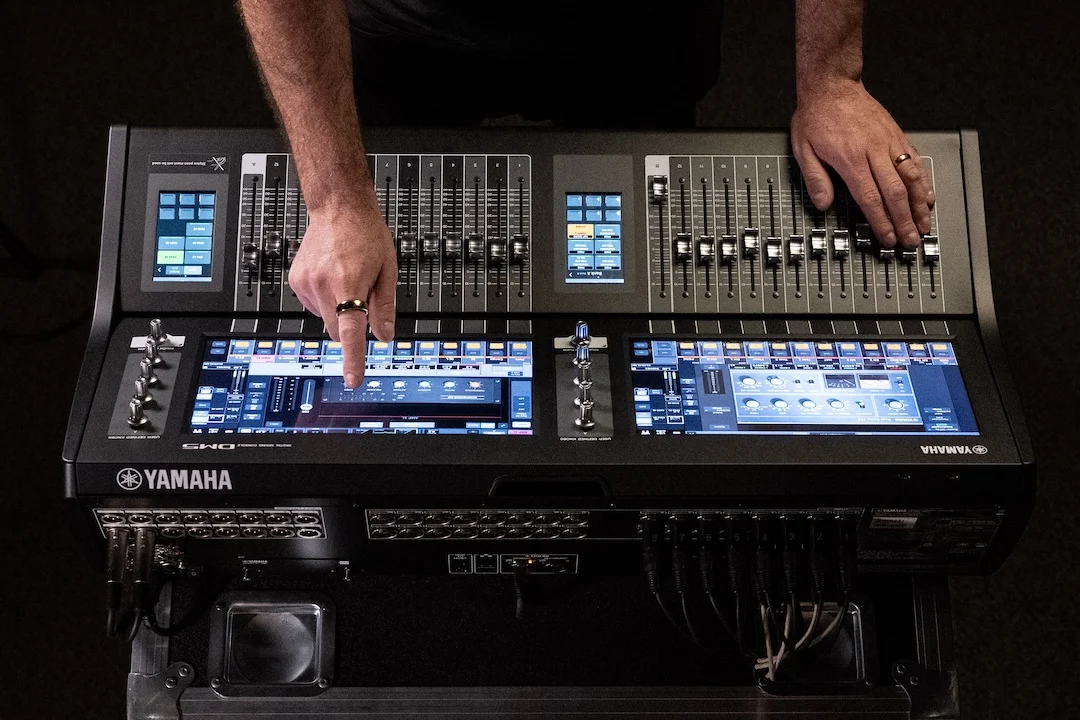
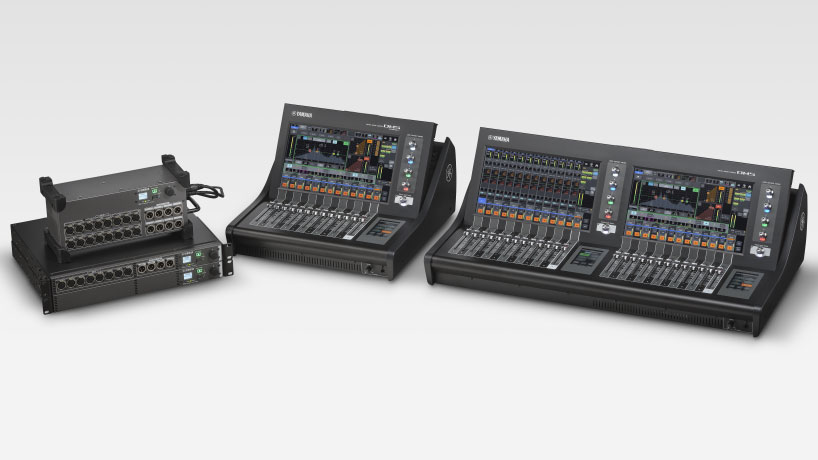
At the core of the new product line are two distinct consoles: the DM5 and the DM5 Compact. Both units draw heavily from the architectural and sonic DNA of the highly successful DM7 platform, offering a sophisticated workflow that feels instantly familiar to Yamaha users while introducing groundbreaking interface technology.
The DM5 (Standard)
The DM5 is a dual-bay powerhouse, offering a robust 60-channel mixing capacity. It features 26 physical faders, providing operators with immediate, tactile control over large-scale inputs without the need for excessive layering. Its physical footprint is designed to balance portability with the comprehensive control surface requirements of professional live sound engineers.
The DM5 Compact
Tailored for space-constrained environments such as corporate boardrooms, smaller worship spaces, or mobile production rigs, the DM5 Compact offers a single-bay, 48-channel architecture with 13 physical faders. Despite its smaller frame, it sacrifices none of the processing power of its larger sibling, ensuring that engineers in smaller venues have access to the same professional-grade tools as those in larger concert halls.
Key Technical Specifications
Both consoles are built on a foundation of high-fidelity audio performance:
- Networking: Native Dante integration supporting 96 kHz operation, ensuring low-latency, high-channel-count audio transport.
- Processing: An extensive library of internal DSP options, including advanced routing, flexible USB audio interfacing, and integrated Bluetooth playback for wireless music streaming.
- Expandability: Each console features a dedicated PY Series card slot. This allows for modular connectivity, including support for Dante, MADI, AES/EBU, MIDI, GPIO, and integration with Waves SoundGrid—a critical requirement for modern touring engineers.
- Specialized Software: Optional add-on software packages tailor the desks for specific workflows, including dedicated suites for broadcast, theater production, and complex conferencing.
Chronology: A Trajectory of Innovation
Yamaha’s current announcement is the culmination of a multi-year strategy to modernize its digital mixing portfolio.
- 2023–2024: The launch of the DM7 series established a new benchmark for Yamaha’s mid-to-large-format consoles. During this time, the company identified a gap in its catalog: a need for a "middle-ground" desk that offered DM7-level workflow but at a price point and form factor suitable for mid-market users.
- Early 2026: Engineering and R&D focused on the "Glass Key" interface technology. The goal was to eliminate the clutter of physical buttons while maintaining the tactile feedback that professional engineers demand.
- September 10, 2026: The official launch of the DM5 series, the V2.0 firmware update for the DM7, and the debut of the RUio Series connectivity suite.
- Future Roadmap: With the release of the V2.0 firmware, Yamaha has signaled that the DM5 and DM7 lines will move in lockstep, with future software updates being deployed across the entire product family simultaneously.
The "Glass Key" Revolution: Human-Machine Interface
Perhaps the most notable innovation in the DM5 series is the introduction of Glass Key technology. In an industry where digital screens have largely replaced physical knobs, engineers often complain about the loss of tactile awareness.
Yamaha’s solution is a hybrid interface that combines static physical control with dynamic, context-aware visual feedback. These "Glass Keys" are essentially tactile buttons integrated with high-resolution labeling that shifts in real-time based on the user’s selected workflow or the system’s status. If an engineer is working on an EQ, the keys transform to reflect EQ parameters; if they pivot to routing, the keys immediately reconfigure.
Furthermore, the consoles feature Dynamic Mode operation, which allows the desk to prioritize specific controls based on the task at hand. Complemented by adjustable display viewing angles and the Yamaha Assist suite—a series of AI-driven setup tools—the DM5 is designed to reduce the "time-to-first-sound," allowing technicians to set up complex routing and signal chains in minutes rather than hours.
Supporting Data: The Ecosystem Integration
The success of a modern mixing console is no longer measured solely by its preamps; it is measured by its integration into the wider network. Yamaha has ensured the DM5 series is "system-ready" by making it fully compatible with:
- The Yamaha Family: Full interoperability with the existing DM7, DM3, and RIVAGE PM series, as well as the R-Series I/O units.
- Software Ecosystem: The consoles are supported by the entire Yamaha software suite, including the DM Editor, StageMix, MonitorMix, and ProVisionaire Control Plus. This allows engineers to manage the mix remotely via iPads or laptops, a standard requirement for modern corporate event production.
- RUio Utility Series: The release of the RUio1608SB-D, RUio0804-D, and RUio16FLX-D provides the final piece of the puzzle. These utility devices act as intelligent "bridge" hardware, allowing disparate audio signals to be brought into the Dante network, further cementing Yamaha’s position as the hub of the professional audio ecosystem.
Official Perspectives and Industry Implications
Industry analysts are already noting that the DM5 series creates a "unified tier" within the pro audio market. By pushing the high-end DM7 features down to the DM5 price point, Yamaha is effectively challenging its competitors to match its software-hardware synergy.
The Impact on Corporate AV and Houses of Worship
The "Yamaha Assist" functionality is particularly targeted at the HOW and corporate markets, where the individual operating the console may be a volunteer or a general IT technician rather than a full-time professional audio engineer. By simplifying the interface, Yamaha is lowering the barrier to entry for high-quality, 96 kHz sound.
The Firmware 2.0 Shift
The simultaneous release of the DM7 Series V2.0 firmware is not merely a bug fix—it is a strategic consolidation. By ensuring the DM7, DM5, and the new RUio units all share a communication protocol, Yamaha is offering its customers a "future-proof" investment. An audio company that buys a DM5 today can rest assured that if their operations expand to include a DM7 in the future, the two consoles will communicate flawlessly within the same network.
Conclusion: A New Standard for Mid-Market Production
The release of the DM5 series, combined with the new connectivity options of the RUio family, underscores a pivot in the industry. Manufacturers are no longer just selling "mixers"; they are selling "ecosystems."
For the freelance engineer, the corporate event manager, and the worship pastor, the DM5 offers a level of sophistication that was once reserved for the world’s largest stadium tours. As Yamaha continues to refine its "Glass Key" technology and its integrated software platform, it is clear that the company is aiming to maintain its dominance by ensuring that its hardware is as intelligent as it is durable.
The DM5 is not just an update to the Yamaha catalog—it is a bold assertion that the future of live sound is tactile, integrated, and above all, user-centric. Whether in a house of worship or a high-stakes corporate environment, the DM5 provides the tools to handle the complexities of modern audio with newfound efficiency and clarity.