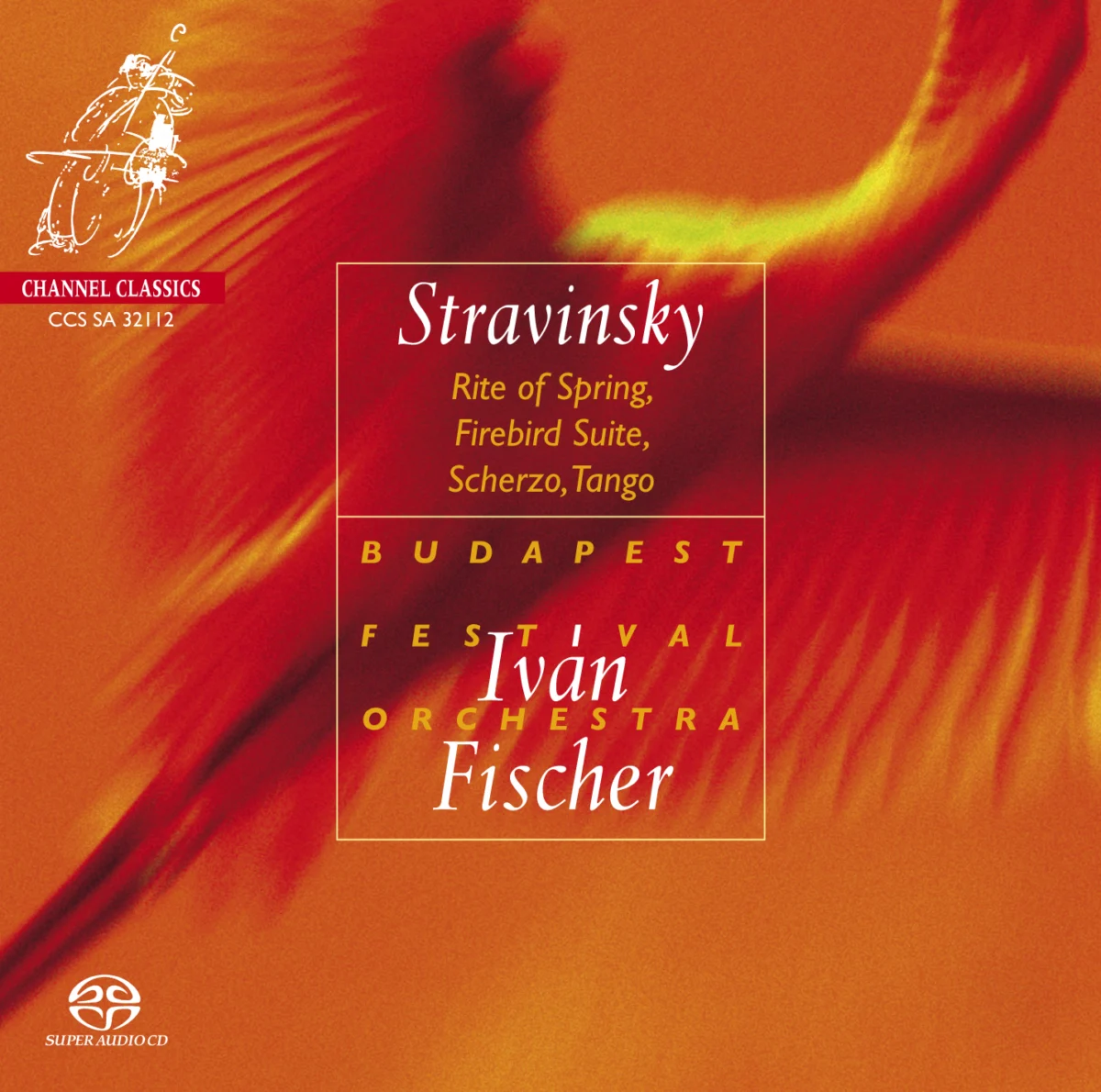
In the vast landscape of classical music, few names command as much immediate recognition as Igor Stravinsky. For generations, audiences have been captivated by his "Big Three"—The Rite of Spring, The Firebird, and Petrushka. These seismic, orchestral titans are cultural icons, representing the pinnacle of the early 20th-century avant-garde. However, beneath the shadow of these mammoth works lies a treasure trove of neoclassical brilliance that often goes overlooked by the casual listener.
In the latest installment of Dodd’s Discoveries, NativeDSD Senior Music Reviewer Bill Dodd shifts his focus away from the bombastic intensity of Stravinsky’s early ballets toward the refined, intellectual elegance of his later period. This week, Dodd highlights a stunning new recording featuring the Camerata Salzburg, conducted by Giovanni Guzzo. To celebrate the release, NativeDSD is offering this essential album at a 40% discount, providing a rare opportunity for audiophiles and newcomers alike to experience a different, more intimate side of one of history’s greatest composers.
The Evolution of Igor Stravinsky: From Primordial Chaos to Neoclassical Order
To understand the significance of the works featured in this new collection—Apollon Musagète, Dumbarton Oaks, and the Concerto in D—one must first understand the shift in Stravinsky’s compositional philosophy.
The Chronology of a Stylistic Shift
Stravinsky’s career is often bifurcated by critics. The early years (1910–1920) were defined by the Russian folklore influences and rhythmic ferocity that shocked the Parisian elite. These works were designed for gargantuan orchestras, pushing the boundaries of tonal color and harmonic tension.
However, as the post-World War I era dawned, the musical world pivoted. Stravinsky, reflecting this shift, moved toward what would be termed "Neoclassicism." Between 1920 and 1950, he began to look backward to the structures of the 18th century—to Bach, Mozart, and Couperin—while infusing them with his own distinct, modern rhythmic vitality.
"Neoclassical is a term that often scares people away," notes Dodd in his review. "They may think of it as meaning angular, cold, or mechanical music. I was in my 20s before I discovered the richness of Stravinsky’s 1920–1950 works, and while they are structured and have a definite rhythm, they are not ‘cold.’"
The CBS Legacy
For decades, the standard-bearer for these works was the massive cycle of recordings conducted by Stravinsky himself for CBS Records. These recordings served a dual purpose: they introduced the public to the nuance of his later output and, perhaps more importantly, codified the performance practices for musicians globally. They established that these pieces were not mere academic exercises but living, breathing entities requiring precision and wit.
The Camerata Salzburg: A New Standard of Excellence
The current recording, featuring the Camerata Salzburg under the baton of Giovanni Guzzo, does not merely replicate the CBS standards—it breathes fresh life into them. The Camerata Salzburg, an ensemble renowned for its chamber-orchestral precision, provides a clarity of texture that is essential for the transparency of Stravinsky’s neoclassical writing.
Analyzing the Performance
Dodd highlights the ensemble’s ability to navigate the complex interplay of these works:
- Apollon Musagète: Dodd’s personal favorite, this work is characterized by a serene beauty that highlights the string-writing mastery of the composer. It is a contemplative piece, moving away from the violent jolts of The Rite into a more ethereal space.
- Dumbarton Oaks: A chamber concerto written in the spirit of the Brandenburg Concertos, it requires a light, agile touch. The Camerata Salzburg captures the conversational nature of the instrumentation with startling accuracy.
- Concerto in D: Often regarded as one of the most intellectually stimulating works of the period, the concerto demands a rhythmic cohesion that the ensemble delivers with effortless grace.
"This turns out to be a superb group of musicians who absolutely show what these three works can be," says Dodd. "These performances set the standard for modern recordings of three of Stravinsky’s best later works."
Engineering the Sonic Experience: The Jared Sacks Factor
In the world of high-resolution audio, the partnership between the performers and the recording engineer is paramount. NativeDSD listeners are well-acquainted with the work of Jared Sacks, whose engineering prowess is once again on full display in this release.
For this album, Sacks has captured a soundstage that is both intimate and expansive. The clarity of the recording is such that the listener can pinpoint the position of the individual players within the hall. In an era of over-processed, compressed digital audio, Sacks’ approach—which prioritizes natural acoustic space and high-fidelity fidelity—is a breath of fresh air.
"Jared Sacks has outdone himself in capturing sound so real that you will start looking for the players," Dodd observes. This commitment to sonic purity is what elevates this release from a standard classical recording to an essential component of any audiophile’s library.
Implications for the Modern Listener
The re-evaluation of Stravinsky’s neoclassical period has profound implications for how we consume classical music today. As the concert-going public moves away from the "event" style of blockbuster symphonic works, there is a growing appreciation for the intricacies of chamber-orchestral works.
Why This Music Matters Now
- Accessibility: Unlike the massive, often intimidating scores of the early 20th century, these neoclassical works are approachable. They offer a sense of order and structure that resonates with the modern desire for clarity in art.
- Educational Value: For music students and performers, this recording provides a modern benchmark. It serves as a masterclass in phrasing, articulation, and balance.
- The "Dodd’s Discoveries" Initiative: By offering these albums at a reduced price, NativeDSD is actively lowering the barrier to entry for high-resolution classical music. It encourages collectors to venture outside their comfort zones and explore the deeper cuts of the classical canon.
Meet the Reviewer: Bill Dodd
The authority behind Dodd’s Discoveries is none other than Bill Dodd, NativeDSD’s Senior Music Reviewer. Based in the Portland, Oregon area, Dodd brings a lifetime of musical passion to his reviews. His journey is one defined by versatility—from early exposure to Bach and piano studies at age nine, to a successful career as a morning personality in San Francisco.
Dodd’s musical palate is exceptionally wide, encompassing everyone from Miles Davis and Dave Brubeck to Joni Mitchell, The Who, and Led Zeppelin. This eclectic background informs his approach to classical music; he treats the genre not as a dusty relic, but as a living art form that shares common DNA with the best of jazz and rock. His transition from the fast-paced world of commercial radio to the nuanced, high-fidelity environment of NativeDSD reflects a lifelong commitment to the highest standards of sound and performance.
Conclusion: A Call to Discovery
The release of this Stravinsky collection is more than just a new recording; it is an invitation to revisit a pivotal moment in 20th-century music history. Through the meticulous conducting of Giovanni Guzzo, the refined musicianship of the Camerata Salzburg, and the world-class engineering of Jared Sacks, listeners are granted a rare, crystal-clear window into the mind of a genius.
For those who have long admired Stravinsky from afar—or perhaps only through his most famous ballets—this album is the perfect bridge to the profound, serene, and intellectually exhilarating world of his neoclassical period.
We encourage you to visit the NativeDSD platform, explore the full depth of Dodd’s Discoveries, and take advantage of the 40% discount on this essential collection. Whether you are a long-time classical devotee or a curious newcomer, these recordings represent the very best of what high-resolution audio has to offer. Rediscover Stravinsky, and allow yourself to be surprised by the grace and beauty of the "other" side of his legacy.