Unearthing a Late-Romantic Masterpiece: Bill Dodd Explores George Enescu’s Symphonic World in the Latest ‘Dodd’s Discoveries’
018 mins
In the vast and often predictable landscape of classical music streaming and high-resolution downloads, true musical discoveries have become rare gems. Audiophile platforms and specialty labels constantly churn out yet another cycle of Beethoven symphonies or yet another pristine take on standard-repertoire violin concertos. However, every so often, a curated spotlight manages to pierce through the noise, illuminating works that have languished unjustly in the shadows of music history.
Enter ‘Dodd’s Discoveries’, an ongoing, highly anticipated review series spearheaded by NativeDSD Senior Music Reviewer Bill Dodd. Designed to guide classical enthusiasts past the well-trodden paths of the standard repertoire, the series highlights hidden treasures from the high-resolution audio catalog, accompanied by regular essays and—best of all—steep promotional discounts on the featured albums.
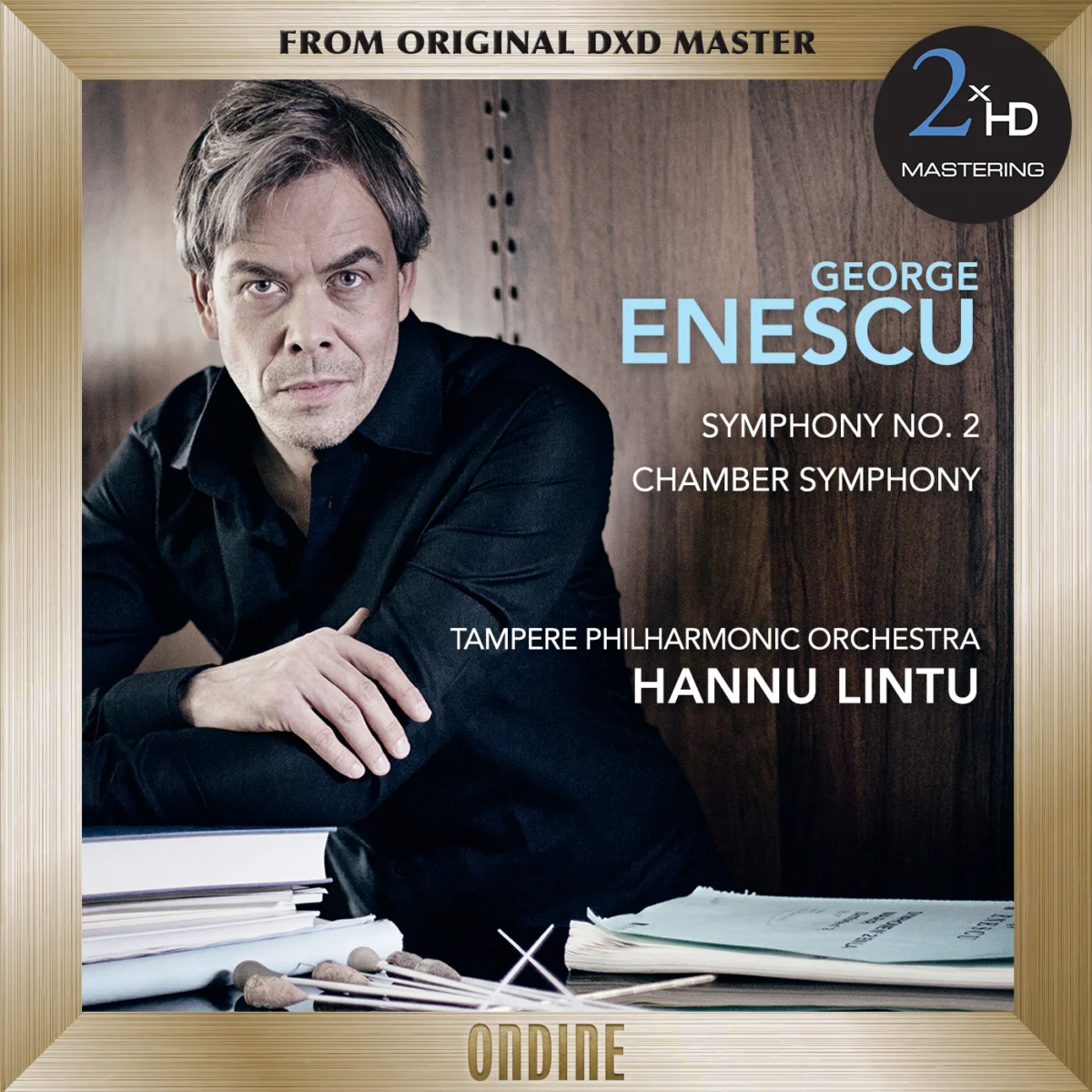
In his latest installment, Dodd turns his expert ear toward a fascinating entry from the NativeDSD archive: a gripping, audiophile-grade recording of works by Romanian polymath George Enescu (1881–1955), performed by the Tampere Philharmonic Orchestra under the dynamic baton of Finnish conductor Hannu Lintu.
To celebrate the release of this review, the album is currently available to music lovers worldwide at a special 40% discount exclusively through the NativeDSD platform. But beyond the commercial appeal of a bargain, Dodd’s review invites us to reconsider a composer too often pigeonholed by a single youthful success, offering an immersive journey into a deeply complex, emotionally turbulent late-Romantic soundworld.
Main Facts: Beyond the Romanian Rhapsodies
For the casual classical music consumer, the name George Enescu conjures up one primary association: the Romanian Rhapsodies (Op. 11), composed at the turn of the 20th century. Brimming with fiery folk tunes, infectious rhythms, and dazzling orchestration, these two short pieces became staples of the orchestral pops repertoire.
Yet, as Bill Dodd points out in his latest critique, defining Enescu solely by his Romanian Rhapsodies does a profound disservice to a musical titan who was simultaneously a virtuoso violinist, a brilliant pianist, a revered teacher (counting Yehudi Menuhin among his pupils), and a remarkably serious composer.
The album spotlighted in Dodd’s Discoveries focuses on two vastly different stages of Enescu’s creative life:
Symphony No. 2 in A Major, Op. 13 – Premiered in 1915, during the height of the First World War, this sprawling, ambitious work represents Enescu’s mature orchestral style at its most intense.
Chamber Symphony in E Major, Op. 33 – Completed decades later in 1954, near the very end of his life, this lean, modernist-leaning piece showcases a distilled, introspective master.
Captured in stunning high-resolution sound by the engineers working with the Tampere Philharmonic and Hannu Lintu, this release provides an ideal window into Enescu’s stylistic evolution. It is a release tailor-made for audiophiles and adventurous music lovers alike, offering sonic transparency and emotional depth in equal measure.
Chronology: Tracing Enescu’s Creative Arc
To understand the weight of the works featured on this NativeDSD album, one must retrace the remarkable trajectory of George Enescu’s life. Born in Liveni, Romania, in 1881, Enescu showed prodigious musical talent almost from infancy. By the age of seven, he was enrolled at the Vienna Conservatory, where he studied alongside some of the finest minds of the Austro-German musical elite, rubbing shoulders with Johannes Brahms and absorbing the rich musical traditions of Central Europe.
The Formative Years and Paris
As a young man, Enescu relocated to Paris, where he studied composition under Jules Massenet and Gabriel Fauré. This French training grafted a refined sense of color, form, and transparency onto his already potent natural musicality. However, Enescu never lost touch with his Romanian roots. The famous Romanian Rhapsodies were written when he was only in his early twenties, instantly catapulting him to international fame.
The Crucible of 1915: Symphony No. 2
While the Rhapsodies earned him adoration, Enescu craved a deeper, more substantial compositional legacy. By the time he completed his Symphony No. 2 in A Major in 1915, Europe had plunged into the catastrophe of World War I.
Enescu remained in Bucharest and Paris during these turbulent years, working tirelessly as a composer, conductor, and violinist. The Second Symphony reflects the immense psychological weight of this era. It is not an easy piece; it demands absolute concentration from the listener, unfolding across massive architectural spans with dense counterpoint and restless harmonic exploration.
The Autumnal Masterpiece: The 1954 Chamber Symphony
Fast-forward nearly forty years to the twilight of Enescu’s life. Living in Paris in post-WWII Europe, his health failing, he composed his Chamber Symphony, Op. 33 in 1954. Scored for a much leaner instrumental ensemble, this single-movement-equivalent architecture strips away the massive, Wagnerian or Mahlerian sonic canvas of his youth. Instead, it reveals a transparent, searching, and surprisingly modern voice—proof that Enescu continued to evolve as an artist until his dying breath in 1955.
Supporting Data: An Audiophile Perspective on the Tampere Philharmonic Recording
What elevates this particular release from a mere historical document to a modern audiophile triumph is the synergy between the performers, the acoustic space, and NativeDSD’s commitment to high-resolution sound reproduction.
Under the leadership of Hannu Lintu—known for his fearless advocacy of expansive, challenging orchestral repertoire—the Tampere Philharmonic Orchestra delivers a masterclass in balance, stamina, and precision.
The Mahlerian and Strauss Connection
In his review, Bill Dodd unpacks the listening experience of Symphony No. 2 with characteristic insight, drawing compelling parallels that will immediately pique the interest of late-Romantic music aficionados:
"At the start, I can’t help but think of Strauss," Dodd notes. "For the first minute or two, I wouldn’t be surprised to see Don Juan stride into the picture. But then there’s a surprise: Enescu starts to sound a lot like Mahler—a huge orchestra, massed strings and brass, and sudden shifts from chamber-like transparency to full orchestral weight."
Dodd is careful to clarify that Enescu is not derivative or guilty of plagiarism. Rather, the Romanian master shares with Gustav Mahler an aesthetic of emotional ambiguity. Listeners familiar with Mahler’s symphonies will recognize the wandering, unsettled harmonies, the long, searching melodic lines, and the constant psychological tug-of-war between triumphant assertion and profound existential anxiety.
Furthermore, Dodd highlights the third movement of the Second Symphony as a structural and expressive turning point:
"And then the third movement shows up with its combination of strong rhythms and dance-like qualities. And did you hear those snide trombones go by?"
These unexpected touches of dark irony, combined with a finale that mirrors Mahler’s oscillations between clarity and chaos, make the Second Symphony a thrilling, high-wire act for any symphony orchestra. The fact that the Tampere Philharmonic pulls it off with such technical security and expressive fire is a testament to Lintu’s rigorous preparation.
Official Responses and Critical Reception
Since its initial rollout, the recording of Enescu’s Second and Chamber Symphonies by Lintu and the Tampere Philharmonic has quietly garnered praise from critics who specialize in overlooked orchestral repertoire. While mainstream media outlets often remain fixated on standard-catalog releases, specialist classical reviewers have hailed the album as an essential corrective to the marginalization of Enescu’s symphonic output.
Musicologists have long argued that Enescu’s symphonies represent the missing link between the late-Romantic excesses of Richard Strauss and the progressive modernism of the mid-20th century. By breathing new life into these scores, Lintu and his Finnish forces have provided a definitive recorded benchmark.
NativeDSD’s decision to feature this release in Dodd’s Discoveries brings it back into the conversation for audiophiles looking to test the limits of their high-end playback systems. Because NativeDSD specializes in Direct Stream Digital (DSD) and high-resolution Pulse Code Modulation (PCM) transfers straight from the master recordings—without dynamic compression—the massive dynamic swells, delicate woodwind solos, and thunderous brass outbursts of Enescu’s orchestration are rendered with breathtaking realism.
Implications: Why This Discovery Matters Today
In an era where streaming services encourage passive listening and algorithms continuously feed users variations of what they already know they like, curated series like Dodd’s Discoveries perform an essential cultural service. They disrupt the echo chamber of the classical streaming economy.
1. Expanding the Canon
The inclusion of Enescu’s Second Symphony challenges the lazy assumption that the symphonic tradition after Brahms and Tchaikovsky belonged exclusively to Mahler, Bruckner, and Sibelius. Enescu offers an alternative path—one that synthesizes French structural elegance, German polyphonic rigor, and Romanian modal lyricism into a wholly unique synthesis.
2. Elevating High-Resolution Audio Standards
For the audiophile community, this release demonstrates why resolution matters. Enescu’s music is characterized by sudden, volatile shifts in texture—moving from a solo cello line to a massive tutti assault in a matter of seconds. Lesser recording formats choke under this kind of dynamic stress. The high-resolution mastering available via NativeDSD preserves the natural decay of instruments, the acoustic signature of the hall, and the delicate inner voices that lesser engineers tend to bury in the mix.
3. A Strategic Win for Classical Lovers
With the current 40% discount offered through the Dodd’s Discoveries promotion, there has never been a more financially accessible time for listeners to expand their musical horizons. As Bill Dodd aptly summarizes in his bottom line:
"This is not imitation Mahler. But if you like Mahler, this is strong, involving symphonic art that will surprise you. And the recording quality is superb."
Meet the Reviewer: Bill Dodd
Behind these insightful musical explorations is Bill Dodd, Senior Music Reviewer at NativeDSD. Based in the Pacific Northwest near Portland, Oregon, Dodd brings a remarkably rich and diverse background to his writing.
An avid photographer and lifelong lover of high fidelity audio, Dodd’s relationship with classical music began in childhood, taking piano lessons starting at age nine—exploring everything from Johann Sebastian Bach to George Gershwin. Remarkably, before finding his home in classical music criticism, Dodd enjoyed a successful stint as a morning radio personality in San Francisco at the age of 22.
Though his professional broadcasting roots were planted in popular music, his personal listening habits have remained anchored in classical music throughout his life, complemented by a broad, eclectic appreciation for jazz legends like Benny Goodman, Miles Davis, and Dave Brubeck, as well as rock and pop icons such as Joni Mitchell, The Who, and Led Zeppelin. This wide-ranging musical curiosity allows Dodd to write about classical masterworks without academic stiffness, framing historical compositions in a vibrant, living context that appeals to both seasoned collectors and curious newcomers.
Conclusion: Take the Journey
If your classical playlist has begun to feel a bit too familiar, if you think you have heard everything the late-Romantic era has to offer, it is time to step outside the box.
Head over to NativeDSD, check out the latest installment of Dodd’s Discoveries, and take advantage of the 40% discount on Hannu Lintu and the Tampere Philharmonic’s riveting traversal of George Enescu’s orchestral masterpieces. Let Bill Dodd be your guide into a world of soaring melodies, unexpected harmonic turns, and audiophile sound quality that will make you fall in love with the symphony all over again.