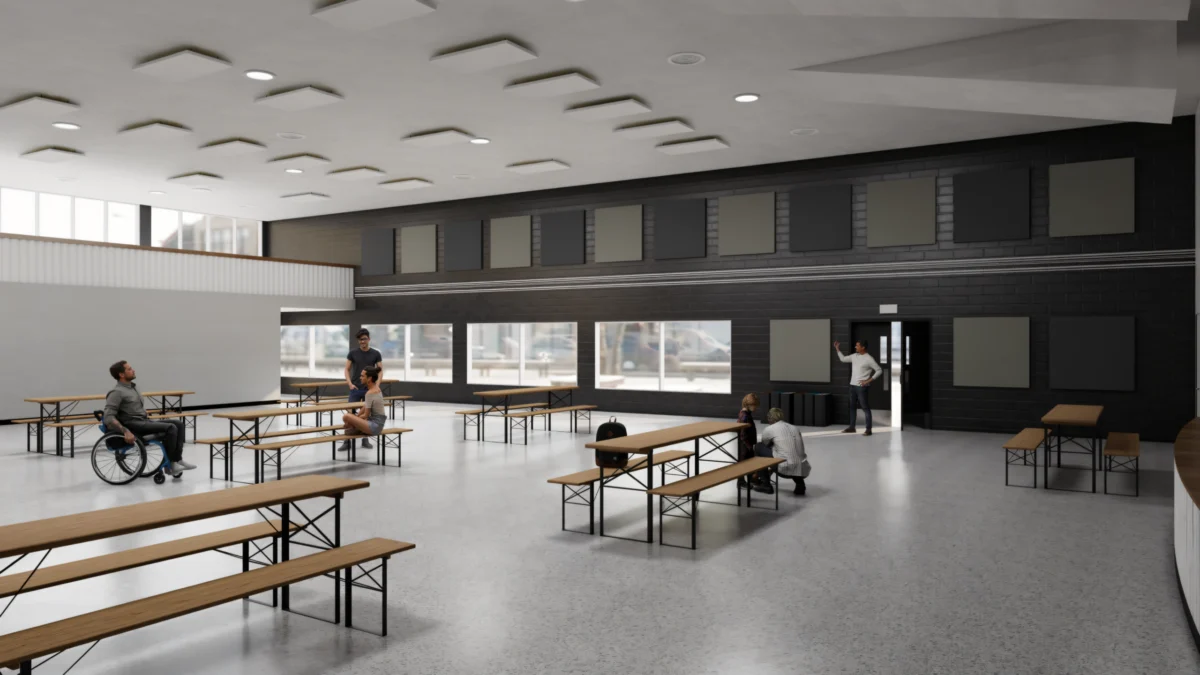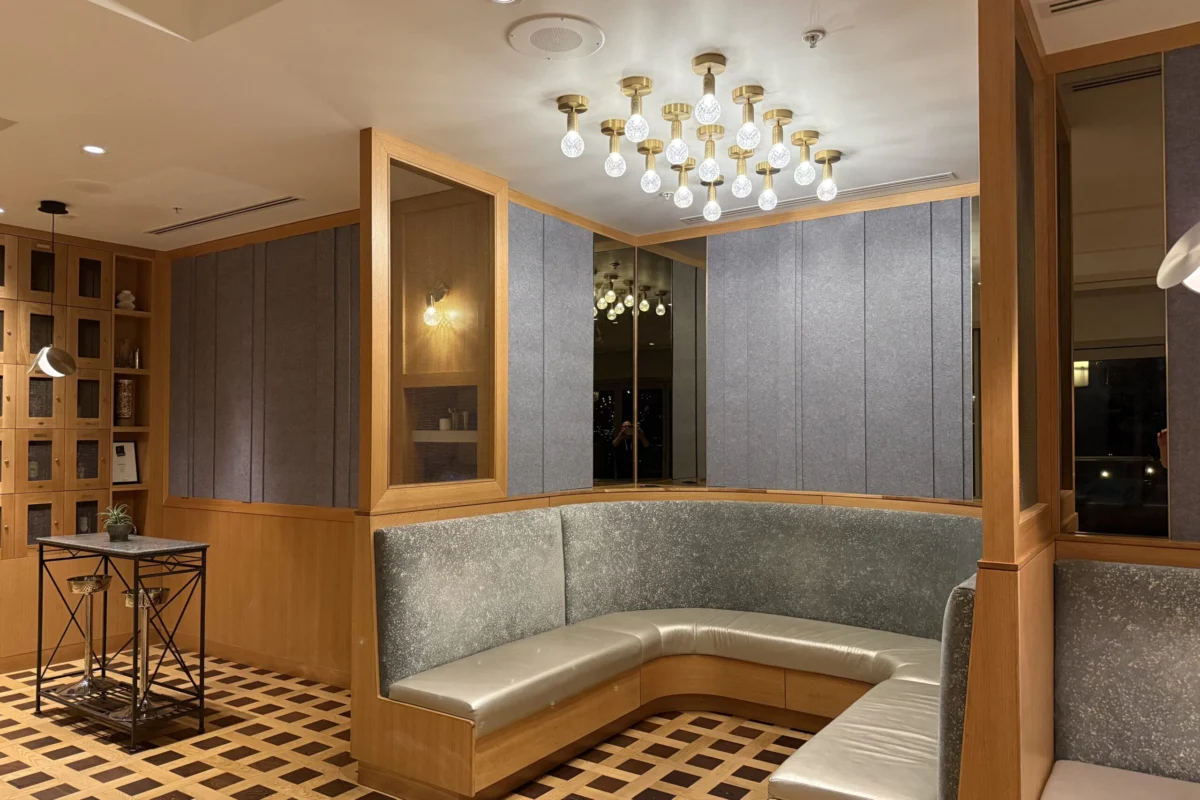
In the modern built environment, design trends have overwhelmingly favored openness, transparency, and striking aesthetic minimalism. Walk into a contemporary corporate office, a bustling downtown café, an expansive co-working hub, or a sleek institutional foyer, and you are likely to be greeted by polished concrete floors, soaring exposed ceilings, and vast expanses of glass.
Yet, beneath the glossy architectural portfolios lies an invisible, compounding crisis: poor acoustics.
In these high-traffic shared spaces, speech intelligibility is plummeting, driving up cognitive fatigue, decreasing daily productivity, and degrading overall user comfort. For years, architects and facility managers have treated sound mitigation as an afterthought—a reactive measure deployed only after occupants begin complaining about deafening noise levels. However, as building science and acoustic engineering continue to evolve, industry leaders are realizing that sound control cannot be solved simply by turning up the volume on sound reinforcement systems or stuffing walls with makeshift panels.
Instead, the solution lies overhead. By adopting a "ceiling-first" approach to acoustic design, developers and designers can restore balance, clarity, and comfort to shared environments without sacrificing architectural integrity.

The Core Problem: Why Speech Clarity is an Acoustic Crisis, Not a Volume Issue
To understand why modern shared spaces are notoriously loud, one must first dismantle a persistent misconception: that high noise levels are simply a matter of volume.
When people struggle to hear in a crowded room, the instinctive reaction is to speak louder. If the venue utilizes sound reinforcement technology—such as public address systems or background audio—operators will often pump up the gain. However, research proves that higher sound levels do not automatically correspond with better speech intelligibility. In fact, they often make the problem worse.
The root of the issue is how sound travels and arrives at the human ear. When a person speaks or a loudspeaker projects audio, sound waves radiate outward in multiple directions. In a room with hard, untreated surfaces, these waves strike walls, floors, and—most critically—ceilings, bouncing back into the space as reflections.
These reflected sound waves arrive at a listener’s ears mere fractions of a second after the direct sound. While the human brain is remarkably adept at processing information, this rapid barrage of overlapping echoes creates a phenomenon known as temporal masking. The listener is forced to expend significant cognitive energy separating the primary voice from background chatter, mechanical hums, and the lingering reverberations of the room itself.

The result? An environment where occupants hear plenty of noise, but understand very little. This chronic cognitive strain contributes directly to mental exhaustion, lowered morale, and diminished productivity in the workplace.
The Physics of Sound: High vs. Low Ceilings and the Multi-Directional Dilemma
While sound management is a holistic challenge, the ceiling remains the single most impactful architectural surface in any room. To design effective acoustic interventions, engineers must analyze how different ceiling heights and configurations interact with sound waves.
High Ceilings: Distance, Delay, and Reverberation
In spaces with soaring, cathedral-style ceilings, sound waves must travel significant distances before striking a surface. This increases the travel time of the reflection, creating long, trailing reverberations and distinct echoes. Because sound is multi-directional, a single vocalization hits the ceiling at various angles and points, reflecting back along multiple paths at different times.
These primary reflections then cascade downward, striking secondary surfaces like walls and floors to generate a complex web of secondary reflections. Without intervention, high-ceilinged spaces quickly devolve into acoustic resonance chambers.

Low Ceilings: Early Reflections and Low-Frequency Buildup
Conversely, rooms with low ceilings present a different set of challenges. Here, sound waves strike the overhead surface and return to the listener almost instantaneously. These "early reflections" blur the direct sound almost immediately. Furthermore, low ceilings trap sound waves between the floor and the ceiling, producing standing waves and troublesome low-frequency buildups.
In both high- and low-ceilinged environments, treating the ceiling is vastly more efficient than treating walls alone. Ceilings are almost always the largest uninterrupted plane in a room. Moreover, wall spaces are frequently constrained by windows, entryways, architectural artwork, branding elements, and functional technology. Treating the ceiling bypasses these spatial limitations, offering an unobstructed canvas for comprehensive sound absorption.
The Shared Space Paradox: More People, More Noise
The acoustic challenges of modern buildings are amplified exponentially in shared environments. Consider the typical dynamic of a contemporary workplace or open-concept hospitality venue:
- Human Activity: Multiple simultaneous conversations, shifting chairs, foot traffic, and the clatter of dishware or office equipment.
- Mechanical Infrastructure: The steady, low-frequency hum of HVAC systems, air handlers, and lighting ballasts.
- Architectural Materials: Hard, reflective finishes chosen for ease of cleaning and aesthetic trends rather than acoustic performance.
When these elements combine, the room fills with an indiscriminate wall of noise. For the speakers within the space, this ambient din forces them to constantly elevate their voices, leading rapidly to vocal strain and fatigue. For listeners, it turns casual catch-ups or business meetings into frustrating exercises in concentration.
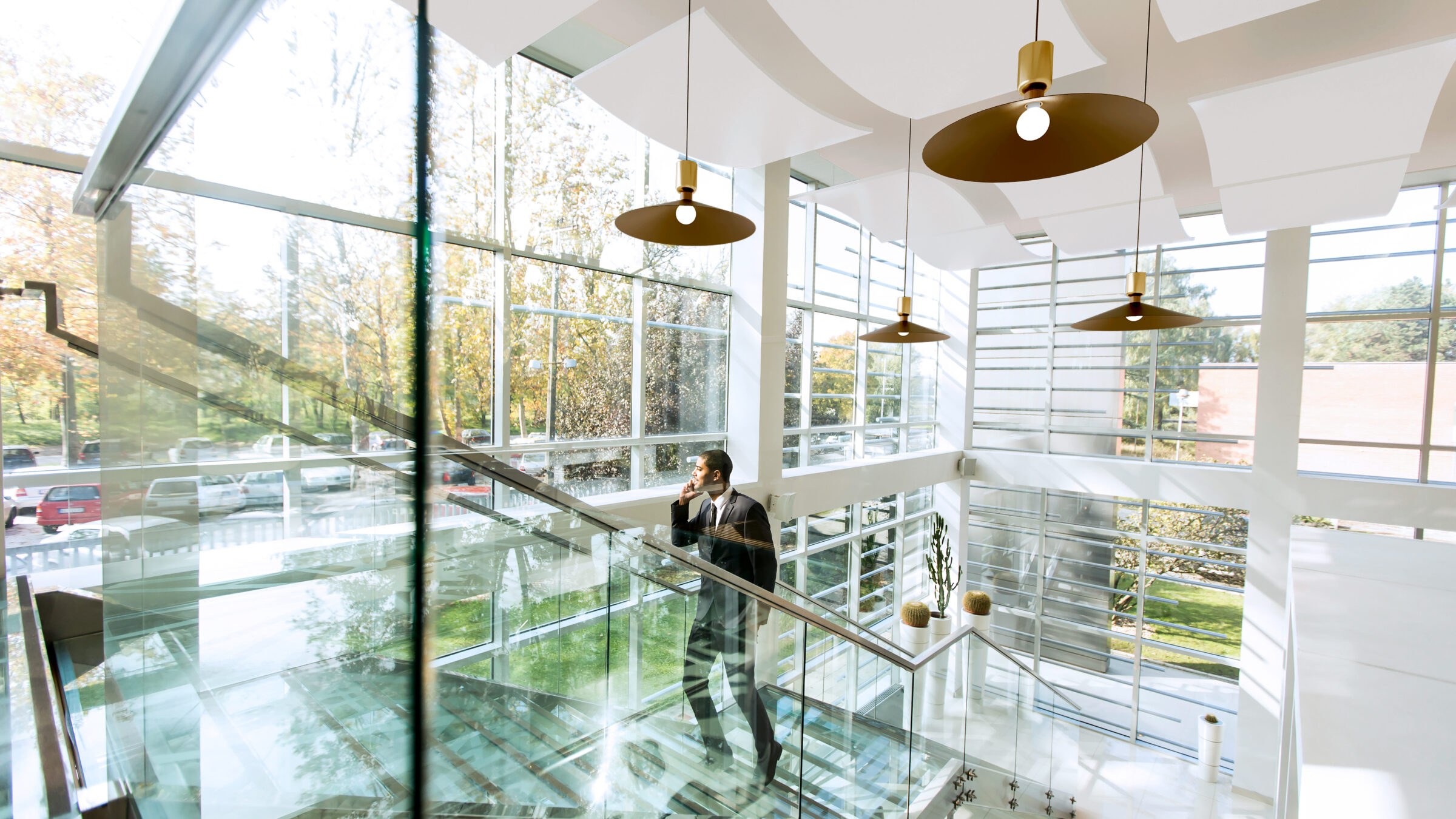
To achieve an equilibrium where speech is intelligible and environments are welcoming, spaces require targeted acoustic interventions that absorb sound energy before it can bounce chaotically through the room.
Architectural Evolution: Blades vs. Baffles
Recognizing the supremacy of the ceiling in acoustic management, manufacturers have developed innovative products designed to integrate seamlessly into modern design palettes. Among the most versatile and popular solutions on the market are architectural ceiling blades and dimensional baffles—such as those engineered by industry leader Primacoustic with their EcoScapes line.
Selecting the right tool depends heavily on a room’s physical dimensions, structural layout, and aesthetic goals:
1. EcoScapes Blades: Subtle Rhythm for Lower Ceilings
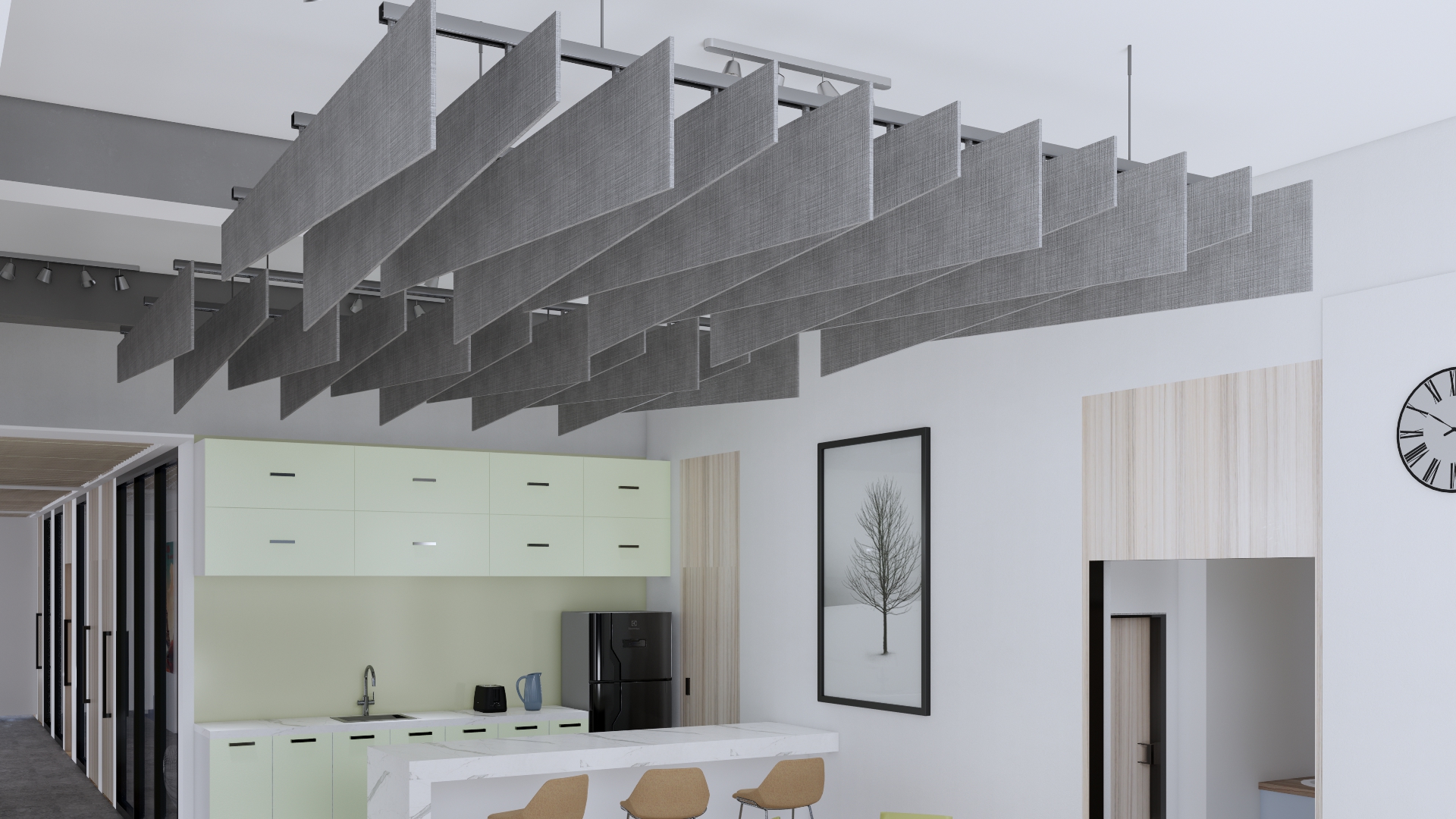
Blades are typically mounted directly adjacent to or suspended closely beneath a ceiling surface. They are exceptionally useful in spaces with lower clearances where hanging deep structures might feel claustrophobic or visually cluttered.

- Design Flexibility: Blades can be arranged in various configurations to introduce visual "rhythm" to a ceiling. Designers can use them to create clean, linear aesthetics, imply gentle motion via wave-like patterns, or delineate functional zones within a larger open-plan office.
- Acoustic Impact: By mounting flat or shaped acoustic panels vertically or semi-vertically, blades intercept multi-directional sound waves, breaking up early reflections without dominating the visual field.
2. Dimensional Baffles: Sculptural Impact for High Ceilings
In contrast, dimensional baffles are suspended independently in open space, making them a striking visual and acoustic choice for large, high-volume environments like atriums, cafeterias, and auditoriums.
- Structural Harmony: The three-dimensional formatting of baffles allows them to complement existing architectural frameworks, such as exposed steel beams, timber rafters, and pendant lighting.
- Acoustic Power: Because they hang freely, baffles absorb sound waves from multiple angles—both as they travel upward toward the deck and as they reflect back down—drastically reducing reverberation time and lowering overall ambient noise floors.
Sustainability and Performance Without Compromise
Historically, commercial acoustic treatments faced pushback from architects and interior designers who feared that functional panels would compromise the visual identity of a space. Modern sustainable acoustics, however, have eliminated that compromise.
Products like Primacoustic’s EcoScapes Blades and Dimensional Baffles are manufactured entirely from post-consumer PET (polyethylene terephthalate). This recycled and recyclable material delivers exceptional sound-absorption coefficients across a broad frequency spectrum while advancing sustainable building credentials, contributing directly to credits under major green building frameworks such as LEED and WELL standards.
Furthermore, because these PET products are manufactured without formaldehyde, VOCs, glues, or binders, they ensure healthy indoor air quality. Their robust construction makes them durable, impact-resistant, and easy to maintain over years of heavy use, resisting both physical wear and discoloration.
With extensive customization options—including wide color palettes, diverse geometric finishes, and printable surfaces—these ceiling treatments allow brands to preserve wall art, maximize natural sunlight through unobstructed windows, and maintain distinct interior design aesthetics while completely transforming the acoustic landscape.
Implications for the Future of Facility Design
As organizations increasingly prioritize employee well-being, customer experience, and multi-functional space utilization, the hidden costs of poor acoustics can no longer be ignored. Environments that sound chaotic are inherently fatiguing, driving down user satisfaction whether the space is utilized for corporate innovation, educational collaboration, hospitality, or public gathering.
The industry-wide shift toward a "ceiling-first" acoustic strategy marks a maturing understanding of architectural physics. By treating the largest reflective surface in the room first, designers can intercept noise at its source, protect human vocal health, and foster spaces that truly support focus, communication, and comfort.
For architects, facility managers, and designers considering an acoustic upgrade, the path forward is clear: look up. Implementing flexible, design-forward ceiling solutions like acoustic blades and baffles represents the single most efficient, non-invasive step toward creating spaces that not only look remarkable, but sound exceptional.