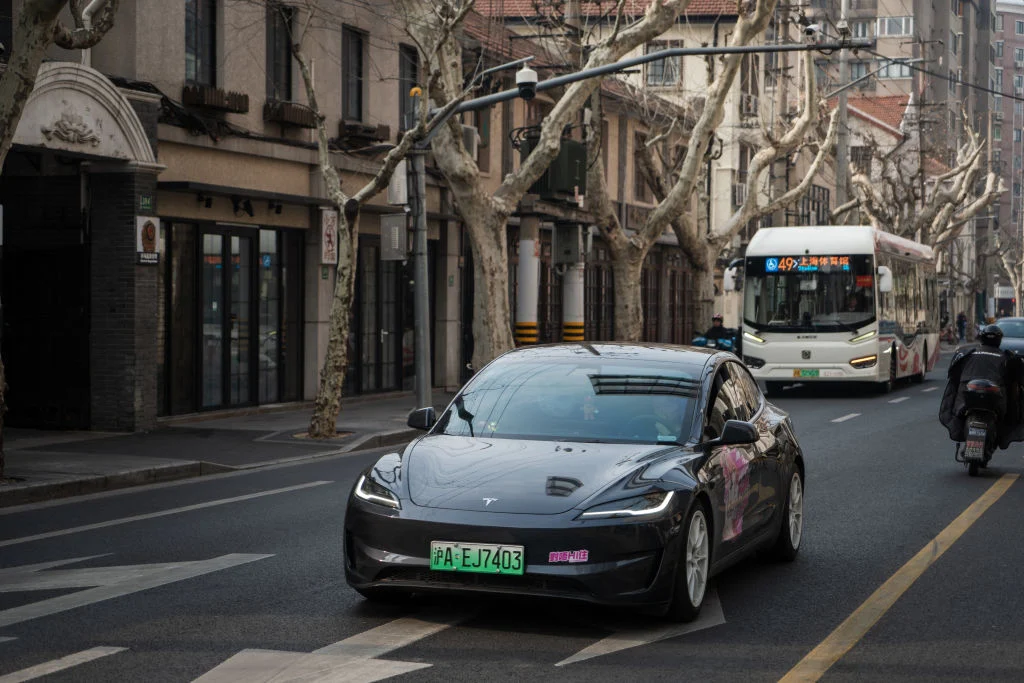
The quiet suburban landscape of Katy, Texas, was shattered last Friday night when a Tesla Model 3 veered off the road and plowed into a private residence, claiming the life of 76-year-old Martha Avila. The incident, which has left a community in mourning, has reignited a fierce national debate regarding the efficacy, safety, and branding of Tesla’s advanced driver-assistance systems (ADAS). While initial reports suggested the vehicle’s Autopilot feature may have been engaged at the time of the collision, Tesla has launched an aggressive, rare public relations counter-offensive, asserting that human error—not technological failure—was the sole cause of the tragedy.
The Chronology of a Tragedy
On Friday evening, a Tesla Model 3 operated by Michael Butler exited a roadway in Katy, Texas, and struck the home of Martha Avila. The force of the impact was catastrophic, resulting in severe injuries to Avila, who was inside her residence at the time. Emergency responders arrived shortly after the collision, and Avila was airlifted to a nearby hospital; however, she was pronounced dead shortly thereafter.
In the immediate aftermath of the crash, statements provided by the driver to the Harris County Sheriff’s Office indicated that the vehicle was operating on "Autopilot" when it departed the road. This detail, disseminated through early reports, quickly became the focal point of a burgeoning controversy. By Monday, the narrative had escalated from a local tragedy to a national conversation, with critics and safety advocates questioning the reliability of Tesla’s software in residential environments.
The Harris County Sheriff’s Office has confirmed that it is currently conducting a thorough investigation. All evidence collected from the scene and the vehicle’s data recorders will be presented to the local district attorney’s office, which will determine whether criminal charges against the driver are warranted.
Tesla’s Unprecedented Rebuttal
Tesla, a company that famously dissolved its formal public relations department years ago under the leadership of CEO Elon Musk, rarely engages in the traditional "he-said, she-said" cycle of media management. However, the intensity of the scrutiny surrounding the Katy crash prompted a sharp departure from this policy.
On Monday afternoon, Ashok Elluswamy, Tesla’s Vice President of AI software and a foundational member of the company’s Autopilot team, took to the social media platform X (formerly Twitter) to contest the prevailing narrative. Elluswamy provided specific technical data points, which he claimed were extracted directly from the vehicle’s logs, to contradict the suggestion that the software was to blame.
"In this case, the driver manually overrode self-driving by pressing the accelerator all the way to 100% of the accel pedal in this residential area," Elluswamy wrote. He further alleged that the vehicle reached speeds of 73 mph—far above the typical limit for a residential street—and that the accelerator pedal remained depressed even after the impact occurred.
Elon Musk quickly amplified this stance, posting to his own X account: "This [allegation] makes no sense. FSD drives slowly through neighborhood streets and this was a high speed crash!" The company’s position is clear: the incident was the result of a human operator actively overriding the system’s safety parameters, rendering the driver-assistance software irrelevant to the outcome of the crash.
The Tech Landscape: Understanding Tesla’s Systems
To understand the stakes of this investigation, one must distinguish between the various iterations of Tesla’s software. Tesla’s "Autopilot," the company’s foundational driver-assistance package, has faced significant regulatory and legal headwinds. In January, Tesla effectively discontinued the use of the "Autopilot" name in certain contexts following a California ruling that deemed the branding potentially misleading to consumers.
Currently, the company markets "Full Self-Driving (Supervised)," a feature available via a $99 monthly subscription. This system is designed to handle complex maneuvers, including navigating residential streets, steering, lane changes, and parking. However, as the name explicitly states, it is "supervised" technology. The onus remains entirely on the human driver to remain attentive and prepared to take control at a moment’s notice.
Critics argue that the terminology used by Tesla—specifically "Full Self-Driving"—creates a "false sense of security," leading drivers to over-rely on the system. Supporters, meanwhile, argue that the data consistently shows Tesla vehicles are safer than the average human-driven car when the technology is used as intended. The Katy crash serves as a high-stakes test case for both sides of this argument.
Federal Oversight and Safety Probes
The National Highway Traffic Safety Administration (NHTSA) has confirmed it is opening a special investigation into the Katy collision. This is not an isolated incident; it represents the latest in a long string of federal inquiries. According to industry reports, this is the 40th such probe launched by the NHTSA into Tesla crashes where advanced driver-assistance systems were suspected to be involved.
The NHTSA’s role is critical. Unlike public debates on social media, the federal agency possesses the technical authority and resources to conduct a forensic analysis of the vehicle’s "black box" data. These logs record pedal position, steering input, sensor status, and speed. Until the NHTSA releases its findings, the debate between the driver’s claims and Tesla’s data remains speculative.
For federal regulators, the question is not just whether the driver was at fault in this specific instance, but whether the software’s design—including the way it handles driver intervention and its UI/UX (user interface/user experience)—is conducive to safety. If the investigation reveals that the system’s design encouraged or failed to prevent such a high-speed override, it could lead to further mandates for Tesla to change its software architecture.
The Implications for Autonomous Driving
The tragedy in Katy has broad implications for the future of autonomous and semi-autonomous driving.
1. The Burden of Proof
The legal system is currently struggling to adapt to the realities of AI-assisted driving. When a car is "driven" by a combination of human input and machine algorithms, determining liability becomes an arduous process. The Katy case may set a precedent for how driver-assistance data is treated in courtrooms across the country.
2. The PR of Safety
Tesla’s move to publicize internal data represents a shift in how tech companies handle crisis management. By going directly to the public on X, Tesla is attempting to control the narrative before regulators can release official reports. While this may serve to protect the brand’s stock price and public perception in the short term, it also places significant pressure on the NHTSA to provide a report that is not only accurate but also robust enough to withstand public scrutiny.
3. Regulatory Pressure
The accumulation of 40 separate probes suggests that the era of "self-regulation" for the EV and autonomous vehicle industry is nearing an end. Lawmakers in Washington and regulators at the NHTSA are increasingly signaling that the "move fast and break things" philosophy of Silicon Valley is incompatible with the life-or-death realities of automotive safety.
Conclusion
The death of Martha Avila is a somber reminder of the vulnerabilities inherent in modern transport. As the Harris County Sheriff’s Office, the local district attorney, and the NHTSA continue their respective investigations, the focus will remain on the vehicle’s data logs.
Whether the truth confirms the driver’s account of a technological malfunction or supports Tesla’s claim of human error, the incident has already served as a catalyst for a necessary national conversation. It challenges the automotive industry to define exactly where the role of the human ends and the machine begins, and whether our current safety standards are sufficient to protect the public from the intersection of high-speed travel and advanced AI. For the residents of Katy, and for the family of Martha Avila, the findings of these investigations cannot come soon enough.