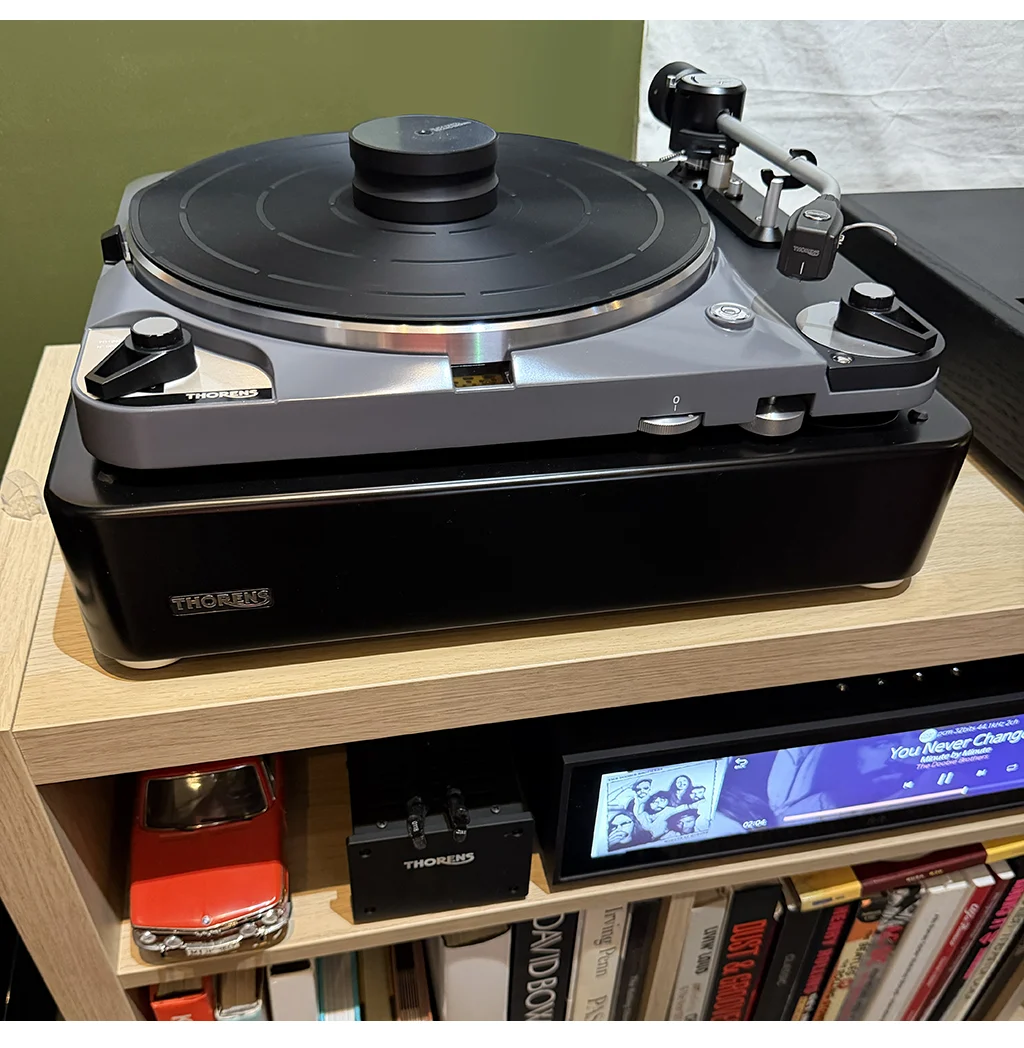
A legendary name in turntable history, Thorens, known for its revered idler-wheel driven masterpieces, has taken a bold leap into the future with the reimagining of its iconic TD 124. This new iteration, however, deviates from its lineage by embracing direct-drive technology, a move that sparks both curiosity and anticipation among audiophiles worldwide. This article delves into the genesis of this groundbreaking turntable, its technical specifications, initial sonic impressions, and its potential impact on the high-fidelity landscape.
The Legacy of the TD 124: A Foundation of Excellence
For decades, the Thorens TD 124 has been synonymous with unparalleled analog sound reproduction. Introduced in the early 1960s, this turntable quickly cemented its status as a benchmark in the audiophile community. Its distinctive design, robust construction, and sophisticated idler-wheel drive system produced a sound characterized by its warmth, musicality, and an uncanny ability to convey the emotional intent of the music. The TD 124 wasn’t just a piece of equipment; it was a statement of audio engineering prowess and a gateway to a deeply engaging listening experience.
The idler-wheel drive, a hallmark of the original TD 124, involved a rubber wheel pressing against the inner rim of a heavy platter. This system, while contributing to the turntable’s unique sonic signature, also presented certain challenges. Variations in the rubber’s elasticity, the platter’s surface, and the motor’s consistency could introduce subtle rumble or wow and flutter. Despite these potential imperfections, the overall sonic presentation, with its rich harmonics and dynamic verve, often compensated, captivating a generation of music lovers.
The enduring appeal of the vintage TD 124 is evidenced by the thriving market for restored and modified units. Enthusiasts often invest significant resources to bring these classic turntables back to their former glory, a testament to their timeless sonic qualities and cultural significance. It is within this hallowed ground of legacy and reverence that the new Thorens TD 124, now designated with the "DD" for direct drive, enters the arena.
A Bold Departure: The Genesis of the Direct Drive TD 124
The announcement of a new Thorens TD 124, particularly one featuring direct-drive technology, was met with a mixture of excitement and trepidation. For many, the very essence of the TD 124 was intertwined with its idler-wheel drive. The question on many lips was: could Thorens replicate the magic of its past while embracing a fundamentally different approach to motorization?
The decision to transition to direct drive represents a significant strategic shift for Thorens, a company deeply rooted in the traditions of analog audio. This move likely stems from a combination of factors. Firstly, advancements in direct-drive motor technology have made it possible to achieve exceptionally stable rotational speeds with minimal wow and flutter, often surpassing the theoretical limitations of idler-wheel systems. Secondly, the modern market demands components that are not only sonically superior but also convenient to set up and maintain. Direct-drive turntables typically require less complex setup and are less susceptible to wear-and-tear issues associated with rubber idler wheels.
The "reimagined" aspect of this new TD 124 is crucial. It’s not intended as a direct, component-for-component replica of the original. Instead, it aims to capture the spirit, the aesthetic, and, most importantly, the sonic excellence that made the original legendary, while leveraging contemporary engineering to elevate performance. This necessitates a delicate balancing act between homage and innovation.
Technical Innovations and Sonic First Impressions
Initial reports and hands-on impressions suggest that Thorens has approached this challenge with considerable care and expertise. The new TD 124 DD eschews the cast-iron platter of its predecessor, a design choice that, while historically significant, could pose a risk to delicate moving coil cartridges. Instead, it features a substantial platter that, while not cast iron, is described as possessing "plenty of mass," crucial for flywheel effect and sonic stability.
The integration of a 9-inch Thorens tonearm is a welcome touch, harkening back to the original’s versatility and compatibility with a wide range of cartridges. Paired with Ortofon’s latest SPU cartridge, the TD 124, the setup promises a high-performance signal chain right out of the box. The "SPU TD124" designation of the cartridge itself suggests a deliberate collaboration, aiming to create a harmonious synergy between the tonearm and the cartridge, optimized for this specific turntable.
The setup process is reportedly quick and straightforward, a welcome departure from the more involved procedures sometimes associated with vintage turntables. This user-friendliness is a significant advantage in today’s market, where convenience often plays a role in purchasing decisions.
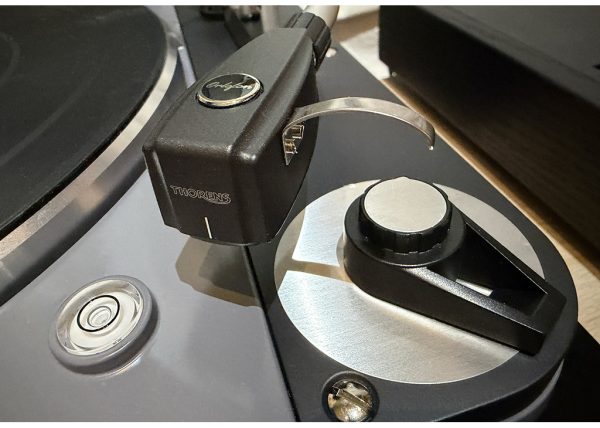
The visual cues of the original TD 124 are largely preserved, maintaining the aesthetic charm that has endeared it to so many. However, one observation notes that when the platter is lifted, the underlying mechanism bears a resemblance to the well-known Technics SL-1200. While this might seem like a departure from the traditional Thorens aesthetic at first glance, it can also be interpreted as a sign of embracing modern, high-performance direct-drive motor technology, a field where Technics has long been a pioneer. This fusion of classic design with cutting-edge engineering is a defining characteristic of this new interpretation.
Early listening sessions, particularly through the MoFi Master Phono phono stage in "current mode," have yielded highly positive results. The sonic description – "big, lush, and dynamic" – paints a picture of a turntable that not only delivers technical precision but also possesses the musicality and emotional impact that defined its ancestor. This suggests that Thorens has succeeded in translating the "magic" of the original into a modern, direct-drive paradigm. The "current mode" operation of the phono stage is particularly noteworthy, often employed to extract the utmost detail and dynamics from high-output moving coil cartridges, hinting at the turntable’s ability to resolve fine sonic nuances.
A Deep Dive into the Sound: Beyond the First Impressions
While initial impressions are encouraging, a comprehensive evaluation of the Thorens TD 124 DD requires a more in-depth analysis, particularly in comparison to its legendary predecessor. The reviewer’s intention to conduct a "proper comparison to a vintage 124" is essential for understanding the extent of Thorens’ success in its reimagining endeavor.
The key areas of comparison will undoubtedly include:
- Speed Stability: Direct-drive motors are inherently capable of achieving superior speed stability compared to idler-wheel systems. The new TD 124 DD is expected to exhibit virtually no measurable wow and flutter, offering a rock-solid foundation for musical reproduction. This translates to a more stable pitch, clearer sustained notes, and a generally more polished and refined sound.
- Noise Floor: The absence of a rubber idler wheel should, in theory, lead to a lower noise floor. The mechanical noise associated with the idler-wheel interface can sometimes manifest as a subtle rumble or mechanical "thrum." A well-engineered direct-drive system should minimize these audible artifacts, allowing for greater transparency and detail retrieval.
- Timbre and Harmonic Richness: This is where the idler-wheel drive of the original TD 124 truly shone. The slight "give" and "grip" of the rubber wheel against the platter could impart a unique character to the sound, adding a certain richness and harmonic complexity. The challenge for the new TD 124 DD will be to achieve a similar sense of tonal density and harmonic sophistication without the inherent characteristics of the idler-wheel system. Modern direct-drive motors, while incredibly precise, can sometimes be perceived as being too "clinical" or "sterile" if not carefully implemented. The "lush" descriptor from the initial impression suggests Thorens may have found a way to imbue the direct-drive sound with a desirable warmth and musicality.
- Dynamic Range and Impact: Both idler-wheel and direct-drive systems can deliver excellent dynamics. However, the absolute stability of a direct-drive system can contribute to a more impactful and uncompressed presentation of transients and sudden dynamic shifts in the music. The "dynamic" aspect of the initial sonic impression bodes well for this.
- Cartridge Compatibility and Synergy: The choice of the Ortofon SPU TD124 cartridge is significant. SPUs are renowned for their dynamic presentation and often have a specific tonal character. Its pairing with the new TD 124 suggests a deliberate effort to achieve a cohesive sonic signature. The reviewer’s experience with the MoFi Master Phono in "current mode" also points towards the turntable being capable of revealing the subtleties of high-quality cartridges.
The comparison will also likely delve into the physical build quality, the ease of tonearm adjustment, and the overall user experience. While the aesthetic retains classic Thorens elements, the internal engineering represents a significant evolution. Understanding how these two generations of the TD 124 interact sonically will be a crucial part of the narrative. Does the new DD version offer a more accurate and technically superior rendition of the music, or does it sacrifice some of the analog "soul" that made the original so beloved?
Supporting Data and Manufacturer’s Intent
While the provided text offers initial impressions, a comprehensive review would ideally include supporting data such as:
- Measured Wow and Flutter: Objective measurements of speed stability are crucial for any turntable review.
- Rumble Measurements: Quantifying the noise floor of the turntable is essential for assessing its transparency.
- Tonearm Resonance Tests: Evaluating the resonance characteristics of the 9-inch Thorens arm in conjunction with the platter and cartridge.
- Cartridge Alignment and Tracking Force Data: Details on the setup parameters for optimal performance.
The manufacturer’s intent, as communicated through press releases and technical documentation, would also be invaluable. Understanding Thorens’ design philosophy behind this reimagining – what specific sonic goals they aimed to achieve and how they approached the technical challenges of integrating direct-drive technology into a product with such a storied heritage – would provide important context. The name "Distilled Thorens" in the article’s context suggests a focus on capturing the essence of the brand’s sonic philosophy.
Implications for the High-Fidelity Market
The introduction of the Thorens TD 124 DD has several significant implications for the high-fidelity market:
- Revival of Iconic Models: This move signals a trend of established audio brands revisiting and reinterpreting their most beloved products for the modern era. This can be a powerful strategy, leveraging brand recognition and nostalgic appeal while offering contemporary performance.
- Direct Drive vs. Idler Wheel Debate: The TD 124 DD reignites the ongoing discussion about the merits of direct-drive versus idler-wheel (or belt-drive) turntables. This new offering, from a company historically associated with idler-wheel technology, could sway opinions and demonstrate the advanced capabilities of modern direct-drive systems.
- User Accessibility: By offering a direct-drive system that is reportedly easy to set up and maintain, Thorens is making high-end analog playback more accessible to a wider audience, including those who might be intimidated by the complexities of vintage turntables.
- Benchmark for Future Designs: If the TD 124 DD proves to be a sonic success, it could set a new benchmark for direct-drive turntables that aim to balance technical precision with musicality and aesthetic appeal. It challenges the notion that direct-drive is inherently sterile or lacking in "analog warmth."
- Competition and Innovation: The presence of a reimagined Thorens TD 124 in the market will undoubtedly spur further innovation from competitors, encouraging them to push the boundaries of both classic and modern turntable design.
The journey of the Thorens TD 124 DD from a concept to a tangible product is a fascinating chapter in the ongoing evolution of analog audio. It represents a bold step for a revered brand, a testament to the enduring appeal of iconic designs, and a promising development for audiophiles seeking the best of both worlds: the legacy of a legend and the precision of modern engineering. The upcoming detailed comparison will be eagerly awaited, as it promises to reveal whether Thorens has truly distilled the essence of the TD 124 into this new, direct-drive era.