Main Facts
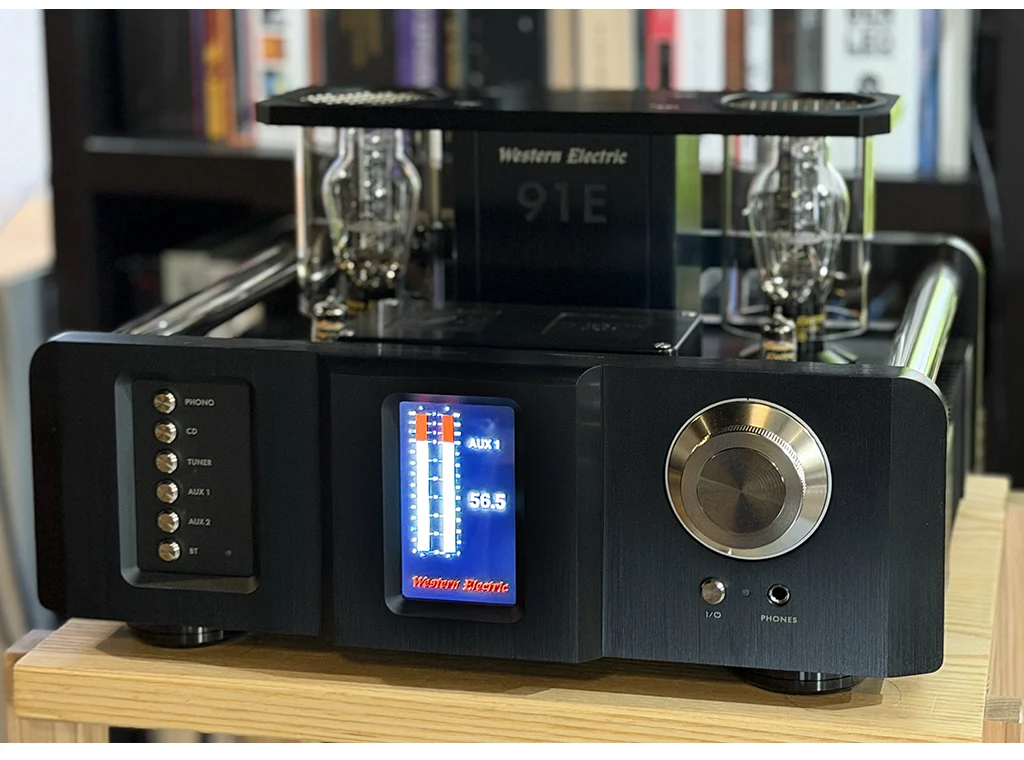
In the rarefied world of high-end tube audio, few names carry the historical gravity of Western Electric. As the original architects and designers of the legendary 300B triode vacuum tube, the company holds a foundational place in the genealogy of sound reproduction. Now, Western Electric is bridging its storied heritage with modern architectural convenience through its flagship integrated offering: the Western Electric 91E amplifier, priced at $7,999.
Reviewers and audiophiles alike have noted that the 91E represents a compelling value proposition within the ultra-luxury sector, particularly when factoring in the inclusion of genuine, branded Western Electric 300B tubes. While a matched pair of these iconic tubes commands a standalone retail price of $1,495, their legendary longevity relative to lower-cost alternatives elevates them from a consumable expense to a long-term investment.
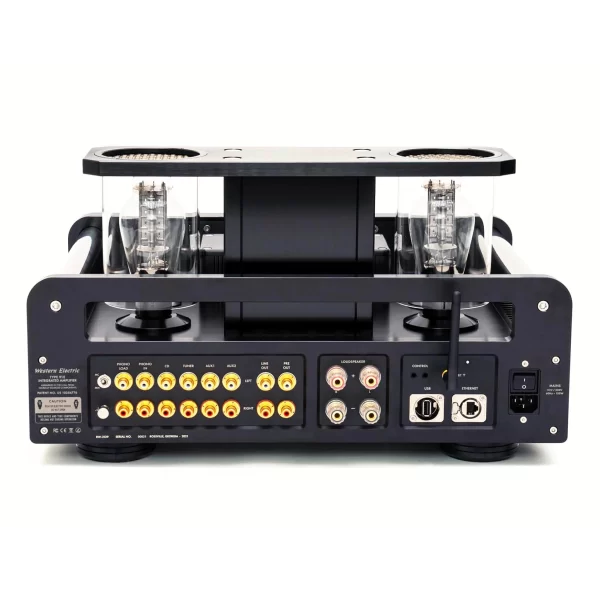
Beyond its core power-amplification duties, the Western Electric 91E functions as a comprehensive, all-in-one analog and digital hub. The unit comes equipped with:
- A high-performance, built-in moving magnet (MM) and moving coil (MC) phono section for vinyl enthusiasts.
- A dedicated, high-fidelity headphone amplifier circuit.
- An integrated Bluetooth DAC for seamless wireless streaming.
- A pair of matching ECC83 (12AX7) driver tubes carrying official Western Electric branding.
Early hands-on evaluations describe the 91E’s sonic profile as exceptionally smooth, maintaining the signature midrange magic of the 300B topology while breaking new ground in power delivery and modern versatility. Western Electric utilizes a proprietary circuit design that allows the 91E to push nearly twice the output of traditional 300B amplifiers—which typically hover in the 6-to-9 watts per channel (wpc) range—making it a viable match for a wider array of efficient loudspeakers.
Chronology
The journey of the Western Electric 91E and its underlying technology spans decades of industrial shifts, technological dormancy, and a triumphant modern resurgence.
The Golden Era and the Genesis of the 300B (1930s–1980s)
Western Electric originally developed the 300B vacuum tube in the 1930s for telecommunications and theater amplification. Over the subsequent decades, it transitioned from a commercial utility component into the holy grail of single-ended triode (SET) audio design. Known for its astonishing midrange purity, harmonic texture, and lifelike vocal reproduction, the 300B became the beating heart of purist high-end audio systems globally, even long after Western Electric ceased original large-scale production.
The Revival and Modern Engineering (2010s–2020s)
Recognizing surging global demand for authentic, American-made thermionic components, Western Electric restarted production of the 300B at its state-of-the-art facility in Rossville, Georgia. With the supply of genuine, high-grade 300B tubes stabilized, the company turned its attention to designing a modern hardware ecosystem to showcase them. The development of the 91E project focused on marrying the timeless acoustic performance of direct-heated triodes with the feature sets demanded by modern consumers, such as digital connectivity, vinyl playback integration, and robust build quality.
The Current Evaluation Phase (2026)
Audio publications recently gained extended access to production units of the Western Electric 91E. While comprehensive, long-term reviews are currently pending final technical fact-checking by Western Electric engineers, early preview impressions indicate that the amplifier has surpassed baseline expectations. Reviewers report spending extensive listening hours with the system, confirming its acoustic prowess while awaiting formal clearance to publish full-length critical breakdowns.
Supporting Data
To understand the positioning of the Western Electric 91E within the high-end audio market, it is essential to analyze the underlying hardware specifications, component costs, and performance metrics.
| Feature / Specification | Detail |
|---|---|
| Retail Price | $7,999 USD |
| Output Tube Complement | Two (2) Genuine Western Electric 300B Triodes ($1,495/pair retail value) |
| Driver Tube Complement | Two (2) WE-Branded ECC83 (12AX7) Tubes |
| Power Output | Nearly double standard 300B amplifiers (traditionally 6–9 wpc; significantly increased headroom via proprietary circuitry) |
| Phono Stage | Built-in, supporting both Moving Magnet (MM) and Moving Coil (MC) cartridges |
| Digital Connectivity | Integrated Bluetooth DAC |
| Headphone Output | Dedicated high-end headphone amplifier circuit |
| Power Supply Architecture | Robust, highly optimized solid-state power supply |
| Chassis Options | Available in Industro-Cool Black (featured), Nickel, and Champagne finishes |
| Packaging | Stout, bespoke wooden shipping crate with custom foam organization |
Component Longevity vs. Operating Cost
A frequent criticism of tube-based amplification is the recurring cost of tube replacement. Standard production tubes—particularly budget-oriented imports from various overseas manufacturers—often exhibit shorter operational lifespans and greater performance drift over time. Western Electric’s domestically manufactured 300Bs, while initially expensive at $1,495 a pair, utilize rigorous quality control and heavy-duty filament construction designed to last for thousands of hours. When amortized over the expected operational lifespan of the amplifier, the cost-per-hour differential narrows significantly, favoring the long-term durability of the original WE components.
Circuit Topology and Power Efficiency
Traditional Single-Ended Triode (SET) amplifiers using a pair of 300B tubes are universally praised for their tone, but criticized for their low output power—usually restricted to roughly 6 to 9 watts per channel. This limitation forces enthusiasts to pair them exclusively with ultra-efficient horn speakers or high-sensitivity baffles. Western Electric addressed this bottleneck in the 91E by implementing a unique, patented or proprietary circuit layout that extracts greater dynamic output and headroom from the tubes without compromising the coveted sonic texture that defines the 300B sound.
Official Responses and Manufacturer Insights
Western Electric has positioned the 91E not merely as an exercise in retro nostalgia, but as a forward-looking statement on what a modern tube amplifier can achieve.
In technical briefings provided to industry analysts and audio journalists, Western Electric representatives emphasized the engineering challenge of combining a traditional, analog vacuum tube gain stage with contemporary conveniences like a Bluetooth DAC and a versatile phono preamplifier. Rather than treating these auxiliary features as afterthoughts, the company engineered each section to meet uncompromising audiophile standards.
Regarding the aesthetic and structural design of the 91E, Western Electric opted for an industrial, robust chassis configuration designed to make a visual statement. Available in three distinct finishes—Black, Nickel, and Champagne—the enclosure breaks away from traditional organic wood-and-chrome styling in favor of a modern, machined-metal architecture.
Furthermore, the company places heavy emphasis on the unboxing experience. The 91E ships inside a stout, custom-built bespoke wooden crate, with every accessory, manual, and tube compartmentalized with surgical precision. This level of presentation underscores Western Electric’s desire to reassert itself as a premier luxury American manufacturing brand, ensuring that the pride of ownership begins the moment the shipping crate is opened.
Implications
The market arrival and early reception of the Western Electric 91E carry significant implications for both the high-end audio industry and the consumers who invest in it.
Redefining the Value Paradigm in Ultra-Luxury Audio
At an MSRP of $7,999, the 91E is undeniably a luxury item, yet seasoned audio reviewers have characterized it as a "bargain" relative to its feature set and pedigree. By bundling a world-class phono stage, a headphone amplifier, a Bluetooth DAC, and a pair of $1,495 reference-grade 300B tubes into a single chassis, Western Electric lowers the barrier to entry for listeners who might otherwise have to purchase separate, highly expensive component boxes to achieve a comparable system.
The Survival and Evolution of Vacuum Tube Technology
There was a time when industry pundits predicted the complete obsolescence of thermionic valves in favor of high-efficiency, cool-running solid-state and Class-D amplification. Products like the 91E prove that vacuum tubes—specifically legendary designs like the 300B—not only survive but thrive in the modern era. By pairing old-world analog warmth with solid-state power supply reliability and wireless streaming inputs, Western Electric has created a hybrid user experience that satisfies purists and digital natives alike.
Speaker Matching and System Synergy
Because the 91E extracts nearly double the power output of traditional 300B topologies, it fundamentally alters the rules of system matching. Audiophiles no longer need to restrict themselves to ultra-rare or prohibitively expensive high-sensitivity horn speakers to enjoy the magic of Western Electric sound. The expanded headroom opens up compatibility with a broader range of modern bookshelf and floorstanding loudspeakers, making high-end tube sound accessible to a wider demographic of music lovers.
As the audio community awaits the publication of final, fact-checked reviews, the Western Electric 91E has already cemented its status as a landmark component. It stands as a testament to the fact that when historical mastery meets modern engineering ambition, the results can resonate across generations.