Introduction: The Evolution of Minimalism in Audiophile Systems
For decades, the pursuit of ultimate high-end audio has been synonymous with physical sprawl. The traditional audiophile living room or dedicated listening space often resembled a laboratory, dominated by massive monoblock amplifiers, separate preamplifiers, dedicated digital-to-analog converters, standalone phono stages, and a rats’ nest of thick, incredibly expensive interconnects and power cables. While this separation of components has historically been the gold standard for avoiding electrical interference and maximizing performance, it comes at a steep price: cluttered living spaces, immense heat generation, complex troubleshooting, and financial investments that rival the cost of a luxury automobile.
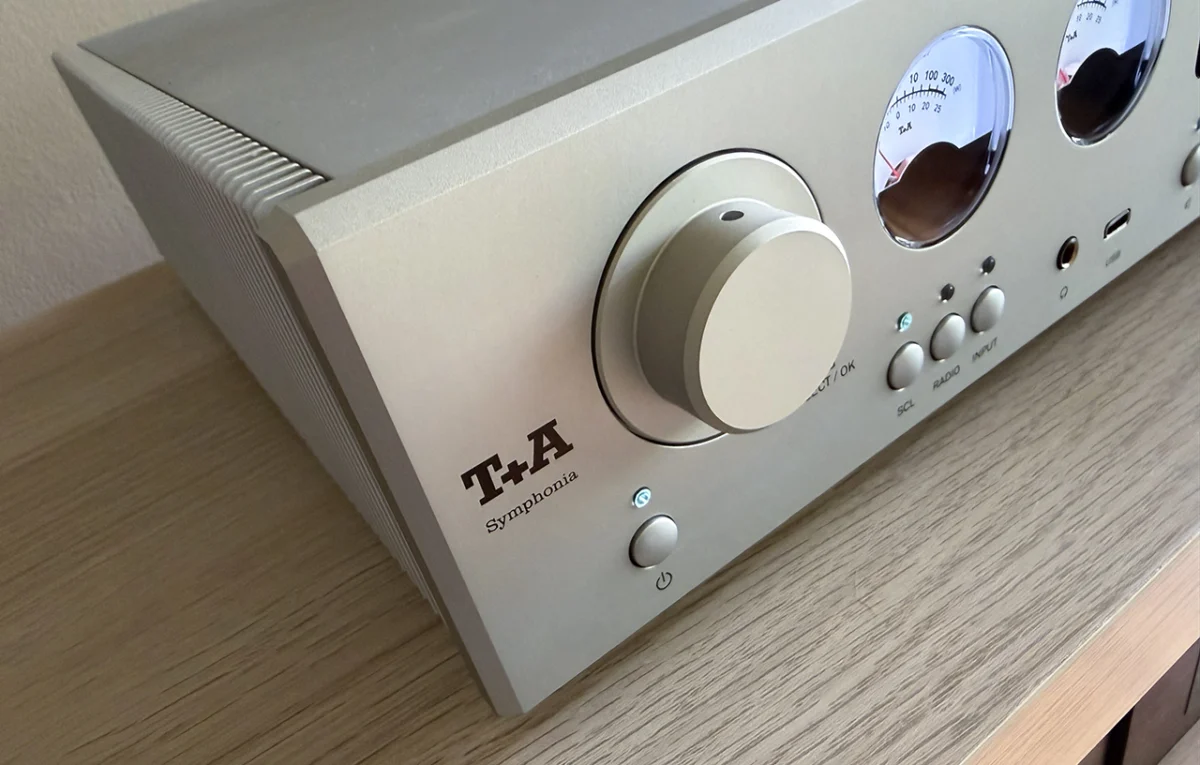
Enter the T+A Symphonia. Priced at $10,995, this component is unapologetically positioned in the high-end tier rather than the budget or entry-level segments. Yet, as the audio industry increasingly shifts toward streamlined, design-conscious living environments where high performance is demanded without the visual clutter of a multi-box rack, products like the Symphonia are redefining what is possible. T+A (Theory and Application), the renowned German high-end audio manufacturer celebrated for its uncompromising engineering and sonic purity, has crafted a component that genuinely "does it all."
By combining proprietary amplifier topologies, a state-of-the-art streaming DAC, comprehensive analog and digital connectivity, a high-quality MM phono stage, and even traditional radio tuners into a single, beautifully executed chassis, the Symphonia bridges the gap between no-compromise audiophile sound and modern domestic elegance.
Main Facts: Unpacking the T+A Symphonia
To truly understand the value proposition of the T+A Symphonia, one must examine the sheer density of technology packed into its sleek, minimalist aluminum chassis. Despite its modest footprint, the Symphonia punches well above its weight class in power, versatility, and technological sophistication.
Core Amplification and the Eigentakt Innovation
At the heart of the Symphonia’s amplification stage is Purifi’s highly acclaimed Eigentakt chipset. However, true to T+A’s engineering ethos, the company’s design team did not simply drop an off-the-shelf module into a box. Instead, T+A engineers developed a completely custom circuit board around the Eigentakt technology, integrating it with their own legendary high-voltage power supply technology and wide-bandwidth throughput.
This custom implementation yields an impressive 125 watts per channel into an 8-ohm load, a figure that neatly doubles to 250 watts per channel when driving demanding 4-ohm speakers. This robust power delivery ensures that the Symphonia can effortlessly control a wide variety of loudspeakers, maintaining composure, low distortion, and linear frequency response even during complex, highly dynamic musical passages.
Digital Capabilities and Streaming Ecosystem
Modern high-end audio demands a comprehensive digital front end, and the Symphonia delivers a masterclass in digital versatility. The unit features a built-in streaming USB DAC that is fully Roon Ready, ensuring seamless integration with the world’s most sophisticated music management and streaming ecosystem.
Beyond network streaming via Ethernet (which remains the manufacturer’s recommended wired connection for optimal stability and resolution) or Wi-Fi, the Symphonia supports high-quality Bluetooth streaming for casual listening from mobile devices. Physical digital inputs are also well represented, including standard coaxial RCA/SPDIF and optical (Toslink) connections, making it simple to integrate digital sources such as CD transports, televisions, or digital media players.
Analog Versatility: From Phono to Tape
T+A recognizes that the vinyl renaissance is here to stay, alongside a broader appreciation for retro analog formats. Consequently, the Symphonia is equipped with an exceptional built-in Moving Magnet (MM) phono stage, allowing vinyl enthusiasts to plug a turntable directly into the system without needing an outboard phono preamplifier.
Additionally, the unit features a single RCA analog line-level input—ideal for connecting legacy sources such as a cassette deck or open-reel tape player—and a dedicated subwoofer output for listeners wishing to incorporate a powered subwoofer into a 2.1 channel configuration. For traditionalists who still enjoy terrestrial broadcasts, T+A has even included an on-board FM and DAB (Digital Audio Broadcasting) tuner.
Chronology: The Path to the Symphonia’s Development
The arrival of the Symphonia is not an accident of modern component miniaturization, but rather the culmination of decades of research, technological maturation, and shifting consumer demands within the high-end audio market.
Phase One: The Heritage of Separate Components (1978–2010s)
Founded in Germany, T+A built its formidable reputation on uncompromising, multi-box reference systems. For over four decades, the company’s engineering philosophy dictated that absolute sonic purity required physical separation. Power supplies were housed away from sensitive low-level analog circuits; digital clocks were isolated from analog outputs; and amplifiers were built as massive, single-channel or dual-channel powerhouses. During this era, integrated amplifiers were often viewed by purists as a compromise, and all-in-one systems were largely relegated to the lifestyle audio category, far removed from true high-end performance.
Phase Two: The Class-D and High-Efficiency Revolution (2015–2020)
As semiconductor technology advanced, high-efficiency amplification topologies began to mature. Traditional Class-AB amplifiers, while sonically superior to early Class-D designs, generated significant heat and required massive heat sinks and heavy transformers. T+A closely monitored these developments, recognizing that if switching amplification could be refined to eliminate high-frequency distortion and phase anomalies, it could revolutionize the design of high-end components.
Phase Three: The Purifi Partnership and Custom Engineering (2020–2025)
The introduction of Purifi’s Eigentakt technology marked a watershed moment in audio engineering. Offering ultra-low distortion and load invariance, it proved that class-agnostic design could rival the finest linear amplifiers. T+A engineers saw an opportunity to pair this core chipset with their proprietary high-voltage power supply designs. Rather than rushing a product to market, T+A spent years developing a proprietary custom board that married Purifi’s efficiency with T+A’s signature analog warmth, bandwidth, and dynamic scale.
Phase Four: The Official Announcement and Market Debut (Late 2025–2026)
Unveiled to the international audio press, the Symphonia represents T+A’s definitive answer to the modern audiophile’s dilemma: how to achieve reference-grade sound without dominating the living space. Positioned at $10,995, the Symphonia is slated for formal reviews and global market availability in mid-2026, marking a new chapter for the brand as it bridges the gap between ultra-high-end performance and minimalist domestic integration.
Supporting Data: Technical Specifications and Performance Metrics
When evaluating a component in the $10,000+ price bracket, specifications matter. The T+A Symphonia backs up its luxurious aesthetics and feature-rich design with serious hardware metrics.
| Feature / Specification | Detail |
|---|---|
| Retail Price | $10,995 USD |
| Power Output (8 Ohms) | 125 Watts per channel |
| Power Output (4 Ohms) | 250 Watts per channel |
| Amplification Topology | Custom T+A implementation of the Purifi Eigentakt chipset with proprietary high-voltage power supplies |
| Digital-to-Analog Conversion | High-performance USB DAC, Roon Ready |
| Network & Wireless Connectivity | Ethernet (recommended), Wi-Fi, Bluetooth |
| Digital Inputs | 1x RCA/SPDIF, 1x Optical (Toslink) |
| Analog Inputs | 1x RCA Line-level, 1x Moving Magnet (MM) Phono stage |
| Outputs | Speaker terminals, Subwoofer line-level output |
| Radio Tuners | On-board FM and DAB tuner |
| Chassis Construction | Minimalist, heavy-gauge aluminum housing designed for low resonance and aesthetic integration |
Real-World Sonic Performance
Early listening impressions from critics testing pre-production units paired with reference-grade loudspeakers—such as the YG Acoustics Summit—reveal a sonic profile that remains entirely faithful to T+A’s house sound. Listeners note that the Symphonia is remarkably dynamic, highly detailed, open, and deeply musical.
Despite driving notoriously demanding reference speakers, the Symphonia exhibits zero signs of strain, maintaining precise imaging, a wide soundstage, and authoritative bass control. The inclusion of a subwoofer output further allows users to tailor low-frequency extension to their specific room acoustics, ensuring seamless integration whether used in a compact bookshelf setup or driving full-range floorstanders.
Official Responses and Industry Perspectives
The introduction of the T+A Symphonia has sparked considerable discussion among manufacturers, reviewers, and audiophile enthusiasts alike.
Industry analysts point out that the high-end audio market is undergoing a demographic and spatial shift. Younger affluent buyers, interior designers, and urban homeowners increasingly reject the visual footprint of traditional multi-box hi-fi systems. Manufacturers who fail to adapt to this demand for aesthetic minimalism risk alienating a growing segment of the luxury audio market.
T+A’s engineering team emphasized during early briefings that compromise was never an option during the development of the Symphonia. One lead acoustic engineer noted:
"The challenge was not simply fitting multiple circuits into a smaller box; that is merely an exercise in spatial geometry. The true challenge was ensuring that placing high-voltage power supplies, sensitive digital streaming boards, and delicate phono stages in close proximity resulted in zero electromagnetic interference or signal degradation. Through meticulous circuit routing, shielding, and our custom Eigentakt board design, we achieved a noise floor and level of transparency that rivals our separate reference components."
Reviewers who have spent time with the Symphonia have likewise voiced astonishment at how much performance is concentrated within a single chassis, noting that the component effectively redefines the category of high-end integrated systems.
Implications: What the Symphonia Means for the Future of High-End Audio
The release of the T+A Symphonia at $10,995 carries significant implications for the broader audio industry, influencing consumer economics, component design, and lifestyle integration.
1. The Real Economics of All-In-One Ownership
At first glance, an investment of nearly $11,000 for a single audio component may cause sticker shock among casual listeners. However, a holistic financial analysis reveals a different picture. Consider the hidden costs associated with assembling a traditional four-box system (streamer, DAC, preamplifier, and power amplifier):
- Interconnect Cables: Multiple pairs of high-end analog interconnects (RCA or XLR) to connect components.
- Power Cords: Upgraded aftermarket power cables for each individual chassis.
- Rack Space: A specialized, high-mass audio equipment rack with multiple shelves to house the gear.
- AC Power Conditioning: Outlets and power conditioners to supply clean juice to separate units.
When factoring in the cost of four sets of high-end interconnects and mains cables—which can easily total several thousand dollars—alongside the floor space saved by eliminating a massive equipment rack, the Symphonia begins to look remarkably cost-effective. It concentrates the budget where it matters most: internal circuit quality, premium components, and precision German engineering.
2. Redefining Domestic Harmony
For decades, high-end audio has battled against the "WAF" (Wife Acceptance Factor)—a colloquial industry term highlighting the friction between massive, unsightly audio gear and interior design aesthetics. The Symphonia effectively neutralizes this conflict. Its elegant, minimalist aluminum enclosure allows it to blend seamlessly into modern, design-forward living environments. Whether placed on a minimalist credenza alongside a high-end turntable or tucked discreetly into a media console, it delivers uncompromising sound without demanding that the listening room be converted into an electronics showroom.
3. The Benchmark for Future Integrated Systems
As technology like the Eigentakt chipset matures, manufacturers are finding new ways to extract reference-level performance from compact form factors. The T+A Symphonia serves as a benchmark for what is possible when a heritage high-end brand embraces modern integration without cutting corners. By refusing to compromise on streaming capabilities, phono playback, power output, or build quality, T+A has set a new standard that competing manufacturers will undoubtedly strive to match in the years to come.
Conclusion
The T+A Symphonia is much more than just another integrated amplifier with a built-in streamer. It is a comprehensive, meticulously engineered audio hub designed for the modern audiophile who refuses to compromise on sonic purity, yet values simplicity, elegance, and spatial efficiency.
While its $10,995 price tag places it firmly in the luxury tier, the level of performance, refinement, and sheer versatility it delivers represents extraordinary value when viewed against the total cost of ownership of traditional multi-box systems. As full reviews drop and listeners around the world experience its dynamic, detailed, and open musical presentation firsthand, the Symphonia is poised to cement its place as one of the most important high-end components of the decade. Whether spinning vinyl, streaming high-resolution digital files, or simply enjoying the visual and acoustic harmony it brings to a living space, T+A has proven that when it comes to the Symphonia, it truly does it all.