In the competitive landscape of high-end hospitality, the difference between a premier venue and an overlooked space often comes down to a single, invisible factor: acoustics. For Iain Fletcher, Director of Club Outlets at Vancouver’s prestigious Terminal City Club (TCC), the realization was stark. Despite the club’s stellar reputation and recent architectural renovations, the dining room—a critical hub for business professionals—had become a victim of its own modern design.
As Fletcher observed, the very aesthetic choices that made the room visually stunning—hard surfaces, glass, and the removal of soft, sound-absorbing elements—had rendered the space acoustically hostile. The result was a decline in lunch-hour business, as members found it increasingly difficult to conduct the private, professional conversations that define the TCC experience.
What followed was a masterclass in acoustic engineering, where Primacoustic and integrator Paramount Automation executed a "stealth" installation that prioritized sonic perfection without compromising the club’s award-winning design.
The Anatomy of the Problem: A Design-First Dilemma
Terminal City Club, located in the heart of Vancouver’s West Hastings district, is an institution. Serving as a sanctuary for business leaders, the club offers a comprehensive suite of amenities, from state-of-the-art fitness facilities to elegant banquet halls and private dining rooms.
However, following a major renovation intended to elevate the club’s visual appeal, the atmosphere in the restaurant shifted. The space, while beautiful, began to suffer from a lack of speech intelligibility. Conversations became difficult, and the ambient noise floor rose to uncomfortable levels.
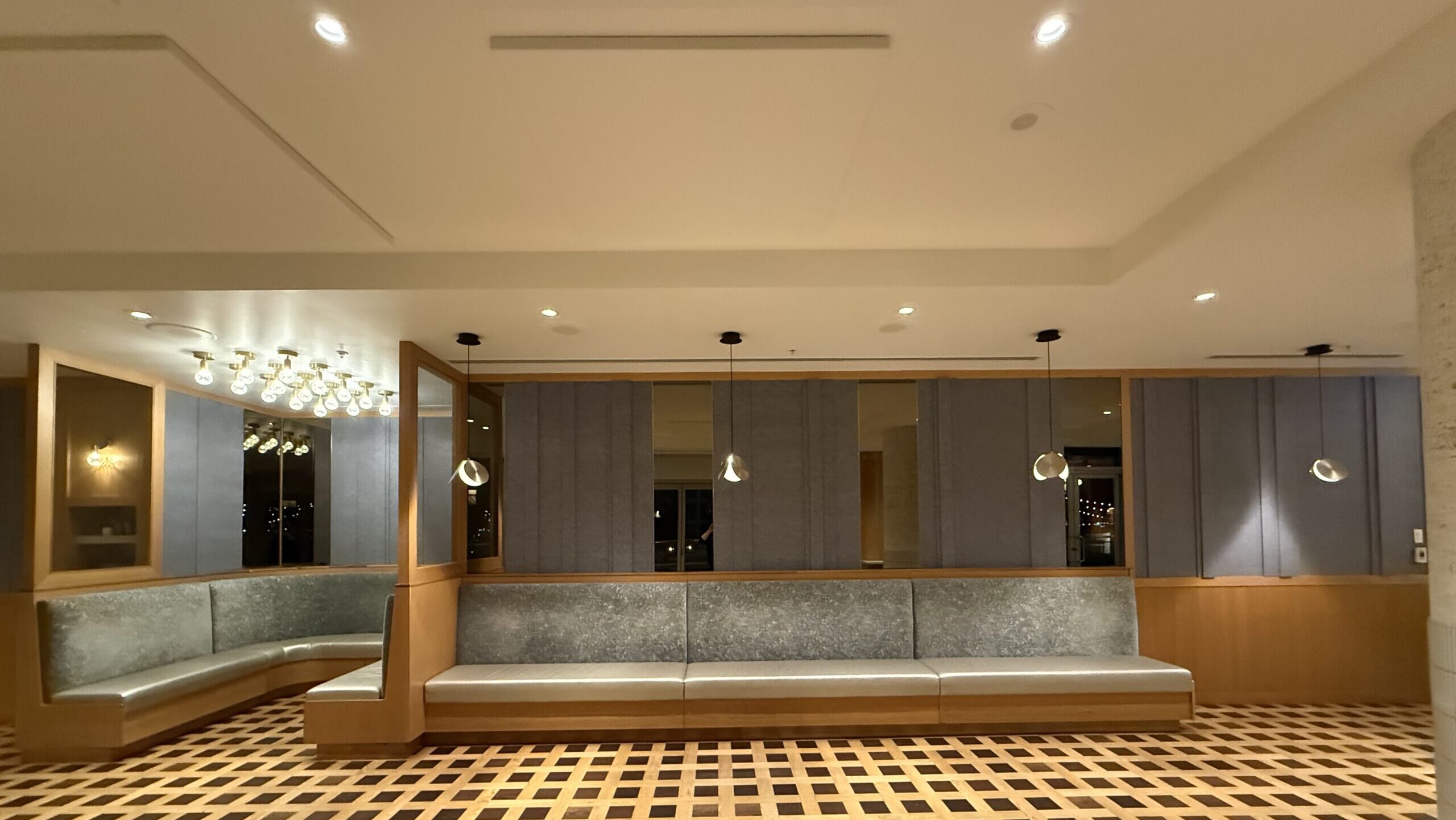
"I’ve been to some places in the city with thoughtful acoustic treatment, and the experience is memorable," Fletcher explains. "But there are also restaurants I might not return to because they’re just too loud. And I can’t help but think how often others feel the same—but don’t tell the people running the restaurant."
The challenge was twofold: the club needed to drastically reduce reverberation times to improve communication, but it could not afford to clutter the room with unsightly acoustic panels. The restaurant had already garnered several design awards; the integrity of its visual aesthetic was non-negotiable.
Chronology of the Transformation: From Discovery to Implementation
The search for a solution led Fletcher to the work of Paramount Automation, a long-time partner of acoustic leader Primacoustic. His interest was piqued by a previous project the team had completed for Piva Restaurant in New Westminster.
"One of our previous managers had actually started working at Piva," Fletcher recalls. "Seeing his comments, and a video showing the before and after, we thought we’d give it a shot."
Once Paramount Automation was brought on board, the project entered a meticulous planning phase. Paramount’s "resident craftsman," Marty Nightingale, was tasked with auditing the space. He quickly identified the primary culprits: high ceilings with floor-to-ceiling glass and minimal soft furniture.
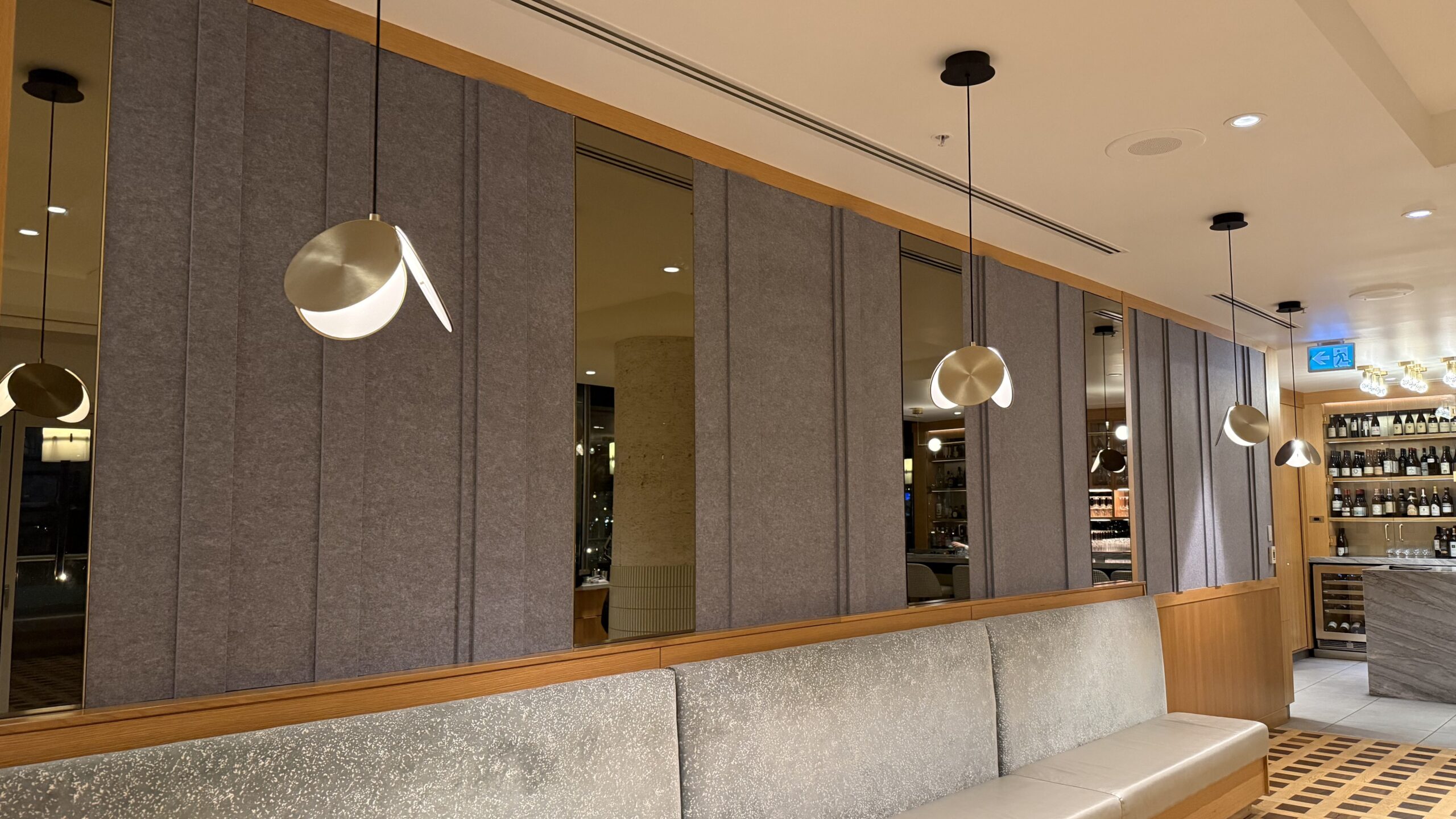
The project progressed in stages:
- Site Assessment: Identifying key reflection points in both the main dining room and the adjacent private lounge.
- Material Selection: Choosing a hybrid solution of Primacoustic’s EcoScapes PET panels for their customization capabilities and Broadway glass wool treatments for their superior absorption performance.
- Bespoke Fabrication: Working with Dylan Bubel, Primacoustic’s Western Canada Sales Manager, to ensure every panel was cut, shaped, and color-matched to the existing decor.
- Stealth Installation: Executing a precise mounting strategy that allowed the acoustic treatments to mimic the existing structural elements of the ceiling and walls.
Technical Precision and Custom Capabilities
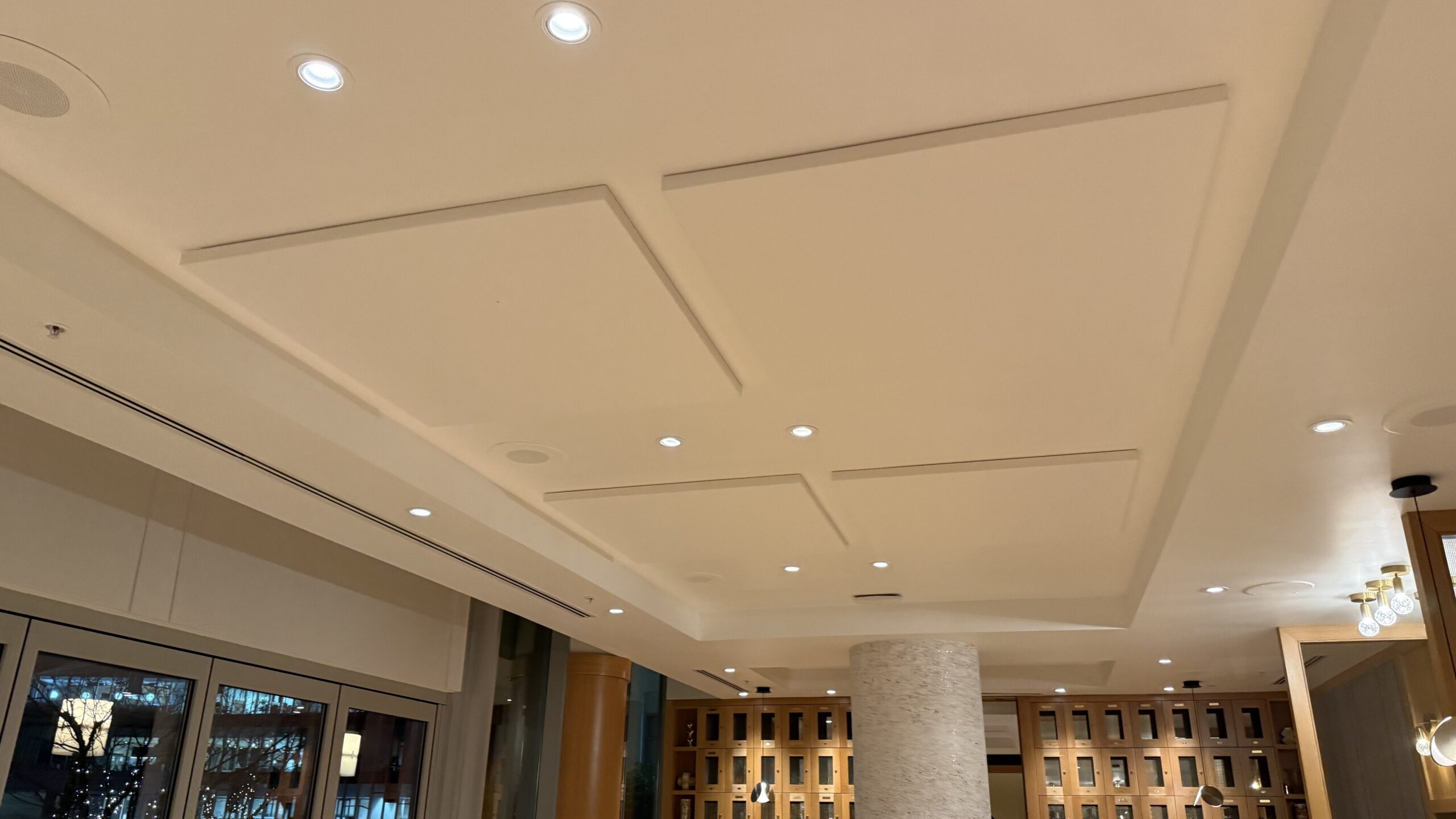
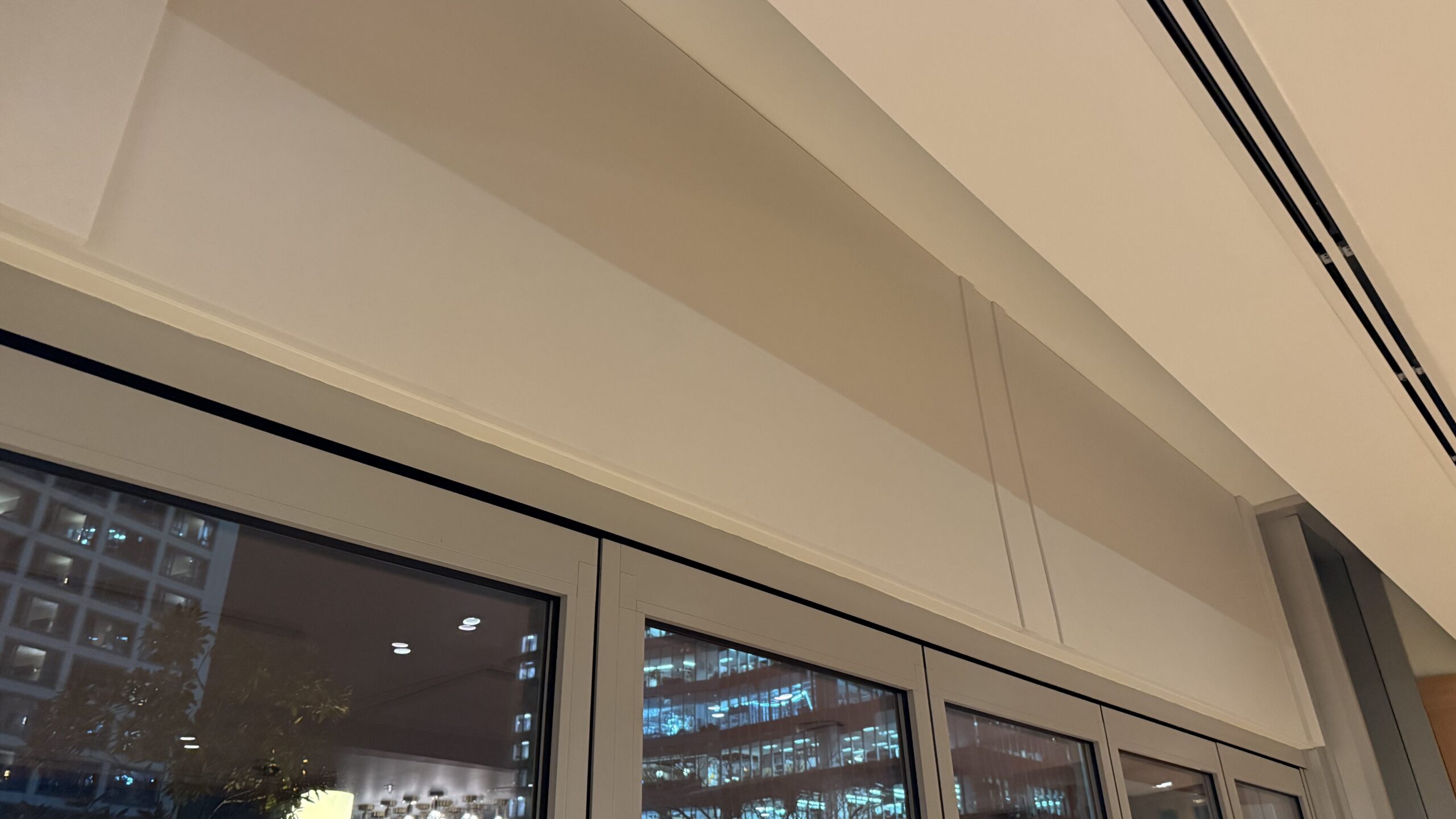
The core of the installation relied on the versatility of Primacoustic’s product line. To address the dining area’s ceiling, the team deployed Broadway "Arctic White" panels, which were flush-mounted to neutralize floor-to-ceiling reflections. Because the panels were color-matched to the existing ceiling, they effectively disappeared into the room’s architecture.
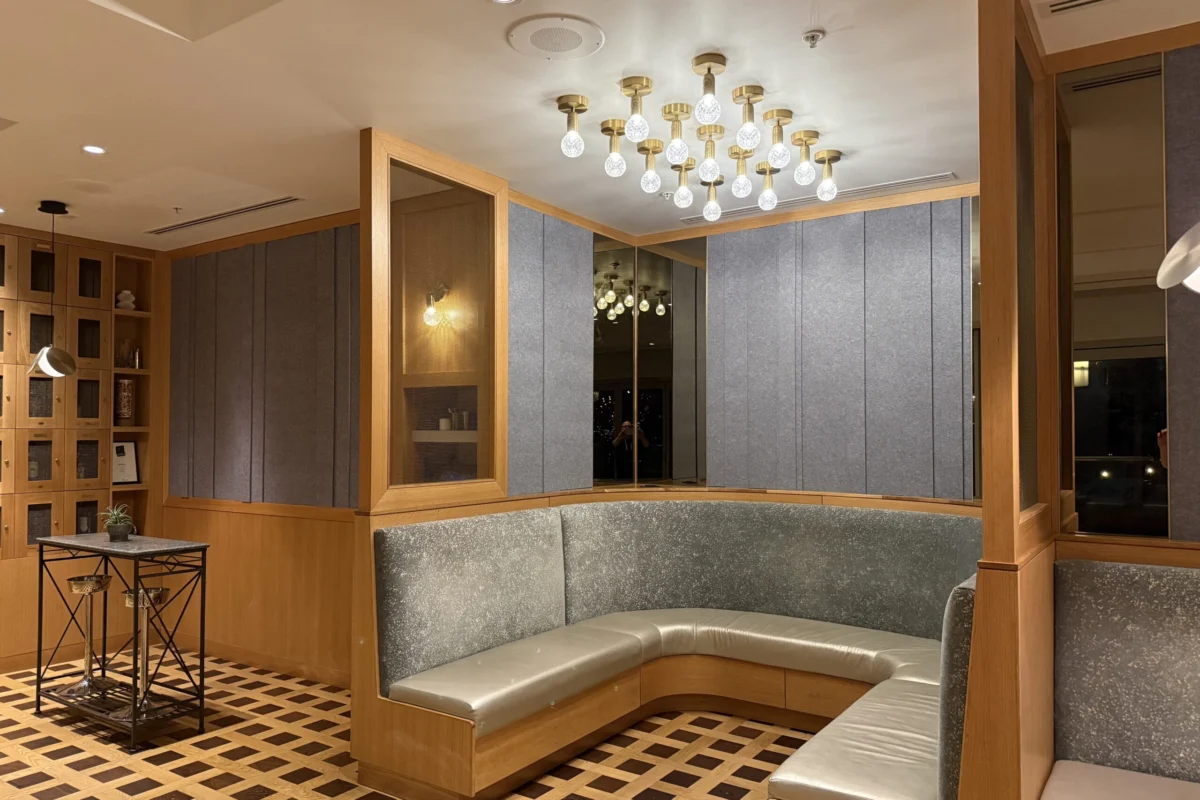
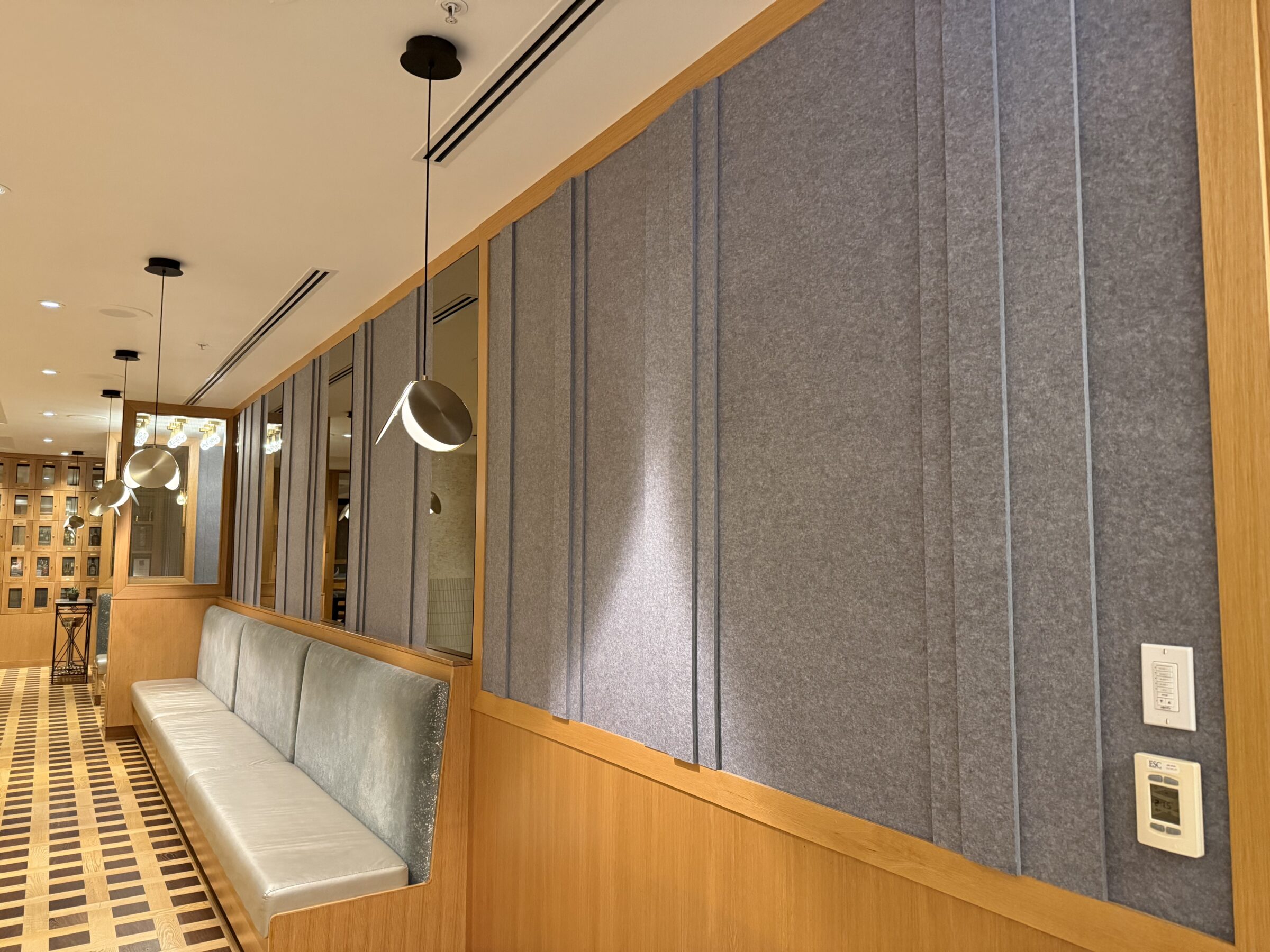
The most complex challenge, however, lay in the dining room’s decorative wall features. These grey, felt-like elements were positioned at eye level, leaving no margin for error.
"Those are at eye level," says Nightingale. "So there was no place to hide a rough edge or seam."
To solve this, the team removed the original, ineffective felt material and replaced it with a multi-layered PET solution. By using a base layer of PET and meticulously cutting and layering strips on top, they created a custom finish that perfectly replicated the original design while providing significantly higher sound absorption. The result was a seamless finish that appeared to be sculpted from a single material.
In the private lounge, the constraints were even tighter. With limited wall space due to glass doors, a large television, and kitchen access, the team pivoted to the ceiling. By using "Glacier" white EcoScapes panels as a base and adding custom-cut PET strips, they successfully recreated the room’s original "coffered" ceiling look while turning the entire ceiling into an acoustic sponge.
Official Responses and Collaborative Synergy
The success of the Terminal City Club project is a testament to the relationship between Paramount Automation and Primacoustic. Both firms operate on a philosophy that treats every acoustic hurdle as a design challenge rather than a technical failure.
"At Paramount Automation, we’re outside-the-box thinkers," says Nightingale. "So it’s a perfect fit, because with both Paramount and Primacoustic, it’s like, ‘this is a challenge, not a problem—let’s figure it out.’"
Drew Campbell, founder and owner of Paramount Automation, emphasizes that this collaborative spirit is what drives their results. "We work well together because we’re like-minded; we complement each other. Primacoustic is always open to feedback, which fosters a ‘how can we do this better’ approach."
For Primacoustic, the project serves as a showcase for their growing suite of PET-based solutions, which offer a modern, sustainable way to tackle noise in commercial environments without sacrificing visual style.
The Implications: A Return to Elegance
The true measure of the project’s success is not found in the frequency response charts or the decibel reduction figures—though those metrics were undoubtedly improved—but in the feedback from the club’s members.
"I have had people ask what we did and where the panels are," Fletcher reports. "They’ve noticed a difference in sound, but they haven’t seen a difference."
The implications for the club are significant. By restoring the acoustic comfort of the dining room, the TCC has successfully reclaimed its position as a primary venue for high-stakes business meetings. The environment has transitioned from one of "unbearable echo" to a space defined by a "soft murmur of voices."
"Right away, it’s something you can feel when you walk into the restaurant," says Fletcher. "The acoustic performance exceeded our expectations by far. Our members can conduct business meetings at the club because they can hear each other over the crowd. And I’ve even been able to increase the music volume to create a more welcoming ambiance, knowing that the room can now handle the sound."
Conclusion: The Invisible Advantage
The Terminal City Club project highlights a growing trend in hospitality: the integration of "invisible" technology. As designers and owners become more aware of the impact of sound on the customer experience, they are increasingly turning to manufacturers like Primacoustic to provide solutions that work in harmony with, rather than in opposition to, interior design.
For businesses looking to improve their own environments, the lesson from the TCC is clear: effective sound control does not require a trade-off between form and function. Through careful planning, high-quality materials, and a commitment to detail, it is entirely possible to create a space that sounds as good as it looks.
As the industry continues to evolve, the partnership between integrators like Paramount Automation and manufacturers like Primacoustic will remain a critical resource for those who understand that in the world of luxury and service, the most powerful tool for improvement is the one you don’t even notice is there.
Are you looking to achieve class-leading sound control while maintaining the aesthetic integrity of your design? Visit Primacoustic.com to explore our wide-ranging product lines, including our latest PET sound control systems, EcoScapes Blades, Dimensional Baffles, and Contour Panels. Contact our expert team today to book a professional consultation for your space.