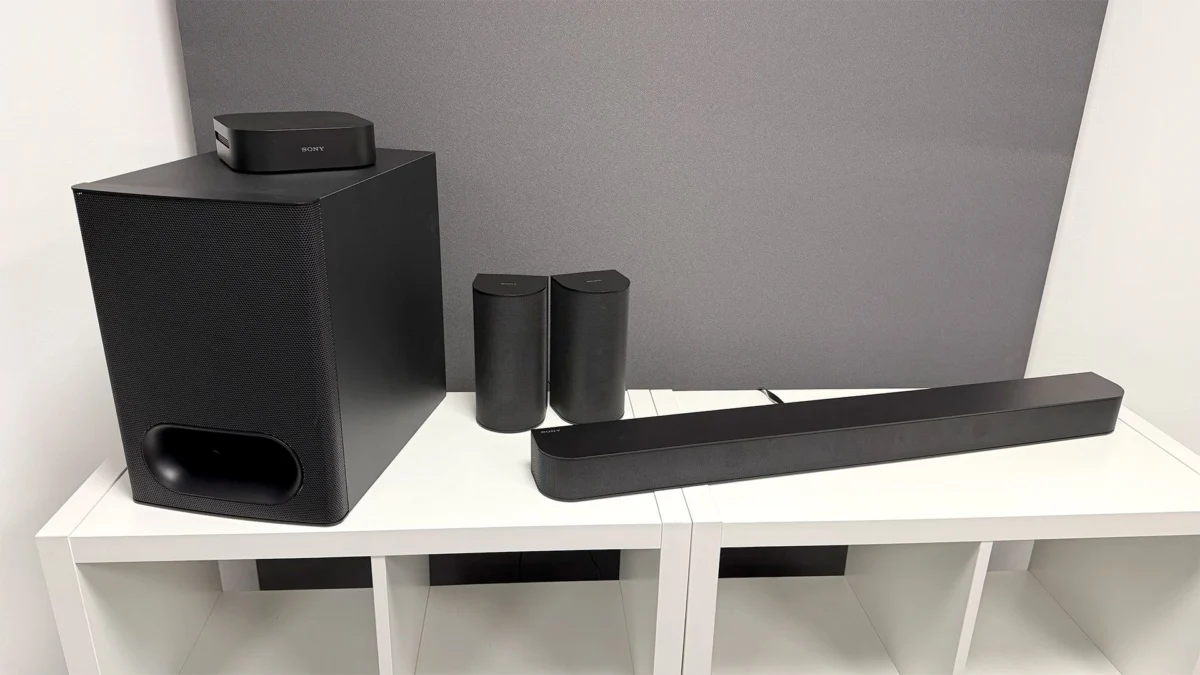
As Home Cinema Week draws to a close, the focus of the audiovisual (AV) industry remains firmly on the pursuit of sensory perfection. From testing state-of-the-art hardware—such as the five-star AWOL Vision Aetherion Max projector—to analyzing the intricacies of reference testing facilities, evaluating how hardware reproduces art is a continuous challenge.
Hardware is only as good as the software used to test it. To push modern displays and spatial audio systems to their absolute limits, industry experts rely on a carefully curated selection of films and television series. This monthly "Now Showing" guide highlights five standout titles that serve as the ultimate benchmarks for modern home cinema systems, testing everything from Dolby Atmos precision to OLED shadow detail and motion handling.
Main Facts: The Five AV Benchmarks of 2026
To thoroughly evaluate modern home cinema equipment, reviewers utilize a diverse mix of newly released streaming series, high-bitrate blockbusters, and vintage catalog titles. Each of the following five selections has been chosen for its unique ability to stress-test specific parameters of display and audio technology:

Ponies(2026–): This Cold War spy thriller, starring Emilia Clarke and Haley Lu Richardson, tests a display’s ability to handle non-standard aspect ratios (3:2) and complex, dialog-heavy soundscapes.House Of The Dragon(Season 3): HBO’s high-fantasy prequel remains the premier test for low-light shadow detail, high-dynamic-range (HDR) contrast, and the spatial tracking of aerial audio effects.F1 The Movie(2025): Joseph Kosinski’s high-octane racing drama, especially on 4K Ultra HD Blu-ray, serves as the ultimate benchmark for motion interpolation, high-velocity frame transitions, and aggressive, multi-channel audio panning.Widow's Bay(2026–): Apple TV+’s genre-bending horror-comedy relies on subtle, micro-detailed acoustic design, testing the limits of low-level ambient sound reproduction and spatial positioning.In the Mouth of Madness(1995): John Carpenter’s classic psychological horror, revisited following the passing of legendary actor Sam Neill, challenges modern upscaling engines, film grain preservation, and analog-to-digital color grading.
Chronology of Home Cinema Testing: From Analog Film to Premium Streaming
The evolution of reference testing material reflects the rapid technological shifts in consumer electronics over the past three decades. Understanding this timeline explains why a mix of legacy and modern content is required to truly benchmark a home theater.
[1995] In the Mouth of Madness (Analog Film Grain, Practical SFX)
   │
[2024] F1 The Movie (Physical 4K UHD Release, Peak Bitrate Audio/Video)
   │
[2025] House of the Dragon Season 3 (High-Dynamic-Range Low-Light Streaming)
   │
[2026] Ponies & Widow's Bay (Modern High-Bitrate Streaming & Creative Aspect Ratios)
In 1995, John Carpenter’s In the Mouth of Madness represented the pinnacle of analog filmmaking, relying on physical film stock, optical effects, and early multi-channel surround sound. For decades, testing focused on how well consumer displays could replicate the warmth and organic texture of celluloid.
By the release of F1 The Movie on physical media in late 2024 and early 2025, the paradigm had shifted to high-bitrate digital capture. The physical 4K Blu-ray release became an instant favorite in testing facilities, demonstrating that physical discs still outperform compressed streaming when handling high-speed motion and uncompressed Dolby Atmos tracks.

In 2025 and 2026, the rise of premium streaming tiers on platforms like HBO Max and Apple TV+ introduced new variables. With House Of The Dragon Season 3 and Widow’s Bay, testing facilities now evaluate how modern televisions and sound systems handle real-time decoding of Dolby Vision and Dolby Atmos delivered via internet protocols, where bandwidth constraints can introduce compression artifacts if the hardware’s processing engine is sub-par.
Supporting Data: A Technical Analysis of the Benchmarks
To understand why these titles are utilized in professional testing environments, we must examine the specific technical demands they place on home cinema hardware.
1. Ponies (2026–): Aspect Ratio and Vocal Textures
- Video Specification: 1080p/4K Dolby Vision, 3:2 Aspect Ratio
- Audio Specification: Dolby Digital 5.1 / Dolby Atmos
- The AV Test: The decision to shoot and broadcast Ponies in a vintage 3:2 aspect ratio means modern 16:9 widescreen televisions must display vertical black bars on either side of the image. For OLED displays, this tests pixel-level illumination and uniformity, ensuring that the active area of the screen does not bleed light into the pillarboxed regions.
- Acoustic Demand: The series features thick, whispered Russian accents and low-frequency environmental tension. Testing hardware must deliver immaculate mid-range clarity through the center channel so that dialogue remains intelligible without sacrificing the low-end atmospheric rumble of Cold War-era subterranean bunkers.
2. House Of The Dragon (Season 3): Shadow Detail and EOTF Tracking
- Video Specification: 4K UHD, Dolby Vision (Profile 5), HDR10
- Audio Specification: Dolby Atmos (Dolby Digital Plus wrapper)
- The AV Test: Westeros is notoriously dark. Season 3 features numerous sequences set in dimly lit castle corridors, candle-lit chambers, and nighttime naval battles. This content directly challenges a display’s Electro-Optical Transfer Function (EOTF) tracking. Lesser displays will suffer from "black crushing," where subtle details in dark clothing or stone walls are lost to pure black. Conversely, poorly calibrated backlights on LED or Mini-LED TVs will exhibit "blooming" around candles and torches.
- Acoustic Demand: The Atmos track utilizes height channels extensively. As dragons swoop from the top of the frame to the bottom, the audio system must seamlessly transition the sound of roaring fire from the ceiling speakers to the ear-level surround channels.
OLED Performance (Perfect Blacks, No Blooming)
[Pixel Off] ──> [Candlelight: 1000 nits] ──> [Pixel Off]

Standard LCD Performance (Light Bleed / Blooming)
[Dim Grey]  ──> [Candlelight:  600 nits] ──> [Dim Grey]
3. F1 The Movie (2025): Motion Vectoring and Transient Audio Response
- Video Specification: 4K UHD Blu-ray, HDR10+, Dolby Vision (MEL)
- Audio Specification: Dolby Atmos (TrueHD lossless)
- The AV Test: At speeds exceeding 200 mph, panning camera shots can easily stutter or judder on modern displays. This film tests the panel’s native refresh rate (120Hz) and the efficiency of its motion processing engine. Reviewers look for a balance where fast-moving vehicles remain sharp without introducing the artificial "soap opera effect."
- Acoustic Demand: The Dolby Atmos track on the physical Blu-ray boasts a massive dynamic range. The transient response of a sound system is put to the test as engines roar from left to right, requiring subwoofers to deliver tight, punchy bass (around 30Hz to 80Hz) without muddying the mid-high frequencies of screeching tires and trackside crowds.
4. Widow's Bay (2026–): Micro-Acoustics and Spatial Precision
- Video Specification: 4K UHD, Dolby Vision, High-Bitrate Apple Stream
- Audio Specification: Dolby Atmos
- The AV Test: Apple TV+ is known for offering some of the highest video bitrates in the streaming industry, often peaking above 40 Mbps. Widow’s Bay uses an intentionally grainy, Twin Peaks-style aesthetic that tests how well a television’s processor distinguishes between intentional film grain and digital compression noise.
- Acoustic Demand: Rather than relying on loud jump scares, the horror elements in Widow’s Bay are built on subtle sound design. Soft footsteps panning across the rear surrounds, creaking floorboards positioned precisely in the overhead height channels, and the gentle lapping of waves in the background require an audio system with an incredibly low noise floor and exceptional spatial imaging.
5. In the Mouth of Madness (1995): Legacy Upscaling and Analog Preservation
- Video Specification: 4K Remaster, HDR10
- Audio Specification: DTS-HD Master Audio 5.1
- The AV Test: This catalog title is a supreme test for a TV’s upscaling capabilities and image reconstruction algorithms. Because it was shot on 35mm film, the presentation is dense with organic grain. Poor upscaling engines will mistake this grain for digital noise and attempt to smooth it out, resulting in a waxy, lifeless image. A reference-grade processor will preserve the grain structure while enhancing edge definition and color depth.
- Acoustic Demand: The 5.1 lossless soundtrack lacks height channels but tests the steering capabilities of traditional surround sound. The chaotic, Lovecraftian climax requires a AV receiver to distribute a dense, schlocky sound mix evenly across the horizontal plane without losing vocal clarity.
Official Responses: Creative Philosophy and Streaming Delivery
The technical presentation of these titles is not accidental; it is the result of deliberate choices made by directors, cinematographers, and streaming platforms.

In interviews discussing the sonic landscape of Widow’s Bay, director Hiro Murai and creator Katie Dippold emphasized that sound was treated as a physical character. The production team chose to eschew traditional horror soundtrack tropes in favor of realistic, highly localized environmental sounds. This creative choice places a direct responsibility on consumer hardware to accurately reproduce the soundstage exactly as it was mixed in the dubbing stage.
Similarly, Joseph Kosinski’s approach to F1 The Movie relied heavily on custom-built IMAX cameras mounted directly to actual racing chassis. The goal was to capture authentic speed. In official featurettes, the production team noted that any artificial smoothing or motion compensation applied by consumer televisions would dilute the visceral, documentary-style realism of the cinematography. This has prompted AV experts to recommend turning off "motion smoothing" modes (such as TruMotion or Motionflow) in favor of "Filmmaker Mode" when viewing the film.
On the distribution side, the streaming industry’s ongoing stratification has drawn comments from AV commentators. The decision by platforms like Max (formerly HBO Max) to lock premium features—such as 4K resolution, Dolby Vision, and Dolby Atmos—behind their most expensive subscription tiers has changed how consumers experience content. Tech representatives have quietly acknowledged that while standard HD streams are sufficient for casual viewing, premium hardware requires these top-tier streams to avoid compression artifacts, particularly in dark, complex shows like House Of The Dragon.

Implications: The Future of Home Cinema Technology
The demands of modern reference content are driving significant advancements in consumer displays and audio hardware, shaping several key industry trends:
The Dominance of Self-Emissive Displays
The dark, high-contrast scenes of House Of The Dragon and the pillarboxed 3:2 presentation of Ponies highlight the limitations of traditional LCD TVs with edge-lit backlights. To prevent light bleed and achieve the deep blacks required for modern HDR content, the market is rapidly shifting toward self-emissive technologies like OLED and QD-OLED, as well as highly zoned Mini-LED backlights.
Contrast Comparison in Dark Scenes:
┌────────────────────────────────────────────────────────┐
│ OLED: Zero light leakage, infinite contrast ratio      │
├────────────────────────────────────────────────────────┤
│ Mini-LED: High brightness, minor blooming around text  │
├────────────────────────────────────────────────────────┤
│ Traditional Edge-Lit LCD: Greyish blacks, visible halo │
└────────────────────────────────────────────────────────┘
The Physical Media Renaissance
While streaming bitrates have improved, the physical 4K Ultra HD Blu-ray release of F1 The Movie proves that physical media remains irreplaceable for enthusiasts. With transfer rates reaching up to 128 Mbps—compared to streaming’s average of 15 to 25 Mbps—physical discs provide the bandwidth necessary to prevent pixelation during fast-moving scenes and deliver uncompressed, lossless audio.

The Standardization of Spatial Audio
The subtle, atmospheric soundscapes of Widow’s Bay and the overhead action of House Of The Dragon demonstrate that Dolby Atmos is no longer reserved solely for action blockbusters. As creators use spatial audio to build tension and deliver dialogue, multi-dimensional sound is becoming standard across all genres. This is driving the development of more sophisticated, upward-firing soundbars and affordable multi-channel AV receivers, making true spatial audio accessible to a broader audience.
Ultimately, these five benchmarks show that as filmmakers push the boundaries of visual and acoustic storytelling, the home cinema industry must continue to innovate, ensuring that the gap between the creator’s vision and the consumer’s living room is smaller than ever before.