In the heart of Nashville’s bustling creative ecosystem, Addiction Sound stands as a testament to a singular philosophy: the most cutting-edge music is often forged by grounding high-tech innovation in the tactile warmth of analog history. Owned and operated by producer, engineer, and multi-instrumentalist David Kalmusky, the facility is far more than a recording studio. It is a living, breathing archive of audio evolution, where 1930s recording lathes coexist with 7.1.4 Dolby Atmos surround arrays.
For Kalmusky, the dichotomy between "vintage" and "modern" is a false one. Instead, he views the entire history of recorded sound as a single, expansive toolkit. By curating a space that treats a 1957 Neumann M49 microphone with the same reverence as a state-of-the-art Pro Tools rig, Kalmusky has created a sanctuary for artists who demand both the sonic depth of the past and the surgical precision of the present.
The Foundation: A Technical Chronology of Sound
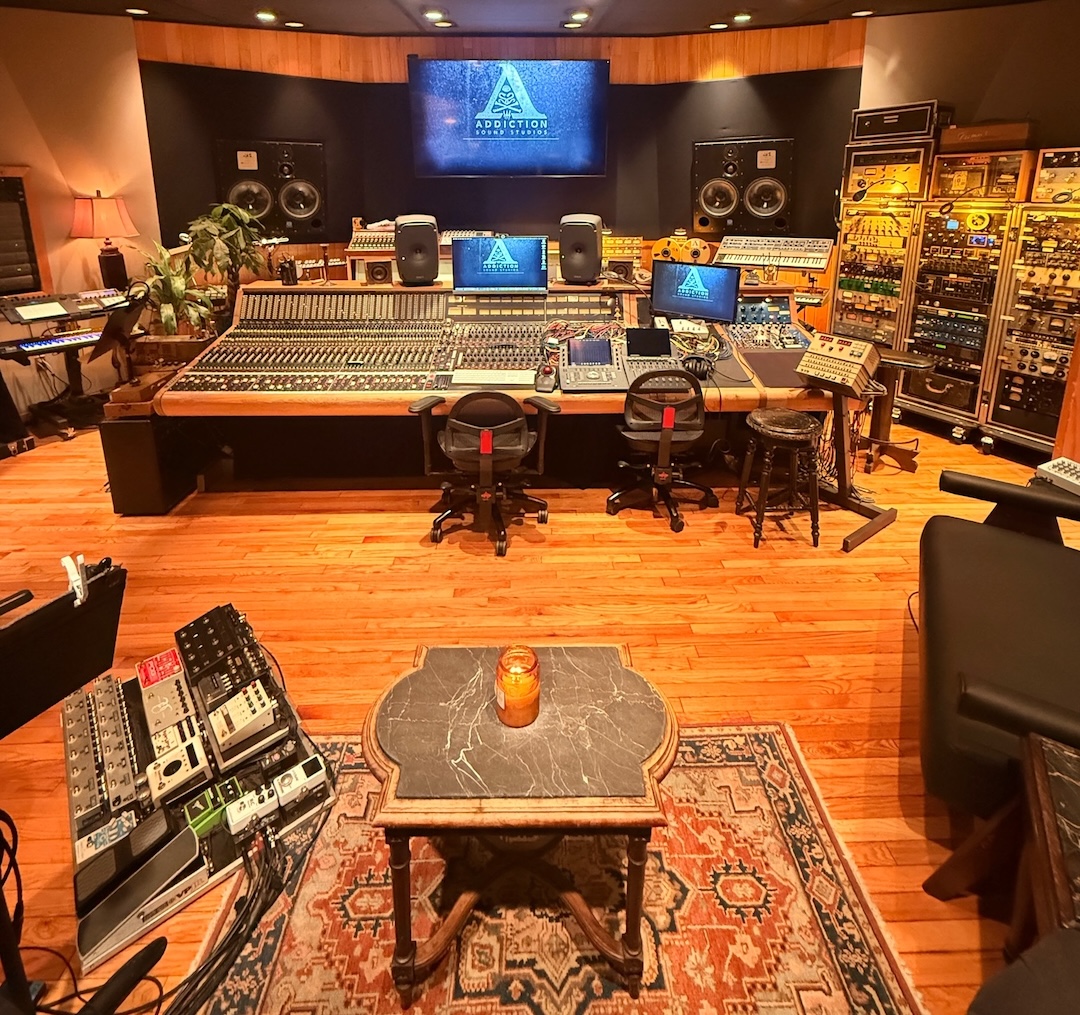
To understand the workflow at Addiction Sound, one must first look at the centerpiece of the control room: a 38-channel Trident TSM console. This board is not merely a piece of furniture; it is a historical artifact that once anchored legendary sessions at Record Plant Sausalito. It has presided over the tracking sessions of iconic acts such as Rick James, Jefferson Airplane, Santana, and Journey.
However, the Trident is just the beginning. The signal path at Addiction Sound is a carefully curated journey through time. From the soffit-mounted ATC 300 monitors—the industry gold standard for transparency—to a 1939 record lathe and an array of analog tape machines including the reliable Studer B67, the signal flow is designed to preserve the character of the performance.
The studio’s chronology of gear reads like a map of 20th-century music production:
- The Rare & The Essential: The facility houses the first-ever Reverbophone in the United States (serial number 001), alongside compressors salvaged from David Briggs’ legendary House of David.
- The Vocal Chain: A 1957 Neumann M49, sourced from the historic Columbia Studios on 30th Street, defines the studio’s vocal sound.
- The Synth Pantheon: The collection includes the Prophet-5 and Jupiter-8, machines that defined the texture of 1980s pop and continue to shape contemporary soundscapes.
Supporting Data: Why Analog Still Matters in the Digital Age
Critics of modern music production often point to the sterile nature of "in-the-box" digital recording as a cause for the homogenization of pop music. Kalmusky addresses this by utilizing the studio’s massive collection of outboard gear not as relics, but as primary instruments.
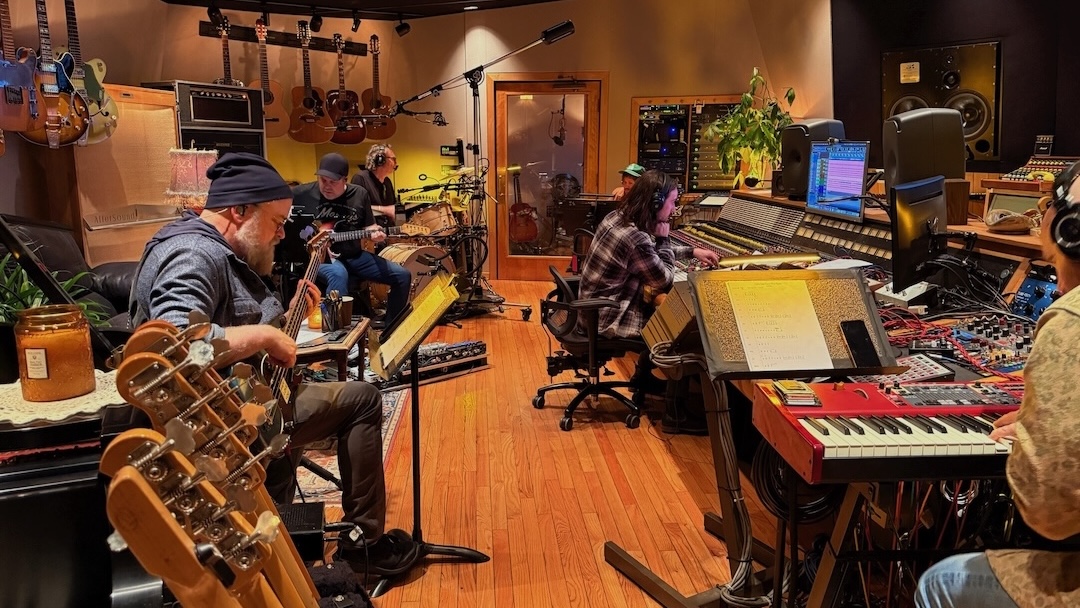
"A lot of young bands are into being bands," Kalmusky notes. "They want to play guitar, bass, and drums, and they are into the history of music—every era, from the 1950s to today."
By providing these artists with access to physical Wurlitzers, custom-built Craviotto drum kits, and genuine tube-based mic preamps from Sunset Sound, Kalmusky is ensuring that the "soul" of a recording—the harmonic distortion, the slight mechanical inconsistencies, the warmth—is baked into the source audio rather than simulated later via plugins.
Yet, this is not a museum. Kalmusky is currently working with Kazrog to develop his own line of Addiction/Kalmusky plugins. This project is rooted in his extensive experience with real-world reverberation, proving that he is not a Luddite, but a developer intent on translating the physics of vintage acoustics into the digital domain.
Workflow and Methodology: The Hybrid Approach
The "Addiction workflow" is a fluid, multi-stage process that balances creative spontaneity with technical rigor. Kalmusky is fluent in the languages of Pro Tools, Ableton, Kontakt, and Logic. In fact, he has integrated a custom "Logic" button directly onto the Trident console, allowing him to seamlessly switch between his role as an engineer and his role as a songwriter.
"We’re writing in Logic and Ableton, but I still prefer to mix in Pro Tools," Kalmusky explains. "When everyone leaves at the end of the day, my assistant will dump everything into Pro Tools for me to mix. While I’m creating, producing, and using virtual instruments, I’m very much an in-the-box producer—especially when it comes to making modern pop music."
This hybridity is best exemplified by his recent experiment in sound design. To avoid the derivative nature of standard sample packs, Kalmusky recorded himself hitting various objects around the studio with mallets. He then processed these unique, organic transients through his vintage chain, creating an 808-style drum sound that is entirely his own. The result is a hip-hop track that sounds both "cutting-edge" and "unique"—a sonic signature that no other producer in the world can replicate because the raw data was generated in-house.
Official Perspectives: The Studio as a Collaborative Space
Addiction Sound functions as a collaborative hub for Nashville’s elite session players. A recent session, featuring talents such as Chad Cromwell on drums and Billy Justineau on keys, highlights the studio’s capacity to handle complex live tracking.
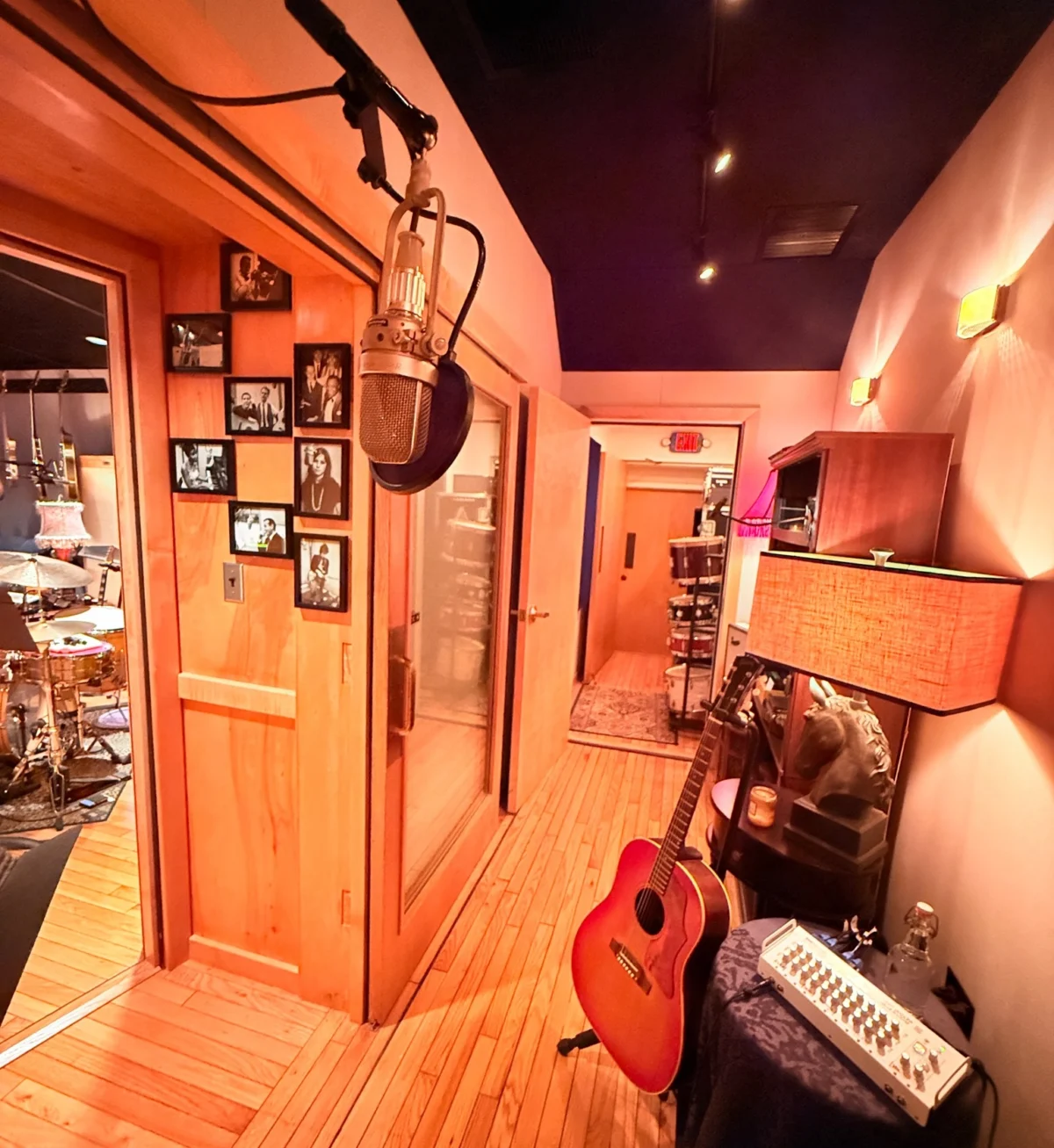
The studio’s vocal booth is a masterclass in versatility. To the left of the main console, the booth is acoustically tuned to function as an isolation space, an amp closet, or a vocal chamber. It is stocked with a massive microphone locker, ranging from vintage Telefunken and RCA units to modern workhorses from Miktek, Royer, and Lewitt. This flexibility allows the studio to pivot from a high-fidelity acoustic jazz session to a saturated, compressed modern pop tracking session without ever breaking the creative momentum.
Implications: The Future of Production
The final frontier for Addiction Sound lies in the "mix room down the hall," which is equipped for 7.1.4 Dolby Atmos production. This room represents the studio’s commitment to the future of immersive audio.
The juxtaposition is striking: a 1/4-inch reel-to-reel tape machine sits comfortably to the right of an Avid controller, while a turntable rests against the left wall. This spatial arrangement is the physical manifestation of Kalmusky’s philosophy. By maintaining the tactile, physical reality of analog media while embracing the spatial, multidimensional capabilities of Atmos, he is positioning Addiction Sound to lead the next decade of music consumption.
As the industry continues to debate the merits of AI-generated audio and algorithmic production, facilities like Addiction Sound offer a necessary counter-narrative. The future of music, if Kalmusky’s model is any indication, is not about choosing between the past and the future. It is about using the knowledge of the past to build a better, more nuanced future.
By refusing to settle for emulations and instead relying on the physical gear that defined the golden age of recording, Kalmusky is not just preserving history—he is using it to build the sounds of tomorrow. For the artist entering those doors, the message is clear: the history of music is at your fingertips, and the tools to redefine it are all around you. Whether it’s a 1939 lathe or a 7.1.4 Atmos array, the goal remains the same: capturing the electricity of a performance that sounds like nothing else on earth.