The global touring industry is built on a delicate foundation of logistics, finance, and professional trust. However, in an era of heightened political polarization, the stage has increasingly become a battleground for ideological expression. This tension recently reached a boiling point with the abrupt removal of Macklemore from Ed Sheeran’s "Loop Tour"—a decision that has sparked a fierce debate among industry veterans about the responsibilities of headlining artists toward their tour partners.
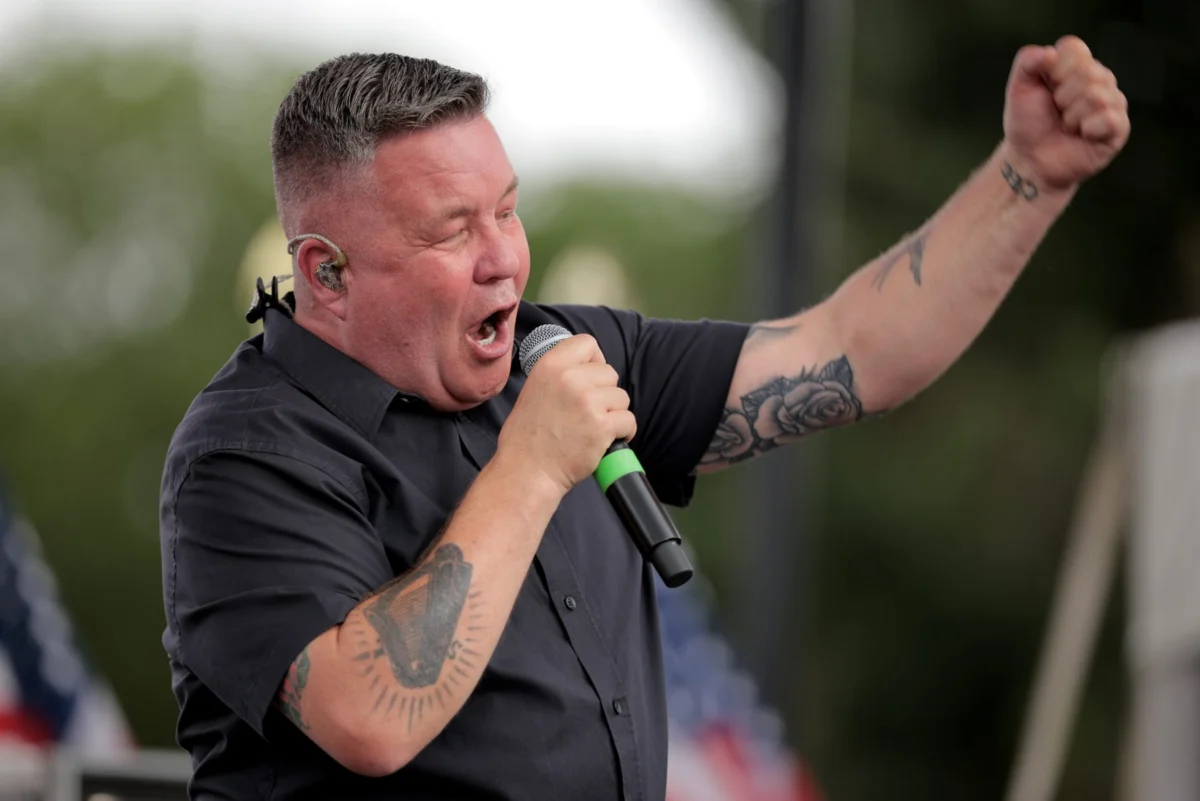
Dropkick Murphys frontman Ken Casey, a staple of the punk rock scene known for his uncompromising stance on artistic integrity, has emerged as one of the most vocal critics of the fallout. In a candid interview with Boston Public Radio, Casey framed the incident not merely as a business disagreement, but as a fundamental breach of the "brotherhood" that defines life on the road.
The Chronology of the Split
The friction began in early September 2025, when Macklemore, serving as a high-profile support act on Sheeran’s global stadium trek, utilized his platform to make vocal comments regarding the ongoing war in Gaza, explicitly expressing support for Palestinians.
The reaction was swift. According to industry reports, the tour’s U.S. promoter, Messina Touring Group, moved to excise the rapper from the bill after just two performances. The situation was compounded by external pressures; reports surfaced that high-profile venue owners, including New England Patriots owner Robert Kraft—who oversees operations at Gillette Stadium—had allegedly voiced concerns regarding the content of the performances.
By September 14, the official announcement of Macklemore’s departure was made. The vacuum created by his exit triggered a domino effect. Aaron Rowe, an opening act for the tour, was the first to publicly exit in protest. He was soon followed by major industry names including Finneas and Lukas Graham, all of whom cited the nature of the tour’s decision-making as incompatible with their own principles.
Ken Casey’s Critique: The Ethics of the Road
For Ken Casey, who has led the Dropkick Murphys for three decades, the core issue is the perceived abandonment of a tour partner.
"I know that, as a musician for 30 years, anytime we’ve gone on tour we’ve selected the bands that have opened for us—that’s brotherhood, sisterhood, that’s family," Casey stated during his radio appearance. "You live or die with the people you bring on the road. They’re your people."
Casey’s critique of Ed Sheeran is rooted in the expectations of leadership. He argued that by allowing promoters or external stakeholders to dictate the conditions of his support acts, Sheeran failed to uphold the traditional bond of a touring entity. "The fact that Ed Sheeran took the knee, no matter what the cause is, and not stood with his fellow tour partner, just doesn’t sit right with me," Casey added. "And that’s not how Dropkick Murphys would operate."
Supporting Data and Precedent
The Dropkick Murphys have long operated with a "speak your truth" policy, often regardless of the financial or venue-related fallout. Casey cited the band’s experience at the 2025 Rocklahoma Festival as a prime example of this philosophy. During their set, the band leveled harsh criticism at the Trump administration.
"We said what we have to say onstage every night, and probably about 50 percent of the audience walked away," Casey recalled. "I was told immediately afterwards that angered the owner of the site, and I’m sure we won’t get invited back."
Casey’s perspective highlights a widening divide in the touring industry. On one side are the "corporate-first" tours, where venue owners and promoters maintain strict control over the "brand safety" of the event. On the other are legacy acts and punk-influenced artists who view the stage as an extension of their personal and political identity.

Official Responses and Humanitarian Efforts
In the wake of his removal, Macklemore did not retreat into silence. Instead, he doubled down on his humanitarian advocacy, announcing that he would donate his entire $1 million in earnings from the Loop Tour to organizations providing aid in Gaza.
In a move that intensified the public pressure, Macklemore challenged Robert Kraft to match the donation. The dynamic took an unexpected turn when representatives for Kraft suggested that the conversation had been mischaracterized. According to statements released by the Kraft camp, Sheeran had reportedly already asked the team to "commit" $2 million to humanitarian efforts, suggesting that the tensions were not entirely devoid of charitable discussions, even if the result was a fractured tour.
The Broader Implications for Live Music
The implications of this incident for the music industry are profound. As artists become more politically engaged, the traditional model of "stadium-sized" touring—which relies on massive financial backing, corporate sponsorships, and the cooperation of major venue conglomerates—is increasingly at odds with the unpredictable nature of personal activism.
1. The Power of the Promoter
The case demonstrates that, regardless of an artist’s fame, the promoter and the venue owner hold significant leverage. In the modern stadium circuit, these stakeholders often prioritize the smooth operation of a tour over the individual expression of the opening acts.
2. The Risk of the "Support Act" Model
Historically, support acts were chosen by headliners to provide a balanced show. Now, as the industry becomes more risk-averse, headliners may face pressure to "vet" the political leanings of their openers. This could lead to more homogenized touring lineups, where artists are chosen based on their lack of controversy rather than their musical compatibility.
3. The "Integrity Premium"
Casey’s comments suggest that there is a growing segment of the audience and the artist community that values "integrity" over "professionalism." He noted, "All the artists I loved as a kid, no matter what, it was that they stand by what they sing about. Once you let that go, then you don’t have any worth in your music if you ask me."
This philosophy poses a challenge to the industry’s status quo. If fans begin to equate a headliner’s silence or compliance with a lack of artistic value, the industry may see a shift in how tours are booked and managed.
Conclusion: The Future of the Stage
The fallout from the Loop Tour serves as a case study in the friction between art and commerce. While Ed Sheeran and his management team may have been focused on the logistical necessity of maintaining a multi-city stadium trek, the cultural cost was a loss of credibility with a significant portion of their peers.
Ken Casey’s stance reminds the industry that, for many musicians, a tour is more than a series of dates on a calendar; it is a community. As the industry moves forward, the question remains: will the next generation of headliners prioritize the protection of their support acts, or will they continue to bow to the pressures of venue owners and promoters?
For now, the events of September 2025 serve as a stark reminder that in the high-stakes world of modern music, where you stand—and who you stand with—is just as important as the music you play. Whether this leads to a "chilling effect" on political discourse in music or a renewed commitment to artistic solidarity remains to be seen. However, as Casey put it, the music industry is watching, and for many, the "worth" of an artist is now being measured by their actions off-stage as much as their performances on it.