In an era dominated by multi-driver hybrid configurations and the relentless pursuit of "more is better," the arrival of the MAKINAaudio T-100B feels like a deliberate step back toward acoustic purity. Priced at $149.00, this single balanced armature (BA) universal in-ear monitor (IEM) arrives from South Korea with a promise of studio-grade precision. While the IEM market currently favors the visceral punch of dynamic drivers, the T-100B positions itself as a specialized tool for the listener who values coherence, vocal clarity, and uncolored neutrality.
The Genesis of MAKINAaudio
MAKINAaudio emerged onto the global stage in December 2025. Despite being a newcomer, the brand is far from green; the team behind the company boasts over two decades of cumulative experience in the high-fidelity audio industry. Their debut offering, the T-100B, reflects this seasoned background, opting for a mature, "monitor-like" tuning philosophy rather than the V-shaped profiles that often saturate the entry-to-mid-tier market.

The decision to focus on a single BA driver is a bold, arguably contrarian move. In the years preceding this release, the single BA has been largely relegated to high-end boutique offerings or historical models like the Westone UM10 Pro and the Campfire Audio Satsuma. By entering this space, MAKINAaudio is betting that there is still a significant audience for the phase-coherent, rapid-transient performance that only a well-tuned single armature can provide.
Engineering and Design Philosophy
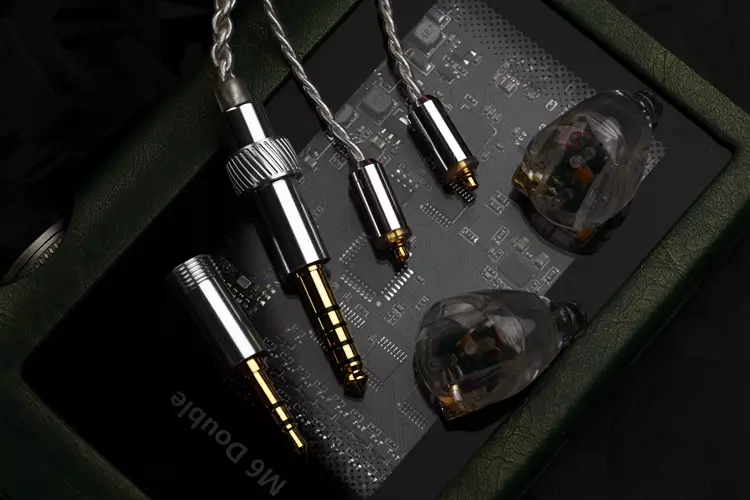
The T-100B is built upon a custom-designed full-range balanced armature driver. However, what sets it apart from budget BA models is its sophisticated internal architecture. Through the transparent chassis, users can clearly observe an electronic crossover network—a rarity in this price bracket.

Most budget IEMs rely on simple acoustic chambers or rudimentary filters to shape their frequency response. In contrast, the T-100B utilizes a dedicated PCB populated with resistors and capacitors to actively tune the driver’s output. This level of electronic integration, coupled with a secondary tuning filter located within the nozzle, suggests a commitment to precision that transcends the "plug and play" nature of many mass-produced monitors.
Ergonomics and Aesthetics
The aesthetic of the T-100B is unapologetically utilitarian. Eschewing the flashy, resin-filled faceplates common in the Chi-Fi landscape, MAKINAaudio has opted for a minimalist, transparent shell that highlights the engineering within.

While the design won’t win awards for artistic flair, its functional advantages are undeniable. Weighing in at a mere 3 grams, the earpieces are exceptionally lightweight. During extended testing sessions—ranging from quiet home listening to ambient-heavy coffee shop environments—the T-100B remained comfortable, avoiding the ear fatigue often caused by heavier, metal-housed monitors. Furthermore, the lack of vent holes, while unconventional, provides an above-average level of passive noise isolation, creating a quiet backdrop that allows the BA driver’s detail to shine.
Technical Specifications and The "Stock" Experience
The T-100B features an impedance of 23Ω and a sensitivity of 110 dB, making it efficient enough to be driven by standard smartphones, though it scales noticeably well with high-fidelity DAC/amps like the iBasso DC-Elite.

The included cable is a significant highlight. Constructed from 6N OCC (Ohno Continuous Cast) copper, it feels substantially more premium than the typical OFC cables bundled with competitors. The inclusion of a modular plug system—allowing for quick swaps between 3.5mm single-ended and 4.4mm balanced connections—is a thoughtful inclusion for the enthusiast. However, the absence of pre-molded ear hooks on the cable makes the wearing experience slightly more fiddly, as the cable tends to drift if not carefully managed.
Sound Profile: A Study in Neutrality
Our testing, conducted using a variety of sources including the FiiO M15S and Muse HiFi M6, revealed a consistent, highly analytical sound signature.
Bass Performance
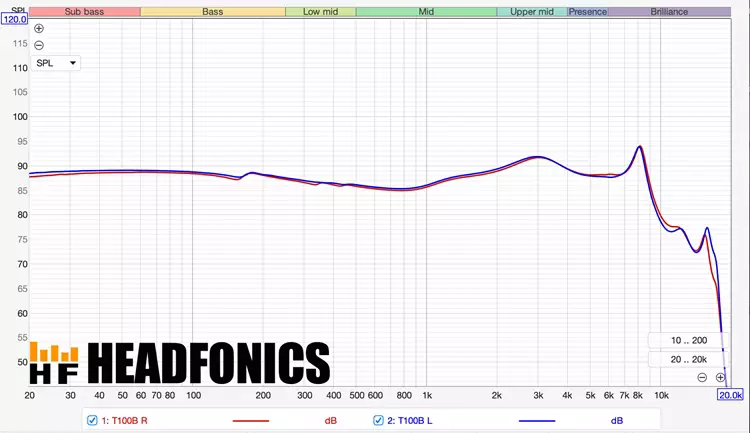
The bass is arguably the most divisive element of the T-100B. It is flat, fast, and articulate. Those accustomed to the sub-bass rumble of dynamic drivers may find the T-100B’s low end "light." It lacks the visceral "thump" of a hybrid setup, but it gains immensely in texture and speed. The decay is incredibly rapid, ensuring that bass notes never bleed into the midrange. For jazz, acoustic, and vocal-heavy tracks, this presentation is superb. However, for bass-heavy electronic music, the sub-bass roll-off is apparent, necessitating the occasional use of EQ.
Midrange and Vocals
This is the heart of the T-100B. The midrange is forward, smooth, and remarkably natural. Because the driver is not competing with a powerful woofer, the vocal frequencies are allowed to breathe. There is a sense of intimacy here; the singer feels present, centered, and physically distinct from the instrumentation. The upper midrange is tuned with a 7 dB pinna gain, which adds presence and clarity without crossing the line into sibilance or "shoutiness."

Treble and Imaging
The treble is extended and neutral, mirroring the monitor-like characteristics of the rest of the spectrum. It avoids the artificial "sparkle" or "air" often added to budget IEMs to create an illusion of detail. Instead, the T-100B delivers honest, analytical detail. Instruments are easily locatable, and the soundstage—while not massive—possesses a logical, accurate width and depth. It presents the recording as it is, rather than attempting to artificially inflate the stage size.
Supporting Data and Potential Drawbacks
While the T-100B is a technical triumph in terms of coherence, it is not without its limitations. During high-volume testing with tracks featuring complex, deep sub-bass passages, a faint, near-imperceptible distortion was detected. This is a common physical limitation of single BA drivers when pushed to extremes, as the small diaphragm struggles to displace the air required for intense low-frequency output at high decibels. It is rarely noticeable during standard listening, but it serves as a reminder that this IEM is designed for critical, moderate-volume monitoring rather than high-SPL concert-style listening.

Implications for the Market
The MAKINAaudio T-100B is a breath of fresh air in a saturated market. By prioritizing a linear, coherent response over the "wow factor" of extreme bass or crystalline treble, the company has created an IEM that serves a specific, professional-leaning purpose.
The shift back toward single-driver designs, if successful, could signal a turning point for enthusiasts tired of the "driver wars." The T-100B proves that when electronic crossover networks are properly utilized, a single armature can provide a level of resolution that many multi-driver configurations lack.
Final Verdict
For the listener who prioritizes vocal accuracy, instrumental timbre, and a neutral signature, the T-100B is a formidable contender at the $149 price point. While it may not suit the "basshead" demographic, it is an essential listen for anyone seeking a pure, uncolored, and highly coherent window into their music library. MAKINAaudio has debuted with a confident, mature product that respects the source material, setting a high bar for their future releases. As they continue to grow, their focus on engineering-led design, rather than marketing-led specifications, will likely earn them a dedicated following among audiophiles who know exactly what they are looking for.