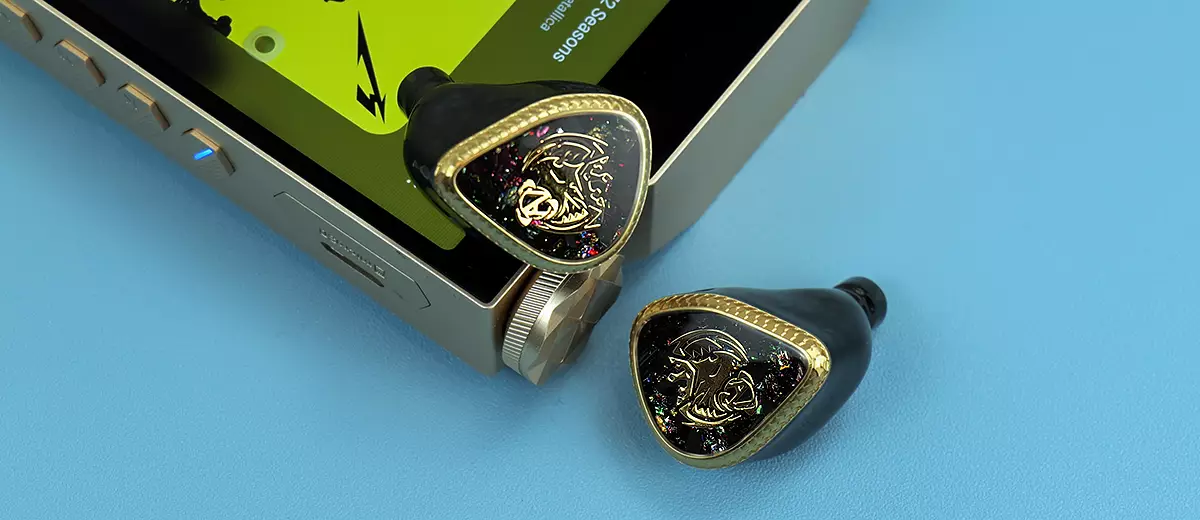
In the rarefied air of high-end personal audio, where prices often reflect the complexity of engineering rather than just luxury branding, Nostalgia Audio has carved out a reputation for unapologetic ambition. Their latest release, the Pendragon, arrives not merely as a successor but as a statement of intent. Priced at $3,799, this 14-driver quad-hybrid universal in-ear monitor (IEM) sits at the summit of the company’s current lineup, promising a fusion of Arthurian-inspired aesthetics and cutting-edge acoustic architecture.
As the industry moves toward increasingly intricate driver configurations, the Pendragon emerges as a titan of complexity. But does it deliver the sonic performance to justify its status as the new flagship, or does it falter under the weight of its own ambition?
Main Facts: Architecture of a Flagship
The Pendragon is defined by its staggering driver count. Inside each shell, Nostalgia Audio has packed a 14-driver configuration designed to cover the frequency spectrum with surgical precision:
- Ultra-Lows: Dual 9.2mm dynamic drivers.
- Mid-Lows: Two dual-diaphragm bone conduction drivers.
- Mids and Highs: 6 Balanced Armature (BA) drivers.
- Ultra-Highs: 4 Electrostatic (EST) drivers.
With an impedance of 19Ω and an SPL of 115 dB/mW at 1kHz, the Pendragon is surprisingly efficient. Unlike older generations of electrostatic drivers that required significant voltage gain to achieve transparency, the latest iteration integrated here allows for a more accessible drive. It does not require a desktop-class amplifier to reach its potential, though it certainly rewards clean, high-resolution amplification.
The technical core of the Pendragon relies on the XBS II (Extreme Bass System), which now utilizes titanium alloy connection materials instead of traditional copper. This shift, combined with micro-nano 3D printing for the acoustic chambers, aims to optimize airflow and transient response. Furthermore, the SFD II (Spiral Flow Device)—a proprietary technology that channels soundwaves through rigid helical tubes—has been refined via high-precision 3D printing to elevate midrange resolution.
Chronology: The Evolution of Nostalgia Audio
To understand the significance of the Pendragon, one must look at the path Nostalgia Audio has traveled over the past several years. The brand has moved rapidly from niche boutique status to a major player in the "Summit-Fi" category.
- The Heritage Era: Products like the Tesseract and the Camelot established the company’s design language. These units were often limited runs, creating a sense of exclusivity.
- The Pivot to Precision: The Durandal marked a shift toward more consistent production and the introduction of the first iteration of the Spiral Flow Device.
- The Present Day: The Royal Camelot exists as an outlier—a $32,000, build-to-order masterpiece for the ultra-wealthy. However, with the Royal Camelot currently listed as sold out, the Pendragon has been positioned as the effective, accessible flagship for the 2026 product cycle. It is the culmination of lessons learned from the Tesseract and the refined engineering of the Durandal.
Supporting Data: Tuning and Technical Performance
The Pendragon is a powerhouse of sub-bass and mid-bass authority. The frequency response from 20Hz to 500Hz is decidedly north of neutral, featuring a long, sustained bass shelf that peaks between 20Hz and 60Hz.
Sonic Character
The result of this tuning is a sound signature that is "full-bodied" and "natural-to-warm." While many modern flagships pursue a clinical, ultra-fast transient response, the Pendragon prioritizes musicality and fatigue-free enjoyment. Bass guitar plucks and rhythm section crunches possess a dense, saturated quality that provides a foundation of "gravitas."
The Challenge of the Mids
Where the Pendragon encounters complexity is in the mid-range. The elevation in the lower-mids, inherited from the bass shelf, provides a rich, lush texture for male vocals and string instruments. However, it sacrifices some of the "bite" or forward presence found in more neutral monitors. In busy, high-energy tracks, this can lead to a slight perception of congestion. The 2kHz to 8kHz region remains slightly south of neutral, which keeps the sound incredibly smooth but necessitates careful pairing with sources that can provide the necessary clarity to "open up" the soundstage.
The Role of Source Pairing
Our testing revealed that the Pendragon acts as a chameleon depending on the front-end equipment.

- The Neutral Advocate: When paired with the iBasso DX320 MAX Ti or the FiiO M27, the Pendragon finds a perfect balance. These sources offer a detailed, energetic treble presentation that counteracts the inherent warmth of the IEM, resulting in a wider dynamic range.
- The Warmth Dilemma: Pairing the Pendragon with inherently warm sources, such as the HiBy RS8 II, can make the signature feel overly lush. In these instances, the use of Parametric EQ (PEQ) is highly recommended—specifically a narrow peaking filter around the 4kHz range—to restore vocal presence and contrast.
Official Responses and Design Philosophy
Nostalgia Audio has made no secret of their dedication to the "Matter of Britain"—the Arthurian legends that underpin their design language. The Pendragon is, visually, an extension of this storytelling.
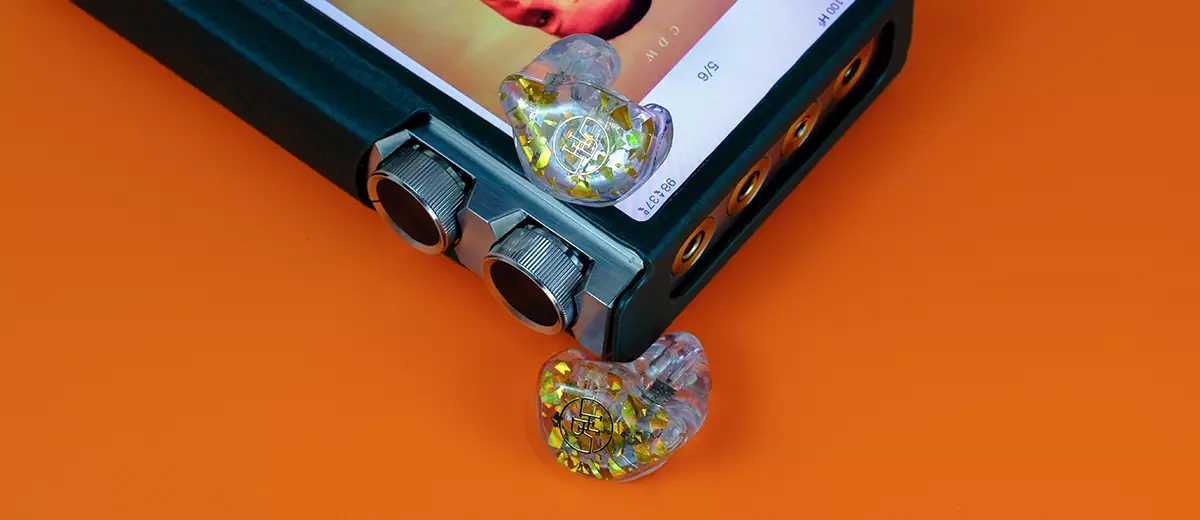
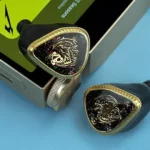
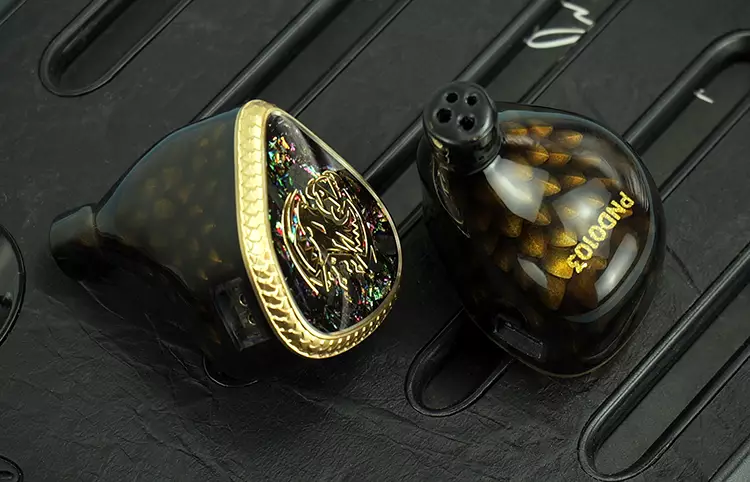
The shell is a masterful blend of 3D-printed materials and CNC-machined aluminum. The underside features a "dragonscale" aesthetic, while the top is adorned with a gold-plated fender. This is not just cosmetic; the company asserts that the materials are chosen for both acoustic damping and physical durability.
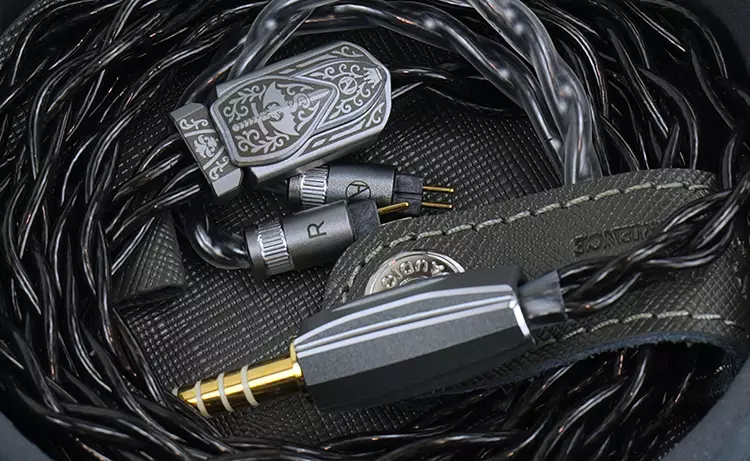
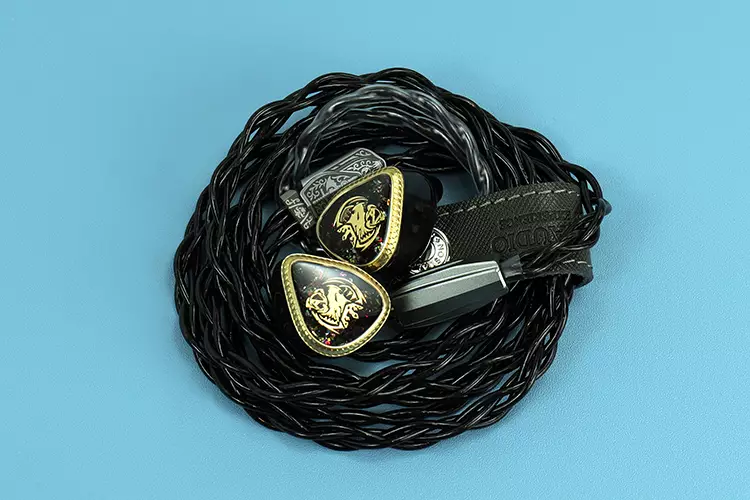
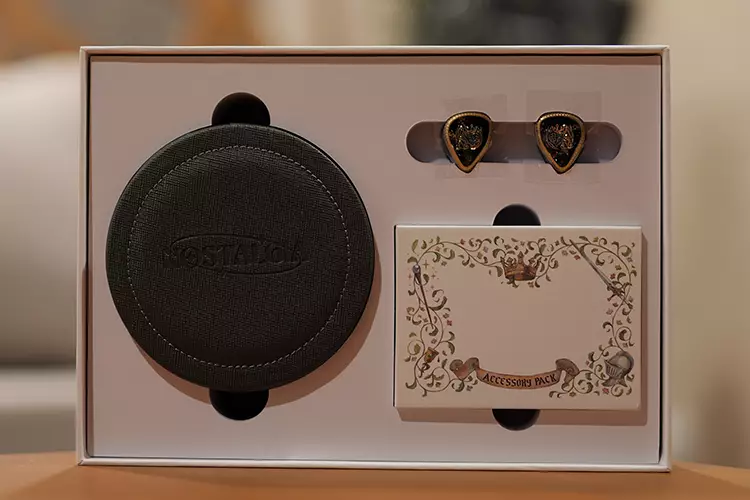
The packaging is arguably the most elaborate in the current IEM market. Every element, from the tapestry-themed box art to the replica "roundstone" case for the ear tips, is designed to immerse the user in the brand’s lore. While some audiophiles prioritize minimalism, Nostalgia Audio argues that at the $3,799 price point, the "unboxing experience" is an essential component of the luxury product value.
Implications: Where the Pendragon Stands
The Pendragon is a polarizing, yet undeniably impressive, piece of engineering. Its implications for the market are threefold:
- A Shift in Flagship Expectations: The Pendragon signals that manufacturers are moving away from the "all-detail-all-the-time" philosophy. By prioritizing a fatigue-free, powerful, and lush presentation, Nostalgia Audio is catering to the listener who spends hours, rather than minutes, with their music.
- The "Driver Flex" Factor: One area where the Pendragon faces scrutiny is the physical experience. Like the Durandal before it, the Pendragon exhibits audible dynamic driver flex during insertion. For an IEM at this price point, this is a technical oversight that may alienate users who demand perfection in every interaction with the hardware.
- The Value of Customization: By providing multiple tip options—including the Symbio W, XWB, and LSR (Liquid Silicone Rubber) tips—Nostalgia Audio acknowledges that at this level of performance, "fit" is as important as the electronic design. The XMB tips, which we found provided the best balance of comfort and treble extension, are essential for unlocking the full capability of the Pendragon.
Final Verdict
The Nostalgia Audio Pendragon is a triumph of design and a testament to the potential of hybrid driver configurations. It is not a tool for the analytical listener seeking clinical separation; it is a tool for the music lover seeking depth, texture, and a sense of scale. While it lacks the high-treble bite that some may desire, its ability to render complex low-end information and its exceptionally smooth midrange make it a formidable contender for the best flagship IEM of 2026.
For those who value a rich, powerful, and, above all, "musical" performance, the Pendragon is an essential audition. It effectively sets the bar for what a modern, consumer-facing flagship should sound like: bold, immersive, and unapologetically, beautifully warm.