In the rarified air of high-end music production, where legends like The Rolling Stones or the late Ozzy Osbourne roam, the role of a producer is often reduced to that of a facilitator—a polished technician tasked with capturing the "vibe." For Andrew Watt, the acclaimed producer and multi-instrumentalist gracing the cover of the October 2026 issue of Mix, that definition is not only insufficient—it is a dereliction of duty.
To work with icons is to be invited into a creative sanctuary, but Watt has built his reputation on the premise that the greatest service a producer can provide is not agreement, but perspective.
The Philosophy of Creative Confrontation
While many in the industry operate on a "Yes Man" basis to preserve the ego of the artist, Watt views his role through a more critical lens. He recognizes that the titans he works with are more than capable of self-producing; they have, after all, defined the sound of generations. Therefore, his contribution must transcend songwriting. It must involve the willingness to provide an honest, occasionally uncomfortable, opinion.
"I don’t know if it’s good guy or bad guy; it’s just I take my role as a producer for these people so seriously," Watt explains. "It’s like you’re showing up to work today with the people that made you who you are, and your job is to tell them what you think! If you don’t do that, you’re not doing your job."
This approach has earned him a reputation for being "the bad guy," a moniker bestowed by Grammy-winning peer Cirkut in The Washington Post. Watt, however, rejects the binary. He argues that his interventions are never about asserting dominance, but rather about navigating the subjective landscape of art with nuance.
"I try and do it in the most delicate way I can, because there are no rules with art," he notes. "There is no right, there is no wrong. It’s opinion-based and it’s taste-based. I just do it in a way where it’s not presented as, ‘If you don’t do this, you’re not making the right choice.’ That’s not a real thing."
Chronology of a Career: From Songwriter to Architect
To understand Watt’s current trajectory, one must look at his evolution. He began his career as a songwriter, a foundation that remains his comfort zone. The transition to producer was not a calculated career pivot but a functional necessity—a response to the needs of the projects he found himself involved in.
Over the last decade, Watt has moved from the peripheral support role to the center of the recording console. His journey is marked by a series of high-stakes collaborations that have shifted the paradigm of modern rock and pop production. From his work with Ozzy Osbourne, which served as a transformative period for the metal legend, to his ongoing partnership with The Rolling Stones, Watt has become a bridge between the analog heritage of the 20th century and the precision-engineered requirements of the 21st.
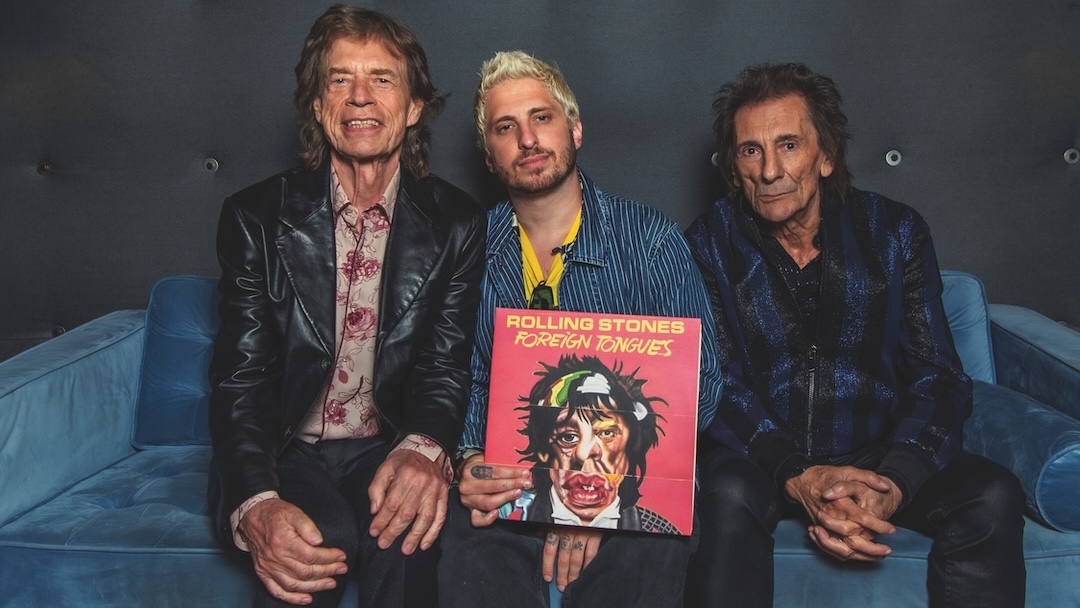
The release of The Rolling Stones’ Foreign Tongues serves as a case study in his methodology. The album’s closing track, a cover of Chuck Berry’s "Beautiful Delilah," is a testament to Watt’s commitment to "old-school" authenticity. By placing a single ribbon microphone between Mick Jagger and Keith Richards and recording directly to tape, Watt stripped away the safety net of digital post-production.
"The relationship between Mick and Keith is fabled—it’s one of the all-time greatest musical collaborations ever," Watt says. "Wanting to capture that and allow it to be heard on record [meant] putting one ribbon microphone between them and recording them to tape, where it’s not something that can be touched. Hearing the way that they’re reacting to each other in real time is as raw as it can be."

Supporting Data: The Psychology of the Room
Watt’s methodology is rooted in physical and emotional proximity. He is famously hands-on, often remaining in the recording space with the musicians rather than retreating behind the safety of the control room glass. This presence is not for show; it is to share in the emotional arc of the recording process.
This approach acknowledges a fundamental truth in music production: the best performances often happen when the artist feels witnessed. Whether the session involves delicate vocal phrasing or aggressive, percussive pounding, Watt’s presence acts as a stabilizer. He is there to validate the risks the artists are taking and to provide the critical feedback loop that ensures those risks pay off.
However, Watt is equally clear about the psychological toll of this work. He emphasizes that the producer must be as ready to discard their own ideas as they are to champion them. "You have to be willing to throw your idea out there and be willing to move on from either result," he says. "If it’s great, you’re still not some be-all, end-all person, and if it’s terrible, you have to be able to say, ‘Whoa, I gave the worst idea ever! I gotta let that go and not think about that anymore.’ Otherwise, that can derail you."
Official Perspectives and Industry Implications
The industry’s reaction to Watt’s "bad guy" persona has been overwhelmingly positive, primarily because it delivers results. By acting as a filter for the artist’s worst impulses and an amplifier for their best, he has managed to remain relevant across multiple genres.
The implication for the future of record production is clear: the era of the passive, "invisible" producer is waning. In an age where digital technology allows anyone to record a technically perfect track, the value of a producer now lies in their taste, their ability to curate the emotional space, and their courage to provide objective pushback.
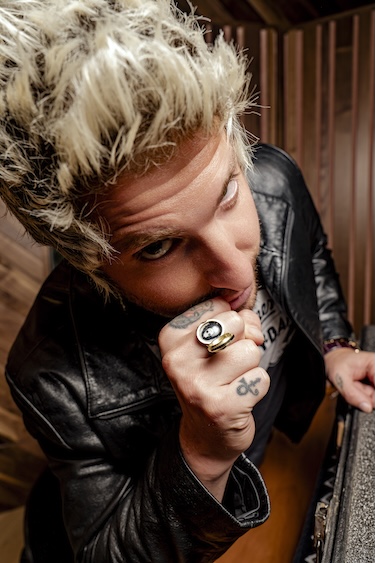
As Watt prepares for his next chapter, the industry is watching closely. Having spent years guiding others, he is now turning his attention back to his own artistry.
The Future: Stepping into the Light
"I’ve started performing and doing more shows," Watt reveals. "I have a couple ideas for a cool project that I’m going to start working on at the top of the year. Until I’m in it, I don’t know if it’s something that’s going to take me a month or a year."
This return to the spotlight is not a departure from his production work, but rather a synthesis of his experiences. By applying the lessons learned from the masters—Jagger, Richards, and the late Osbourne—to his own music, Watt is poised to demonstrate how a modern producer interprets their own creative voice.
His philosophy remains fluid: "I can do a project where I’m writing every song on the album; I can do a project where I wrote zero songs. It’s just whatever is required and however it naturally progresses when you’re working. You do what is needed of you."
Conclusion
Andrew Watt represents a new breed of producer—one who is as comfortable with the history of analog tape as he is with the realities of modern hit-making. His insistence on honesty, his refusal to be a "Yes Man," and his deep respect for the emotional weight of performance have cemented his status as a pivotal figure in contemporary music.
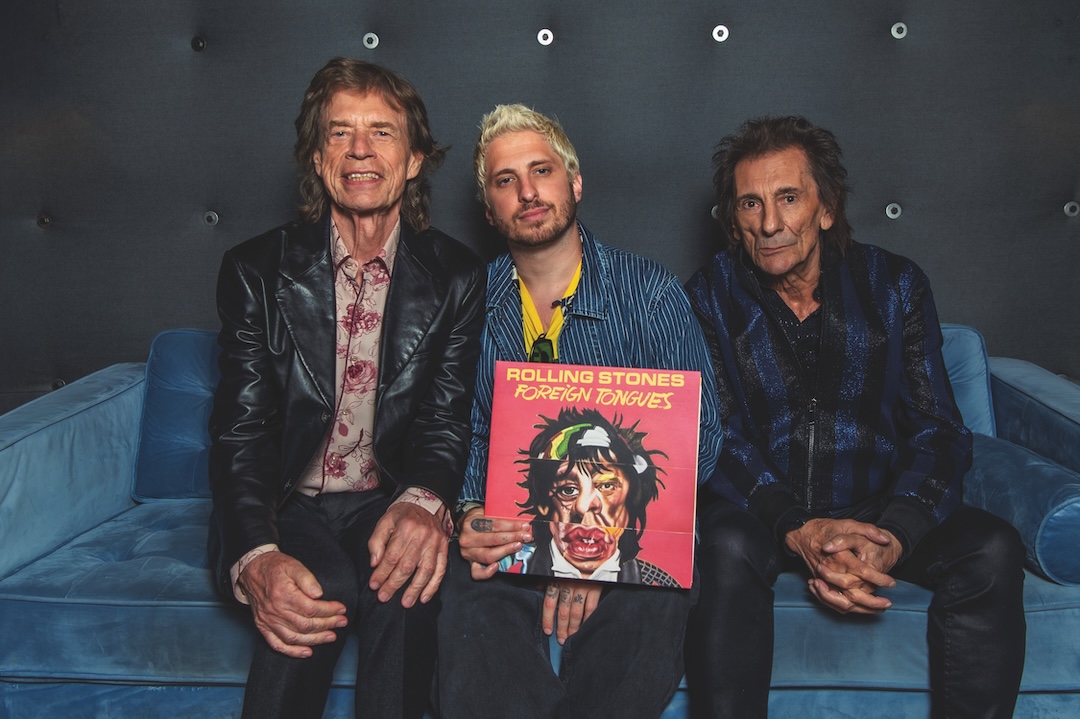
As he transitions from the chair behind the console to the center of the stage, his career serves as a masterclass in adaptability. Whether he is capturing the raw, tape-hiss energy of a rock legend or carving out his own sound, Watt continues to prove that the most essential tool in a producer’s kit is not a plugin or a piece of outboard gear, but the willingness to tell the truth.